THE ADVENTURE COLLECTIVE® · Independent discovery and booking for outdoor travel

A five-hour journey from Marangu Gate up to Mandara Hut offers a compact Kilimanjaro experience: rainforest trails, close encounters with colobus monkeys, and a rooftop view toward Kibo without the multi-day commitment. Ideal for travelers short on time or curious about the mountain.
A five-hour journey from Marangu Gate up to Mandara Hut offers a compact Kilimanjaro experience: rainforest trails, close encounters with colobus monkeys, and a rooftop view toward Kibo without the multi-day commitment. Ideal for travelers short on time or curious about the mountain.
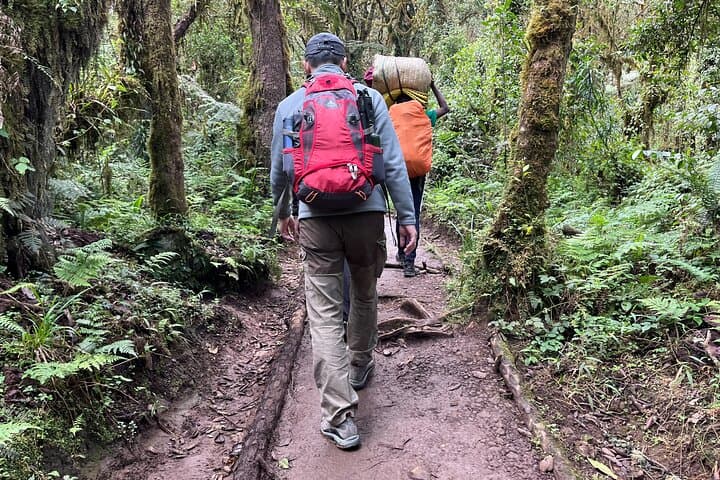
You step out of the minivan at Marangu Gate and the mountain immediately changes the script: the hum of Moshi falls away and a humid, green world presses in. Rainforest vines loop over the trail, sunbeams slit through moss-draped branches, and the chatter of colobus monkeys rivets the ear. For five hours you walk a slope that feels both intimate and enormous — close enough to smell damp earth, far enough to spot Kibo's scarred silhouette through a clearing.
Verified experiences and guided adventures in the surrounding area.
Operated by African Trek & Travel l.t.d (moshi) · Moshi, Kilimanjaro Region
You step out of the minivan at Marangu Gate and the mountain immediately changes the script: the hum of Moshi falls away and a humid, green world presses in. Rainforest vines loop over the trail, sunbeams slit through moss-draped branches, and the chatter of colobus monkeys rivets the ear. For five hours you walk a slope that feels both intimate and enormous — close enough to smell damp earth, far enough to spot Kibo's scarred silhouette through a clearing.
The Marangu Route has been used for decades, first by local guides and early colonial explorers who mapped Kilimanjaro’s lower flanks. Geologically, you’re on the ancient slopes of a stratovolcano whose summit cones — Mawenzi, Kibo, and Shira — record millions of years of volcanic sculpting. Culturally, this is Chagga country: terraces and coffee farms wrap the foothills, and local guides weave stories about harvests, rituals, and how the mountain shapes community life.
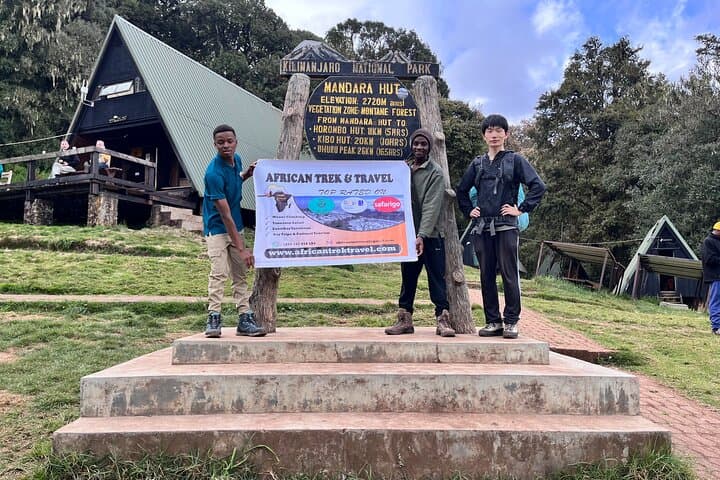
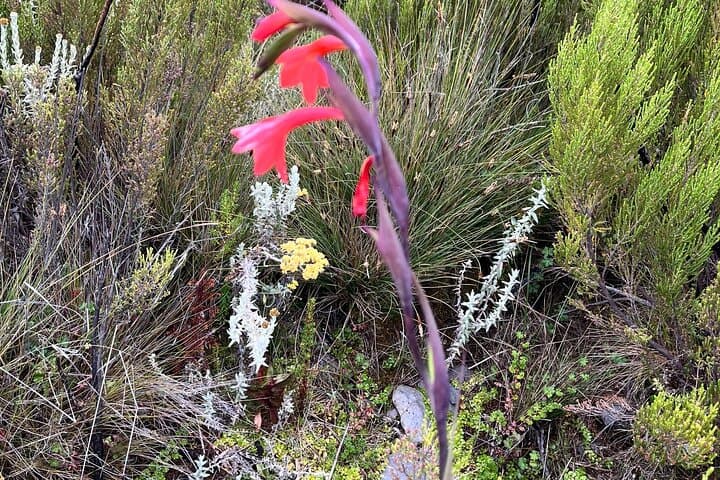
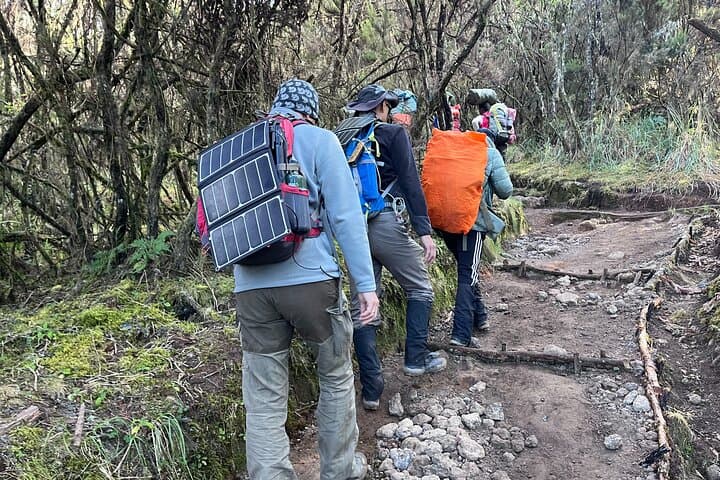
The day hike follows the classic Coca-Cola Route: start at Marangu Gate (~1,860–1,900 m), climb through a thick montane rainforest, and gain roughly 850–950 m to reach Mandara Hut at about 2,720 m. Expect roughly 8–10 km round-trip on packed dirt, root-strewn track and occasional stone steps — a persistent climb more than a scramble. Along the way the forest gives up hawthorn-like heath and giant lobelia as the canopy thins; Maundi Crater is an easy detour before the hut, rewarding with a quieter viewpoint.
Practically, this is the best half-day taste of Kilimanjaro if you’re short on time or not ready for an overnight. The itinerary usually includes bottled water, a packed lunch at Mandara, and return transfer to Moshi. No high-altitude acclimatization is required for most people, but the hike does finish above 2,500 m, so move at a steady pace and watch your breathing.
Tips that matter: start early to avoid mid-morning heat and afternoon clouds that can blunt views; wear sturdy hiking shoes with good traction; bring layers because the temperature can drop near the hut; and pack a rain shell — mountain weather changes fast. Respect the guides — they know shortcuts, local flora and fauna, and how to read the clouds.
This day hike is equal parts nature and human scale: a compact, sensory-rich introduction to Africa’s highest peak. You won’t stand on Uhuru Peak, but you’ll walk high enough to see the mountain’s character, hear its forests, and meet the people who live in its shadow. For many travelers, it’s the most satisfying way to touch Kilimanjaro without giving over days to the trail.
moderate.
5 hours.
Moderate fitness: regular walkers who can sustain uphill hiking for 3–4 hours will be comfortable. Expect steady cardiovascular effort and use of trekking poles if you have them.
It’s moderate: steady uphill walking to 2,720 m over 4–5 hours with minimal technical terrain, suitable for most active travelers.
Not usually for this day hike, but if you’ve just flown in from sea level take it slow and monitor for mild altitude symptoms.
Common sightings include colobus monkeys, various sunbirds and turacos, and forest-dwelling insects and butterflies.
Yes—most operators include bottled water and a packed lunch at Mandara Hut, but bring extra snacks if you prefer.
Families with older children accustomed to hiking can join; check operator age restrictions and fitness expectations before booking.
Transportation is usually provided as part of the tour; confirm pickup and drop-off points when you book.
The Marangu route has long served local communities and early explorers; nearby Chagga villages cultivated terraces and coffee that shaped the mountain’s foothill landscape.
Mount Kilimanjaro is a protected national park—stay on trails, pack out plastics, and support local guides whose fees fund conservation and community programs.
African Trek & Travel l.t.d (moshi) operates guided outdoor trips and adventures with an emphasis on safety, stewardship, and memorable experiences.
You step out of the minivan at Marangu Gate and the mountain immediately changes the script: the hum of Moshi falls away and a humid, green world presses in. Rainforest vines loop over the trail, sunbeams slit through moss-draped branches, and the chatter of colobus monkeys rivets the ear. For five hours you walk a slope that feels both intimate and enormous — close enough to smell damp earth, far enough to spot Kibo's scarred silhouette through a clearing.
You step out of the minivan at Marangu Gate and the mountain immediately changes the script: the hum of Moshi falls away and a humid, green world presses in. Rainforest vines loop over the trail, sunbeams slit through moss-draped branches, and the chatter of colobus monkeys rivets the ear. For five hours you walk a slope that feels both intimate and enormous — close enough to smell damp earth, far enough to spot Kibo's scarred silhouette through a clearing.
The Marangu Route has been used for decades, first by local guides and early colonial explorers who mapped Kilimanjaro’s lower flanks. Geologically, you’re on the ancient slopes of a stratovolcano whose summit cones — Mawenzi, Kibo, and Shira — record millions of years of volcanic sculpting. Culturally, this is Chagga country: terraces and coffee farms wrap the foothills, and local guides weave stories about harvests, rituals, and how the mountain shapes community life.
The day hike follows the classic Coca-Cola Route: start at Marangu Gate (~1,860–1,900 m), climb through a thick montane rainforest, and gain roughly 850–950 m to reach Mandara Hut at about 2,720 m. Expect roughly 8–10 km round-trip on packed dirt, root-strewn track and occasional stone steps — a persistent climb more than a scramble. Along the way the forest gives up hawthorn-like heath and giant lobelia as the canopy thins; Maundi Crater is an easy detour before the hut, rewarding with a quieter viewpoint.
Practically, this is the best half-day taste of Kilimanjaro if you’re short on time or not ready for an overnight. The itinerary usually includes bottled water, a packed lunch at Mandara, and return transfer to Moshi. No high-altitude acclimatization is required for most people, but the hike does finish above 2,500 m, so move at a steady pace and watch your breathing.
Tips that matter: start early to avoid mid-morning heat and afternoon clouds that can blunt views; wear sturdy hiking shoes with good traction; bring layers because the temperature can drop near the hut; and pack a rain shell — mountain weather changes fast. Respect the guides — they know shortcuts, local flora and fauna, and how to read the clouds.
This day hike is equal parts nature and human scale: a compact, sensory-rich introduction to Africa’s highest peak. You won’t stand on Uhuru Peak, but you’ll walk high enough to see the mountain’s character, hear its forests, and meet the people who live in its shadow. For many travelers, it’s the most satisfying way to touch Kilimanjaro without giving over days to the trail.