THE ADVENTURE COLLECTIVE® · Independent discovery and booking for outdoor travel

Walk Darwin’s CBD with a local guide and watch the city reveal its wartime past, cyclone-scarred architecture, and harbour-facing green spaces. This two-hour tour combines history, public art, and practical local insight—ideal for first-time visitors who want context and direction.
Walk Darwin’s CBD with a local guide and watch the city reveal its wartime past, cyclone-scarred architecture, and harbour-facing green spaces. This two-hour tour combines history, public art, and practical local insight—ideal for first-time visitors who want context and direction.
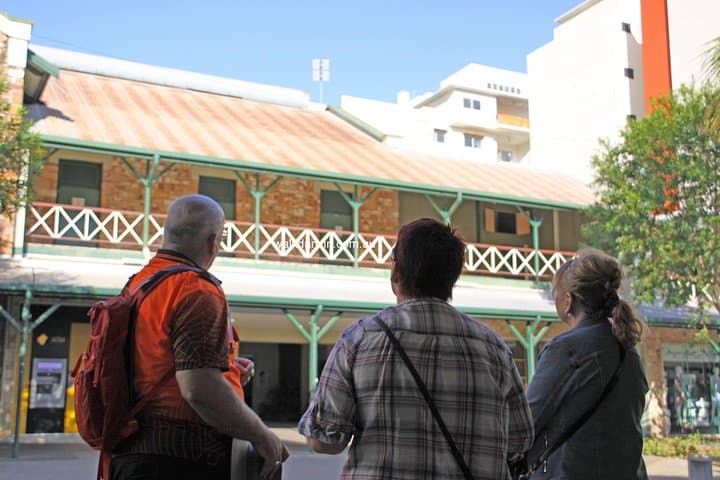
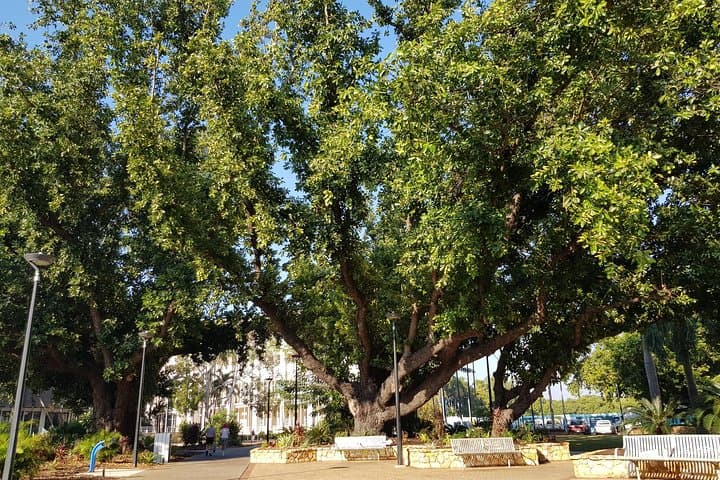
You meet under a bright orange shirt in Raintree Park, the statue of John McDouall Stuart keeping watch as the harbour breathes out heat and salt. The group spills into Knuckey Street and the city opens not as a postcard but as a layered story—weathered facades, public artworks, and shops that have worked to survive the tropics.
Verified experiences and guided adventures in the surrounding area.
Operated by Walk Darwin Pty Ltd · Darwin, Northern Territory
You meet under a bright orange shirt in Raintree Park, the statue of John McDouall Stuart keeping watch as the harbour breathes out heat and salt. The group spills into Knuckey Street and the city opens not as a postcard but as a layered story—weathered facades, public artworks, and shops that have worked to survive the tropics.
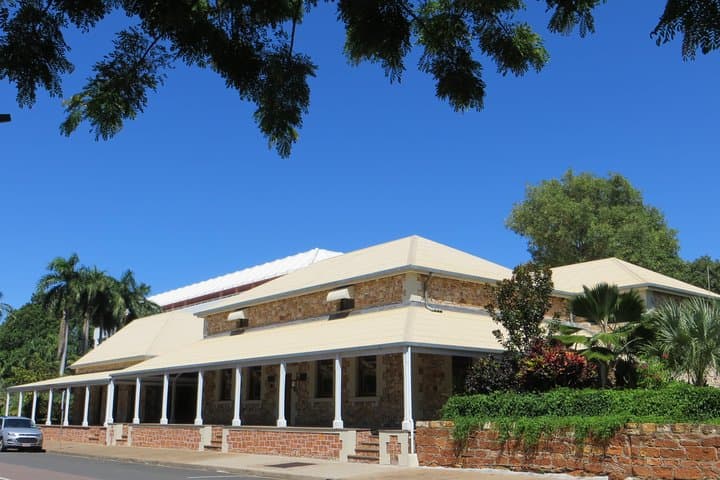
The walk threads through Darwin’s compact CBD, where every brick has a memory. Your guide moves easily between eras: pre-war timber buildings that survived the cyclone that rewrote the city in 1974, WWII-era sites that recall the air raids that shaped Darwin’s role in the Pacific, and post-war architecture that signaled a new multicultural era. Geology here is subtle—sandstone and compacted coastal soils, mangrove-lined foreshore and a harbour that alternates between languid and commanding with the tide.
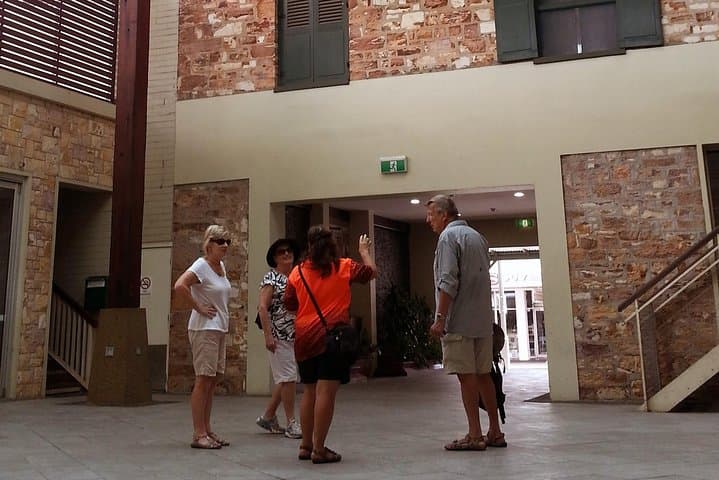
Culture in Darwin reads as practical and unpretentious. Public art punctuates the route, telling local stories in bright tiles and murals. You’ll stop at a converted open-air cinema that hints at simpler leisure before the cyclone; the guide points to original plasterwork now framed by chic retail. The Old Palmerston Town Hall in partial ruin offers a quieter contrast, its broken edges reminding you that the city survives by adapting.
Bicentennial Park furnishes one of the clearest panoramas: Darwin Harbour stretching toward the Timor Sea, ferries scudding like punctuation marks. Birdlife—kites, gulls, and the odd flying fox at dusk—threads through the urban noise, giving the walk a wildlife edge without leaving the CBD.
Practicalities arrive with the same clarity as the history. The standard tour lasts about two hours and covers mostly flat, paved surfaces suited to steady walkers and active wheelchair users. Wear non-slip shoes for wet footpaths, bring a brimmed hat and sunscreen—the sun is unapologetic—and carry water; even a short stroll in the tropics can become taxing.
Guides are local and conversational; expect stories, stops for photos, and a manageable pace. The route finishes at The Esplanade opposite Lyons Cottage, where the harbour invites you to linger or continue exploring on your own. If you want deeper context, plan to visit nearby museums or return at sunset when the light flattens the buildings and the harbour dares you to slow down and watch the city breathe.
This isn’t a tour of landmarks alone but a practical primer on how Darwin’s climate, history, and diverse communities shaped the place you’re standing in—compact, candid, and surprisingly resilient.
moderate.
2–2.5 hours.
Suitable for people with a moderate level of fitness; mostly flat walking but sustained in tropical heat.
The tour runs about 120–150 minutes, covering a compact route through Darwin CBD with multiple stops for commentary and photos.
Yes—routes and surfaces are wheelchair accessible for active wheelchair users; notify the operator of any specific needs when booking.
Bring water, a hat, sunscreen, comfortable non-slip shoes, and a camera; light rainwear is advisable in the wet season.
Children are welcome but must be accompanied by an adult; the pace and route are family-friendly.
The operator may cancel in severe weather; the itinerary notes that tours operate in all weather conditions, so dress accordingly and check for cancellations.
Meet at Raintree Park under the John McDouall Stuart statue on Knuckey Street; the tour ends at The Esplanade opposite Lyons Cottage.
Darwin’s urban form was dramatically reshaped by Cyclone Tracy in 1974 and by WWII air raids—both events are visible in surviving buildings and wartime sites through the CBD.
The harbour and adjacent mangroves are ecologically sensitive; avoid feeding wildlife, stick to paths, and use reef-safe sunscreen to protect coastal waters.
Walk Darwin Pty Ltd operates guided outdoor trips and adventures with an emphasis on safety, stewardship, and memorable experiences.
You meet under a bright orange shirt in Raintree Park, the statue of John McDouall Stuart keeping watch as the harbour breathes out heat and salt. The group spills into Knuckey Street and the city opens not as a postcard but as a layered story—weathered facades, public artworks, and shops that have worked to survive the tropics.
You meet under a bright orange shirt in Raintree Park, the statue of John McDouall Stuart keeping watch as the harbour breathes out heat and salt. The group spills into Knuckey Street and the city opens not as a postcard but as a layered story—weathered facades, public artworks, and shops that have worked to survive the tropics.
The walk threads through Darwin’s compact CBD, where every brick has a memory. Your guide moves easily between eras: pre-war timber buildings that survived the cyclone that rewrote the city in 1974, WWII-era sites that recall the air raids that shaped Darwin’s role in the Pacific, and post-war architecture that signaled a new multicultural era. Geology here is subtle—sandstone and compacted coastal soils, mangrove-lined foreshore and a harbour that alternates between languid and commanding with the tide.
Culture in Darwin reads as practical and unpretentious. Public art punctuates the route, telling local stories in bright tiles and murals. You’ll stop at a converted open-air cinema that hints at simpler leisure before the cyclone; the guide points to original plasterwork now framed by chic retail. The Old Palmerston Town Hall in partial ruin offers a quieter contrast, its broken edges reminding you that the city survives by adapting.
Bicentennial Park furnishes one of the clearest panoramas: Darwin Harbour stretching toward the Timor Sea, ferries scudding like punctuation marks. Birdlife—kites, gulls, and the odd flying fox at dusk—threads through the urban noise, giving the walk a wildlife edge without leaving the CBD.
Practicalities arrive with the same clarity as the history. The standard tour lasts about two hours and covers mostly flat, paved surfaces suited to steady walkers and active wheelchair users. Wear non-slip shoes for wet footpaths, bring a brimmed hat and sunscreen—the sun is unapologetic—and carry water; even a short stroll in the tropics can become taxing.
Guides are local and conversational; expect stories, stops for photos, and a manageable pace. The route finishes at The Esplanade opposite Lyons Cottage, where the harbour invites you to linger or continue exploring on your own. If you want deeper context, plan to visit nearby museums or return at sunset when the light flattens the buildings and the harbour dares you to slow down and watch the city breathe.
This isn’t a tour of landmarks alone but a practical primer on how Darwin’s climate, history, and diverse communities shaped the place you’re standing in—compact, candid, and surprisingly resilient.