THE ADVENTURE COLLECTIVE® · Independent discovery and booking for outdoor travel

A full-day blend of forest hiking, panoramic views from the Juliánus Lookout Tower, and a calm sit-on-top kayak paddle along the iconic Danube Bend. Perfect for travelers based in Budapest who want an active day in nature with local history and a riverside finish.
A full-day blend of forest hiking, panoramic views from the Juliánus Lookout Tower, and a calm sit-on-top kayak paddle along the iconic Danube Bend. Perfect for travelers based in Budapest who want an active day in nature with local history and a riverside finish.
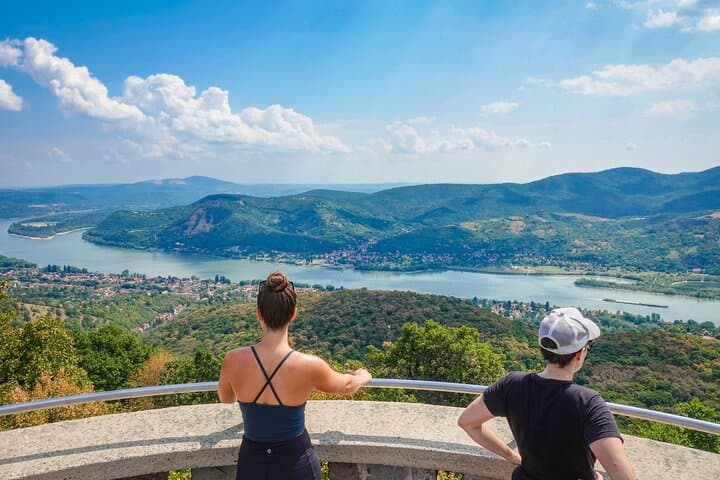
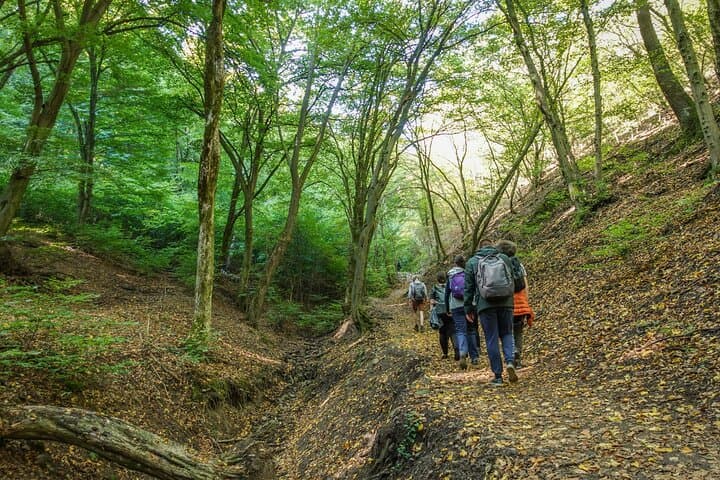
You step out of the minivan and the Danube reappears like a wide ribbon folding around the hills—cool air from the river brushing past your face, the sound of distant oars and bird calls. The guide points up: a slim silhouette of the Juliánus Lookout Tower perches above the trees. The first stretch is a forested climb; rocks and roots press at your boots, and the trees seem to lean in as if to watch you pass.
Verified experiences and guided adventures in the surrounding area.
Operated by Gyorgy Kulcsar · Nagymaros, Pest County
You step out of the minivan and the Danube reappears like a wide ribbon folding around the hills—cool air from the river brushing past your face, the sound of distant oars and bird calls. The guide points up: a slim silhouette of the Juliánus Lookout Tower perches above the trees. The first stretch is a forested climb; rocks and roots press at your boots, and the trees seem to lean in as if to watch you pass.
History and geology are never far from view here. The Danube Bend is where the river turns sharply northward, scooping out a corridor through Tertiary and Cretaceous sediments uplifted by the same forces that shaped the Carpathians. Medieval castles—most notably the reconstructed Visegrád fortress across the water—once controlled the river lanes and now provide dramatic ruins that punctuate the skyline.
Local culture still orbits the river. Nagymaros and Visegrád were small trade and ferry points for centuries; today the banks host a lively mix of anglers, families, and a handful of riverside cafés and a well-known “hippie” bar where kayakers wind down with a beer. Guides here combine natural history with practical river lore: which tree species mark old terraces, where otters might show, and why certain cliffs harbor different mosses.
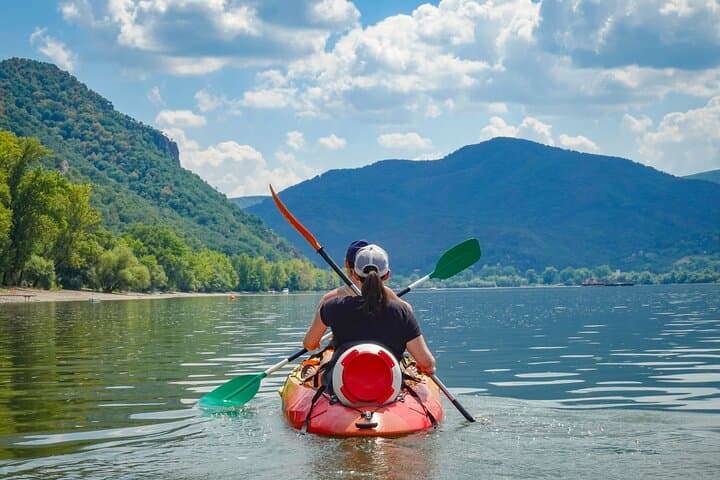
The route itself moves fast from narrative to practical. Expect roughly a 5-mile (8 km) hike through mixed deciduous woods with intermittent rock steps—plan for a few hundred feet of ascent to reach the Julianus tower viewpoint—and then a river section paddling in stable sit-on-top kayaks. The Danube in the Bend is typically calm in summer and late spring, the current gentle enough that paddling feels like guided drifting past green slopes and castle ruins.
Practical guidance: wear supportive trail shoes with good traction for the forest stretch and quick-dry shorts or pants for the paddle. Bring at least 1–1.5 liters of water, a light windlayer, sunscreen and a hat. Guides provide kayaking safety instruction, lifejackets and snacks, and pickup from Budapest in an air-conditioned van means you don’t need to arrange transport—expect a full-day outing of about 8 hours.
Timing matters: start early to get cooler hiking temperatures and quieter riverbanks, and save time at the sandy shore stops should the weather allow a swim. If you prefer more solitude, shoulder seasons (late spring, early fall) reduce crowds and keep the landscape vivid. Finish with a cold beer at the river bar and let the river’s rhythm, steady and unhurried, set the pace for the rest of your day.
moderate.
8 hours.
Suitable for people with a moderate fitness level: you should be comfortable hiking ~5 miles with some elevation and paddling for several kilometers.
The guided hike covers roughly 5 miles (about 8 km) of mixed forest trails with some rocky sections and a moderate climb to the Juliánus Lookout.
No prior experience required—guides provide a safety and technique briefing and use stable sit-on-top kayaks suited to beginners.
Yes—the tour includes pickup in an air-conditioned van from Budapest and returns you at the end of the day.
If conditions and weather allow, guides often stop at a sandy shore for a swim—bring swimwear and a towel.
Lifejackets, kayaks, paddles, basic safety instruction, snacks and a licensed guide are included.
Bring water, sun protection, quick-dry clothing, sturdy shoes, and any personal medications—weight limits or other specifics may be requested at booking.
The Danube Bend was strategic in medieval Hungary—Visegrád Castle controlled river traffic and later became a royal seat in the Middle Ages.
Respect riverbanks and avoid littering; local operators promote leave-no-trace paddling and often brief guests on protecting sensitive shoreline vegetation.
Gyorgy Kulcsar operates guided outdoor trips and adventures with an emphasis on safety, stewardship, and memorable experiences.

You step out of the minivan and the Danube reappears like a wide ribbon folding around the hills—cool air from the river brushing past your face, the sound of distant oars and bird calls. The guide points up: a slim silhouette of the Juliánus Lookout Tower perches above the trees. The first stretch is a forested climb; rocks and roots press at your boots, and the trees seem to lean in as if to watch you pass.
You step out of the minivan and the Danube reappears like a wide ribbon folding around the hills—cool air from the river brushing past your face, the sound of distant oars and bird calls. The guide points up: a slim silhouette of the Juliánus Lookout Tower perches above the trees. The first stretch is a forested climb; rocks and roots press at your boots, and the trees seem to lean in as if to watch you pass.
History and geology are never far from view here. The Danube Bend is where the river turns sharply northward, scooping out a corridor through Tertiary and Cretaceous sediments uplifted by the same forces that shaped the Carpathians. Medieval castles—most notably the reconstructed Visegrád fortress across the water—once controlled the river lanes and now provide dramatic ruins that punctuate the skyline.
Local culture still orbits the river. Nagymaros and Visegrád were small trade and ferry points for centuries; today the banks host a lively mix of anglers, families, and a handful of riverside cafés and a well-known “hippie” bar where kayakers wind down with a beer. Guides here combine natural history with practical river lore: which tree species mark old terraces, where otters might show, and why certain cliffs harbor different mosses.
The route itself moves fast from narrative to practical. Expect roughly a 5-mile (8 km) hike through mixed deciduous woods with intermittent rock steps—plan for a few hundred feet of ascent to reach the Julianus tower viewpoint—and then a river section paddling in stable sit-on-top kayaks. The Danube in the Bend is typically calm in summer and late spring, the current gentle enough that paddling feels like guided drifting past green slopes and castle ruins.
Practical guidance: wear supportive trail shoes with good traction for the forest stretch and quick-dry shorts or pants for the paddle. Bring at least 1–1.5 liters of water, a light windlayer, sunscreen and a hat. Guides provide kayaking safety instruction, lifejackets and snacks, and pickup from Budapest in an air-conditioned van means you don’t need to arrange transport—expect a full-day outing of about 8 hours.
Timing matters: start early to get cooler hiking temperatures and quieter riverbanks, and save time at the sandy shore stops should the weather allow a swim. If you prefer more solitude, shoulder seasons (late spring, early fall) reduce crowds and keep the landscape vivid. Finish with a cold beer at the river bar and let the river’s rhythm, steady and unhurried, set the pace for the rest of your day.