THE ADVENTURE COLLECTIVE® · Independent discovery and booking for outdoor travel

An early-morning drive from Cusco brings you to high puna, then a steep 1.5-hour ascent to Vinicunca’s iconic colored ridgeline at 5,020 m. Expect strong sun, thin air and sweeping Ausangate views on this full-day trek.
An early-morning drive from Cusco brings you to high puna, then a steep 1.5-hour ascent to Vinicunca’s iconic colored ridgeline at 5,020 m. Expect strong sun, thin air and sweeping Ausangate views on this full-day trek.
Before dawn you meet your guide in Cusco and slide southward through the Andean night, the city lights shrinking as the road rises into a skeleton of ridgelines and frozen pasture.
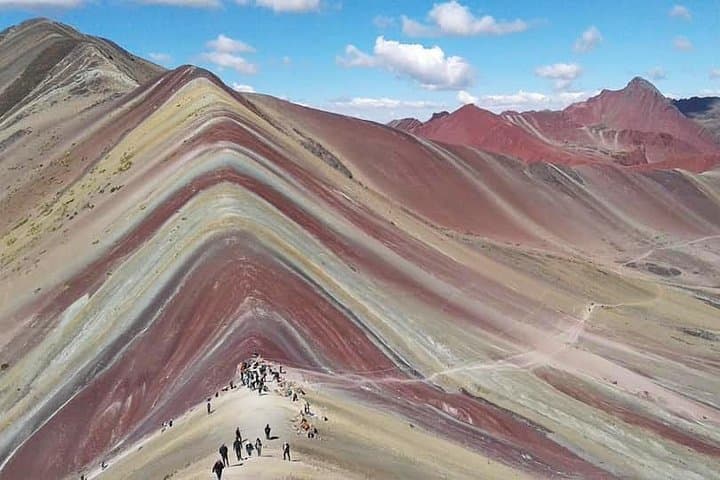
Three hours later the vehicle sighs to a stop at Llactoc, 4,500 m, and breakfast tastes like fuel for lungs thin with altitude. The trail immediately pitches uphill — a steady 1.5-hour climb that demands measured breathing more than fast feet — and then Ausangate, the region’s glaciated giant, fills the skyline while the peak of Vinicunca (5,020 m) opens in bands of ochre, rust, green and cream.
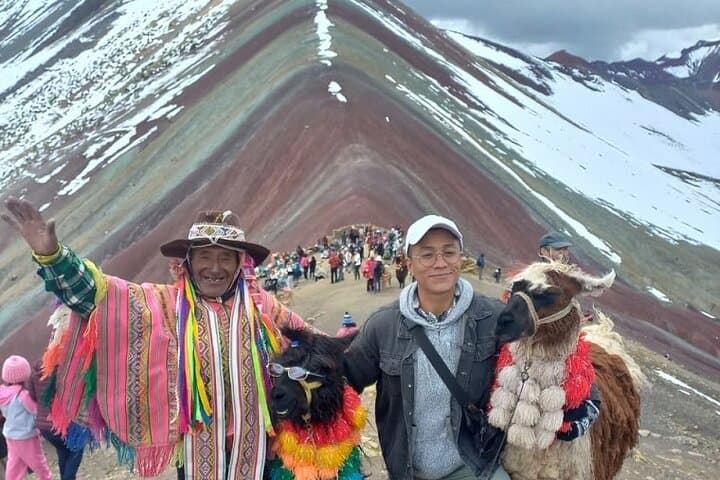
Those stripes are not paint but geology: oxidized iron, copper and other minerals in compacted sedimentary layers exposed by millennia of uplift and erosion. Cultural life at high altitude is visible too: herds of llamas and alpacas moving like punctuation across puna grasslands, and Quechua-speaking communities in traditional dress patching fields and guiding animals along ancient trails.
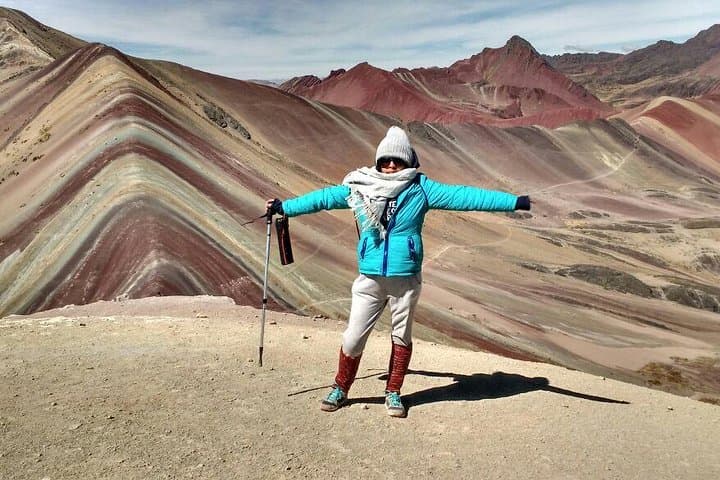
Practically, this is a long, high-altitude day. Expect 10 hours from hotel pickup to return, with steep uphill sections, loose scree and strong sun. Drink frequently, use layered clothing for rapid temperature swings, and consider trekking poles for the descent. Allow at least 48–72 hours in Cusco to acclimatize first; altitude, not distance, is the main challenge.
This full-day trek rewards persistent lungs and early starts with panoramic, otherworldly color and a clear sense of mountain time and Andean resilience.
Verified experiences and guided adventures in the surrounding area.
Operated by Cusco Destinations Tours & Travels · Cusco, Cusco
Before dawn you meet your guide in Cusco and slide southward through the Andean night, the city lights shrinking as the road rises into a skeleton of ridgelines and frozen pasture.
Three hours later the vehicle sighs to a stop at Llactoc, 4,500 m, and breakfast tastes like fuel for lungs thin with altitude. The trail immediately pitches uphill — a steady 1.5-hour climb that demands measured breathing more than fast feet — and then Ausangate, the region’s glaciated giant, fills the skyline while the peak of Vinicunca (5,020 m) opens in bands of ochre, rust, green and cream.
Those stripes are not paint but geology: oxidized iron, copper and other minerals in compacted sedimentary layers exposed by millennia of uplift and erosion. Cultural life at high altitude is visible too: herds of llamas and alpacas moving like punctuation across puna grasslands, and Quechua-speaking communities in traditional dress patching fields and guiding animals along ancient trails.
Practically, this is a long, high-altitude day. Expect 10 hours from hotel pickup to return, with steep uphill sections, loose scree and strong sun. Drink frequently, use layered clothing for rapid temperature swings, and consider trekking poles for the descent. Allow at least 48–72 hours in Cusco to acclimatize first; altitude, not distance, is the main challenge.
This full-day trek rewards persistent lungs and early starts with panoramic, otherworldly color and a clear sense of mountain time and Andean resilience.
challenging.
10 hours.
Good aerobic fitness and prior exposure to high altitude; able to sustain a steep 1.5-hour ascent and return trek.
The uphill section takes about 1.5 hours from the Llactoc trailhead, with a similar 1.5-hour descent; the full excursion from Cusco is typically a 10-hour day including driving and breaks.
Yes—spend at least 48–72 hours in Cusco (3,400 m) or do shorter acclimatizing walks; many operators will not recommend the trek for those newly arrived to high altitude.
Young children and travelers with limited fitness or cardiovascular issues will struggle at the altitude and steep sections; consult your provider and consider shorter alternatives at lower elevation.
There is no special national park permit for the basic day trek, but regulated access and local entrance fees or transit rules can apply—confirm with your tour operator.
The area sits on ancient Andean grazing routes tied to Quechua communities; many local families still practice traditional herding and weaving.
High visitor numbers and fragile soils make staying on marked paths essential; many local guides support community-managed entrance fees that fund trail maintenance.
Cusco Destinations Tours & Travels operates guided outdoor trips and adventures with an emphasis on safety, stewardship, and memorable experiences.
Before dawn you meet your guide in Cusco and slide southward through the Andean night, the city lights shrinking as the road rises into a skeleton of ridgelines and frozen pasture.
Three hours later the vehicle sighs to a stop at Llactoc, 4,500 m, and breakfast tastes like fuel for lungs thin with altitude. The trail immediately pitches uphill — a steady 1.5-hour climb that demands measured breathing more than fast feet — and then Ausangate, the region’s glaciated giant, fills the skyline while the peak of Vinicunca (5,020 m) opens in bands of ochre, rust, green and cream.
Those stripes are not paint but geology: oxidized iron, copper and other minerals in compacted sedimentary layers exposed by millennia of uplift and erosion. Cultural life at high altitude is visible too: herds of llamas and alpacas moving like punctuation across puna grasslands, and Quechua-speaking communities in traditional dress patching fields and guiding animals along ancient trails.
Practically, this is a long, high-altitude day. Expect 10 hours from hotel pickup to return, with steep uphill sections, loose scree and strong sun. Drink frequently, use layered clothing for rapid temperature swings, and consider trekking poles for the descent. Allow at least 48–72 hours in Cusco to acclimatize first; altitude, not distance, is the main challenge.
This full-day trek rewards persistent lungs and early starts with panoramic, otherworldly color and a clear sense of mountain time and Andean resilience.
Before dawn you meet your guide in Cusco and slide southward through the Andean night, the city lights shrinking as the road rises into a skeleton of ridgelines and frozen pasture.
Three hours later the vehicle sighs to a stop at Llactoc, 4,500 m, and breakfast tastes like fuel for lungs thin with altitude. The trail immediately pitches uphill — a steady 1.5-hour climb that demands measured breathing more than fast feet — and then Ausangate, the region’s glaciated giant, fills the skyline while the peak of Vinicunca (5,020 m) opens in bands of ochre, rust, green and cream.
Those stripes are not paint but geology: oxidized iron, copper and other minerals in compacted sedimentary layers exposed by millennia of uplift and erosion. Cultural life at high altitude is visible too: herds of llamas and alpacas moving like punctuation across puna grasslands, and Quechua-speaking communities in traditional dress patching fields and guiding animals along ancient trails.
Practically, this is a long, high-altitude day. Expect 10 hours from hotel pickup to return, with steep uphill sections, loose scree and strong sun. Drink frequently, use layered clothing for rapid temperature swings, and consider trekking poles for the descent. Allow at least 48–72 hours in Cusco to acclimatize first; altitude, not distance, is the main challenge.
This full-day trek rewards persistent lungs and early starts with panoramic, otherworldly color and a clear sense of mountain time and Andean resilience.