THE ADVENTURE COLLECTIVE® · Independent discovery and booking for outdoor travel

Pedal above a canyon, clip into a Via Ferrata, and rap down a rock face on a four-hour adventure outside Cusco. This Cachimayo route blends technical exposure with fast-moving thrills—perfect for travelers with moderate fitness seeking a compact adrenaline dose.
Pedal above a canyon, clip into a Via Ferrata, and rap down a rock face on a four-hour adventure outside Cusco. This Cachimayo route blends technical exposure with fast-moving thrills—perfect for travelers with moderate fitness seeking a compact adrenaline dose.
The bus eases out of Cusco and the stone city falls behind; in its place the canyon air sharpens, and the Cachimayo valley stretches like a raw promise. You step off at a dusty ridge, harness clipped and helmet snug, and the guide’s voice becomes the steady line that pulls you through the next four hours. First comes the Via Ferrata—a steel ladder welded into rock—40–50 meters of vertical exposure that forces you to look down and keep moving. At the plateau the sky bike waits: two suspended lines where you pedal above the gorge, wind pulling at your shirt, the valley daring you to relax into the speed. A 25-meter rappel follows, then a final 15-meter climb that returns you to terra firma, breath warm and hands salt-streaked from the rope.
Verified experiences and guided adventures in the surrounding area.
Operated by Peru Andes Top · Cusco, Cusco
The bus eases out of Cusco and the stone city falls behind; in its place the canyon air sharpens, and the Cachimayo valley stretches like a raw promise. You step off at a dusty ridge, harness clipped and helmet snug, and the guide’s voice becomes the steady line that pulls you through the next four hours. First comes the Via Ferrata—a steel ladder welded into rock—40–50 meters of vertical exposure that forces you to look down and keep moving. At the plateau the sky bike waits: two suspended lines where you pedal above the gorge, wind pulling at your shirt, the valley daring you to relax into the speed. A 25-meter rappel follows, then a final 15-meter climb that returns you to terra firma, breath warm and hands salt-streaked from the rope.
Geologically, Cachimayo is carved from uplifted Andean strata—layers of sandstone and shale folded by the same tectonics that built Machu Picchu’s backdrop. The route itself sits where the river’s erosive work exposed sheer faces suitable for via ferrata anchors. Culturally, the valley is part of Greater Cusco’s rural ring; local communities still tend terraced fields downstream and maintain ancestral pathways that modern operators now use as approach trails.
The operator meets at Plaza Regocijos in Cusco, then drives about 25 minutes to the site with a short 10-minute walk to the course. Guides are bilingual, and standard safety equipment—helmet, harness, gloves, climbing shoes, carabiners—is provided. Expect two sky-bike lines totaling roughly 250 meters roundtrip and up to 50 meters in vertical exposure from the highest cables. Photographers get excellent angles from the Via Ferrata ledges and the sky-bike platforms—bring a secure strap.
Practicalities: this is an activity for people with at least moderate fitness; you’ll need steady balance and some upper-body strength for the ferrata and rappel transition. Wear grippy trail shoes (climbing shoes are provided but day shoes are easier for the approach), breathable layers, and sun protection—the high-altitude sun in the Andes is relentless. Hydrate well before you go; altitude and exertion compound quickly. The full excursion runs about four hours door-to-door, including transport and the safety briefing, and operators recommend cancelling in poor weather.
Why go? It’s compact, high-adrenaline exposure set against Cusco’s highland geology—an efficient way to add a hard-earned photo and a story of heights to an itinerary otherwise filled with ruins. For first-timers the guides’ steady, methodical pace makes the technical parts approachable; for adrenaline-seekers the sky bike’s suspended pedaling is pure, uncomplicated thrill.
If you leave with chalked hands and a grin, you’ll have done more than an attraction—you’ll have moved through a section of the Andes that insists on being noticed.
challenging.
3–4 hours.
Moderate to good cardiovascular fitness and basic upper-body strength for balance and short pulls on the via ferrata and rappel transitions.
The full experience is about four hours including transport from Plaza Regocijos, safety briefing, the via ferrata, two sky-bike lines, a 25m rappel, a final 15m climb, and return transport.
No; guides provide instruction and constant belay points, but participants should be comfortable with heights and have moderate fitness.
Yes—helmet, harness, gloves, climbing shoes and carabiners are supplied and included in the price.
Not recommended for those with spinal, heart problems, or pregnant travelers; a moderate fitness level is required and booking collects passport and medical info.
Bring grippy shoes, sun protection, a light wind layer, water, and ID/passport details. Avoid loose clothing that can snag on cables.
The operator cancels for bad weather and offers a refund if cancelled at least 24 hours prior; safety decisions are weather-dependent due to exposed metal lines and lightning risk.
The Cachimayo valley is part of the greater Cusco watershed, with small farming communities that historically linked highland settlements to the city via pack routes.
Operators limit group sizes and use fixed anchors to minimize repeated trampling; stick to paths and bring out any trash to protect fragile highland soils.
Peru Andes Top operates guided outdoor trips and adventures with an emphasis on safety, stewardship, and memorable experiences.
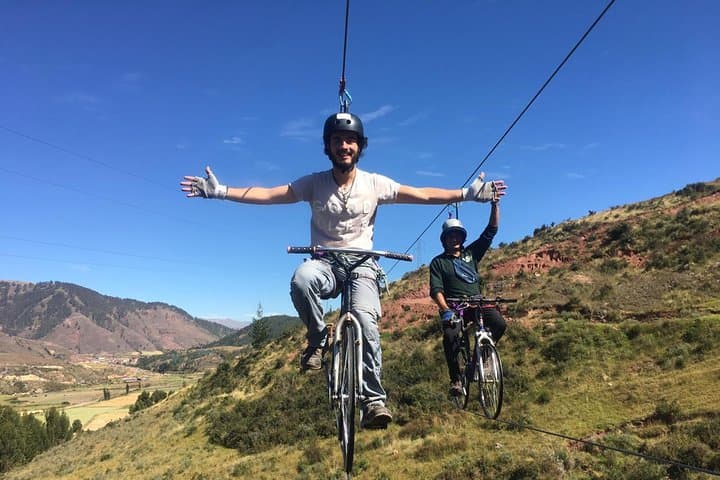
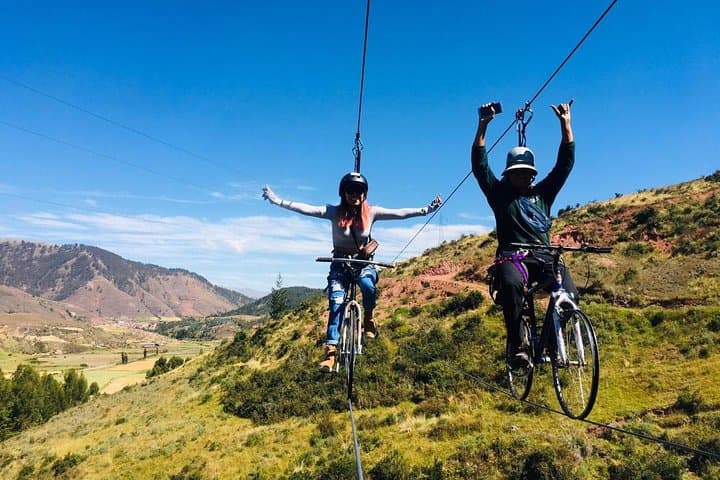
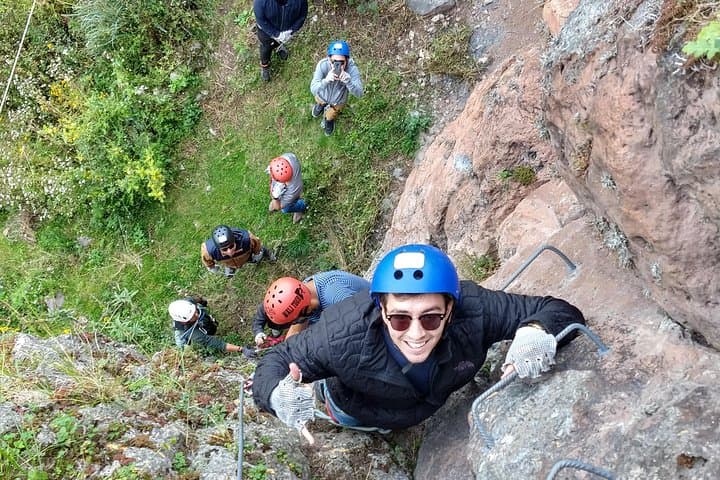
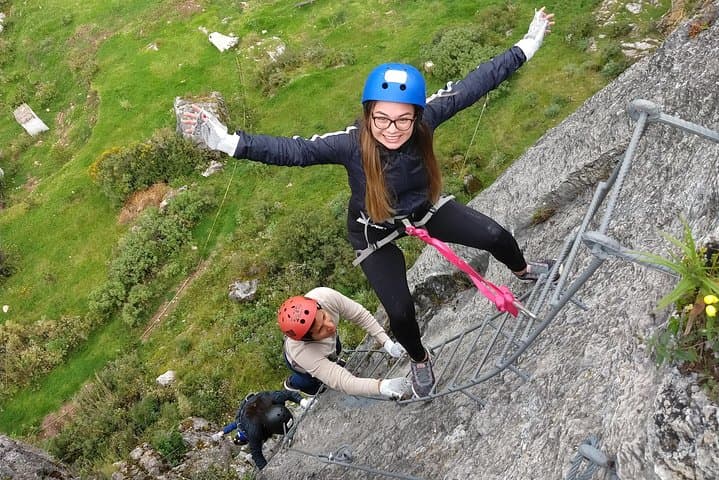
The bus eases out of Cusco and the stone city falls behind; in its place the canyon air sharpens, and the Cachimayo valley stretches like a raw promise. You step off at a dusty ridge, harness clipped and helmet snug, and the guide’s voice becomes the steady line that pulls you through the next four hours. First comes the Via Ferrata—a steel ladder welded into rock—40–50 meters of vertical exposure that forces you to look down and keep moving. At the plateau the sky bike waits: two suspended lines where you pedal above the gorge, wind pulling at your shirt, the valley daring you to relax into the speed. A 25-meter rappel follows, then a final 15-meter climb that returns you to terra firma, breath warm and hands salt-streaked from the rope.
The bus eases out of Cusco and the stone city falls behind; in its place the canyon air sharpens, and the Cachimayo valley stretches like a raw promise. You step off at a dusty ridge, harness clipped and helmet snug, and the guide’s voice becomes the steady line that pulls you through the next four hours. First comes the Via Ferrata—a steel ladder welded into rock—40–50 meters of vertical exposure that forces you to look down and keep moving. At the plateau the sky bike waits: two suspended lines where you pedal above the gorge, wind pulling at your shirt, the valley daring you to relax into the speed. A 25-meter rappel follows, then a final 15-meter climb that returns you to terra firma, breath warm and hands salt-streaked from the rope.
Geologically, Cachimayo is carved from uplifted Andean strata—layers of sandstone and shale folded by the same tectonics that built Machu Picchu’s backdrop. The route itself sits where the river’s erosive work exposed sheer faces suitable for via ferrata anchors. Culturally, the valley is part of Greater Cusco’s rural ring; local communities still tend terraced fields downstream and maintain ancestral pathways that modern operators now use as approach trails.
The operator meets at Plaza Regocijos in Cusco, then drives about 25 minutes to the site with a short 10-minute walk to the course. Guides are bilingual, and standard safety equipment—helmet, harness, gloves, climbing shoes, carabiners—is provided. Expect two sky-bike lines totaling roughly 250 meters roundtrip and up to 50 meters in vertical exposure from the highest cables. Photographers get excellent angles from the Via Ferrata ledges and the sky-bike platforms—bring a secure strap.
Practicalities: this is an activity for people with at least moderate fitness; you’ll need steady balance and some upper-body strength for the ferrata and rappel transition. Wear grippy trail shoes (climbing shoes are provided but day shoes are easier for the approach), breathable layers, and sun protection—the high-altitude sun in the Andes is relentless. Hydrate well before you go; altitude and exertion compound quickly. The full excursion runs about four hours door-to-door, including transport and the safety briefing, and operators recommend cancelling in poor weather.
Why go? It’s compact, high-adrenaline exposure set against Cusco’s highland geology—an efficient way to add a hard-earned photo and a story of heights to an itinerary otherwise filled with ruins. For first-timers the guides’ steady, methodical pace makes the technical parts approachable; for adrenaline-seekers the sky bike’s suspended pedaling is pure, uncomplicated thrill.
If you leave with chalked hands and a grin, you’ll have done more than an attraction—you’ll have moved through a section of the Andes that insists on being noticed.