THE ADVENTURE COLLECTIVE® · Independent discovery and booking for outdoor travel

A compact, four-hour shore excursion through Willemstad that pairs UNESCO-listed colonial streets, street art, a liqueur tasting and a beach stop—designed for cruise passengers who want a concise but complete taste of Curaçao.
A compact, four-hour shore excursion through Willemstad that pairs UNESCO-listed colonial streets, street art, a liqueur tasting and a beach stop—designed for cruise passengers who want a concise but complete taste of Curaçao.
Stepping off the gangway in Willemstad, the island unfolds faster than most visitors expect: a stretch of candy-colored Dutch façades fronting a glittering harbor, palms bowing into salt-scented trade winds, and an itinerary compact enough to show the island’s contradictions in a single morning.
Verified experiences and guided adventures in the surrounding area.
Operated by Irie Tours · Willemstad, Curaçao
Stepping off the gangway in Willemstad, the island unfolds faster than most visitors expect: a stretch of candy-colored Dutch façades fronting a glittering harbor, palms bowing into salt-scented trade winds, and an itinerary compact enough to show the island’s contradictions in a single morning.
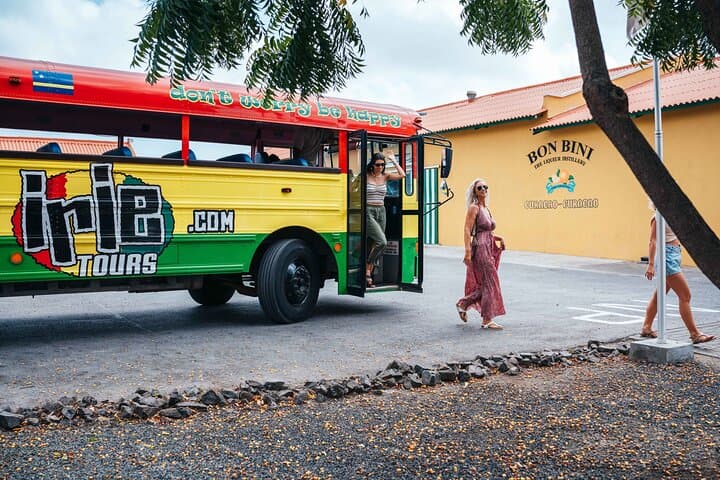
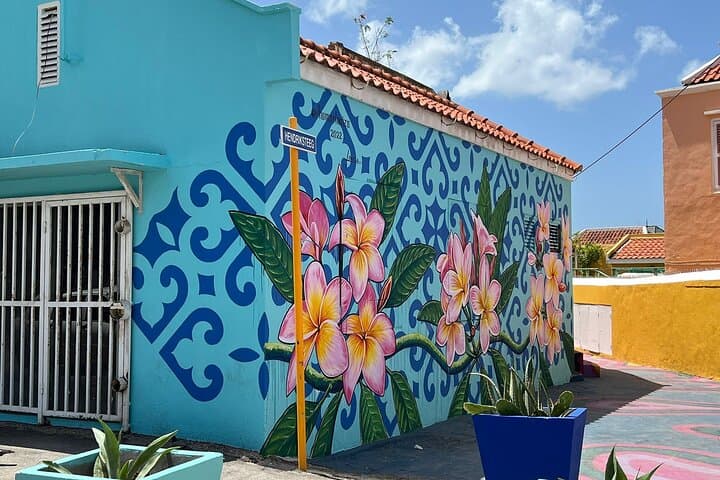
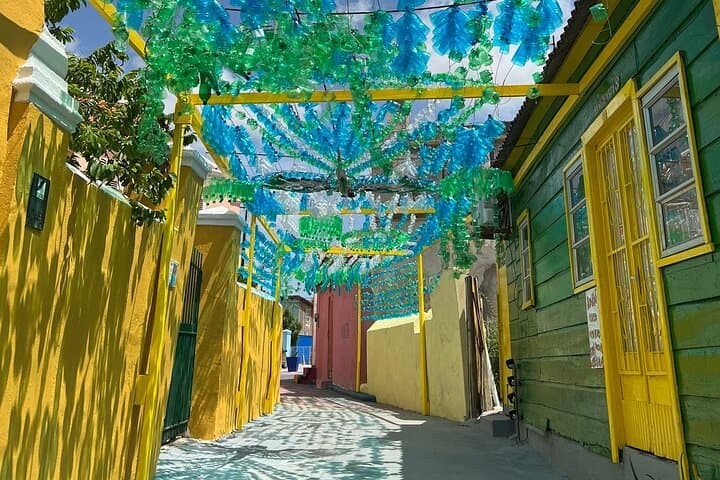
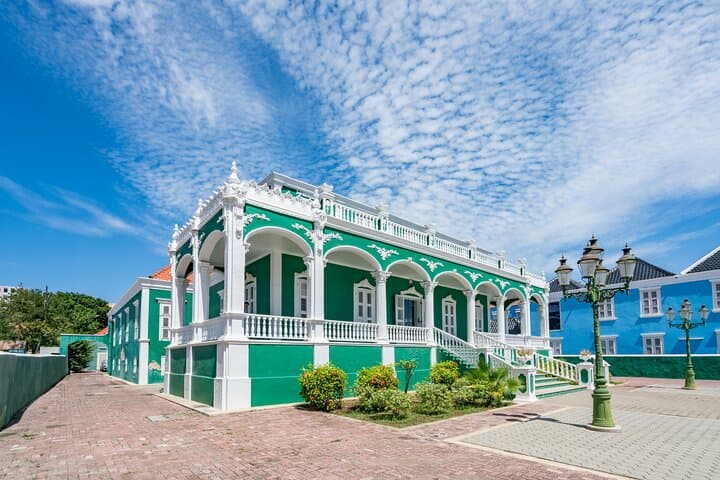
This four-hour shore excursion threads historic districts, murals, a tasting at Landhuis Chobolobo and a beach stop at Kokomo Beach, built for cruise passengers who want a quick, confident introduction to Curaçao. The driving shots across the bay give context—Scharloo’s restored mansions recall the 17th- and 18th-century plantation wealth tied to the Dutch West India Company—while Frederikstraat’s alleyways and recent murals mark a contemporary cultural pulse where local artists have reclaimed public space.
Geologically, Curaçao is a raised limestone platform. Walks past salt pans and low scrubland reveal how karst and evaporative basins create shallow lagoons that flamingos favor; the island’s distinctive low-relief means viewpoints such as Fort Waakzaamheid deliver broad, ship-in-harbor panoramas rather than alpine drama.
Culturally, this tour balances heritage and hospitality: the UNESCO-listed historic center (Handelskade and Scharloo) speaks to colonial trade and immigrant communities, while Landhuis Chobolobo offers a short introduction to the island’s signature spirit—blue curaçao—paired with local storytelling at a family-owned estate.
Practical guidance is clear: the tour runs four hours and is designed around cruise schedules. Meet at Mega Pier 1 under the white tent (or at Mathey Wharf when docked there). The pace is easy—several short walks and photo stops—so it works for families and most fitness levels; maximum group size is about 48. Bottled water is included, and the beach stop allows swimming or snorkeling for roughly an hour; bring water shoes for the shoreline and reef, reef-safe sunscreen, and a towel.
Timing matters—mornings are generally calmer for photography and wildlife viewing; under trade winds the salt flats can briefly glow pink with flamingos. Accessibility is reasonable but not barrier-free for all sections; guests with mobility constraints should check in advance.
In four hours you’ll get an efficient, textured portrait of Curaçao: colonial streets and modern murals, salt flats and flamingos, a tasting that ties local craft to place, and a brief saltwater interlude. For many visitors, it’s the ideal shore excursion—concise, varied and anchored to the practical rhythms of cruise travel.
easy.
4 hours.
Light walking on flat streets and short beach approaches; suitable for most fitness levels
Meet at the white tent at Mega Pier 1 near the souvenir shops; if your ship is at Mathey Wharf a company representative will meet you there.
Yes, bottled water is included on the tour to help with hydration in the tropical heat.
Yes, at the end of the tour you can choose to be dropped off in town—confirm your reboarding plan and ship time if you do.
No—flamingo sightings are likely but depend on season, seasonality of the salt flats and local bird movements.
Snorkeling availability varies; bring your own mask if you prefer, otherwise ask the guide if rentals are available at the beach restaurant.
Yes—strollers are possible for short walks and infants must sit on an adult’s lap; the tour is rated easy for most families.
Willemstad’s waterfront and Scharloo district reflect Dutch colonial architecture and the island’s role in Caribbean trade; parts of the city are UNESCO-listed for their urban heritage.
Visitors are urged to use reef-safe sunscreen and avoid walking on coral or in salt flats—both are sensitive habitats and crucial to local bird and marine life.
Irie Tours operates guided outdoor trips and adventures with an emphasis on safety, stewardship, and memorable experiences.
Stepping off the gangway in Willemstad, the island unfolds faster than most visitors expect: a stretch of candy-colored Dutch façades fronting a glittering harbor, palms bowing into salt-scented trade winds, and an itinerary compact enough to show the island’s contradictions in a single morning.
Stepping off the gangway in Willemstad, the island unfolds faster than most visitors expect: a stretch of candy-colored Dutch façades fronting a glittering harbor, palms bowing into salt-scented trade winds, and an itinerary compact enough to show the island’s contradictions in a single morning.
This four-hour shore excursion threads historic districts, murals, a tasting at Landhuis Chobolobo and a beach stop at Kokomo Beach, built for cruise passengers who want a quick, confident introduction to Curaçao. The driving shots across the bay give context—Scharloo’s restored mansions recall the 17th- and 18th-century plantation wealth tied to the Dutch West India Company—while Frederikstraat’s alleyways and recent murals mark a contemporary cultural pulse where local artists have reclaimed public space.
Geologically, Curaçao is a raised limestone platform. Walks past salt pans and low scrubland reveal how karst and evaporative basins create shallow lagoons that flamingos favor; the island’s distinctive low-relief means viewpoints such as Fort Waakzaamheid deliver broad, ship-in-harbor panoramas rather than alpine drama.
Culturally, this tour balances heritage and hospitality: the UNESCO-listed historic center (Handelskade and Scharloo) speaks to colonial trade and immigrant communities, while Landhuis Chobolobo offers a short introduction to the island’s signature spirit—blue curaçao—paired with local storytelling at a family-owned estate.
Practical guidance is clear: the tour runs four hours and is designed around cruise schedules. Meet at Mega Pier 1 under the white tent (or at Mathey Wharf when docked there). The pace is easy—several short walks and photo stops—so it works for families and most fitness levels; maximum group size is about 48. Bottled water is included, and the beach stop allows swimming or snorkeling for roughly an hour; bring water shoes for the shoreline and reef, reef-safe sunscreen, and a towel.
Timing matters—mornings are generally calmer for photography and wildlife viewing; under trade winds the salt flats can briefly glow pink with flamingos. Accessibility is reasonable but not barrier-free for all sections; guests with mobility constraints should check in advance.
In four hours you’ll get an efficient, textured portrait of Curaçao: colonial streets and modern murals, salt flats and flamingos, a tasting that ties local craft to place, and a brief saltwater interlude. For many visitors, it’s the ideal shore excursion—concise, varied and anchored to the practical rhythms of cruise travel.