THE ADVENTURE COLLECTIVE® · Independent discovery and booking for outdoor travel

Learn to surf at Costa da Caparica where steady beach breaks and experienced instructors make for an ideal two‑hour beginner session. This concise guide covers what to expect, local context, and practical tips to maximize your lesson.
Learn to surf at Costa da Caparica where steady beach breaks and experienced instructors make for an ideal two‑hour beginner session. This concise guide covers what to expect, local context, and practical tips to maximize your lesson.
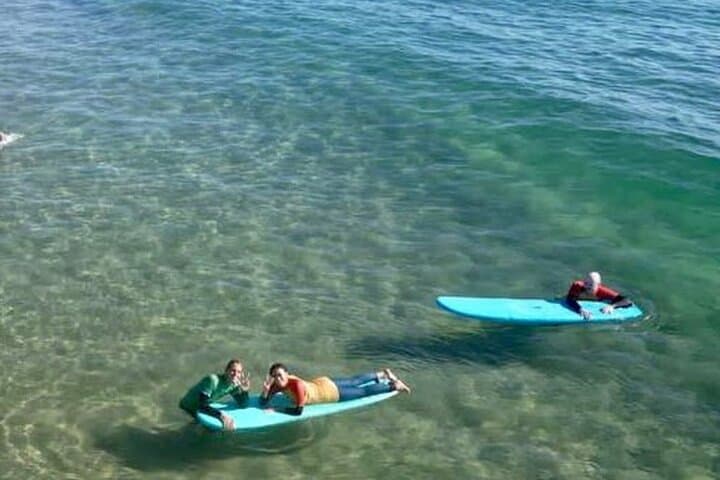
The Atlantic breathes cold and clean across Costa da Caparica as you sling a wet suit over your shoulders and eye a white ribbon of breaking waves.
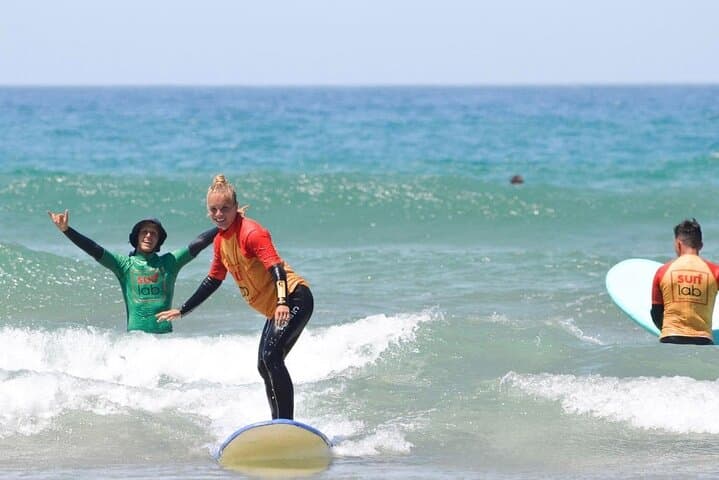
On the sand the instructors gather surfboards like tools, calling out paddle technique and timing; beyond them the 25 de Abril Bridge pins Lisbon to the horizon. The beach’s long, mellow peaks make this stretch one of Portugal’s most reliable learner breaks, where waves roll in predictable sets and the shore offers easy egress.
Historically a string of fishing hamlets, Costa da Caparica swung toward surf culture in the late 20th century when Lisbon’s urban surfers began chasing consistent lefts across the river. Geologically the coastline is a broad sandy platform backed by dunes and low cliffs carved from Pleistocene marine terraces — it’s beach sand more than reef, which keeps wipeouts mostly soft.
Local life still orbits the sea: simple seafood shacks, surf schools, and seasonal markets. Expect Portuguese surf etiquette — politeness on the lineup and clear signals from instructors.
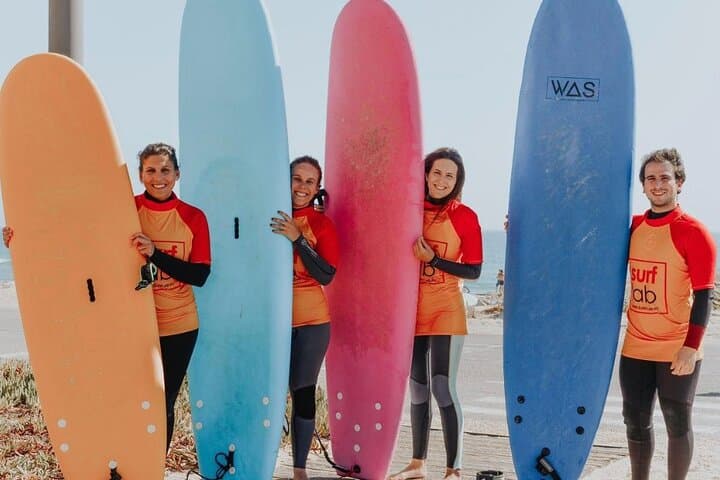
Practical guidance: lessons run about two hours and include boards, wetsuits, leashes and lockers; groups are small (roughly 5:1). Arrive 20–40 minutes early for briefing and changing, hydrate well, and wear a swimsuit under your suit. Morning sessions often offer cleaner conditions and lighter winds; afternoons can be windier but warmer.
Safety notes: know your limits in shorebreak, listen to the instructor’s exit plan, and protect skin with reef-appropriate sunscreen. After the lesson, walk the promenade to cool down with a coffee and watch local surfers working longer rides as the tide shifts.
Verified experiences and guided adventures in the surrounding area.
Operated by SurfLab Surf School · Costa da Caparica, Setúbal
The Atlantic breathes cold and clean across Costa da Caparica as you sling a wet suit over your shoulders and eye a white ribbon of breaking waves.
On the sand the instructors gather surfboards like tools, calling out paddle technique and timing; beyond them the 25 de Abril Bridge pins Lisbon to the horizon. The beach’s long, mellow peaks make this stretch one of Portugal’s most reliable learner breaks, where waves roll in predictable sets and the shore offers easy egress.
Historically a string of fishing hamlets, Costa da Caparica swung toward surf culture in the late 20th century when Lisbon’s urban surfers began chasing consistent lefts across the river. Geologically the coastline is a broad sandy platform backed by dunes and low cliffs carved from Pleistocene marine terraces — it’s beach sand more than reef, which keeps wipeouts mostly soft.
Local life still orbits the sea: simple seafood shacks, surf schools, and seasonal markets. Expect Portuguese surf etiquette — politeness on the lineup and clear signals from instructors.
Practical guidance: lessons run about two hours and include boards, wetsuits, leashes and lockers; groups are small (roughly 5:1). Arrive 20–40 minutes early for briefing and changing, hydrate well, and wear a swimsuit under your suit. Morning sessions often offer cleaner conditions and lighter winds; afternoons can be windier but warmer.
Safety notes: know your limits in shorebreak, listen to the instructor’s exit plan, and protect skin with reef-appropriate sunscreen. After the lesson, walk the promenade to cool down with a coffee and watch local surfers working longer rides as the tide shifts.
easy.
2 hours.
Suitable for most fitness levels — basic paddling strength and swimming comfort recommended
No — the class is designed for beginners; instructors teach basic paddling, pop‑up technique, and wave selection.
Yes — wetsuit, surfboard, leash and wax are included, plus lockers and showers at the facility.
Age requirements vary; the operator accepts a wide range of ages but asks for booking information including date of birth to confirm eligibility.
Yes — lessons are cancellable for bad weather; you’ll typically receive a full refund if canceled at least 24 hours in advance.
Costa da Caparica evolved from small fishing communities into a surf hotspot in the late 20th century as Lisbon surfers sought accessible Atlantic breaks.
Dune restoration and beach cleanups are active locally — respect marked dune areas, dispose of waste, and use reef‑safe sunscreens to reduce impact.
SurfLab Surf School operates guided outdoor trips and adventures with an emphasis on safety, stewardship, and memorable experiences.
The Atlantic breathes cold and clean across Costa da Caparica as you sling a wet suit over your shoulders and eye a white ribbon of breaking waves.
On the sand the instructors gather surfboards like tools, calling out paddle technique and timing; beyond them the 25 de Abril Bridge pins Lisbon to the horizon. The beach’s long, mellow peaks make this stretch one of Portugal’s most reliable learner breaks, where waves roll in predictable sets and the shore offers easy egress.
Historically a string of fishing hamlets, Costa da Caparica swung toward surf culture in the late 20th century when Lisbon’s urban surfers began chasing consistent lefts across the river. Geologically the coastline is a broad sandy platform backed by dunes and low cliffs carved from Pleistocene marine terraces — it’s beach sand more than reef, which keeps wipeouts mostly soft.
Local life still orbits the sea: simple seafood shacks, surf schools, and seasonal markets. Expect Portuguese surf etiquette — politeness on the lineup and clear signals from instructors.
Practical guidance: lessons run about two hours and include boards, wetsuits, leashes and lockers; groups are small (roughly 5:1). Arrive 20–40 minutes early for briefing and changing, hydrate well, and wear a swimsuit under your suit. Morning sessions often offer cleaner conditions and lighter winds; afternoons can be windier but warmer.
Safety notes: know your limits in shorebreak, listen to the instructor’s exit plan, and protect skin with reef-appropriate sunscreen. After the lesson, walk the promenade to cool down with a coffee and watch local surfers working longer rides as the tide shifts.
The Atlantic breathes cold and clean across Costa da Caparica as you sling a wet suit over your shoulders and eye a white ribbon of breaking waves.
On the sand the instructors gather surfboards like tools, calling out paddle technique and timing; beyond them the 25 de Abril Bridge pins Lisbon to the horizon. The beach’s long, mellow peaks make this stretch one of Portugal’s most reliable learner breaks, where waves roll in predictable sets and the shore offers easy egress.
Historically a string of fishing hamlets, Costa da Caparica swung toward surf culture in the late 20th century when Lisbon’s urban surfers began chasing consistent lefts across the river. Geologically the coastline is a broad sandy platform backed by dunes and low cliffs carved from Pleistocene marine terraces — it’s beach sand more than reef, which keeps wipeouts mostly soft.
Local life still orbits the sea: simple seafood shacks, surf schools, and seasonal markets. Expect Portuguese surf etiquette — politeness on the lineup and clear signals from instructors.
Practical guidance: lessons run about two hours and include boards, wetsuits, leashes and lockers; groups are small (roughly 5:1). Arrive 20–40 minutes early for briefing and changing, hydrate well, and wear a swimsuit under your suit. Morning sessions often offer cleaner conditions and lighter winds; afternoons can be windier but warmer.
Safety notes: know your limits in shorebreak, listen to the instructor’s exit plan, and protect skin with reef-appropriate sunscreen. After the lesson, walk the promenade to cool down with a coffee and watch local surfers working longer rides as the tide shifts.