THE ADVENTURE COLLECTIVE® · Independent discovery and booking for outdoor travel

A five‑to‑six hour loop from St. George’s that pairs a cool swim beneath Concord’s tiered falls with a hands‑on tour of Grenada’s chocolate gardens and a brief rainforest visit to Grand Etang. Efficient, sensory, and ideal for time‑pressed travelers.
A five‑to‑six hour loop from St. George’s that pairs a cool swim beneath Concord’s tiered falls with a hands‑on tour of Grenada’s chocolate gardens and a brief rainforest visit to Grand Etang. Efficient, sensory, and ideal for time‑pressed travelers.
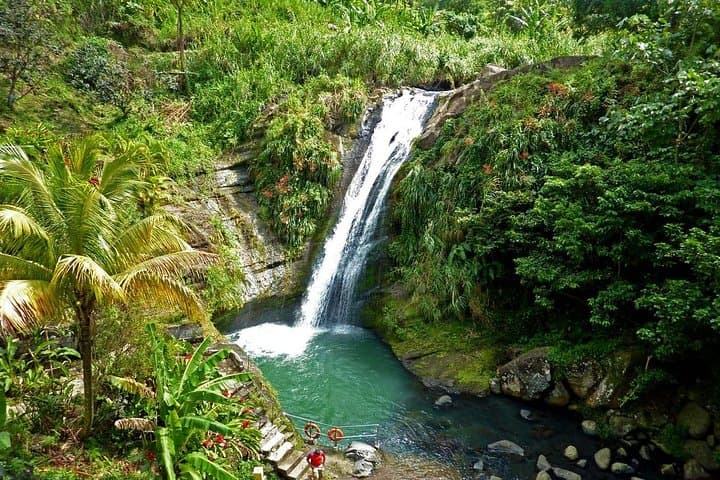
By the time the van peels away from the harbor, St. George’s red roofs and pastel facades shrink into a ribbon of sea and coconut palms. The road climbs, narrowing between spice-scented hedges and small wooden houses with bright shutters. Then the mountain opens—not wide, but enough for a trio of waterfalls to find a place in the folds of the island. Concord Waterfalls drops in tiers through emerald ferns; the water dares you to step in and let the cool current press against your skin.
Verified experiences and guided adventures in the surrounding area.
Operated by Henry Safari Tours · St. George's, Saint George
By the time the van peels away from the harbor, St. George’s red roofs and pastel facades shrink into a ribbon of sea and coconut palms. The road climbs, narrowing between spice-scented hedges and small wooden houses with bright shutters. Then the mountain opens—not wide, but enough for a trio of waterfalls to find a place in the folds of the island. Concord Waterfalls drops in tiers through emerald ferns; the water dares you to step in and let the cool current press against your skin.
This half-day tour threads together three of Grenada’s clearest stories: colonial settlement and market towns, the island’s volcanic geology, and its global role in chocolate. St. George’s, founded by the French in the 17th century and rebuilt after earthquakes and hurricanes, still carries that layered history in its narrow streets and Georgian steps. Drive along the west coast past Gouyave, a working fishing town whose Friday night fish fry is a rite for locals, then turn inland where lava flows and heavy rainfall carved basins that now hold Grand Etang Lake.
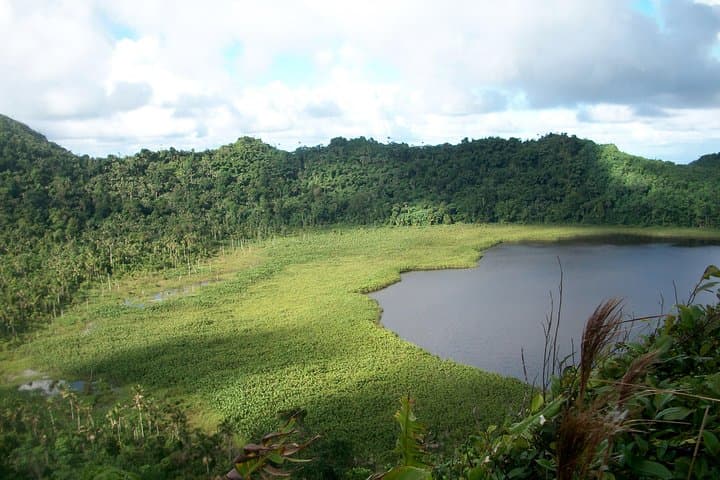
Geology is visible here—bumpy ridgelines and the caldera that contains Grand Etang—where rainforest clings to steep banks and strangler figs weave trunks together. At the chocolate plantation you walk among cocoa pods, learning how local farmers ferment and dry beans that become some of the world’s single-origin chocolate. The tasting is small, honest—less about sugar and more about terroir: spice trees nearby, volcanic soil underfoot, and Caribbean humidity shaping flavor.
Practicalities are simple but worth noting. The tour runs roughly five to six hours with air-conditioned transport and hotel or port pickup. Paths at Concord are short but can be slippery; expect stepping stones and roots. Guides keep groups compact (max ~13) and provide local context—history, farming cycles, and conservation efforts in Grand Etang National Park.
Bring a swimsuit and towel if you plan to swim; water is cool enough to sharpen the senses and rinse out salt and sun. Footwear that handles river rocks and sudden showers will let you move freely. Weather can shift quickly; even on a bright morning, a light rain jacket folds neatly into your daypack.
For travelers with limited time in Grenada, this loop is efficient: a city pass-through, a seaside glance, a mountain plunge, and a lesson in chocolate—each stop a compact slice of the island’s character. It’s an easy, sensory-rich half-day that leaves you refreshed and a little more connected to how this spice island tastes, sounds, and moves.
easy.
5–6 hours.
Suitable for most travelers; requires short, easy walks on uneven terrain and the ability to climb a few steps and river rocks.
The tour lasts approximately 5–6 hours from pickup to drop‑off.
Yes—guides typically allow swimming; bring swimwear and a towel.
Yes—hotel and port pickup and drop‑off are included; exact pickup times are confirmed after booking.
Families are welcome; infants must sit on an adult’s lap and the tour is considered easy for most ages.
No—the tour is not wheelchair accessible due to uneven trails and steps at natural sites.
Guides are local and typically speak English; tipping is appreciated but discretionary.
St. George’s and the west coast carry layers of colonial history—French settlement followed by British control—reflected in architecture and plantation land use.
Grand Etang is Grenada’s largest protected area; stick to marked paths, avoid disturbing wildlife, and support local farms whose sustainable practices help preserve soil and forest cover.
Henry Safari Tours operates guided outdoor trips and adventures with an emphasis on safety, stewardship, and memorable experiences.
By the time the van peels away from the harbor, St. George’s red roofs and pastel facades shrink into a ribbon of sea and coconut palms. The road climbs, narrowing between spice-scented hedges and small wooden houses with bright shutters. Then the mountain opens—not wide, but enough for a trio of waterfalls to find a place in the folds of the island. Concord Waterfalls drops in tiers through emerald ferns; the water dares you to step in and let the cool current press against your skin.
By the time the van peels away from the harbor, St. George’s red roofs and pastel facades shrink into a ribbon of sea and coconut palms. The road climbs, narrowing between spice-scented hedges and small wooden houses with bright shutters. Then the mountain opens—not wide, but enough for a trio of waterfalls to find a place in the folds of the island. Concord Waterfalls drops in tiers through emerald ferns; the water dares you to step in and let the cool current press against your skin.
This half-day tour threads together three of Grenada’s clearest stories: colonial settlement and market towns, the island’s volcanic geology, and its global role in chocolate. St. George’s, founded by the French in the 17th century and rebuilt after earthquakes and hurricanes, still carries that layered history in its narrow streets and Georgian steps. Drive along the west coast past Gouyave, a working fishing town whose Friday night fish fry is a rite for locals, then turn inland where lava flows and heavy rainfall carved basins that now hold Grand Etang Lake.
Geology is visible here—bumpy ridgelines and the caldera that contains Grand Etang—where rainforest clings to steep banks and strangler figs weave trunks together. At the chocolate plantation you walk among cocoa pods, learning how local farmers ferment and dry beans that become some of the world’s single-origin chocolate. The tasting is small, honest—less about sugar and more about terroir: spice trees nearby, volcanic soil underfoot, and Caribbean humidity shaping flavor.
Practicalities are simple but worth noting. The tour runs roughly five to six hours with air-conditioned transport and hotel or port pickup. Paths at Concord are short but can be slippery; expect stepping stones and roots. Guides keep groups compact (max ~13) and provide local context—history, farming cycles, and conservation efforts in Grand Etang National Park.
Bring a swimsuit and towel if you plan to swim; water is cool enough to sharpen the senses and rinse out salt and sun. Footwear that handles river rocks and sudden showers will let you move freely. Weather can shift quickly; even on a bright morning, a light rain jacket folds neatly into your daypack.
For travelers with limited time in Grenada, this loop is efficient: a city pass-through, a seaside glance, a mountain plunge, and a lesson in chocolate—each stop a compact slice of the island’s character. It’s an easy, sensory-rich half-day that leaves you refreshed and a little more connected to how this spice island tastes, sounds, and moves.