THE ADVENTURE COLLECTIVE® · Independent discovery and booking for outdoor travel

This full-day small-group excursion from Colombo pairs two of Sri Lanka’s cultural heavyweights—Sigiriya Rock and Dambulla Cave Temple—with a 4x4 elephant safari in Kaudulla. Expect a day of archaeology, steep stairs, painted caves and close-up wildlife viewing.
This full-day small-group excursion from Colombo pairs two of Sri Lanka’s cultural heavyweights—Sigiriya Rock and Dambulla Cave Temple—with a 4x4 elephant safari in Kaudulla. Expect a day of archaeology, steep stairs, painted caves and close-up wildlife viewing.
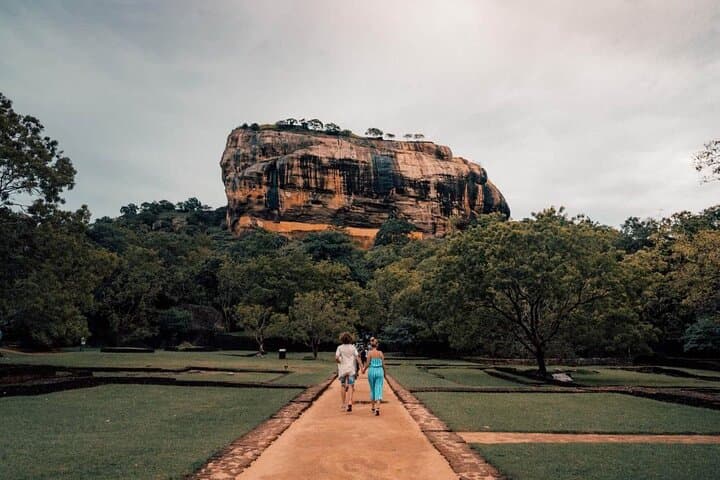
You leave Colombo before dawn, the city’s concrete hush giving way to a green that grows louder the further inland you travel. Low hills and paddy fields pass in a ribbon; palms lean as if watching the van and the small group inside. By midmorning the silhouette of Sigiriya—an abrupt, dark monolith rising like an island of stone from the plains—appears on the horizon, daring you to climb.
Verified experiences and guided adventures in the surrounding area.
Operated by Skyline Sri Lanka · Habarana, North Central Province
You leave Colombo before dawn, the city’s concrete hush giving way to a green that grows louder the further inland you travel. Low hills and paddy fields pass in a ribbon; palms lean as if watching the van and the small group inside. By midmorning the silhouette of Sigiriya—an abrupt, dark monolith rising like an island of stone from the plains—appears on the horizon, daring you to climb.
At Sigiriya the route threads through terraced gardens and ancient waterworks—engineered irrigation channels that still direct the land’s mood. The climb up metal staircases and carved steps is brisk: about 600 feet of vertical gain to the summit. Halfway up you pass fresco galleries—faded pigments of semi-figured maidens—and the carved paws of a gigantic lion that once guarded the stair. From the top, the plains flatten into a living map of reservoirs, forest and village roofs; the wind here has the blunt honesty of altitude, pushing you to stand and look longer.
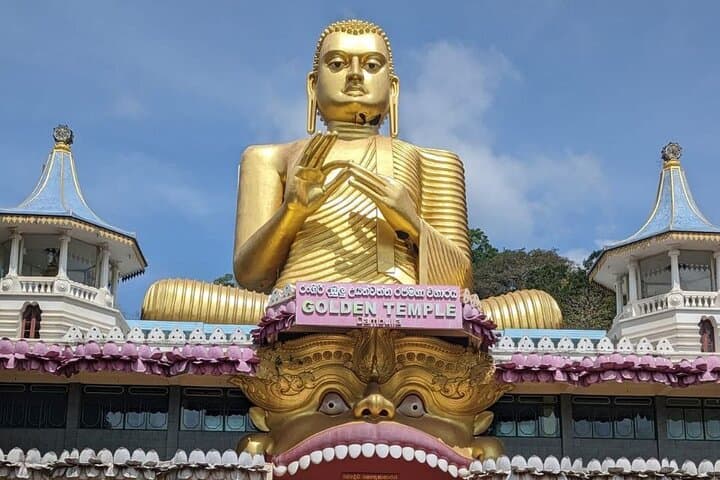
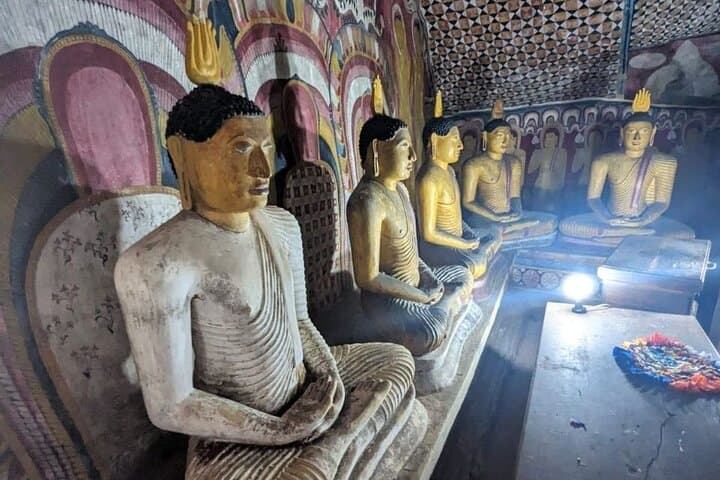
Dambulla’s cave temples are a different kind of ascent: not vertical, but temporal. Inside five caverns, over 150 Buddha images and painted panels unfold across vaulted rock. The caves, occupied since the first millennium BCE, are a record of devotional layering—kings, monks, and artisans leaving traces in paint and plaster that survive humid summers.
The day finishes in Kaudulla National Park, where a 4x4 safari searches scrub and reservoir margins for elephants. Herds congregate around water, trunks busy and deliberate, calves bobbing behind matriarchs. The open plains and scattered tamarind trees make for easy viewing; the animals behave like small weather systems, deciding when to move and when to linger.
Practical edge: this is a long day—expect 12 to 15 hours including driving. Wear stiff-soled shoes for Sigiriya’s uneven steps, and bring a refillable water bottle: bottled water is provided on the tour, but carrying your own reduces plastic waste. Admission fees to Sigiriya and Dambulla are typically paid on-site; the tour includes an English-speaking driver and guide assistance at Sigiriya, but garden entry, cave admission and national park fees are separate.
Timing matters: climb Sigiriya in the cooler morning hours to avoid the midday heat and the busiest crowds. If elephants are the focus, late afternoon safaris often concentrate animals near water as temperatures drop. Respect temple protocols—cover shoulders and knees at Dambulla, speak quietly—and let the landscape be the guide: reservoirs reflect the sky; the rock waits, immovable yet revealing.
moderate.
12–15 hours.
Moderate fitness recommended—able to handle a steep, sustained climb and long day of travel.
No—entrance fees for the Sigiriya Rock Fortress and Dambulla Cave Temple are paid on-site; bring local currency.
The operator lists 12 to 15 hours (roughly 720–900 minutes) including travel time, stops and the safari.
Kaudulla often hosts large herds, especially near the reservoir in the dry season, but wildlife sightings cannot be guaranteed.
Yes—infant seats are available and the tour is marked suitable for all fitness levels, but climbs and long travel may be tiring for very young children.
Yes—pickup in Colombo city is offered; specify your hotel or preferred location when booking.
The tour provides English-speaking drivers and guide assistance at Sigiriya in English, German, French and Spanish as noted.
Sigiriya was a 5th-century palace-fortress commissioned by King Kashyapa and later abandoned, while Dambulla’s caves have been a continuous religious site since ancient times.
Kaudulla is managed to protect elephant migration and wetland habitats; stick to vehicle tracks, avoid feeding wildlife and minimize plastic use to reduce impact.
Skyline Sri Lanka operates guided outdoor trips and adventures with an emphasis on safety, stewardship, and memorable experiences.
You leave Colombo before dawn, the city’s concrete hush giving way to a green that grows louder the further inland you travel. Low hills and paddy fields pass in a ribbon; palms lean as if watching the van and the small group inside. By midmorning the silhouette of Sigiriya—an abrupt, dark monolith rising like an island of stone from the plains—appears on the horizon, daring you to climb.
You leave Colombo before dawn, the city’s concrete hush giving way to a green that grows louder the further inland you travel. Low hills and paddy fields pass in a ribbon; palms lean as if watching the van and the small group inside. By midmorning the silhouette of Sigiriya—an abrupt, dark monolith rising like an island of stone from the plains—appears on the horizon, daring you to climb.
At Sigiriya the route threads through terraced gardens and ancient waterworks—engineered irrigation channels that still direct the land’s mood. The climb up metal staircases and carved steps is brisk: about 600 feet of vertical gain to the summit. Halfway up you pass fresco galleries—faded pigments of semi-figured maidens—and the carved paws of a gigantic lion that once guarded the stair. From the top, the plains flatten into a living map of reservoirs, forest and village roofs; the wind here has the blunt honesty of altitude, pushing you to stand and look longer.
Dambulla’s cave temples are a different kind of ascent: not vertical, but temporal. Inside five caverns, over 150 Buddha images and painted panels unfold across vaulted rock. The caves, occupied since the first millennium BCE, are a record of devotional layering—kings, monks, and artisans leaving traces in paint and plaster that survive humid summers.
The day finishes in Kaudulla National Park, where a 4x4 safari searches scrub and reservoir margins for elephants. Herds congregate around water, trunks busy and deliberate, calves bobbing behind matriarchs. The open plains and scattered tamarind trees make for easy viewing; the animals behave like small weather systems, deciding when to move and when to linger.
Practical edge: this is a long day—expect 12 to 15 hours including driving. Wear stiff-soled shoes for Sigiriya’s uneven steps, and bring a refillable water bottle: bottled water is provided on the tour, but carrying your own reduces plastic waste. Admission fees to Sigiriya and Dambulla are typically paid on-site; the tour includes an English-speaking driver and guide assistance at Sigiriya, but garden entry, cave admission and national park fees are separate.
Timing matters: climb Sigiriya in the cooler morning hours to avoid the midday heat and the busiest crowds. If elephants are the focus, late afternoon safaris often concentrate animals near water as temperatures drop. Respect temple protocols—cover shoulders and knees at Dambulla, speak quietly—and let the landscape be the guide: reservoirs reflect the sky; the rock waits, immovable yet revealing.