THE ADVENTURE COLLECTIVE® · Independent discovery and booking for outdoor travel

Drive high Andean roads, watch condors wheel over one of the world’s deepest canyons, and unwind in thermal baths on this compact 2-day Colca Valley experience from Arequipa. Early starts, thin air, and sweeping views reward travelers who come prepared.
Drive high Andean roads, watch condors wheel over one of the world’s deepest canyons, and unwind in thermal baths on this compact 2-day Colca Valley experience from Arequipa. Early starts, thin air, and sweeping views reward travelers who come prepared.
Morning light on the high plateau feels thin and sharp—the air has the brittle clarity of altitude. On the road from Arequipa, the van edges past the black cone of Chachani and across the open Cañahuas pampas; vicuñas lift their heads like soft punctuation marks against the grass. By the time the bus climbs to the Mirador de los Volcanes at roughly 4,910 meters, the volcanoes of the region—Misti, Chachani, Ampato—stand in a line that seems to measure the sky itself.
Verified experiences and guided adventures in the surrounding area.
Operated by camino peru · Chivay, Arequipa
Morning light on the high plateau feels thin and sharp—the air has the brittle clarity of altitude. On the road from Arequipa, the van edges past the black cone of Chachani and across the open Cañahuas pampas; vicuñas lift their heads like soft punctuation marks against the grass. By the time the bus climbs to the Mirador de los Volcanes at roughly 4,910 meters, the volcanoes of the region—Misti, Chachani, Ampato—stand in a line that seems to measure the sky itself.
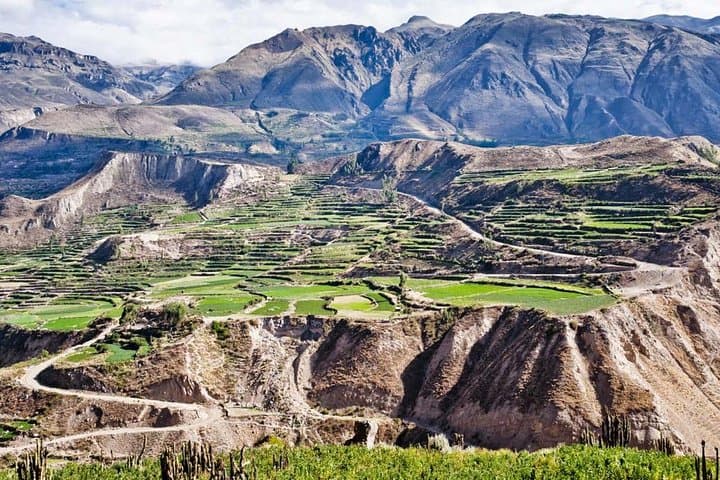
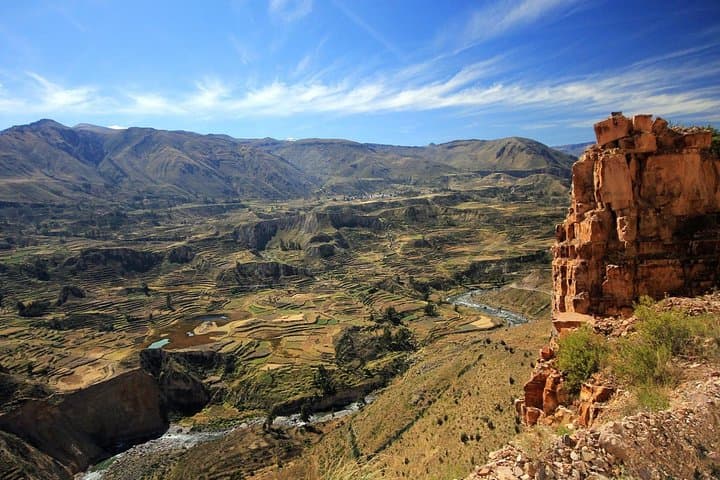
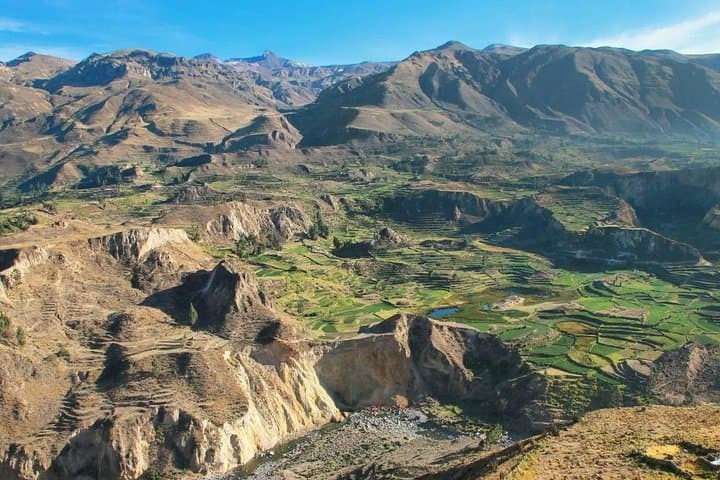
The tour reduces the Colca Valley to a sequence of vivid vantage points: wetlands where Andean gulls and waders quarter the shore, high puna where the wind gives the grasses a restless life, and finally the Cruz del Cóndor viewpoint where the canyon reveals its scale. Colca Canyon is carved into volcanic rock and Andean stratigraphy; at about 3,270 meters deep at its greatest point, its terraces and folds record centuries of human engineering and natural erosion.
People have shaped this landscape for millennia. Pre-Inca and Inca farmers built stepped terraces—andenes—that still hold water and crops, while Spanish colonial settlements later added whitewashed churches and narrow plaza rhythms to villages like Yanque, Maca and Pinchollo. The mixture of Quechua cultural practices and Catholic festivals is visible in embroidered garments, market stalls, and the rhythmic clang of town bells.
Practical measures shape the enjoyment of the trip. The Arequipa-to-Colca drive is roughly 160 kilometers one-way and takes about 3–4 hours with stops; expect significant altitude changes (Arequipa sits near 2,335 m, Mirador de los Volcanes near 4,910 m). The terrain around viewpoints is high-altitude puna—rocky paths, exposed ridgelines, and steep drops—so steady footing and layers are essential. The itinerary includes an optional soak at the Thermal Baths of La Calera; entrances are typically extra and cash-friendly. Expect early starts—sunrise at Cruz del Cóndor is the best time to watch condors ride the thermals.
For pacing: allow time to acclimatize in Arequipa, sip coca tea if you need it, and keep your schedule flexible for weather and wildlife. Bring a daypack with 2–3 liters of water, sun protection, a warm jacket, and small bills for markets and bath entrances. The trip balances cultural stops, short walks, and long, cinematic drives—it's more about absorbing scale than completing a technical climb.
In the end, the Colca 2D-1N is a study in contrasts: volcanic shoulders and carved terraces, fragile highland fauna and human resilience. It asks travelers to move deliberately—watch the condor catch its thermal, let the steam of the hot springs fog your glasses, and notice how the canyon keeps the history of the Andes in its layers.
moderate.
2 days (approx. 48 hours).
Moderate fitness required; able to walk short, uneven trails and tolerate altitude changes.
The road is about 160 km one-way and the trip with stops takes roughly 3–4 hours depending on traffic and weather.
Cruz del Cóndor is a reliable spot for condor sightings, especially early morning when thermals lift the birds; sightings aren’t guaranteed but odds are good.
Thermal baths (La Calera) are optional and typically require a small entrance fee paid locally, not included in the tour price.
Yes—you’ll reach nearly 4,900 m at Mirador de los Volcanes; acclimatize in Arequipa, hydrate, move slowly, and consult a doctor if you have health concerns.
Small bills, comfortable walking shoes, a reusable bag for purchases, and respect for local customs when photographing people and churches.
Breakfast is included; lunch and dinner are generally not included (dinner in the accommodation may be offered for a fee).
The valley preserves pre-Inca terrace agriculture and colonial-era towns—many terraces still irrigate crops using ancient channels.
Visitor fees and responsible touring help fund local conservation; stick to trails, avoid feeding wildlife, and buy local handicrafts to support communities.
camino peru operates guided outdoor trips and adventures with an emphasis on safety, stewardship, and memorable experiences.
Morning light on the high plateau feels thin and sharp—the air has the brittle clarity of altitude. On the road from Arequipa, the van edges past the black cone of Chachani and across the open Cañahuas pampas; vicuñas lift their heads like soft punctuation marks against the grass. By the time the bus climbs to the Mirador de los Volcanes at roughly 4,910 meters, the volcanoes of the region—Misti, Chachani, Ampato—stand in a line that seems to measure the sky itself.
Morning light on the high plateau feels thin and sharp—the air has the brittle clarity of altitude. On the road from Arequipa, the van edges past the black cone of Chachani and across the open Cañahuas pampas; vicuñas lift their heads like soft punctuation marks against the grass. By the time the bus climbs to the Mirador de los Volcanes at roughly 4,910 meters, the volcanoes of the region—Misti, Chachani, Ampato—stand in a line that seems to measure the sky itself.
The tour reduces the Colca Valley to a sequence of vivid vantage points: wetlands where Andean gulls and waders quarter the shore, high puna where the wind gives the grasses a restless life, and finally the Cruz del Cóndor viewpoint where the canyon reveals its scale. Colca Canyon is carved into volcanic rock and Andean stratigraphy; at about 3,270 meters deep at its greatest point, its terraces and folds record centuries of human engineering and natural erosion.
People have shaped this landscape for millennia. Pre-Inca and Inca farmers built stepped terraces—andenes—that still hold water and crops, while Spanish colonial settlements later added whitewashed churches and narrow plaza rhythms to villages like Yanque, Maca and Pinchollo. The mixture of Quechua cultural practices and Catholic festivals is visible in embroidered garments, market stalls, and the rhythmic clang of town bells.
Practical measures shape the enjoyment of the trip. The Arequipa-to-Colca drive is roughly 160 kilometers one-way and takes about 3–4 hours with stops; expect significant altitude changes (Arequipa sits near 2,335 m, Mirador de los Volcanes near 4,910 m). The terrain around viewpoints is high-altitude puna—rocky paths, exposed ridgelines, and steep drops—so steady footing and layers are essential. The itinerary includes an optional soak at the Thermal Baths of La Calera; entrances are typically extra and cash-friendly. Expect early starts—sunrise at Cruz del Cóndor is the best time to watch condors ride the thermals.
For pacing: allow time to acclimatize in Arequipa, sip coca tea if you need it, and keep your schedule flexible for weather and wildlife. Bring a daypack with 2–3 liters of water, sun protection, a warm jacket, and small bills for markets and bath entrances. The trip balances cultural stops, short walks, and long, cinematic drives—it's more about absorbing scale than completing a technical climb.
In the end, the Colca 2D-1N is a study in contrasts: volcanic shoulders and carved terraces, fragile highland fauna and human resilience. It asks travelers to move deliberately—watch the condor catch its thermal, let the steam of the hot springs fog your glasses, and notice how the canyon keeps the history of the Andes in its layers.