THE ADVENTURE COLLECTIVE® · Independent discovery and booking for outdoor travel

Scale the dramatic Lion Rock and step into the cool, painted caverns of Dambulla on this private day tour from Dambulla. Ideal for history lovers and active travelers, the route combines steep climbs, hydraulic gardens and ancient Buddhist art.
Scale the dramatic Lion Rock and step into the cool, painted caverns of Dambulla on this private day tour from Dambulla. Ideal for history lovers and active travelers, the route combines steep climbs, hydraulic gardens and ancient Buddhist art.
You step from the air-conditioned van into the heat of Sri Lanka's Cultural Triangle and the landscape tightens around you: a squat granite outcrop rises like an island in a sea of scrub and paddy, and across the plain the layered mouths of Dambulla's cave temple peer from a low ridge. The day opens here with the hum of tuktuks and the distant crow of jungle birds; the rock seems to dare you to make the climb, while the caves promise cool, quiet relief.
Verified experiences and guided adventures in the surrounding area.
Operated by Lakpura LLC · Dambulla, Central Province
You step from the air-conditioned van into the heat of Sri Lanka's Cultural Triangle and the landscape tightens around you: a squat granite outcrop rises like an island in a sea of scrub and paddy, and across the plain the layered mouths of Dambulla's cave temple peer from a low ridge. The day opens here with the hum of tuktuks and the distant crow of jungle birds; the rock seems to dare you to make the climb, while the caves promise cool, quiet relief.
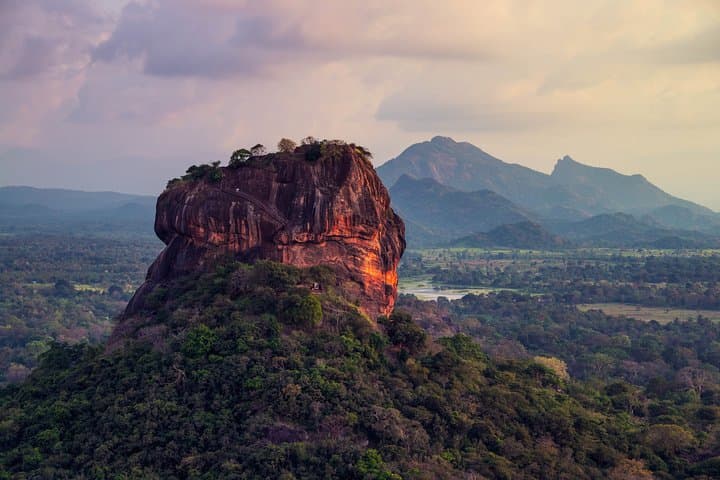
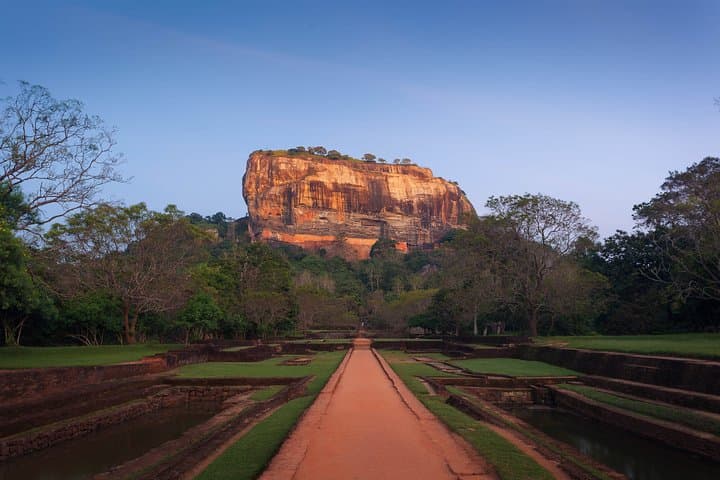
Sigiriya, the so-called Lion Rock, is a 5th-century AD stronghold built by King Kasyapa. Geologically it's a massive laterite plug—hard, weathered granite that juts abruptly from the plains—and its vertical faces were shaped as much by natural fracture as by ancient engineering. Walk the water gardens at its base, and you read the literal hydraulics of a royal landscape: moats, symmetrical ponds and channels that still hold water. Higher, the Mirror Wall and the panel of frescoes—colours surprisingly intact—offer a rare window into the island's artistic sensibilities a millennium and a half old.
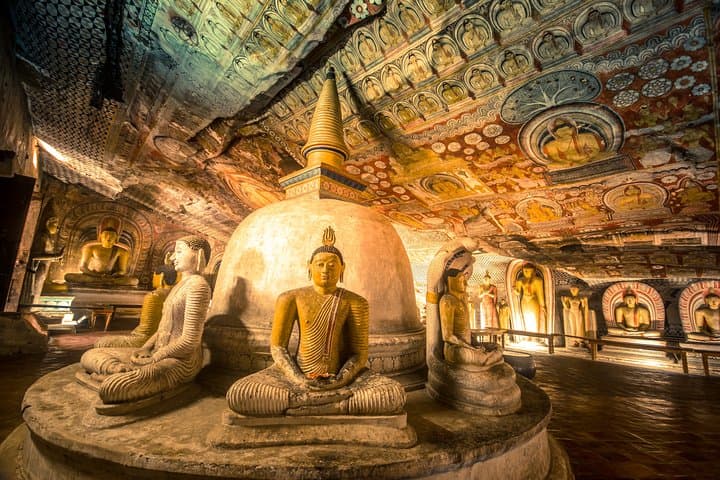
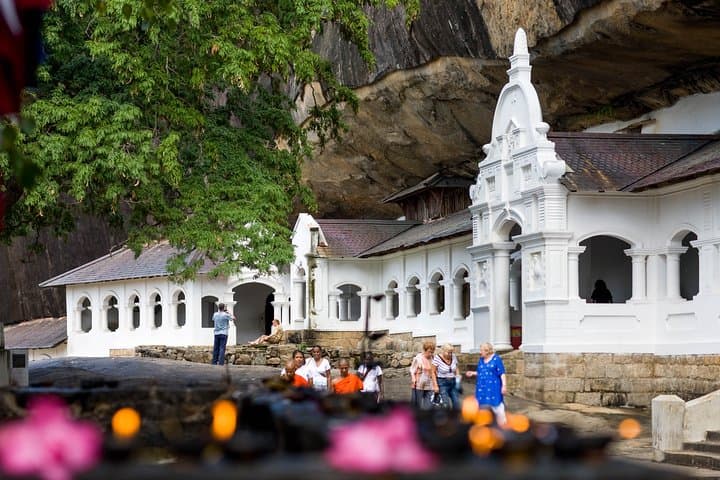
A short drive away, Dambulla Cave Temple sits in five painted caverns and houses over 150 Buddha statues. The caves are an archaeological palimpsest: early Theravada devotion, later Sinhalese kingship, and hints of Hindu iconography layered across centuries. The air in the caves is cooler, the stone smelling faintly of incense. Local guides often point out the inscriptions—pilgrim graffiti that reads like a social diary across ages.
Culturally, both sites are living places: monks still meditate in the caves and villagers maintain the gardens around Sigiriya. Respectful clothing and quiet behaviour are not just rules but part of the shared etiquette.
Practical guidance: the combined private tour runs about 5–6 hours. Start early—7–9am is ideal—to avoid the midday heat and crowds. The Sigiriya ascent involves uneven steps and short metal staircases; total elevation gain is roughly 200–250m from the garden to the summit plateau. Bring at least 1.5 liters of water, a sun hat, and shoes with good grip; flip-flops are not suitable for the climb and must be removed at the cave temple entrance. Tickets for Sigiriya and Dambulla are separate—confirm entrance fees ahead and budget local cash for them.
Expect moderate physical exertion: the climb is steep in sections but broken by platforms and viewpoints. Photography is excellent in the morning light for wide vistas and late afternoon for warm stone tones; in the caves, watch exposure and respect signs forbidding flash in certain sanctified chambers.
Finally, allow time for the Sigiriya Museum after your descent: the artifacts and models put the ruins into practical perspective and help the day tie together—a historical readout of what you've just seen on the ground.
moderate.
5–6 hours.
Moderate fitness required: you should be comfortable walking uphill and on uneven surfaces for short bursts.
From the garden entrance to the summit plateau expect 30–45 minutes at a steady pace; allow longer for stops at frescoes and viewpoints.
Entrance fees for Sigiriya and Dambulla are typically not included in basic tour rates—confirm with the operator and carry local currency for tickets.
Children can join but supervision is required on steep sections; some operators have age recommendations due to stairs and narrow ledges.
At Sigiriya shorts are acceptable for the climb, but Dambulla requires covered shoulders and knees—bring a lightweight cover-up for the caves.
This private tour includes an English-speaking chauffeur-guide; inquire ahead if you need another language to be provided.
Photography is generally allowed in the caves but flash may be prohibited in certain sanctified chambers to protect pigments—follow posted signs and monk requests.
Sigiriya was King Kasyapa’s 5th-century AD palace and fort; its gardens, frescoes and rock-cut water systems reflect advanced early medieval Sinhalese engineering and aesthetics.
Both sites are UNESCO-protected; visitors are asked to stay on marked paths, avoid touching frescoes and minimize plastic waste to protect fragile pigments and habitats.
Lakpura LLC operates guided outdoor trips and adventures with an emphasis on safety, stewardship, and memorable experiences.
You step from the air-conditioned van into the heat of Sri Lanka's Cultural Triangle and the landscape tightens around you: a squat granite outcrop rises like an island in a sea of scrub and paddy, and across the plain the layered mouths of Dambulla's cave temple peer from a low ridge. The day opens here with the hum of tuktuks and the distant crow of jungle birds; the rock seems to dare you to make the climb, while the caves promise cool, quiet relief.
You step from the air-conditioned van into the heat of Sri Lanka's Cultural Triangle and the landscape tightens around you: a squat granite outcrop rises like an island in a sea of scrub and paddy, and across the plain the layered mouths of Dambulla's cave temple peer from a low ridge. The day opens here with the hum of tuktuks and the distant crow of jungle birds; the rock seems to dare you to make the climb, while the caves promise cool, quiet relief.
Sigiriya, the so-called Lion Rock, is a 5th-century AD stronghold built by King Kasyapa. Geologically it's a massive laterite plug—hard, weathered granite that juts abruptly from the plains—and its vertical faces were shaped as much by natural fracture as by ancient engineering. Walk the water gardens at its base, and you read the literal hydraulics of a royal landscape: moats, symmetrical ponds and channels that still hold water. Higher, the Mirror Wall and the panel of frescoes—colours surprisingly intact—offer a rare window into the island's artistic sensibilities a millennium and a half old.
A short drive away, Dambulla Cave Temple sits in five painted caverns and houses over 150 Buddha statues. The caves are an archaeological palimpsest: early Theravada devotion, later Sinhalese kingship, and hints of Hindu iconography layered across centuries. The air in the caves is cooler, the stone smelling faintly of incense. Local guides often point out the inscriptions—pilgrim graffiti that reads like a social diary across ages.
Culturally, both sites are living places: monks still meditate in the caves and villagers maintain the gardens around Sigiriya. Respectful clothing and quiet behaviour are not just rules but part of the shared etiquette.
Practical guidance: the combined private tour runs about 5–6 hours. Start early—7–9am is ideal—to avoid the midday heat and crowds. The Sigiriya ascent involves uneven steps and short metal staircases; total elevation gain is roughly 200–250m from the garden to the summit plateau. Bring at least 1.5 liters of water, a sun hat, and shoes with good grip; flip-flops are not suitable for the climb and must be removed at the cave temple entrance. Tickets for Sigiriya and Dambulla are separate—confirm entrance fees ahead and budget local cash for them.
Expect moderate physical exertion: the climb is steep in sections but broken by platforms and viewpoints. Photography is excellent in the morning light for wide vistas and late afternoon for warm stone tones; in the caves, watch exposure and respect signs forbidding flash in certain sanctified chambers.
Finally, allow time for the Sigiriya Museum after your descent: the artifacts and models put the ruins into practical perspective and help the day tie together—a historical readout of what you've just seen on the ground.