THE ADVENTURE COLLECTIVE® · Independent discovery and booking for outdoor travel

Leave Arequipa at midnight and follow a highland road to El Collado, then trek up volcanic scree to reach the 6,075 m summit of Chachani. This full-day climb balances hard-earned views with practical pacing and altitude awareness.
Leave Arequipa at midnight and follow a highland road to El Collado, then trek up volcanic scree to reach the 6,075 m summit of Chachani. This full-day climb balances hard-earned views with practical pacing and altitude awareness.
The bus eases away from Arequipa under a sky so clear the stars seem to press against the windows. By the time the driver climbs onto the unpaved Cabrerías road you're moving through the high plateau of Salinas and Aguada Blanca—the air thin, cold, and honest. At El Collado, 5,000 meters above sea level, guides check crampons and hand out coca tea; the light is a bruise of pre-dawn blue. You shoulder your pack and follow a narrow ribbon of volcanic ash and pumice, the summit of Chachani looming like an unfinished question ahead.
Verified experiences and guided adventures in the surrounding area.
Operated by Peru Ultimate Expedition · Arequipa, Arequipa Region
The bus eases away from Arequipa under a sky so clear the stars seem to press against the windows. By the time the driver climbs onto the unpaved Cabrerías road you're moving through the high plateau of Salinas and Aguada Blanca—the air thin, cold, and honest. At El Collado, 5,000 meters above sea level, guides check crampons and hand out coca tea; the light is a bruise of pre-dawn blue. You shoulder your pack and follow a narrow ribbon of volcanic ash and pumice, the summit of Chachani looming like an unfinished question ahead.
Chachani is not a single peak but a volcanic complex of eroded cones and lava flows whose final summit reaches 6,075 meters. Geologically, its slopes tell a history of explosive eruptions and long lava runs; the ground is a mix of ash, sand and boulder fields left from millennia of activity. Culturally, the range frames Arequipa—its stone was used by pre-Columbian and colonial builders and the highland communities keep a careful traditional relationship with these peaks, bringing offerings and tending llamas in the lower puna.
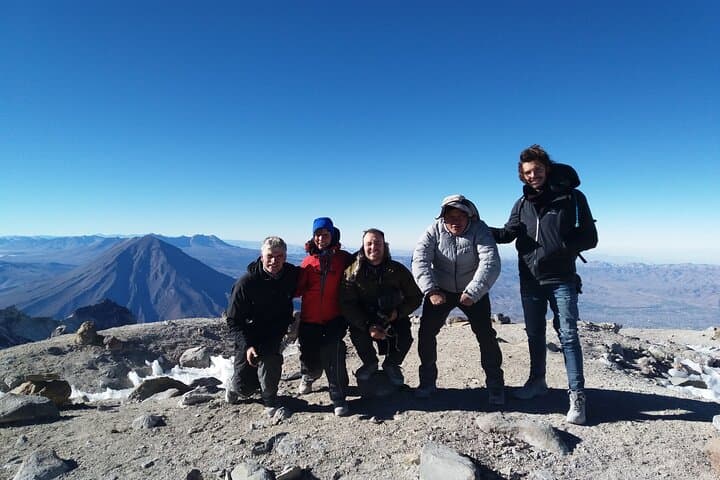
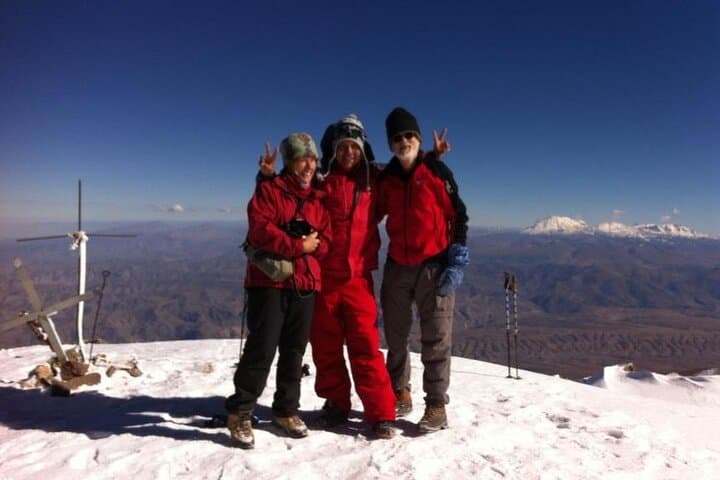
The climb itself reads like a study in altitude management. The approach from El Collado to the fox camp is roughly 3.5 km of gradual gain across volcanic scree; from there the zigzag route to the summit gains about 1,075 meters over mixed sand, ash and rock. Expect 6–8 hours of steady ascent on that second section, with strategic stops to regulate pace and oxygen. On a clear day the summit returns a 360° view—Misti and Pichu Pichu nearby, the city of Arequipa to the southeast, and, on exceptionally transparent afternoons, a pale stripe of the Pacific on the horizon.
Practically: this is a long single-day outing that begins at midnight with hotel pickup in Arequipa and includes vehicle transfers in a 4WD. Guides provide a mountain breakfast, coca tea, first aid kits and, when required, crampons. Acclimatization matters more than technical ropework—outside of heavy snow the route is largely high-altitude trekking, not technical mountaineering, but the thin air is unforgiving.
Plan to move slow, sip frequently, and read the mountain—if you feel persistent headache, nausea or weakness, descend immediately. Footwear with aggressive tread, a warm insulated layer for summit-time, and a reliable headlamp are non-negotiable. If you have time in Arequipa before the climb, spend a day at moderate elevation walking the city and do shorter hikes to boost your chances at the top.
Summiting Chachani is a clear, elemental achievement: a test of patience, breathing, and quiet endurance. When you stand at 6,075 meters the wind has a voice; it pushes and lets you know you climbed into a different sky.
challenging.
12–14 hours.
High level of aerobic fitness and experience with long, high-altitude day hikes is recommended; be prepared for sustained uphill walking and thin air.
No technical climbing experience is required outside heavy snow; however, previous high-altitude trekking experience and excellent fitness are strongly recommended.
From the El Collado start (~5,000 m) to the summit is roughly 1,075 m of elevation gain; total hiking distance is approximately 10–14 km round-trip depending on exact route.
Yes—guides supply crampons and ice axes when seasonal snow or ice makes them necessary; bring suitable boots that accept crampons.
Pickup typically begins around midnight in Arequipa; after the descent you return by 4WD to the city and are dropped at your hotel the same day.
Altitude sickness is the main risk—symptoms include headache, nausea and dizziness; guides monitor the group and will descend anyone showing persistent signs.
No special permit is normally required for guided climbs in the Salinas and Aguada Blanca reserve, but regulations can change so confirm with the operator before booking.
Chachani's volcanic products were used historically by pre-Incan and colonial inhabitants; its massifs have long marked the agricultural and spiritual landscape surrounding Arequipa.
The route passes through Salinas and Aguada Blanca Reserve—guides emphasize leave-no-trace practices and limit group impact; avoid burning fuel and pack out all waste.
Peru Ultimate Expedition operates guided outdoor trips and adventures with an emphasis on safety, stewardship, and memorable experiences.
The bus eases away from Arequipa under a sky so clear the stars seem to press against the windows. By the time the driver climbs onto the unpaved Cabrerías road you're moving through the high plateau of Salinas and Aguada Blanca—the air thin, cold, and honest. At El Collado, 5,000 meters above sea level, guides check crampons and hand out coca tea; the light is a bruise of pre-dawn blue. You shoulder your pack and follow a narrow ribbon of volcanic ash and pumice, the summit of Chachani looming like an unfinished question ahead.
The bus eases away from Arequipa under a sky so clear the stars seem to press against the windows. By the time the driver climbs onto the unpaved Cabrerías road you're moving through the high plateau of Salinas and Aguada Blanca—the air thin, cold, and honest. At El Collado, 5,000 meters above sea level, guides check crampons and hand out coca tea; the light is a bruise of pre-dawn blue. You shoulder your pack and follow a narrow ribbon of volcanic ash and pumice, the summit of Chachani looming like an unfinished question ahead.
Chachani is not a single peak but a volcanic complex of eroded cones and lava flows whose final summit reaches 6,075 meters. Geologically, its slopes tell a history of explosive eruptions and long lava runs; the ground is a mix of ash, sand and boulder fields left from millennia of activity. Culturally, the range frames Arequipa—its stone was used by pre-Columbian and colonial builders and the highland communities keep a careful traditional relationship with these peaks, bringing offerings and tending llamas in the lower puna.
The climb itself reads like a study in altitude management. The approach from El Collado to the fox camp is roughly 3.5 km of gradual gain across volcanic scree; from there the zigzag route to the summit gains about 1,075 meters over mixed sand, ash and rock. Expect 6–8 hours of steady ascent on that second section, with strategic stops to regulate pace and oxygen. On a clear day the summit returns a 360° view—Misti and Pichu Pichu nearby, the city of Arequipa to the southeast, and, on exceptionally transparent afternoons, a pale stripe of the Pacific on the horizon.
Practically: this is a long single-day outing that begins at midnight with hotel pickup in Arequipa and includes vehicle transfers in a 4WD. Guides provide a mountain breakfast, coca tea, first aid kits and, when required, crampons. Acclimatization matters more than technical ropework—outside of heavy snow the route is largely high-altitude trekking, not technical mountaineering, but the thin air is unforgiving.
Plan to move slow, sip frequently, and read the mountain—if you feel persistent headache, nausea or weakness, descend immediately. Footwear with aggressive tread, a warm insulated layer for summit-time, and a reliable headlamp are non-negotiable. If you have time in Arequipa before the climb, spend a day at moderate elevation walking the city and do shorter hikes to boost your chances at the top.
Summiting Chachani is a clear, elemental achievement: a test of patience, breathing, and quiet endurance. When you stand at 6,075 meters the wind has a voice; it pushes and lets you know you climbed into a different sky.