THE ADVENTURE COLLECTIVE® · Independent discovery and booking for outdoor travel

A short, three-day circuit from Kathmandu through Shivapuri National Park to Nagarkot and Changu Narayan, this trek pairs sunrise Himalayan panoramas with village trails and terraced fields. It’s a moderate, well-supported route ideal for travelers who want big mountain views on a compact itinerary.
A short, three-day circuit from Kathmandu through Shivapuri National Park to Nagarkot and Changu Narayan, this trek pairs sunrise Himalayan panoramas with village trails and terraced fields. It’s a moderate, well-supported route ideal for travelers who want big mountain views on a compact itinerary.
You step out of a hotel shuttle into cool, thin air and watch Kathmandu shrink behind a wall of pine and oak. The road to Sundarijal is less than an hour, but it feels like a seam between two worlds: city noise dissolves into the rattle of water pipes and the measured chatter of porters and guides. The trail climbs beside a large supply pipe, then squeezes into Shivapuri National Park, where the forest leans close and the path narrows to a rhythm of stone steps and breath.
Verified experiences and guided adventures in the surrounding area.
Operated by Breakfree Adventures Pvt. Ltd. · Kathmandu, Bagmati Province
You step out of a hotel shuttle into cool, thin air and watch Kathmandu shrink behind a wall of pine and oak. The road to Sundarijal is less than an hour, but it feels like a seam between two worlds: city noise dissolves into the rattle of water pipes and the measured chatter of porters and guides. The trail climbs beside a large supply pipe, then squeezes into Shivapuri National Park, where the forest leans close and the path narrows to a rhythm of stone steps and breath.
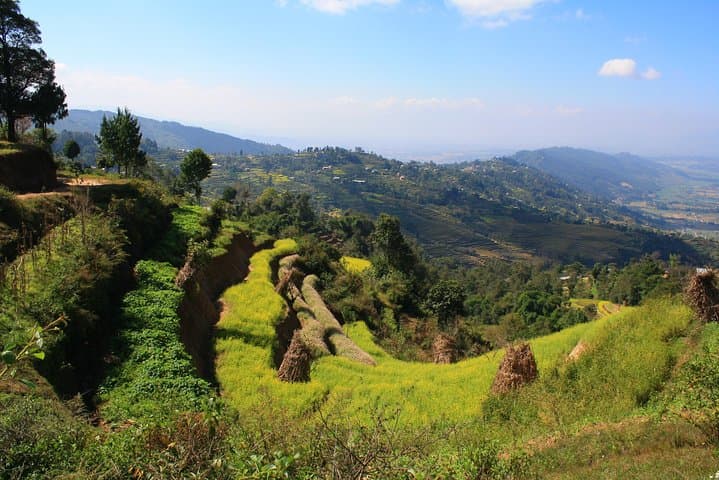
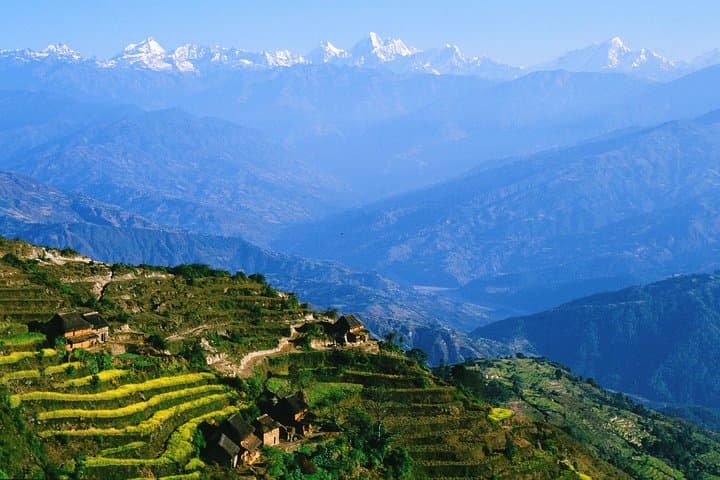
By late afternoon you arrive in Chisapani, a ridge village at about 2,165 meters. Wooden houses with corrugated roofs punctuate terraced fields; children wave from mud courtyards. From the ridge you get your first wide-angle Himalayan preview — Langtang, Ganesh Himal, Manaslu — the mountains occupying the horizon like slow-moving ships. On the second day the trail dives through mossy forest, skirts Tamang settlements, and opens into the terraced slopes that lead up to Nagarkot. At sunset, the Himalayan arc lights up in copper and steel.
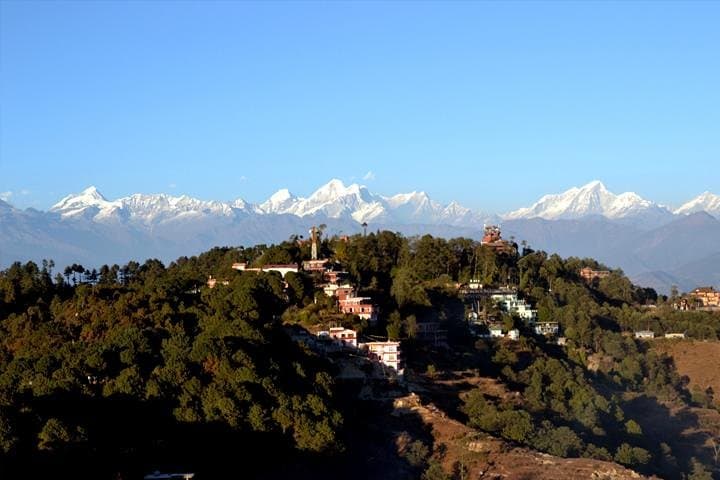
Nagarkot, at roughly 2,175 meters, is a classic vantage point: on clear mornings you can see Dhaulagiri to the west and, if fortune favors you, a fingertip of Everest to the east. The final day drops down to Changu Narayan, where a 4th-century temple—one of Nepal's oldest—crowns a hill above Bhaktapur, connecting the trek's mountain panoramas with the Kathmandu Valley's layered human history.
Geology here is visible in slope and soil: young fold-and-thrust formations thrusting upward over a wide valley; rocks are often hidden beneath terraced agriculture but the broad ridgelines reveal the tectonics that built the Himalaya. Culturally, the route threads Tamang and Newar villages, offering simple hospitality and near-constant reminders of the valley's sacred geography.
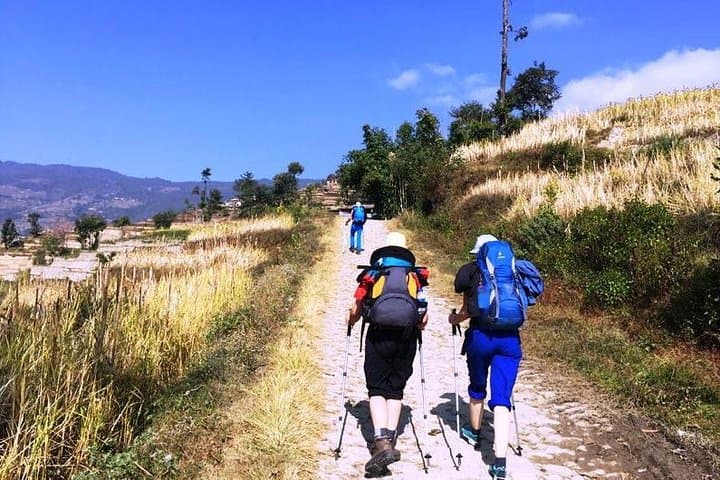
Practical guide: the trek is classified moderate — expect 4–7 hours of hiking on days one and two, shorter day three. Trails alternate between packed dirt, stone steps, and short steep ascents; wear sturdy boots with good grip. Altitude is modest but move at a measured pace, hydrate, and sleep early. Guides handle permits and navigation inside Shivapuri National Park; transportation includes pickup and drop-off in Kathmandu.
Timing matters: take the early-morning window for the clearest mountain views and sunrise at Nagarkot. Pack a light rain shell year-round; monsoon months hide the peaks. Respect local trails and minimize plastic: the villages depend on trekkers for income, and conservation efforts are active in the national park. With prepared legs and a clear morning, this compact trek delivers big Himalayan theater and a concentrated slice of Nepali rural life.
moderate.
3 days (approx. 72 hours total; 10–12 hrs of trekking).
Good base fitness with capability for sustained uphill and downhill hiking; hikers should be comfortable walking 4–7 hours in a day.
It’s rated moderate: daily sections include steady ascents and descents on stone and dirt paths, but no technical climbing.
Yes — the operator arranges park permits and local fees as part of the tour, so you don’t need to secure them yourself.
Active beginners with good cardio and experience hiking a few hours at a time can manage it if they move slowly and follow the guide’s pace.
No — mountain visibility depends on weather; the clearest views occur in late autumn and early spring but clear windows can happen any month.
Yes — the tour includes hotel pickup and drop-off in Kathmandu as listed in the itinerary.
Cell service is intermittent on ridge sections; carry Nepalese rupees for small purchases in villages and any incidentals.
Changu Narayan temple near the trek's end dates back to the 4th century CE and is one of Nepal's oldest Hindu shrines, reflecting the valley's long cultural continuity.
Shivapuri Nagarjun National Park protects local watershed and forest; stick to marked trails, pack out trash, and support local guides to help preserve fragile slopes.
Breakfree Adventures Pvt. Ltd. operates guided outdoor trips and adventures with an emphasis on safety, stewardship, and memorable experiences.
You step out of a hotel shuttle into cool, thin air and watch Kathmandu shrink behind a wall of pine and oak. The road to Sundarijal is less than an hour, but it feels like a seam between two worlds: city noise dissolves into the rattle of water pipes and the measured chatter of porters and guides. The trail climbs beside a large supply pipe, then squeezes into Shivapuri National Park, where the forest leans close and the path narrows to a rhythm of stone steps and breath.
You step out of a hotel shuttle into cool, thin air and watch Kathmandu shrink behind a wall of pine and oak. The road to Sundarijal is less than an hour, but it feels like a seam between two worlds: city noise dissolves into the rattle of water pipes and the measured chatter of porters and guides. The trail climbs beside a large supply pipe, then squeezes into Shivapuri National Park, where the forest leans close and the path narrows to a rhythm of stone steps and breath.
By late afternoon you arrive in Chisapani, a ridge village at about 2,165 meters. Wooden houses with corrugated roofs punctuate terraced fields; children wave from mud courtyards. From the ridge you get your first wide-angle Himalayan preview — Langtang, Ganesh Himal, Manaslu — the mountains occupying the horizon like slow-moving ships. On the second day the trail dives through mossy forest, skirts Tamang settlements, and opens into the terraced slopes that lead up to Nagarkot. At sunset, the Himalayan arc lights up in copper and steel.
Nagarkot, at roughly 2,175 meters, is a classic vantage point: on clear mornings you can see Dhaulagiri to the west and, if fortune favors you, a fingertip of Everest to the east. The final day drops down to Changu Narayan, where a 4th-century temple—one of Nepal's oldest—crowns a hill above Bhaktapur, connecting the trek's mountain panoramas with the Kathmandu Valley's layered human history.
Geology here is visible in slope and soil: young fold-and-thrust formations thrusting upward over a wide valley; rocks are often hidden beneath terraced agriculture but the broad ridgelines reveal the tectonics that built the Himalaya. Culturally, the route threads Tamang and Newar villages, offering simple hospitality and near-constant reminders of the valley's sacred geography.
Practical guide: the trek is classified moderate — expect 4–7 hours of hiking on days one and two, shorter day three. Trails alternate between packed dirt, stone steps, and short steep ascents; wear sturdy boots with good grip. Altitude is modest but move at a measured pace, hydrate, and sleep early. Guides handle permits and navigation inside Shivapuri National Park; transportation includes pickup and drop-off in Kathmandu.
Timing matters: take the early-morning window for the clearest mountain views and sunrise at Nagarkot. Pack a light rain shell year-round; monsoon months hide the peaks. Respect local trails and minimize plastic: the villages depend on trekkers for income, and conservation efforts are active in the national park. With prepared legs and a clear morning, this compact trek delivers big Himalayan theater and a concentrated slice of Nepali rural life.