THE ADVENTURE COLLECTIVE® · Independent discovery and booking for outdoor travel

Walk the Chicago Riverwalk with a local guide and read the city’s skyline like a history book. In two hours you’ll learn how engineering, industry, and bold architecture remade a river and a city.
Walk the Chicago Riverwalk with a local guide and read the city’s skyline like a history book. In two hours you’ll learn how engineering, industry, and bold architecture remade a river and a city.
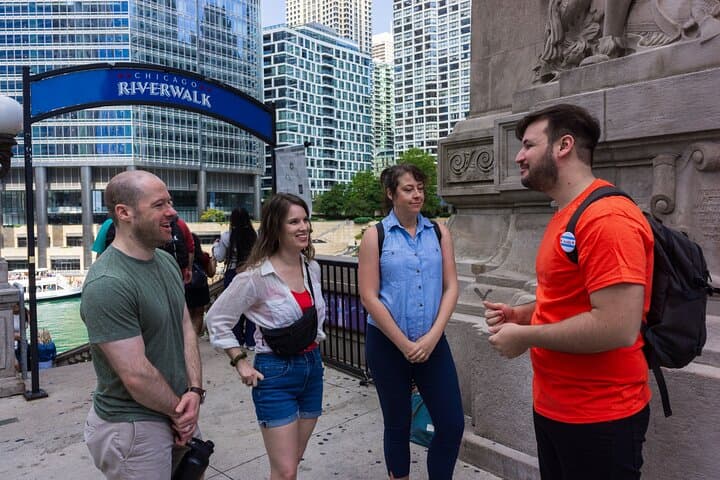
You step off Wacker Drive and the city rearranges itself: glass and limestone, steel ribs and carved stone, all leaning toward the river as if to hear a single story. The Chicago River cuts a cool, reflective line through the urban roar, daring you to slow down. Over two hours a local guide walks you along the Riverwalk—past raised bascule bridges, under cantilevered balconies, and beside stair-stepped terraces where office workers and tourists share the same light.
Verified experiences and guided adventures in the surrounding area.
Operated by Tours By Foot - Chicago · Chicago, Illinois
You step off Wacker Drive and the city rearranges itself: glass and limestone, steel ribs and carved stone, all leaning toward the river as if to hear a single story. The Chicago River cuts a cool, reflective line through the urban roar, daring you to slow down. Over two hours a local guide walks you along the Riverwalk—past raised bascule bridges, under cantilevered balconies, and beside stair-stepped terraces where office workers and tourists share the same light.
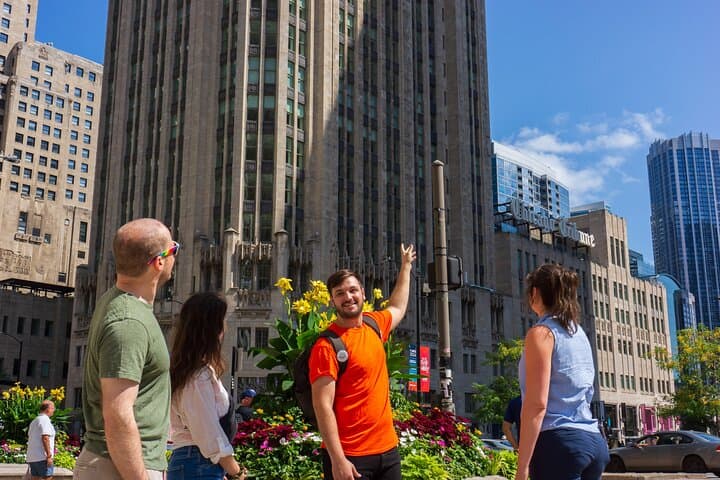
This stretch of water is both an artery of commerce and a stage for architecture. The tour frames the Riverwalk as a living timeline: the neo-Gothic flourishes of the Tribune Tower, the lean modernism of Mies van der Rohe’s glass boxes, and the round Marina City towers—affectionately called the “corn cobs”—that punctuate the skyline. Guides weave in Chicago’s engineering feats, from the 19th-century push to reverse the river’s flow to protect the city’s drinking supply, to the 20th and 21st-century reclamation of industrial waterfronts into public space.
Geology plays a quieter part—glacial clay beneath the streets and a shallow river channel that forced ingenious, often brutal, engineering solutions. Culturally, the Riverwalk is a cross-section of the city: immigrant labor that built the rail and packing industries, river workers whose barges once carried grain and lumber, and modern entrepreneurs who turned derelict wharves into restaurants and plazas.
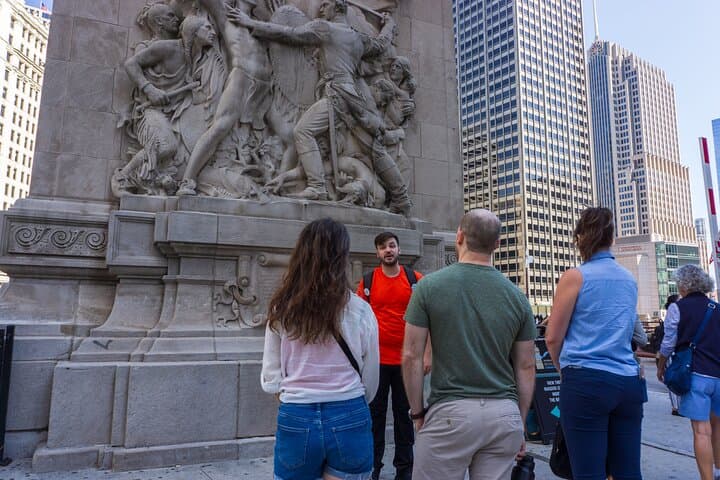
The tour is practical, deliberate: expect roughly 1.5–2 miles of mostly flat, paved walking with frequent stops for stories and photos. Your guide points out architectural details most visitors miss—the carved eagles, the original keystones, the way light plays differently on limestone and curtain wall glass. The group size is capped, so questions shape the pace.
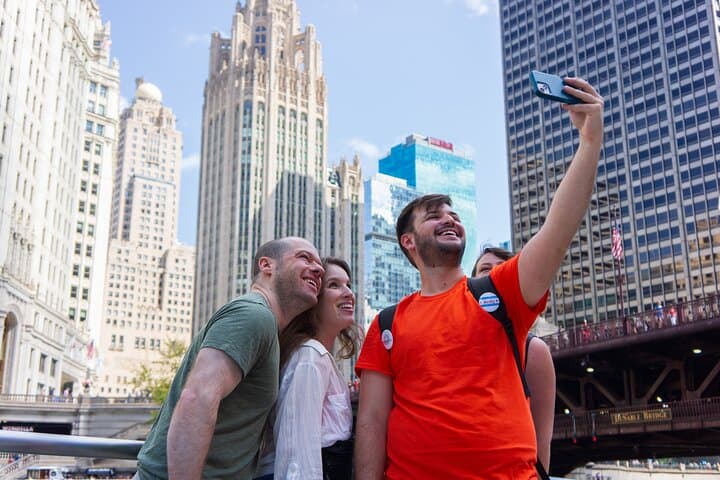
If you go: arrive at the meeting point outside the Renaissance Hotel at State and Wacker 10 minutes early. Morning light brings the best reflections on glass; late afternoon casts dramatic shadows on columned façades. Shoes matter more than fashion—supportive footwear makes the promenade easy. Bring a refillable water bottle and a light layer: wind funnels along the river even on warm days. Cameras will be busy—ask your guide for recommended angles; they know where to stand to capture the Tribune Tower framed by a bridge.
This tour is accessible to most fitness levels, family-friendly, and operates year-round with weather contingencies. It’s an efficient, story-driven way to understand why Chicago’s skyline looks the way it does—and why the river still sets the city’s tempo.
easy.
2 hours.
Suitable for most fitness levels; requires standing and walking up to 2 miles on flat paved surfaces.
The meeting point is directly outside the Renaissance Hotel at the corner of State Street and Wacker Drive; arrive 10 minutes early.
Yes—the Riverwalk route is mostly flat and paved; notify the operator of accessibility needs when booking for the best accommodations.
Public restrooms and cafés with facilities are available near several stops; guides will point them out during the tour.
Yes—this is family-friendly; expect two hours of walking and engaging stories suitable for older kids who can walk the distance.
The tour runs rain or shine; check the cancellation policy (full refund if cancelled 24+ hours in advance) or bring weather-appropriate layers and an umbrella.
Shared tours cap at 18 participants; private tours may be available on request—ask the operator during booking.
The Chicago River’s course was famously reversed in the early 20th century to protect Lake Michigan’s drinking water; the city’s skyscraper boom that followed made the riverbanks an architectural showcase.
Recent Riverwalk redesigns prioritized public access and stormwater management—stay on paths, pack out trash, and support local river cleanup initiatives.
Tours By Foot - Chicago operates guided outdoor trips and adventures with an emphasis on safety, stewardship, and memorable experiences.
You step off Wacker Drive and the city rearranges itself: glass and limestone, steel ribs and carved stone, all leaning toward the river as if to hear a single story. The Chicago River cuts a cool, reflective line through the urban roar, daring you to slow down. Over two hours a local guide walks you along the Riverwalk—past raised bascule bridges, under cantilevered balconies, and beside stair-stepped terraces where office workers and tourists share the same light.
You step off Wacker Drive and the city rearranges itself: glass and limestone, steel ribs and carved stone, all leaning toward the river as if to hear a single story. The Chicago River cuts a cool, reflective line through the urban roar, daring you to slow down. Over two hours a local guide walks you along the Riverwalk—past raised bascule bridges, under cantilevered balconies, and beside stair-stepped terraces where office workers and tourists share the same light.
This stretch of water is both an artery of commerce and a stage for architecture. The tour frames the Riverwalk as a living timeline: the neo-Gothic flourishes of the Tribune Tower, the lean modernism of Mies van der Rohe’s glass boxes, and the round Marina City towers—affectionately called the “corn cobs”—that punctuate the skyline. Guides weave in Chicago’s engineering feats, from the 19th-century push to reverse the river’s flow to protect the city’s drinking supply, to the 20th and 21st-century reclamation of industrial waterfronts into public space.
Geology plays a quieter part—glacial clay beneath the streets and a shallow river channel that forced ingenious, often brutal, engineering solutions. Culturally, the Riverwalk is a cross-section of the city: immigrant labor that built the rail and packing industries, river workers whose barges once carried grain and lumber, and modern entrepreneurs who turned derelict wharves into restaurants and plazas.
The tour is practical, deliberate: expect roughly 1.5–2 miles of mostly flat, paved walking with frequent stops for stories and photos. Your guide points out architectural details most visitors miss—the carved eagles, the original keystones, the way light plays differently on limestone and curtain wall glass. The group size is capped, so questions shape the pace.
If you go: arrive at the meeting point outside the Renaissance Hotel at State and Wacker 10 minutes early. Morning light brings the best reflections on glass; late afternoon casts dramatic shadows on columned façades. Shoes matter more than fashion—supportive footwear makes the promenade easy. Bring a refillable water bottle and a light layer: wind funnels along the river even on warm days. Cameras will be busy—ask your guide for recommended angles; they know where to stand to capture the Tribune Tower framed by a bridge.
This tour is accessible to most fitness levels, family-friendly, and operates year-round with weather contingencies. It’s an efficient, story-driven way to understand why Chicago’s skyline looks the way it does—and why the river still sets the city’s tempo.