THE ADVENTURE COLLECTIVE® · Independent discovery and booking for outdoor travel

A two-hour walking exploration of Chicago’s best donuts and downtown views. Sample four shops — including Doughnut Vault and Do-Rite Donuts — while learning the local stories behind each bite.
A two-hour walking exploration of Chicago’s best donuts and downtown views. Sample four shops — including Doughnut Vault and Do-Rite Donuts — while learning the local stories behind each bite.
The morning starts with a small crowd and the smell of frying sugar curling through a narrow alley off Franklin Street. A line forms outside Doughnut Vault — a small storefront that feels both irreverent and ritualized — as the guide counts heads and promises you’ll try flavors that don’t show up on menus. You move off the curb, donuts in paper bags, and the city opens up: glass facades reflecting the river, bridges creaking, and the steady hum of downtown waking up.
Verified experiences and guided adventures in the surrounding area.
Operated by Underground Donut Tour · Chicago, IL
The morning starts with a small crowd and the smell of frying sugar curling through a narrow alley off Franklin Street. A line forms outside Doughnut Vault — a small storefront that feels both irreverent and ritualized — as the guide counts heads and promises you’ll try flavors that don’t show up on menus. You move off the curb, donuts in paper bags, and the city opens up: glass facades reflecting the river, bridges creaking, and the steady hum of downtown waking up.
This two-hour walking tour threads four of Chicago’s most talked-about donut shops through the Loop and River North. The route is less about exhaustive neighborhood history than it is about place-making: the Merchandise Mart’s industrial scale, the Chicago River’s engineered reversal, and Michigan Avenue’s parade of commercial architecture create context for why foodways here mix old-school bakery craft with inventive, seasonal flavors.
Chicago’s story is geological and civic at once. Lake Michigan carved the city’s shoreline and the Chicago River’s banks were reworked in the 19th century to redirect industrial runoff — a human reshaping that made the riverfront a stage for commerce and, today, for coffee-and-donut commerce. The shops you visit are modern heirs to a long local tradition of neighborhood bakeries: each stop reveals a different approach to the same simple goal — perfect dough, well-timed fry, balanced glaze.
Along the way you’ll hear shop-specific lore: one morning-only window that sells out in minutes, a local artisan who sources butter from a Midwestern creamery, a shop that builds seasonal flavors from hyper-local fruit. Guides mix this with practical local knowledge: crosswalk etiquette on the busy bridges, the best vantage for skyline photos, and transit options to return downtown.
Practicalities are simple. Expect 1–1.5 miles of mostly flat, paved walking at a leisurely pace. Donuts for sampling are included; you can buy extra. The tour is wheelchair and stroller accessible, and most stops accept cards, though small cash tips are appreciated. Bring a reusable water bottle — sugar demands it — and dress for city weather: wind off the river bites in winter and magnifies summer humidity.
For travelers, the trip doubles as an edible orientation to central Chicago; it’s sensory, short on exertion, and heavy on flavor and skyline moments. Whether you’re chasing a classic glazed or a seasonal surprise, the Underground Donut Tour is a compact, practical way to taste the city while walking its most iconic streets.
easy.
2 hours.
Suitable for most fitness levels; expect light walking (1–1.5 miles) on flat pavement.
Yes — samples from each of the four stops are included; you can purchase extras if you wish.
Yes — the route uses flat, paved sidewalks and all venues on the tour are accessible.
About 1–1.5 miles total over two hours at a leisurely pace with frequent stops for tasting.
Yes — the tour is family-friendly; children often enjoy the tastings, and strollers are accommodated.
Notify the operator at booking; they request dietary requirements in advance and will try to accommodate alternatives.
The tour meets at Doughnut Vault (401 N Franklin St) and concludes at Do-Rite Donuts (233 E Erie St).
Donut shops in Chicago reflect waves of immigration and neighborhood bakery culture; the Doughnut Vault became a local ritual by opening limited hours and building long lines that turned into folklore.
Bring reusable containers and avoid excess packaging — downtown food-tour waste is a persistent issue, and many stops partner with local composting programs when possible.
Underground Donut Tour operates guided outdoor trips and adventures with an emphasis on safety, stewardship, and memorable experiences.
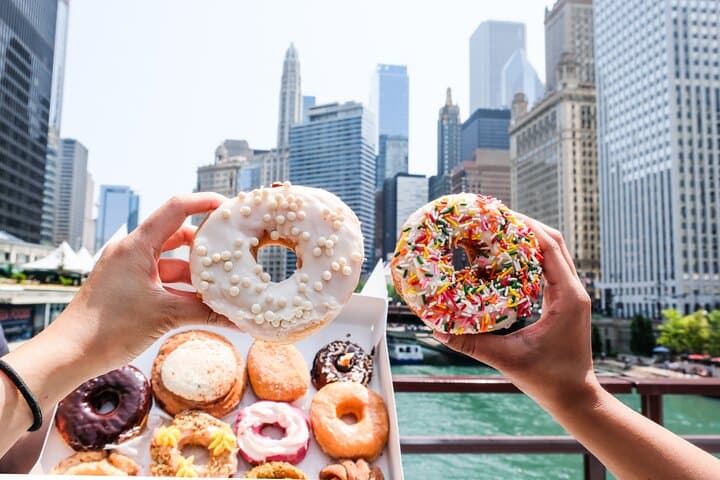
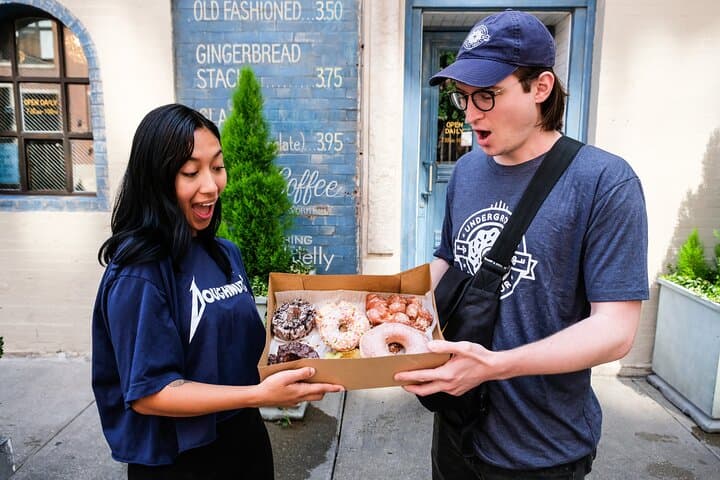
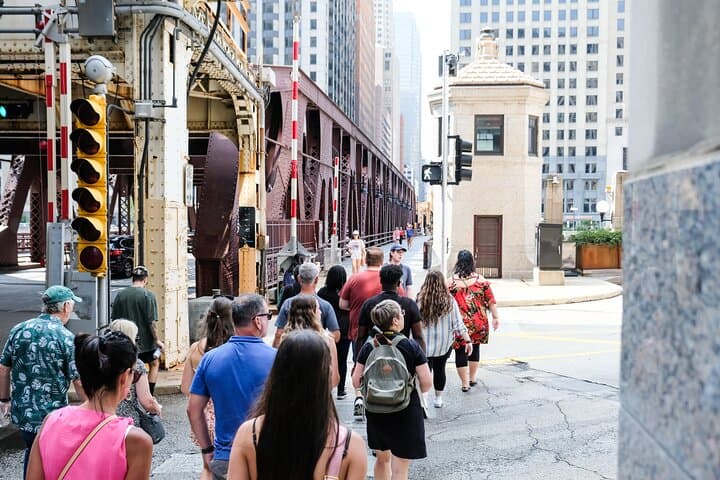
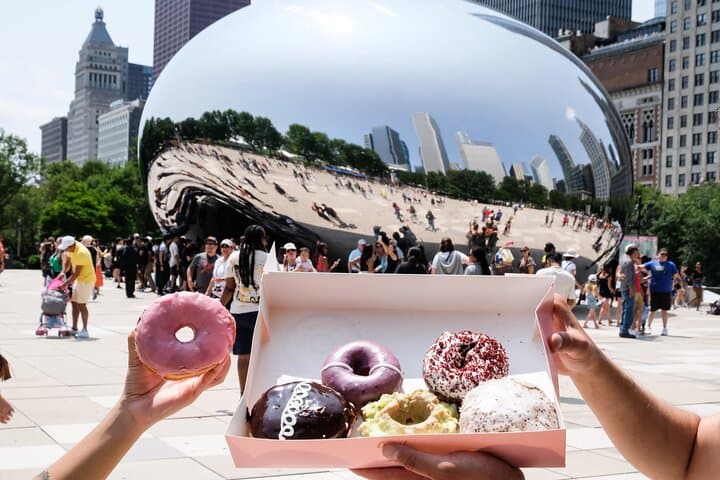
The morning starts with a small crowd and the smell of frying sugar curling through a narrow alley off Franklin Street. A line forms outside Doughnut Vault — a small storefront that feels both irreverent and ritualized — as the guide counts heads and promises you’ll try flavors that don’t show up on menus. You move off the curb, donuts in paper bags, and the city opens up: glass facades reflecting the river, bridges creaking, and the steady hum of downtown waking up.
The morning starts with a small crowd and the smell of frying sugar curling through a narrow alley off Franklin Street. A line forms outside Doughnut Vault — a small storefront that feels both irreverent and ritualized — as the guide counts heads and promises you’ll try flavors that don’t show up on menus. You move off the curb, donuts in paper bags, and the city opens up: glass facades reflecting the river, bridges creaking, and the steady hum of downtown waking up.
This two-hour walking tour threads four of Chicago’s most talked-about donut shops through the Loop and River North. The route is less about exhaustive neighborhood history than it is about place-making: the Merchandise Mart’s industrial scale, the Chicago River’s engineered reversal, and Michigan Avenue’s parade of commercial architecture create context for why foodways here mix old-school bakery craft with inventive, seasonal flavors.
Chicago’s story is geological and civic at once. Lake Michigan carved the city’s shoreline and the Chicago River’s banks were reworked in the 19th century to redirect industrial runoff — a human reshaping that made the riverfront a stage for commerce and, today, for coffee-and-donut commerce. The shops you visit are modern heirs to a long local tradition of neighborhood bakeries: each stop reveals a different approach to the same simple goal — perfect dough, well-timed fry, balanced glaze.
Along the way you’ll hear shop-specific lore: one morning-only window that sells out in minutes, a local artisan who sources butter from a Midwestern creamery, a shop that builds seasonal flavors from hyper-local fruit. Guides mix this with practical local knowledge: crosswalk etiquette on the busy bridges, the best vantage for skyline photos, and transit options to return downtown.
Practicalities are simple. Expect 1–1.5 miles of mostly flat, paved walking at a leisurely pace. Donuts for sampling are included; you can buy extra. The tour is wheelchair and stroller accessible, and most stops accept cards, though small cash tips are appreciated. Bring a reusable water bottle — sugar demands it — and dress for city weather: wind off the river bites in winter and magnifies summer humidity.
For travelers, the trip doubles as an edible orientation to central Chicago; it’s sensory, short on exertion, and heavy on flavor and skyline moments. Whether you’re chasing a classic glazed or a seasonal surprise, the Underground Donut Tour is a compact, practical way to taste the city while walking its most iconic streets.