THE ADVENTURE COLLECTIVE® · Independent discovery and booking for outdoor travel

Float beneath Chicago’s bridges and listen as expert docents map the city’s skyline on the award-winning First Lady river cruise. This 90-minute tour unpacks architecture, engineering, and urban history while offering unbeatable river-level views.
Float beneath Chicago’s bridges and listen as expert docents map the city’s skyline on the award-winning First Lady river cruise. This 90-minute tour unpacks architecture, engineering, and urban history while offering unbeatable river-level views.
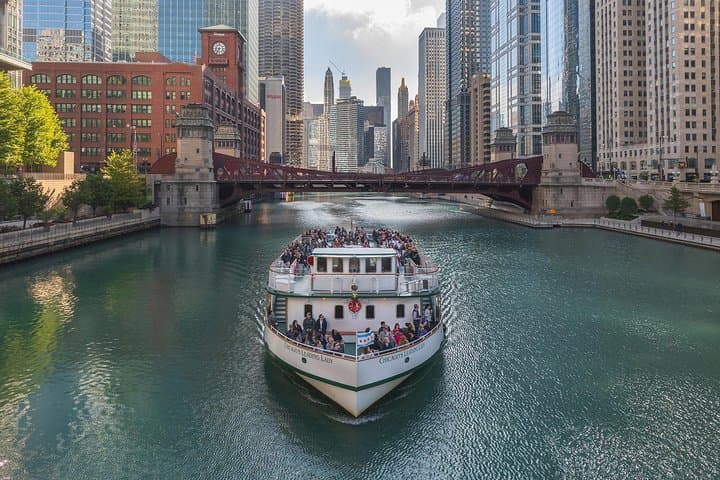
The boat eases away from the Michigan Avenue Bridge with the city folding open on either side: limestone cornices give way to glass skins, cast-iron facades step aside for cantilevered balconies, and the Chicago River, once a working artery of industry, now threads a calmer course through it all.
Verified experiences and guided adventures in the surrounding area.
Operated by Chicago Architecture Foundation & Chicago's First Lady Cruises · Chicago, Illinois
The boat eases away from the Michigan Avenue Bridge with the city folding open on either side: limestone cornices give way to glass skins, cast-iron facades step aside for cantilevered balconies, and the Chicago River, once a working artery of industry, now threads a calmer course through it all.
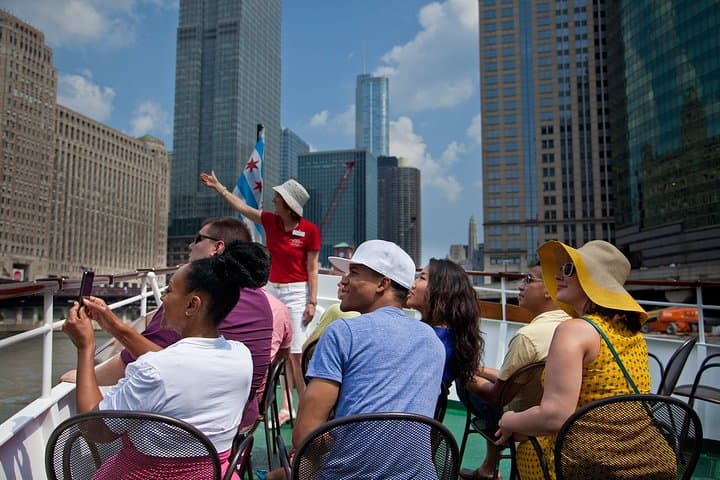
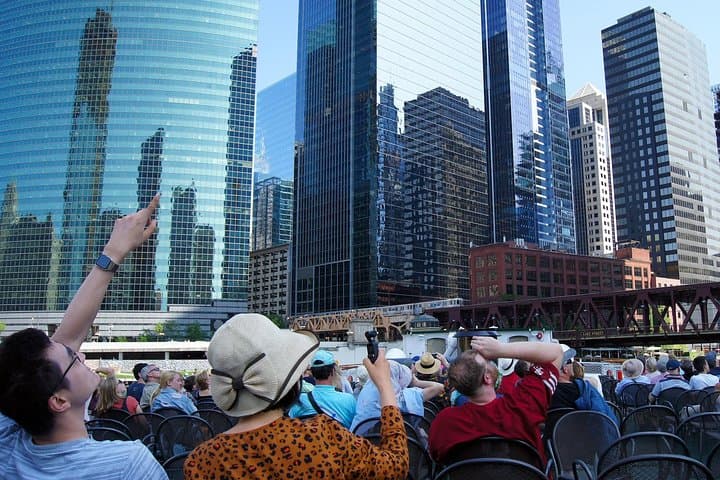
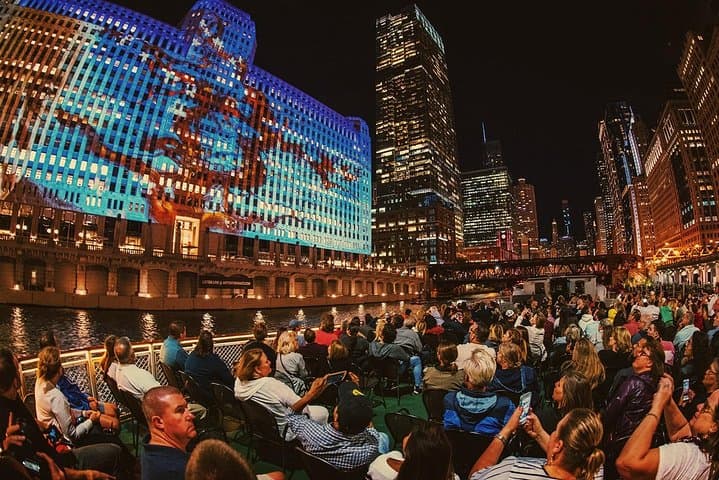
On the Chicago Architecture Center River Cruise aboard the First Lady, expert docents narrate 90 minutes of structural ambition and civic reinvention. From the lower, climate-controlled cabin to the open-air upper deck, the tour reads like an annotated skyline—stories of the Great Fire’s aftermath, the audacity of early skyscrapers, and mid-century experiments like Marina City. Pass under trussed rail bridges and beside restored warehouses that quietly hint at the river’s freight and shipping past.
Chicago’s river has its own engineered biography: engineers reversed its flow in the early 20th century to protect public health, and old riverbanks that once stacked lumber and coal now anchor promenades and parks. The cruise highlights this layered urban geology—reclaimed industrial piers turned into entertainment hubs, adaptive-reuse projects that kept brick and beam while inserting glass and life. Docents don't just list architects; they place design choices in social context: why developers gambled on mixed-use towers during postwar flight, and how civic priorities shifted toward public waterfront access in the 1990s.
The First Lady is operated by a certified nonprofit; ticket revenue supports architecture education and city engagement. That makes the cruise equal parts sightseeing and civic investment.
Practical guidance: arrive 30 minutes before departure to pick up tickets at the dockside box office (112 E. Wacker is the GPS address). Boarding is first-come, first-served—grab the upper deck early for unobstructed views and late-afternoon light. There’s an onboard restroom and a climate-controlled lower level, but expect wind and sun on the open deck; a lightweight windbreaker goes far. The operator advises against motorized scooters and electric wheelchairs aboard for safety, though manual wheelchair transfer may be possible—call ahead if you require assistance.
Timing matters. Morning sails give softer crowds and crisper light for detail shots; golden hour turns façades to warm relief. The cruise operates in most weather conditions, so dress in layers and bring a small waterproof if rain is forecast. It’s not recommended for children under 12.
Whether you’re a first-time visitor or a repeat Chicagoan, the First Lady offers a focused, docent-driven way to read the city from the water—a perspective that clarifies how architecture, transport, and civic policy shaped the skyline you see today.
easy.
90 minutes.
Suitable for all fitness levels; mostly seated with short boarding steps
The tour is 90 minutes long and departs from the Chicago Riverwalk at Michigan Avenue and Wacker Drive.
Most departures are wheelchair accessible but motorized scooters and electric wheelchairs cannot be accommodated; guests who can transfer may use a manual wheelchair—advise at booking.
Yes, there are restrooms available in the climate-controlled lower level of the boat.
All sales are final; tickets are non-refundable and non-transferable according to the operator’s policy.
The cruise is not recommended for children under 12 and children must be accompanied by an adult.
Arrive at least 30 minutes before departure to redeem your voucher and line up for boarding; tickets are held at the box office until 10 minutes prior to sail time.
Engineers reversed the flow of the Chicago River in the early 1900s to protect Lake Michigan’s drinking water; the river corridor later became a focus of urban renewal and public-access projects.
The cruise operator is a nonprofit that supports architecture education; ongoing river cleanup and restoration efforts aim to improve water quality and habitat along the corridor.
Chicago Architecture Foundation & Chicago's First Lady Cruises operates guided outdoor trips and adventures with an emphasis on safety, stewardship, and memorable experiences.
The boat eases away from the Michigan Avenue Bridge with the city folding open on either side: limestone cornices give way to glass skins, cast-iron facades step aside for cantilevered balconies, and the Chicago River, once a working artery of industry, now threads a calmer course through it all.
The boat eases away from the Michigan Avenue Bridge with the city folding open on either side: limestone cornices give way to glass skins, cast-iron facades step aside for cantilevered balconies, and the Chicago River, once a working artery of industry, now threads a calmer course through it all.
On the Chicago Architecture Center River Cruise aboard the First Lady, expert docents narrate 90 minutes of structural ambition and civic reinvention. From the lower, climate-controlled cabin to the open-air upper deck, the tour reads like an annotated skyline—stories of the Great Fire’s aftermath, the audacity of early skyscrapers, and mid-century experiments like Marina City. Pass under trussed rail bridges and beside restored warehouses that quietly hint at the river’s freight and shipping past.
Chicago’s river has its own engineered biography: engineers reversed its flow in the early 20th century to protect public health, and old riverbanks that once stacked lumber and coal now anchor promenades and parks. The cruise highlights this layered urban geology—reclaimed industrial piers turned into entertainment hubs, adaptive-reuse projects that kept brick and beam while inserting glass and life. Docents don't just list architects; they place design choices in social context: why developers gambled on mixed-use towers during postwar flight, and how civic priorities shifted toward public waterfront access in the 1990s.
The First Lady is operated by a certified nonprofit; ticket revenue supports architecture education and city engagement. That makes the cruise equal parts sightseeing and civic investment.
Practical guidance: arrive 30 minutes before departure to pick up tickets at the dockside box office (112 E. Wacker is the GPS address). Boarding is first-come, first-served—grab the upper deck early for unobstructed views and late-afternoon light. There’s an onboard restroom and a climate-controlled lower level, but expect wind and sun on the open deck; a lightweight windbreaker goes far. The operator advises against motorized scooters and electric wheelchairs aboard for safety, though manual wheelchair transfer may be possible—call ahead if you require assistance.
Timing matters. Morning sails give softer crowds and crisper light for detail shots; golden hour turns façades to warm relief. The cruise operates in most weather conditions, so dress in layers and bring a small waterproof if rain is forecast. It’s not recommended for children under 12.
Whether you’re a first-time visitor or a repeat Chicagoan, the First Lady offers a focused, docent-driven way to read the city from the water—a perspective that clarifies how architecture, transport, and civic policy shaped the skyline you see today.