THE ADVENTURE COLLECTIVE® · Independent discovery and booking for outdoor travel

Float under Chicago’s moving bridges and past more than 40 landmark buildings on a 75‑minute guided river cruise. An expert guide decodes the city’s skyline while the river frames a practical tour of history, engineering, and photo-ready views.
Float under Chicago’s moving bridges and past more than 40 landmark buildings on a 75‑minute guided river cruise. An expert guide decodes the city’s skyline while the river frames a practical tour of history, engineering, and photo-ready views.
The boat eases away from the dock and the city rearranges itself—glass facades tilt, limestone cornices step forward, and a chorus of bascule bridges lifts like mechanical brows. From the stern you can feel the river push you through a century of design: the Chicago River narrows, then opens, presenting row after row of facades that read like chapters — Beaux-Arts clocks, mid-century glass, and the cantilevered modernism of recent towers.
Verified experiences and guided adventures in the surrounding area.
Operated by Shoreline Sightseeing · Chicago, IL
The boat eases away from the dock and the city rearranges itself—glass facades tilt, limestone cornices step forward, and a chorus of bascule bridges lifts like mechanical brows. From the stern you can feel the river push you through a century of design: the Chicago River narrows, then opens, presenting row after row of facades that read like chapters — Beaux-Arts clocks, mid-century glass, and the cantilevered modernism of recent towers.
The cruise traces the city’s architectural evolution and a very human history. The river here is no natural luxury; it was engineered and reversed in the early 20th century to protect public health and to fuel industrial growth. After the Great Chicago Fire of 1871, rebuilding became an act of invention: steel frames replaced timber, ornament gave way to pragmatic curtain walls, and architects from Burnham to Mies shaped the skyline. The waterway’s movable bridges and bulkheaded banks reflect that pragmatic urgency—structures built to carry commerce and the spectacle of a rising metropolis.
Geology is subtle but present: the river cuts across the clay and sand of the old lakeplain, where early developers piled fill to plant streets and plazas. That engineered ground supports colossal loads; it also helps explain why the river’s course and banks were altered repeatedly to balance shipping needs, sanitation, and urban planning.
Ride with an expert guide and the cruise becomes more than a catalog of facades. You’ll hear about the quirky details—stones embedded in a neo-Gothic tower taken from distant landmarks, the way a certain cornice repels pigeons, and the social maneuvers that saved or doomed buildings across decades. Cultural life flows off the river too: promenades, the Riverwalk cafes, and small public artworks that reward a second look.
Practical guidance: cruises depart from two docks (Navy Pier and Michigan Avenue); choose your starting point carefully and arrive 15 minutes early. Tours run roughly 75 minutes in peak months (60 minutes during winter schedule). Boats have restrooms, a full bar, and English-language live commentary; most vessels are pet-friendly and Navy Pier departures offer wheelchair access. Expect mild motion on the river—choose seating on the top deck for open views and inside seats if wind or cold is a concern.
Timing and photography matter: early evening light softens limestone and gives glass towers color; midday clears details for closer shots beneath the bridges. Bring a lightweight layer—the river corridor channels wind—and a charged phone for panoramic shots. For a quick, informative, and comfortable orientation to Chicago’s built environment, few experiences match the direct perspective of the river. It’s a moving classroom with the skyline as the whiteboard.
easy.
75 minutes.
Suitable for all fitness levels; minimal mobility required to board
Standard departures run 75 minutes; between November and April, tours operate as 60‑minute excursions.
Options include 124 N Streeter Drive (Navy Pier Shoreline docks) and 401 N Michigan Avenue (Shoreline docks at Pioneer Court); confirm the dock on your ticket.
Yes—most boats have full restrooms and a full bar; food options vary by vessel.
Wheelchair access is available from the Navy Pier dock; accessibility at Michigan Avenue departures may be limited—contact the operator if you require assistance.
Cruises are dog‑friendly, but pets must be controlled and owners are responsible for behavior and any fees.
Live expert commentary is provided in English; confirm special-language options with the operator in advance.
The Chicago River’s course and flow were dramatically altered in the early 20th century (the river reversal) to improve sanitation and support the city’s industrial expansion; the river corridor later became a canvas for civic architecture after the 1871 rebuilding.
Ongoing restoration and water‑quality projects have improved the river’s ecology; choose operators who follow no‑discharge policies and support river cleanup efforts.
Shoreline Sightseeing operates guided outdoor trips and adventures with an emphasis on safety, stewardship, and memorable experiences.
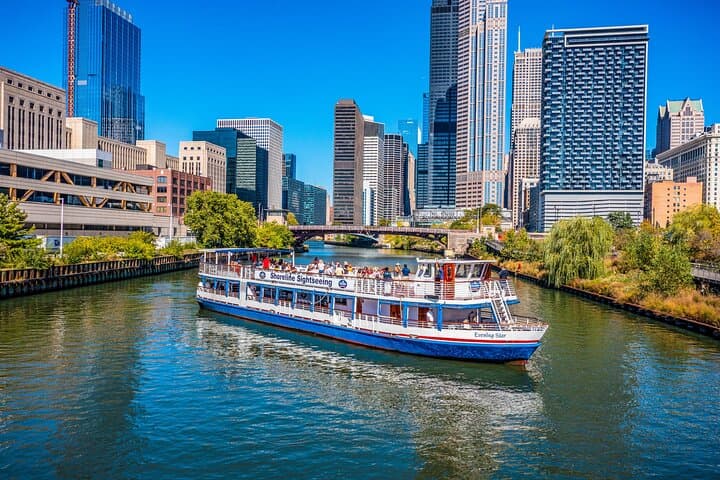
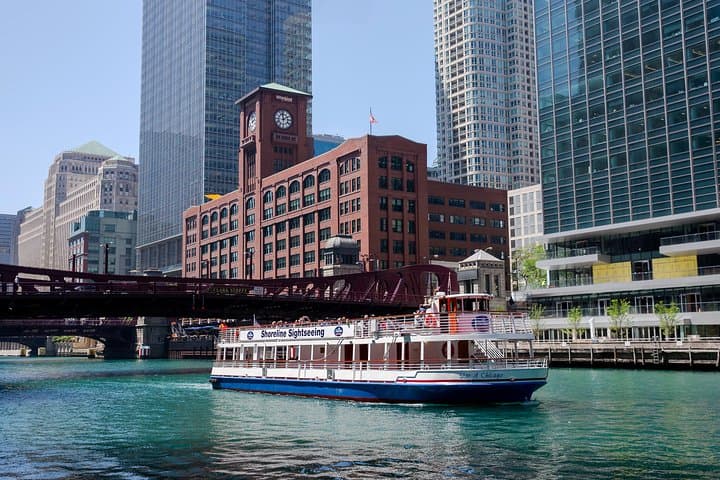
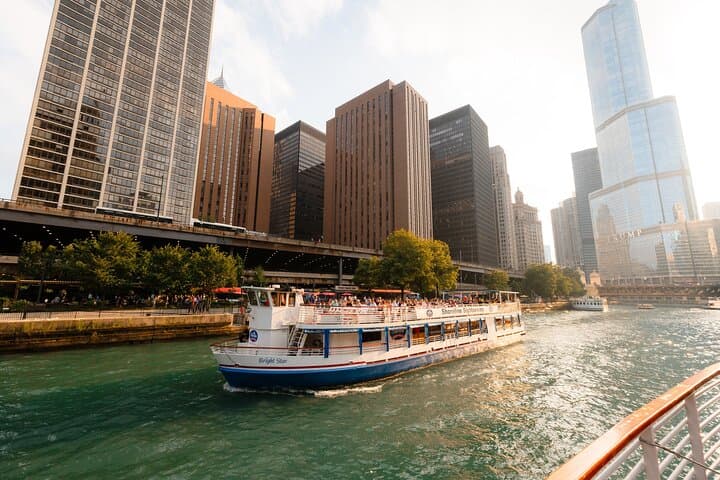
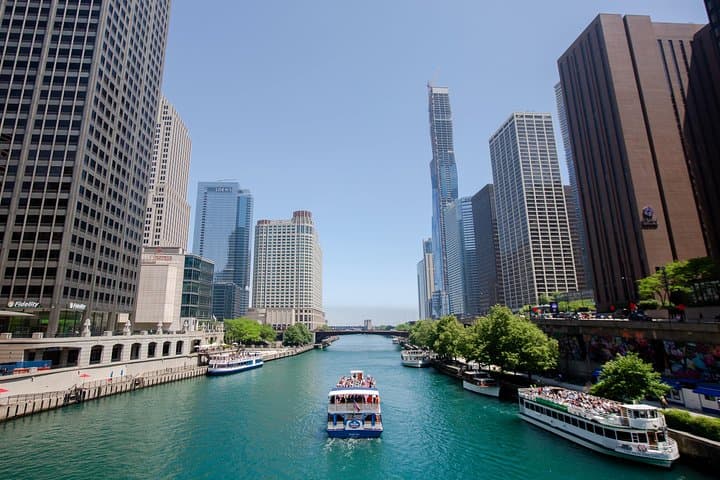
The boat eases away from the dock and the city rearranges itself—glass facades tilt, limestone cornices step forward, and a chorus of bascule bridges lifts like mechanical brows. From the stern you can feel the river push you through a century of design: the Chicago River narrows, then opens, presenting row after row of facades that read like chapters — Beaux-Arts clocks, mid-century glass, and the cantilevered modernism of recent towers.
The boat eases away from the dock and the city rearranges itself—glass facades tilt, limestone cornices step forward, and a chorus of bascule bridges lifts like mechanical brows. From the stern you can feel the river push you through a century of design: the Chicago River narrows, then opens, presenting row after row of facades that read like chapters — Beaux-Arts clocks, mid-century glass, and the cantilevered modernism of recent towers.
The cruise traces the city’s architectural evolution and a very human history. The river here is no natural luxury; it was engineered and reversed in the early 20th century to protect public health and to fuel industrial growth. After the Great Chicago Fire of 1871, rebuilding became an act of invention: steel frames replaced timber, ornament gave way to pragmatic curtain walls, and architects from Burnham to Mies shaped the skyline. The waterway’s movable bridges and bulkheaded banks reflect that pragmatic urgency—structures built to carry commerce and the spectacle of a rising metropolis.
Geology is subtle but present: the river cuts across the clay and sand of the old lakeplain, where early developers piled fill to plant streets and plazas. That engineered ground supports colossal loads; it also helps explain why the river’s course and banks were altered repeatedly to balance shipping needs, sanitation, and urban planning.
Ride with an expert guide and the cruise becomes more than a catalog of facades. You’ll hear about the quirky details—stones embedded in a neo-Gothic tower taken from distant landmarks, the way a certain cornice repels pigeons, and the social maneuvers that saved or doomed buildings across decades. Cultural life flows off the river too: promenades, the Riverwalk cafes, and small public artworks that reward a second look.
Practical guidance: cruises depart from two docks (Navy Pier and Michigan Avenue); choose your starting point carefully and arrive 15 minutes early. Tours run roughly 75 minutes in peak months (60 minutes during winter schedule). Boats have restrooms, a full bar, and English-language live commentary; most vessels are pet-friendly and Navy Pier departures offer wheelchair access. Expect mild motion on the river—choose seating on the top deck for open views and inside seats if wind or cold is a concern.
Timing and photography matter: early evening light softens limestone and gives glass towers color; midday clears details for closer shots beneath the bridges. Bring a lightweight layer—the river corridor channels wind—and a charged phone for panoramic shots. For a quick, informative, and comfortable orientation to Chicago’s built environment, few experiences match the direct perspective of the river. It’s a moving classroom with the skyline as the whiteboard.