THE ADVENTURE COLLECTIVE® · Independent discovery and booking for outdoor travel

A full-day escape from Marrakech that delivers dramatic 110‑metre cascades, terrace lunches, and close encounters with Barbary macaques. Practical route, local context, and what to pack for the loop trail at Ouzoud.
A full-day escape from Marrakech that delivers dramatic 110‑metre cascades, terrace lunches, and close encounters with Barbary macaques. Practical route, local context, and what to pack for the loop trail at Ouzoud.
The bus eases off the highway and the air changes — dust thins, oleander scent sharpens, and a ribbon of water soon calls from a cut in the red cliffs. By the time you step out, the falls have already announced themselves: a cool roar, a spray that threads sunlight into tiny rainbows, and terraces of flat stones where villagers and visitors trade silence for that first clear view.
Verified experiences and guided adventures in the surrounding area.
Operated by Traces Berbres Voyages · Ouzoud, Azilal Province
The bus eases off the highway and the air changes — dust thins, oleander scent sharpens, and a ribbon of water soon calls from a cut in the red cliffs. By the time you step out, the falls have already announced themselves: a cool roar, a spray that threads sunlight into tiny rainbows, and terraces of flat stones where villagers and visitors trade silence for that first clear view.
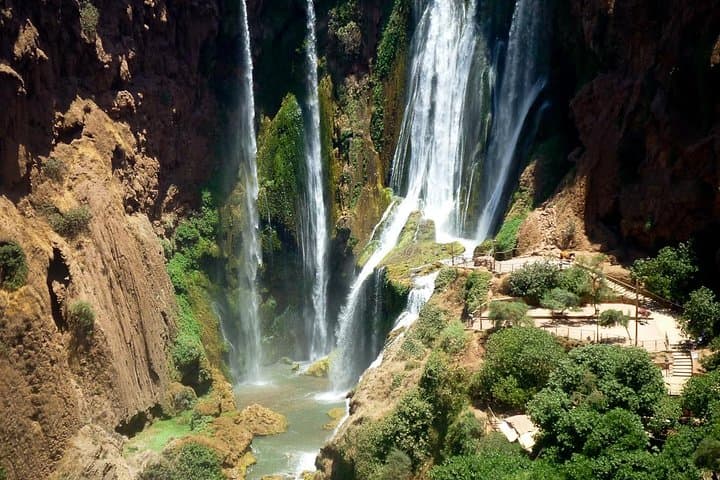
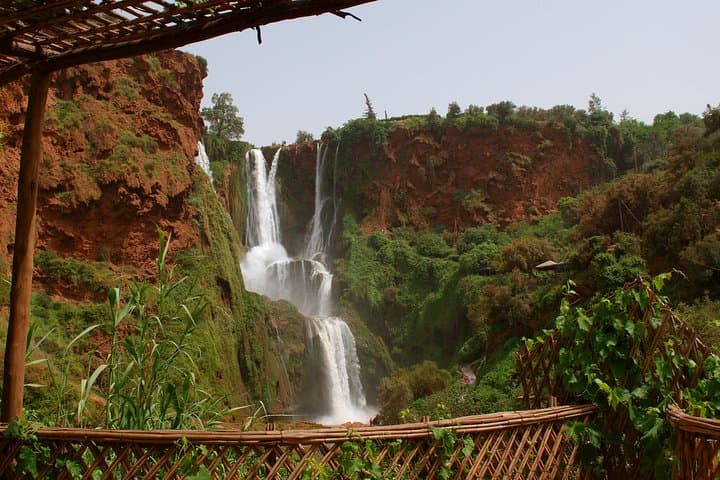
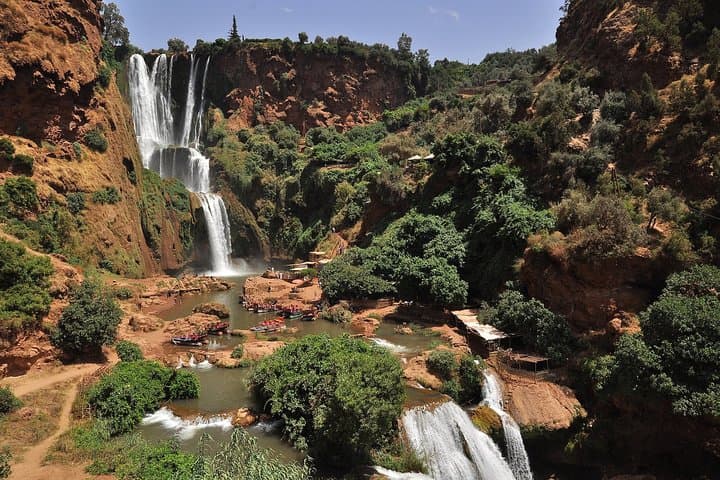
Ouzoud is not one curtain of water but a stair of cascades, the main drop measuring roughly 110 metres. The river has carved a narrow gorge in Miocene-era sandstone and conglomerate, and human hands have long worked alongside it: the stone mills at the top of the falls date back centuries and were once driven by the same force that still powers the cataracts.
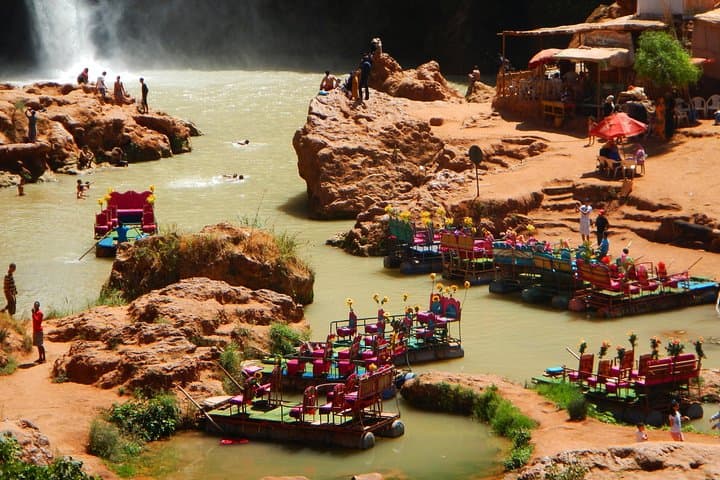
Culturally the valley is simple and direct. Local Berber communities run the guest terraces that line the gorge, and the economy of the village revolves around olive groves and tourism. Barbary macaques and an array of river birds — kingfishers and herons among them — add the unpredictable element. Historically, the mills and paths reflect a pattern of small-scale industry; today, careful stewardship is a growing concern as visitor numbers rise.
The full-day tour from Marrakech typically covers about 150 km each way, with a door-to-door schedule near eight hours. Expect roughly five hours on-site to follow the loop trail that drops to the base and climbs to the rim — plan on 2.5–3 kilometres of walking with stone steps and uneven trails and a cumulative ascent approaching 150 metres if you explore every viewpoint. Terrain shifts quickly: sun-exposed tracks, shaded gorge steps, and slippery rock near the spray.
Practical planning is straightforward. Leave early: mid-morning gets crowded and light flattens the falls. Sturdy footwear and a light rain shell are smart — the spray cools the air and the path can be greasy. Bring cash for terrace lunches and tips; many of the best viewpoints are on family-run terraces where the tagine arrives still steaming. Water: carry at least 1.5 litres per person, more in summer. Keep a respectful distance from the macaques and avoid feeding them; they are curious and quick, and interactions stress wildlife.
Photography is rewarding at dawn and late afternoon when side-light sculpts the cliffs and rainbows form in the mist. If you want a quieter tableau, walk the upper rim toward the old mills for broad vistas, or head down to the river for a foreground of mossy stones and churning water.
Logistically, the tour is popular with those on limited time in Marrakech — an immersive natural day trip that balances accessible walking with a rare, high-energy landscape.
moderate.
8 hours.
Comfortable walking fitness; able to manage 2.5–3 km on uneven stone steps and short steep sections.
Expect about 150 km each way — roughly 2.5–3 hours of driving one way depending on traffic, with the tour structured to give about five hours at the falls.
Yes; the tour notes stroller accessibility for some sections, but parents should be prepared for stairs and uneven ground and supervise children near edges and water.
Swimming is possible in calmer sections of the river but isn’t always safe near strong currents and is not generally part of the guided visit; check locally before entering the water.
Lunch is typically not included; there are multiple terraces and restaurants at the falls where you can buy traditional tagine and drinks — bring cash.
You often will; the macaques frequent the viewing areas and terraces, but sightings aren’t guaranteed. Keep distance and don’t feed them.
The site includes stairs and uneven paths, so it’s not ideal for people with significant mobility limitations, though parts of the upper viewpoints are more accessible.
The valley’s stone mills and terraced farms reflect centuries of local use of water power; mills once ground grain for the surrounding villages.
Rising visitor numbers put pressure on trails and wildlife; stick to marked paths, avoid feeding animals, and support local family-run terraces to keep tourism sustainable.
Traces Berbres Voyages operates guided outdoor trips and adventures with an emphasis on safety, stewardship, and memorable experiences.
The bus eases off the highway and the air changes — dust thins, oleander scent sharpens, and a ribbon of water soon calls from a cut in the red cliffs. By the time you step out, the falls have already announced themselves: a cool roar, a spray that threads sunlight into tiny rainbows, and terraces of flat stones where villagers and visitors trade silence for that first clear view.
The bus eases off the highway and the air changes — dust thins, oleander scent sharpens, and a ribbon of water soon calls from a cut in the red cliffs. By the time you step out, the falls have already announced themselves: a cool roar, a spray that threads sunlight into tiny rainbows, and terraces of flat stones where villagers and visitors trade silence for that first clear view.
Ouzoud is not one curtain of water but a stair of cascades, the main drop measuring roughly 110 metres. The river has carved a narrow gorge in Miocene-era sandstone and conglomerate, and human hands have long worked alongside it: the stone mills at the top of the falls date back centuries and were once driven by the same force that still powers the cataracts.
Culturally the valley is simple and direct. Local Berber communities run the guest terraces that line the gorge, and the economy of the village revolves around olive groves and tourism. Barbary macaques and an array of river birds — kingfishers and herons among them — add the unpredictable element. Historically, the mills and paths reflect a pattern of small-scale industry; today, careful stewardship is a growing concern as visitor numbers rise.
The full-day tour from Marrakech typically covers about 150 km each way, with a door-to-door schedule near eight hours. Expect roughly five hours on-site to follow the loop trail that drops to the base and climbs to the rim — plan on 2.5–3 kilometres of walking with stone steps and uneven trails and a cumulative ascent approaching 150 metres if you explore every viewpoint. Terrain shifts quickly: sun-exposed tracks, shaded gorge steps, and slippery rock near the spray.
Practical planning is straightforward. Leave early: mid-morning gets crowded and light flattens the falls. Sturdy footwear and a light rain shell are smart — the spray cools the air and the path can be greasy. Bring cash for terrace lunches and tips; many of the best viewpoints are on family-run terraces where the tagine arrives still steaming. Water: carry at least 1.5 litres per person, more in summer. Keep a respectful distance from the macaques and avoid feeding them; they are curious and quick, and interactions stress wildlife.
Photography is rewarding at dawn and late afternoon when side-light sculpts the cliffs and rainbows form in the mist. If you want a quieter tableau, walk the upper rim toward the old mills for broad vistas, or head down to the river for a foreground of mossy stones and churning water.
Logistically, the tour is popular with those on limited time in Marrakech — an immersive natural day trip that balances accessible walking with a rare, high-energy landscape.