THE ADVENTURE COLLECTIVE® · Independent discovery and booking for outdoor travel

Drive the famous 9 km Chapman's Peak, watch African penguins at Boulders Beach, ride the funicular to Cape Point lighthouse and pause at the Cape of Good Hope — all in one eight-hour loop from Cape Town. Practical tips on timing, terrain and conservation help you make the most of the day.
Drive the famous 9 km Chapman's Peak, watch African penguins at Boulders Beach, ride the funicular to Cape Point lighthouse and pause at the Cape of Good Hope — all in one eight-hour loop from Cape Town. Practical tips on timing, terrain and conservation help you make the most of the day.
The tour unfolds like a coastal novella: a low morning sun glances off Atlantic spray while the minivan snakes up Chapman's Peak Drive, a 9 km ribbon of asphalt with 114 hairpin curves that dares drivers and passengers alike to look away.
Verified experiences and guided adventures in the surrounding area.
Operated by JST Adventures · Cape Town, Western Cape
The tour unfolds like a coastal novella: a low morning sun glances off Atlantic spray while the minivan snakes up Chapman's Peak Drive, a 9 km ribbon of asphalt with 114 hairpin curves that dares drivers and passengers alike to look away.
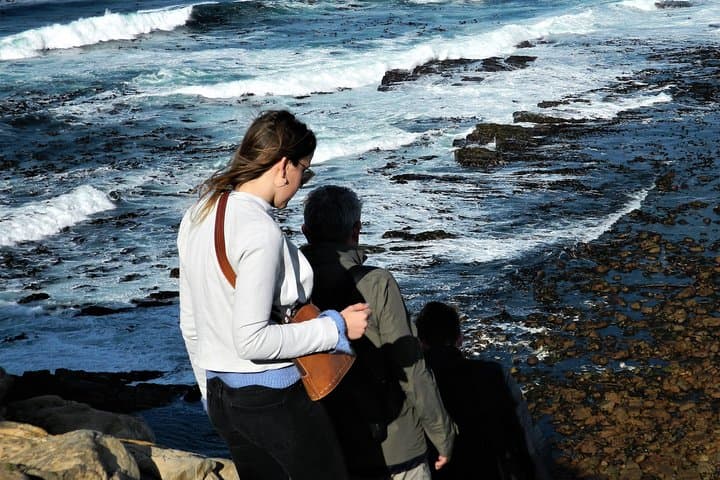
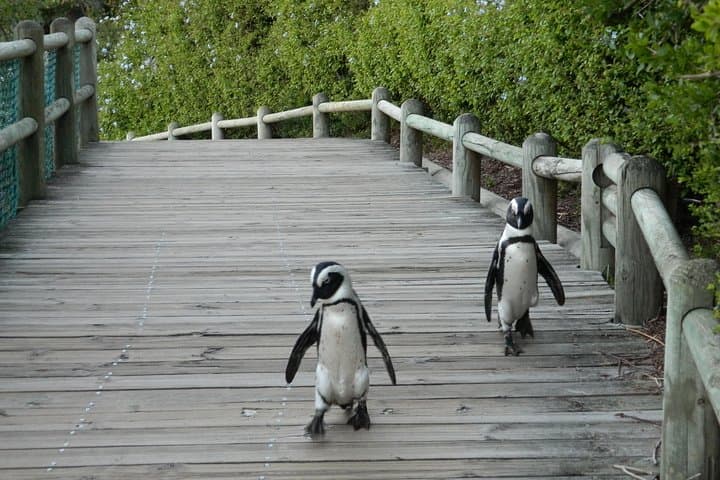
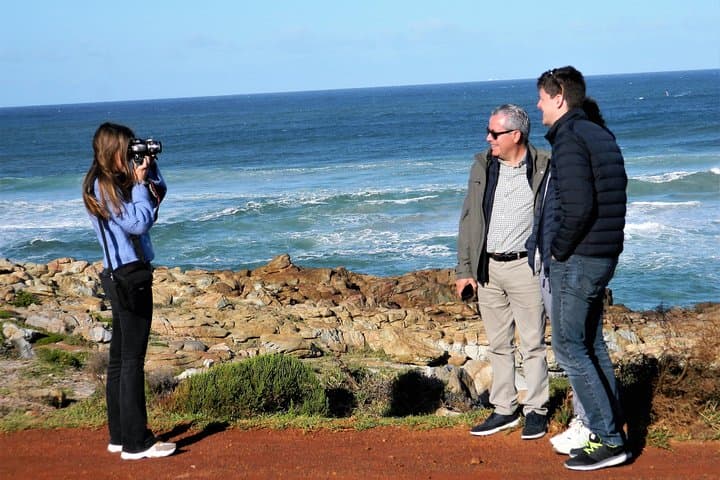
From the car window the shore drops away in stepped bays of sand and boulder, the ocean stretching toward South America. At a lookout the group disembarks for a quick photo stop — wind pushing hairs and thoughts toward the sea — before the road releases them down toward Simon's Town and the wooden boardwalks of Boulders Beach, where the African penguin colony operates on its own timetable, waddling between kelp and granite.
History and geology sit side by side here. Chapman's Peak Drive cuts through Table Mountain sandstone folded during the Cape Orogeny; the rounded granite outcrops around Boulders are part of a much older geological story. Cape Point and the Cape of Good Hope are maritime landmarks with centuries of shipwreck and exploration lore — Portuguese sailors rounded these rocks in the 1400s and later British naval bases defined Simon's Town. Today the area is part of Table Mountain National Park, where cultural threads from local fishing communities to naval history remain visible at every stop.
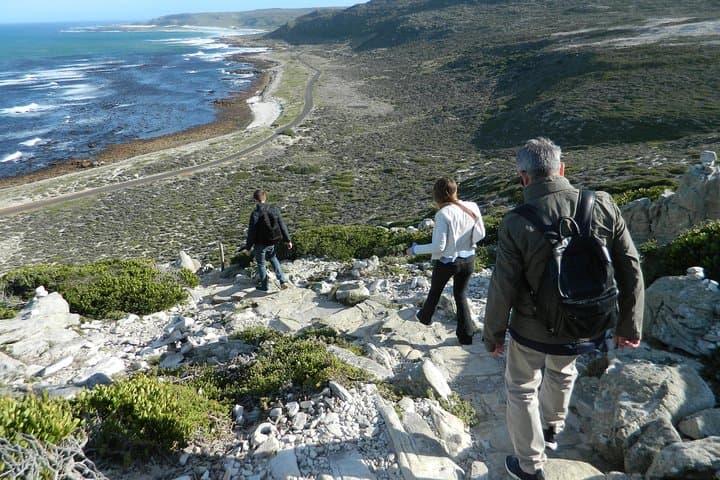
Practicalities anchor the romance. The full loop runs about eight hours total, with several short walks: boardwalk access at Boulders is flat and stroller-friendly, while a short coastal hike at Cape Point to a higher viewpoint can take 30–45 minutes round-trip with roughly 100–200 m of elevation gain depending on the route. The Flying Dutchman Funicular offers a 3-minute, wheelchair-friendly shuttle to the lighthouse for those who prefer to skip the steps.
Travelers should expect mixed terrain: paved roadside overlooks, wooden boardwalks, and rocky trail underfoot at the viewpoints. Cape Point entry fees are typically paid on-site, so carry a credit card or cash. Dress in layers — Atlantic weather is famously changeable — and bring sun protection, a windproof layer, and good shoes for the short hikes. Respect park rules: stick to boardwalks around penguins and avoid approaching or feeding wildlife.
By afternoon the tour eases down Stirling and False Bay toward St James, where multi-colored bathing huts sit in a quiet row, an ideal end-point for a dip or a slow walk before returning to Cape Town. In a single day you meet dramatic coastal geology, an endangered penguin colony, a working naval town and classic lighthouse panoramas — all held together by the road that makes the Cape's wild edge accessible.
moderate.
8 hours.
Light to moderate fitness: mostly vehicle-based with short walks of up to 1–2 km and a 30–45 minute coastal hike option; be prepared for some stairs and uneven trail.
The tour is approximately 8 hours from pickup to drop-off, including stops at Chapman's Peak, Boulders Beach, Cape Point and St James Beach.
Cape Point admission is typically not included; plan to pay the park entry fee and any funicular ride on-site.
Boardwalks at Boulders Beach bring you close to the African penguins while protecting the colony; do not touch or feed them.
Boulders Beach boardwalks and many lookouts are stroller-friendly, but Cape Point trails can be steep; child seating is available in vehicles if needed.
If Chapman's Peak Drive is closed for maintenance or weather the itinerary adjusts to alternate scenic coastal routes; check with the operator on the day of travel.
Snacks and bottled water are provided, but bring any special dietary items; there are cafés near Cape Point and Simon's Town for lunch or refreshments.
The Cape's headlands have been major maritime navigation points since Portuguese explorers rounded the peninsula in the 15th century; Simon's Town later became an important Royal and South African naval base.
Cape Point and Boulders Beach are part of Table Mountain National Park and SANParks-led conservation programs; stay on boardwalks and avoid disturbing nesting or resting animals to support recovery efforts.
JST Adventures operates guided outdoor trips and adventures with an emphasis on safety, stewardship, and memorable experiences.
The tour unfolds like a coastal novella: a low morning sun glances off Atlantic spray while the minivan snakes up Chapman's Peak Drive, a 9 km ribbon of asphalt with 114 hairpin curves that dares drivers and passengers alike to look away.
The tour unfolds like a coastal novella: a low morning sun glances off Atlantic spray while the minivan snakes up Chapman's Peak Drive, a 9 km ribbon of asphalt with 114 hairpin curves that dares drivers and passengers alike to look away.
From the car window the shore drops away in stepped bays of sand and boulder, the ocean stretching toward South America. At a lookout the group disembarks for a quick photo stop — wind pushing hairs and thoughts toward the sea — before the road releases them down toward Simon's Town and the wooden boardwalks of Boulders Beach, where the African penguin colony operates on its own timetable, waddling between kelp and granite.
History and geology sit side by side here. Chapman's Peak Drive cuts through Table Mountain sandstone folded during the Cape Orogeny; the rounded granite outcrops around Boulders are part of a much older geological story. Cape Point and the Cape of Good Hope are maritime landmarks with centuries of shipwreck and exploration lore — Portuguese sailors rounded these rocks in the 1400s and later British naval bases defined Simon's Town. Today the area is part of Table Mountain National Park, where cultural threads from local fishing communities to naval history remain visible at every stop.
Practicalities anchor the romance. The full loop runs about eight hours total, with several short walks: boardwalk access at Boulders is flat and stroller-friendly, while a short coastal hike at Cape Point to a higher viewpoint can take 30–45 minutes round-trip with roughly 100–200 m of elevation gain depending on the route. The Flying Dutchman Funicular offers a 3-minute, wheelchair-friendly shuttle to the lighthouse for those who prefer to skip the steps.
Travelers should expect mixed terrain: paved roadside overlooks, wooden boardwalks, and rocky trail underfoot at the viewpoints. Cape Point entry fees are typically paid on-site, so carry a credit card or cash. Dress in layers — Atlantic weather is famously changeable — and bring sun protection, a windproof layer, and good shoes for the short hikes. Respect park rules: stick to boardwalks around penguins and avoid approaching or feeding wildlife.
By afternoon the tour eases down Stirling and False Bay toward St James, where multi-colored bathing huts sit in a quiet row, an ideal end-point for a dip or a slow walk before returning to Cape Town. In a single day you meet dramatic coastal geology, an endangered penguin colony, a working naval town and classic lighthouse panoramas — all held together by the road that makes the Cape's wild edge accessible.