THE ADVENTURE COLLECTIVE® · Independent discovery and booking for outdoor travel

A one-day, self-guided outing from Geneva that pairs the dizzying Aiguille du Midi cable car with the Montenvers cog railway to Mer de Glace. Skip-the-line access and pre-booked lift and train tickets make it an efficient introduction to the high Alps.
A one-day, self-guided outing from Geneva that pairs the dizzying Aiguille du Midi cable car with the Montenvers cog railway to Mer de Glace. Skip-the-line access and pre-booked lift and train tickets make it an efficient introduction to the high Alps.
You step off the shuttle into a sharp alpine light and the valley answers: gullies of stone and ribbons of snow climbing toward a skyline of serrated peaks. Chamonix moves with purpose—luggage carts roll, gondolas hum, and the Aiguille du Midi cable car waits like an elevator to the sky. In a single day this self-guided trip hands you two of the high-mountain classics: the dizzying ascent to 3,842 m on the Aiguille du Midi and the timeworn climb on the little red Montenvers cogwheel to the Mer de Glace glacier.
Verified experiences and guided adventures in the surrounding area.
Operated by Swisstours Transport · Chamonix-Mont-Blanc, Auvergne-Rhône-Alpes
You step off the shuttle into a sharp alpine light and the valley answers: gullies of stone and ribbons of snow climbing toward a skyline of serrated peaks. Chamonix moves with purpose—luggage carts roll, gondolas hum, and the Aiguille du Midi cable car waits like an elevator to the sky. In a single day this self-guided trip hands you two of the high-mountain classics: the dizzying ascent to 3,842 m on the Aiguille du Midi and the timeworn climb on the little red Montenvers cogwheel to the Mer de Glace glacier.
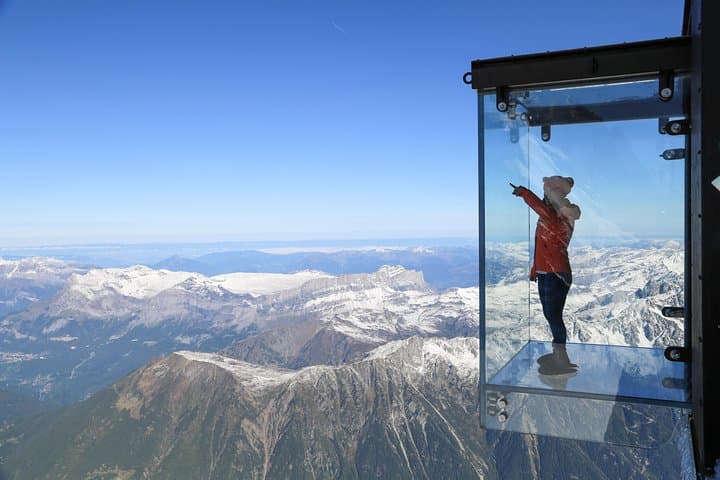
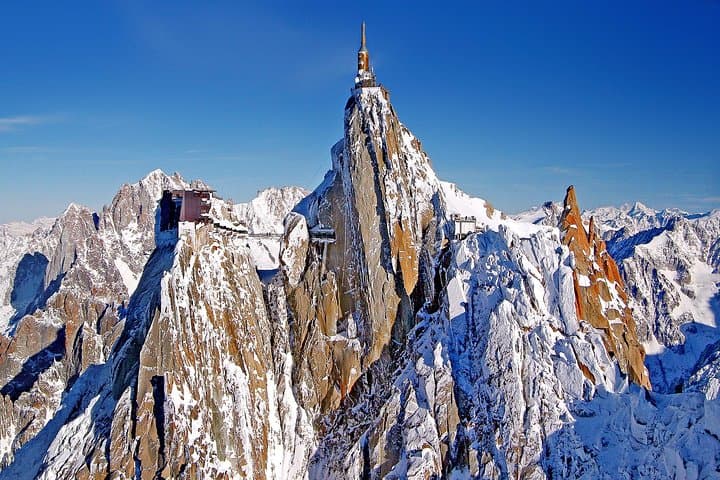
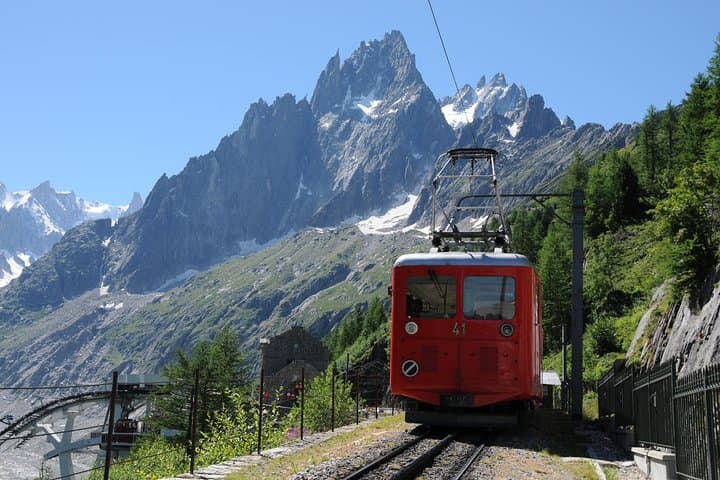
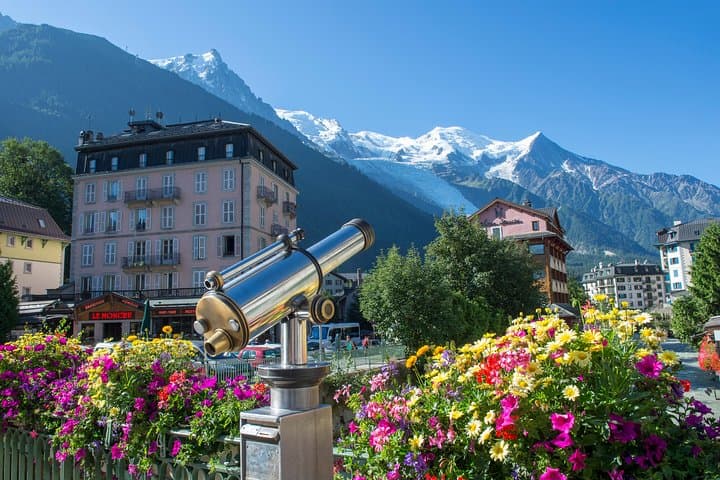
The Aiguille du Midi cable car is more than transport; it’s a vertical narrative of the Alps. You gain roughly 2,700 m in one breathless ride and step onto a balcony of stone that frames Mont Blanc (4,807 m) and its neighboring giants. The compact village of Chamonix—where modern ski lifts sit beside 19th-century mountain architecture—was an early international magnet for climbers and hosted the first Winter Olympics in 1924. The Montenvers train, by contrast, tells the language of ice: a 20-minute climb that gains about 1,000 m through forests and rock tunnels and deposits you at 1,913 m above the Mer de Glace, a glacier that stretches roughly 7 km and wears the slow lines of geological time.
Geology is visible here; cirques, seracs and moraine fields sketch the arc of ice and thaw. Locals will tell you the glacier is stubbornly moving and visibly retreating—an observation that lends urgency to any visit. Culture in Chamonix blends Alpine pragmatism and hospitality: a working mountain town where guide schools and patisseries coexist, and where alpine cuisine powers both summit attempts and relaxed afternoon strolls.
Practical details shape the day. The excursion runs about six hours; the reserved gondola and pre-ordered train tickets skip some queues but both Aiguille du Midi and Montenvers are weather-dependent and may close without refund for the multipass—alternatives can be offered. A valid passport is required for travel documentation. Expect altitude swings: take time on the summit, drink water, and avoid heavy exertion immediately after the cable car.
Pack for layering, sun, and wind. Footwear should be sturdy enough for icy steps and gravel paths. Aim to arrive early for clearer skies and thinner crowds; late afternoon often brings clouds into the valley. For photographers, the ridge lines and glacier snouts provide the most dramatic frames, while the town center offers shots of mountain architecture and alpine life. This is a compact day that places you between earth and sky—efficient, vivid and intimately educational about the forces that shape the high Alps.
easy.
6–7 hours.
Suitable for most fitness levels; expect short walks, stairs and brief periods at altitude—basic mobility required.
This self-guided option departs from Geneva; check the booking confirmation for specific meeting point and included transport—some packages include round-trip transport while others require independent arrival.
Tickets are pre-ordered but both sites operate subject to local weather and maintenance; if closed you’ll be offered alternatives, and multipass terms mean single-use may be considered consumed.
The tour is physically easy but not recommended for children under 3; infants must sit on a lap and strollers may be usable in town but not on mountain infrastructure.
Yes—participants are required to carry a current valid passport on the day of travel for documentation checks.
Ascend gradually where possible, stay hydrated, avoid heavy meals and alcohol before the summit, and descend if you experience severe symptoms like dizziness or shortness of breath.
Yes—the itinerary is built to visit both; allow time for lines and weather-related delays and prioritize the site that’s open if closures occur.
Chamonix became an international mountaineering hub in the 19th century and hosted the first Winter Olympics in 1924, shaping its tourism and guide traditions.
Mer de Glace is visibly retreating; visitors are encouraged to stay on marked paths and support local conservation initiatives that monitor glacier health.
Swisstours Transport operates guided outdoor trips and adventures with an emphasis on safety, stewardship, and memorable experiences.
You step off the shuttle into a sharp alpine light and the valley answers: gullies of stone and ribbons of snow climbing toward a skyline of serrated peaks. Chamonix moves with purpose—luggage carts roll, gondolas hum, and the Aiguille du Midi cable car waits like an elevator to the sky. In a single day this self-guided trip hands you two of the high-mountain classics: the dizzying ascent to 3,842 m on the Aiguille du Midi and the timeworn climb on the little red Montenvers cogwheel to the Mer de Glace glacier.
You step off the shuttle into a sharp alpine light and the valley answers: gullies of stone and ribbons of snow climbing toward a skyline of serrated peaks. Chamonix moves with purpose—luggage carts roll, gondolas hum, and the Aiguille du Midi cable car waits like an elevator to the sky. In a single day this self-guided trip hands you two of the high-mountain classics: the dizzying ascent to 3,842 m on the Aiguille du Midi and the timeworn climb on the little red Montenvers cogwheel to the Mer de Glace glacier.
The Aiguille du Midi cable car is more than transport; it’s a vertical narrative of the Alps. You gain roughly 2,700 m in one breathless ride and step onto a balcony of stone that frames Mont Blanc (4,807 m) and its neighboring giants. The compact village of Chamonix—where modern ski lifts sit beside 19th-century mountain architecture—was an early international magnet for climbers and hosted the first Winter Olympics in 1924. The Montenvers train, by contrast, tells the language of ice: a 20-minute climb that gains about 1,000 m through forests and rock tunnels and deposits you at 1,913 m above the Mer de Glace, a glacier that stretches roughly 7 km and wears the slow lines of geological time.
Geology is visible here; cirques, seracs and moraine fields sketch the arc of ice and thaw. Locals will tell you the glacier is stubbornly moving and visibly retreating—an observation that lends urgency to any visit. Culture in Chamonix blends Alpine pragmatism and hospitality: a working mountain town where guide schools and patisseries coexist, and where alpine cuisine powers both summit attempts and relaxed afternoon strolls.
Practical details shape the day. The excursion runs about six hours; the reserved gondola and pre-ordered train tickets skip some queues but both Aiguille du Midi and Montenvers are weather-dependent and may close without refund for the multipass—alternatives can be offered. A valid passport is required for travel documentation. Expect altitude swings: take time on the summit, drink water, and avoid heavy exertion immediately after the cable car.
Pack for layering, sun, and wind. Footwear should be sturdy enough for icy steps and gravel paths. Aim to arrive early for clearer skies and thinner crowds; late afternoon often brings clouds into the valley. For photographers, the ridge lines and glacier snouts provide the most dramatic frames, while the town center offers shots of mountain architecture and alpine life. This is a compact day that places you between earth and sky—efficient, vivid and intimately educational about the forces that shape the high Alps.