THE ADVENTURE COLLECTIVE® · Independent discovery and booking for outdoor travel

Glide through mangrove channels from Mérida to watch thousands of rose-pink flamingos feed in shallow lagoons, swim in freshwater springs, and taste a local fish lunch. This full-day Celestún boat tour pairs easy access with rich natural history—ideal for travelers who want a compact, high-reward wildlife outing.
Glide through mangrove channels from Mérida to watch thousands of rose-pink flamingos feed in shallow lagoons, swim in freshwater springs, and taste a local fish lunch. This full-day Celestún boat tour pairs easy access with rich natural history—ideal for travelers who want a compact, high-reward wildlife outing.
The motor slows and the mangroves tighten like a green corridor, and for a moment the world narrows to the soft slap of water against the hull and the distant, rust-pink blur of wings.
Verified experiences and guided adventures in the surrounding area.
Operated by H.I.S. México · Celestún, Yucatán
The motor slows and the mangroves tighten like a green corridor, and for a moment the world narrows to the soft slap of water against the hull and the distant, rust-pink blur of wings.
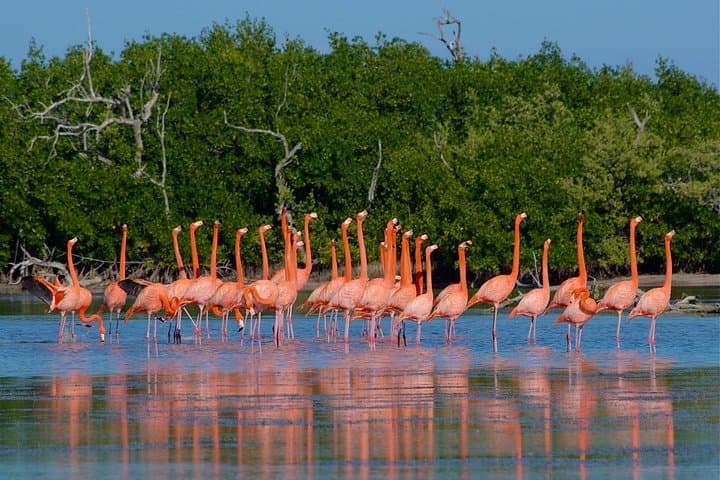
On an eight-hour day trip from Mérida, local skippers thread narrow tidal channels through the Celestún Biosphere Reserve to reach the shallow lagoons where thousands of American flamingos feed. The birds don an almost theatrical pink here—carotenoid-rich shrimp and algae tint their feathers a deeper rose than in other parts of the Caribbean, and the guide points this out with the practiced eye of someone who reads the lagoon like a tide chart.
Celestún sits on the western rim of the Yucatán Peninsula, a low limestone coast carved by sea and season. Mangrove roots anchor the mud while channels slice through, carrying saltwater inland and creating a brackish nursery for fish, shrimp, and the birds that follow them. The human story is quiet but present: Celestún began as a fishing village and today balances tourism with traditional livelihoods—fishermen, small estuarine farms, and guides who grew up on these waterways.
Geology here is subtle. The porous limestone of the peninsula filters groundwater into freshwater springs—Cambay and Baldiosera—where bright eyes of clear water break the mangrove monotone and invite swimmers. Tambor, the roosting islet, is a magnet for flamingos at low tide; approach quietly and the flock coalesces like a living reef.
Practically, the trip is straightforward: pickup in Mérida, bilingual guide, boat excursions through mangroves, a shore stop with a swim and a local fish fillet lunch. Tours run with small groups (up to a dozen) so the boat can slip into quieter channels.
Expect heat, salt, and insects—nature that asks you to show up prepared. Wear reef-safe sunscreen and a hat, bring a refillable water bottle, and keep cameras ready; the best images happen when light is low and the birds are moving. Respect the guides’ distance rules around nesting and feeding birds. Cell signal is patchy; accept the throttle of the engine as your calendar for the day.
For travelers who want an accessible slice of wild Yucatán, Celestún delivers: a morning among flamingos, an afternoon in clear springs, and a slow return along mangroves that feel older than the roads that brought you here. It’s a contained, low-impact way to meet one of the peninsula’s most charismatic communities of wildlife and people.
easy.
8 hours.
Suitable for most fitness levels; involves short, low-stepping on/off boats and light walking on sand or docks.
The excursion is about eight hours total and includes hotel pickup from Mérida, a guided boat ride through mangrove channels, stops at springs and a beach for swimming, and a fish fillet lunch.
Children aged four and older are allowed; families should supervise kids closely around boats and water.
Early morning and late afternoon concentrate feeding and roosting activity; light at those times is also best for photos.
Yes—there are stops at freshwater springs and a beach where swimming is permitted; follow guides’ safety instructions regarding currents and shallow areas.
Basic facilities are available at the small shore stops and on shore at the beach; expect rustic conditions rather than full-service restrooms.
Full refunds are available if you cancel at least 24 hours before departure; tours may be canceled for bad weather or insufficient travelers.
Celestún developed as a fishing town; local communities have long balanced subsistence fishing with salt-harvesting and, more recently, regulated tourism.
The reserve is protected to preserve mangrove, lagoon and bird habitat—visitors should not feed or approach wildlife and should use reef-safe products to limit pollution.
H.I.S. México operates guided outdoor trips and adventures with an emphasis on safety, stewardship, and memorable experiences.
The motor slows and the mangroves tighten like a green corridor, and for a moment the world narrows to the soft slap of water against the hull and the distant, rust-pink blur of wings.
The motor slows and the mangroves tighten like a green corridor, and for a moment the world narrows to the soft slap of water against the hull and the distant, rust-pink blur of wings.
On an eight-hour day trip from Mérida, local skippers thread narrow tidal channels through the Celestún Biosphere Reserve to reach the shallow lagoons where thousands of American flamingos feed. The birds don an almost theatrical pink here—carotenoid-rich shrimp and algae tint their feathers a deeper rose than in other parts of the Caribbean, and the guide points this out with the practiced eye of someone who reads the lagoon like a tide chart.
Celestún sits on the western rim of the Yucatán Peninsula, a low limestone coast carved by sea and season. Mangrove roots anchor the mud while channels slice through, carrying saltwater inland and creating a brackish nursery for fish, shrimp, and the birds that follow them. The human story is quiet but present: Celestún began as a fishing village and today balances tourism with traditional livelihoods—fishermen, small estuarine farms, and guides who grew up on these waterways.
Geology here is subtle. The porous limestone of the peninsula filters groundwater into freshwater springs—Cambay and Baldiosera—where bright eyes of clear water break the mangrove monotone and invite swimmers. Tambor, the roosting islet, is a magnet for flamingos at low tide; approach quietly and the flock coalesces like a living reef.
Practically, the trip is straightforward: pickup in Mérida, bilingual guide, boat excursions through mangroves, a shore stop with a swim and a local fish fillet lunch. Tours run with small groups (up to a dozen) so the boat can slip into quieter channels.
Expect heat, salt, and insects—nature that asks you to show up prepared. Wear reef-safe sunscreen and a hat, bring a refillable water bottle, and keep cameras ready; the best images happen when light is low and the birds are moving. Respect the guides’ distance rules around nesting and feeding birds. Cell signal is patchy; accept the throttle of the engine as your calendar for the day.
For travelers who want an accessible slice of wild Yucatán, Celestún delivers: a morning among flamingos, an afternoon in clear springs, and a slow return along mangroves that feel older than the roads that brought you here. It’s a contained, low-impact way to meet one of the peninsula’s most charismatic communities of wildlife and people.