THE ADVENTURE COLLECTIVE® · Independent discovery and booking for outdoor travel

Drive deep into the Chiquibul forest to stand on Caana, the tallest man-made structure in Belize. This private day trip from San Ignacio combines a bumpy jungle road, forest wildlife, and hours among the vast plazas and pyramids of ancient Caracol.
Drive deep into the Chiquibul forest to stand on Caana, the tallest man-made structure in Belize. This private day trip from San Ignacio combines a bumpy jungle road, forest wildlife, and hours among the vast plazas and pyramids of ancient Caracol.
You leave San Ignacio before dawn and the road narrows to a washboard ribbon that climbs and drops through two very different forests — citrus-scented broadleaf giving way to scrubby pines, then folding back into dense, humid jungle. The vehicle slows, the dust settles, and the canopy opens onto a low, stone city rising from a plateau at roughly 500 meters above sea level. Caana, the Sky Place, dominates the clearing: a stepped limestone palace that still insists you look up.
Verified experiences and guided adventures in the surrounding area.
Operated by Classic Maya Adventure Tours (CmaTours) · San Ignacio, Cayo District
You leave San Ignacio before dawn and the road narrows to a washboard ribbon that climbs and drops through two very different forests — citrus-scented broadleaf giving way to scrubby pines, then folding back into dense, humid jungle. The vehicle slows, the dust settles, and the canopy opens onto a low, stone city rising from a plateau at roughly 500 meters above sea level. Caana, the Sky Place, dominates the clearing: a stepped limestone palace that still insists you look up.
Caracol is not a postcard ruin; it was a city of scale. Rediscovered in 1938 by mahogany hunter Rosa Mai and later recorded by A.H. Anderson, Caracol once supported an estimated population in the tens of thousands and controlled a swath of the western Maya lowlands. Its plazas, causeways and reservoirs reflect an engineered landscape — terraced agriculture, long-range trade routes and monumental architecture built with local limestone and labor-intensive masonry. Geology matters here: the site sits on a plateau at the western edge of the Maya Mountains and drains into subterranean karst systems that feed cave networks like Rio Frio.
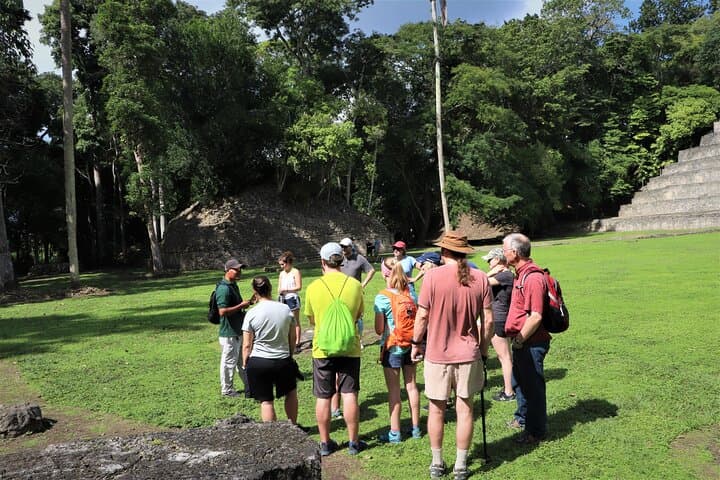
Culture is present in everything from the carved stelae to the regional exchange of goods that once flowed through Caracol. Today guides read glyph fragments, point out alignments that mark solar cycles, and interpret how water management made large settlements possible in this part of Belize.
The experience is a mix of road and trail: expect a three-hour drive each way over unpaved roads, then 2–4 kilometers of walking across dirt trails, grassy plazas, and stone stairways within the core. Elevation changes are modest on the site itself, but there are climbed pyramid faces and uneven footing. Wildlife is never far — howler monkeys call from the canopy, toucans flash color, and agouti rustle through leaf litter.
Practical guidance: this is an all-day, private tour (roughly 8–9 hours total) with pickup in the Cayo District; travel time is significant so start early. Wear sturdy closed-toe shoes with good tread for rocky steps and muddy trails. Bring 2–3 liters of water, reef-safe sunscreen, insect repellent, and light rain protection — Belize weather turns quickly. The tour includes bottled water, lunch and an air-conditioned vehicle, but cell coverage is intermittent inside the Chiquibul Reserve. If you’re photographing, plan to climb Caana for scale shots in late morning light and save close-up architectural details for softer afternoon light.
For travelers who want to dig deeper, ask about Rio Frio Cave and the natural pools included on most itineraries. Respect restricted areas and local conservation rules: Caracol sits within a sensitive forest reserve where ongoing protection helps preserve both archaeological fabric and critical wildlife habitat.
moderate.
8–9 hours.
Light to moderate fitness; you should be comfortable walking 2–4 km over uneven terrain and climbing several flights of stone steps.
Expect roughly a three-hour drive each way depending on road and weather conditions; roads are unpaved and can be slow.
Yes — the tour is labeled suitable for all fitness levels, but uneven surfaces and pyramid climbs may be challenging for those with mobility issues.
Yes. The private package includes site admissions, bottled water, and lunch as noted in the itinerary.
Most itineraries include a stop at natural pools near the site after visiting the ruins; bring a towel and swimsuit if you want to swim.
Yes. Howler monkeys, toucans and a variety of forest birds and small mammals are commonly seen around Caracol.
No special permit is required for standard visitor access; the tour operator handles park fees and logistics as part of the package.
Caracol was a major Classic Maya city rediscovered in 1938; excavations reveal an urban core with plazas, causeways and a population at its height in the tens of thousands.
Caracol sits within the Chiquibul Forest Reserve, where conservation efforts balance archaeological access with protection of forest habitat that faces threats from illegal logging and land-use pressure.
Classic Maya Adventure Tours (CmaTours) operates guided outdoor trips and adventures with an emphasis on safety, stewardship, and memorable experiences.
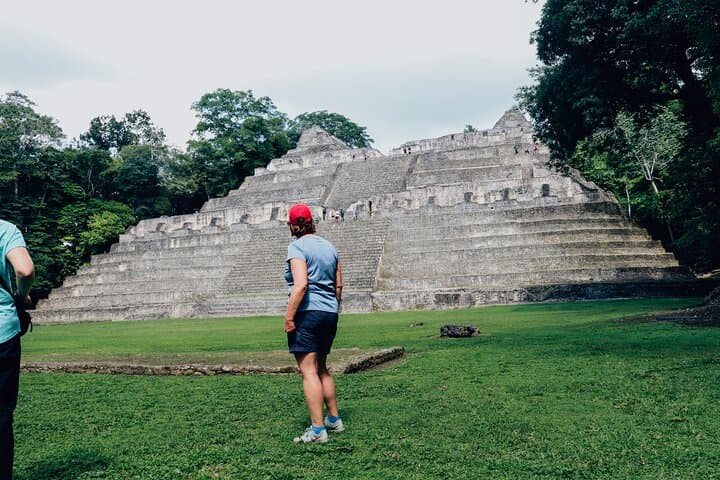
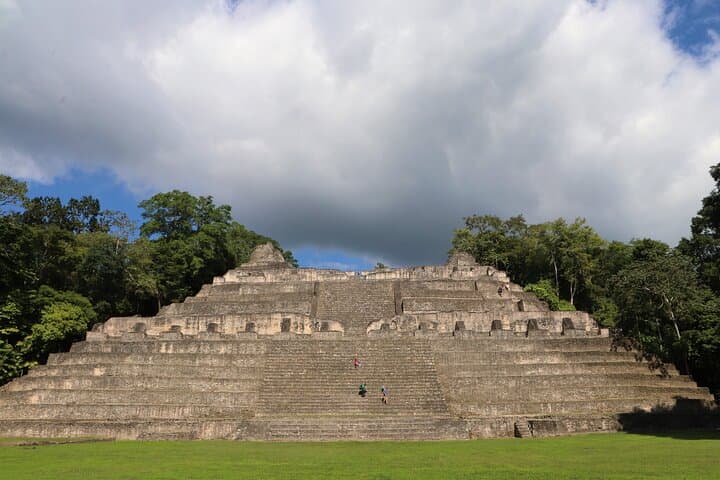
You leave San Ignacio before dawn and the road narrows to a washboard ribbon that climbs and drops through two very different forests — citrus-scented broadleaf giving way to scrubby pines, then folding back into dense, humid jungle. The vehicle slows, the dust settles, and the canopy opens onto a low, stone city rising from a plateau at roughly 500 meters above sea level. Caana, the Sky Place, dominates the clearing: a stepped limestone palace that still insists you look up.
You leave San Ignacio before dawn and the road narrows to a washboard ribbon that climbs and drops through two very different forests — citrus-scented broadleaf giving way to scrubby pines, then folding back into dense, humid jungle. The vehicle slows, the dust settles, and the canopy opens onto a low, stone city rising from a plateau at roughly 500 meters above sea level. Caana, the Sky Place, dominates the clearing: a stepped limestone palace that still insists you look up.
Caracol is not a postcard ruin; it was a city of scale. Rediscovered in 1938 by mahogany hunter Rosa Mai and later recorded by A.H. Anderson, Caracol once supported an estimated population in the tens of thousands and controlled a swath of the western Maya lowlands. Its plazas, causeways and reservoirs reflect an engineered landscape — terraced agriculture, long-range trade routes and monumental architecture built with local limestone and labor-intensive masonry. Geology matters here: the site sits on a plateau at the western edge of the Maya Mountains and drains into subterranean karst systems that feed cave networks like Rio Frio.
Culture is present in everything from the carved stelae to the regional exchange of goods that once flowed through Caracol. Today guides read glyph fragments, point out alignments that mark solar cycles, and interpret how water management made large settlements possible in this part of Belize.
The experience is a mix of road and trail: expect a three-hour drive each way over unpaved roads, then 2–4 kilometers of walking across dirt trails, grassy plazas, and stone stairways within the core. Elevation changes are modest on the site itself, but there are climbed pyramid faces and uneven footing. Wildlife is never far — howler monkeys call from the canopy, toucans flash color, and agouti rustle through leaf litter.
Practical guidance: this is an all-day, private tour (roughly 8–9 hours total) with pickup in the Cayo District; travel time is significant so start early. Wear sturdy closed-toe shoes with good tread for rocky steps and muddy trails. Bring 2–3 liters of water, reef-safe sunscreen, insect repellent, and light rain protection — Belize weather turns quickly. The tour includes bottled water, lunch and an air-conditioned vehicle, but cell coverage is intermittent inside the Chiquibul Reserve. If you’re photographing, plan to climb Caana for scale shots in late morning light and save close-up architectural details for softer afternoon light.
For travelers who want to dig deeper, ask about Rio Frio Cave and the natural pools included on most itineraries. Respect restricted areas and local conservation rules: Caracol sits within a sensitive forest reserve where ongoing protection helps preserve both archaeological fabric and critical wildlife habitat.