THE ADVENTURE COLLECTIVE® · Independent discovery and booking for outdoor travel

Explore the dark skies of Arches National Park on a night photography tour focused on capturing the Milky Way. Learn camera techniques while surrounded by iconic sandstone formations lit only by stars.
Explore the dark skies of Arches National Park on a night photography tour focused on capturing the Milky Way. Learn camera techniques while surrounded by iconic sandstone formations lit only by stars.
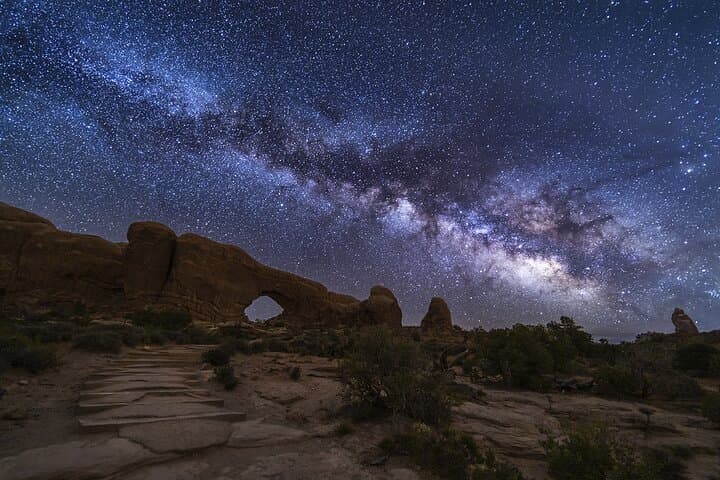
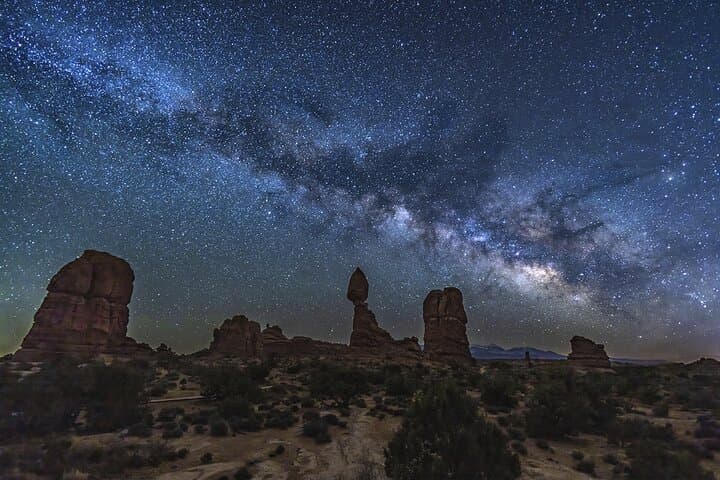
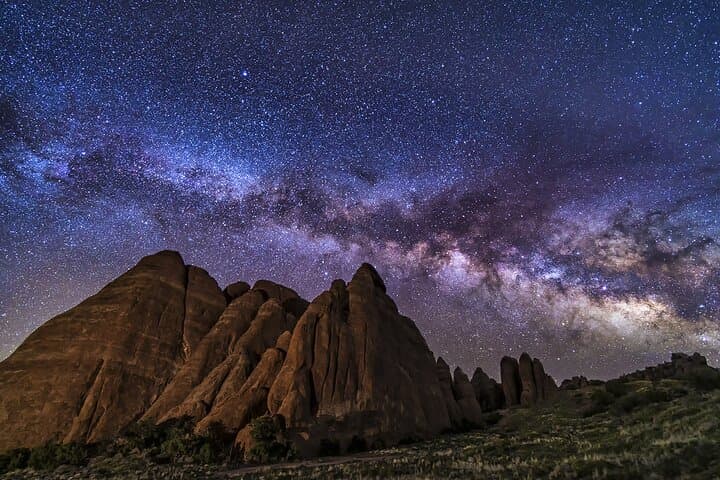
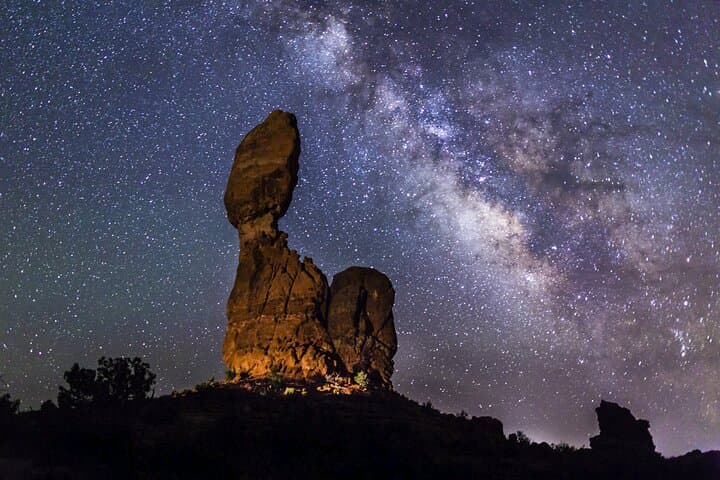
When daylight fades over the red rock landscape surrounding Moab, a different kind of adventure begins beneath an expansive black canvas peppered with stars. Arches National Park, designated as an International Dark Sky Park, offers rare clarity for astrophotographers eager to document the Milky Way’s hazy river of light. This guided photography tour takes you beyond daylight’s limit and into night’s embrace, where towering sandstone arches cast skeletal shadows and constellations dare you to focus your lens.
Verified experiences and guided adventures in the surrounding area.
Operated by Rock Light Photo Tours · Moab, Utah
When daylight fades over the red rock landscape surrounding Moab, a different kind of adventure begins beneath an expansive black canvas peppered with stars. Arches National Park, designated as an International Dark Sky Park, offers rare clarity for astrophotographers eager to document the Milky Way’s hazy river of light. This guided photography tour takes you beyond daylight’s limit and into night’s embrace, where towering sandstone arches cast skeletal shadows and constellations dare you to focus your lens.
Arches National Park’s unique geology—comprising over 2,000 natural stone arches shaped by millions of years of erosion—creates dramatic silhouettes that frame the Milky Way in ways few places on earth can. The park’s remote desert location means minimal light pollution, allowing the galaxy’s glowing core to emerge in vivid detail. Moab, the closest town, is a gateway for adventurers who come to hike, bike, and now, shoot the night sky.
Geologically, the park sits on the Colorado Plateau, where sedimentary layers have been lifted and sculpted by wind and water. Culturally, this landscape also holds Native American heritage, with petroglyphs and ancestral connections adding depth to the starlit experience. The guide shares tips on camera settings, helping participants adjust ISO, aperture, and shutter speed for optimal shots using DSLRs or mirrorless cameras.
The tour runs approximately 3.5 hours, typically starting after sunset and continuing into the late night when the Milky Way rises fully. For best results, bring a tripod to steady your camera during long exposures and a headlamp—preferably with a red setting—to preserve night vision. Warm layers are critical; desert nights drop quickly in temperature, even outside of winter.
Snacks and bottled water are provided, but hydrating well beforehand and packing your own refillable bottle is recommended. Photographers with wide-angle lenses, ideally between 14mm and 35mm, will capture expansive sky scenes with arches in the foreground. Smartphone cameras can also surprise, particularly the latest models with night modes.
Cancellations are accepted up to 24 hours before the tour for a full refund. The guide offers hotel pickup throughout Moab and meeting points at either the Moab Information Center or the Arches Visitor Center. Photographers of all skill levels are welcome, although basic familiarity with their equipment helps.
This experience combines technical skill-building with the pure wilderness spectacle of Arches at night. The quiet desert, punctuated only by shuffling feet and camera clicks, connects visitors to a cosmos that is as old as the rocks themselves—an unforgettable way to see a signature southwestern landscape under a cathedral of stars.
moderate.
3–4 hours.
Light physical activity required; minimal walking on uneven terrain at night.
Yes, a DSLR or mirrorless camera capable of shooting at least 3200 ISO is needed; smartphones may work but with limited quality.
No, but familiarity with your camera’s manual settings will help you get the most from the tour.
It typically starts after sunset and lasts about 3.5 hours, sometimes beginning around 9 or 10pm depending on the season.
Yes, hotel pickup is available within Moab, with options to meet at visitor centers as well.
Snacks, including gluten-free options, and bottled water are provided during the tour.
This tour is not recommended for those with poor night vision due to the low light conditions.
The park features ancestral Puebloan sites nearby, connecting ancient human stories to the timeless night sky.
Arches National Park enforces strict light pollution controls to preserve its dark sky status for wildlife and visitors alike.
Rock Light Photo Tours operates guided outdoor trips and adventures with an emphasis on safety, stewardship, and memorable experiences.
When daylight fades over the red rock landscape surrounding Moab, a different kind of adventure begins beneath an expansive black canvas peppered with stars. Arches National Park, designated as an International Dark Sky Park, offers rare clarity for astrophotographers eager to document the Milky Way’s hazy river of light. This guided photography tour takes you beyond daylight’s limit and into night’s embrace, where towering sandstone arches cast skeletal shadows and constellations dare you to focus your lens.
When daylight fades over the red rock landscape surrounding Moab, a different kind of adventure begins beneath an expansive black canvas peppered with stars. Arches National Park, designated as an International Dark Sky Park, offers rare clarity for astrophotographers eager to document the Milky Way’s hazy river of light. This guided photography tour takes you beyond daylight’s limit and into night’s embrace, where towering sandstone arches cast skeletal shadows and constellations dare you to focus your lens.
Arches National Park’s unique geology—comprising over 2,000 natural stone arches shaped by millions of years of erosion—creates dramatic silhouettes that frame the Milky Way in ways few places on earth can. The park’s remote desert location means minimal light pollution, allowing the galaxy’s glowing core to emerge in vivid detail. Moab, the closest town, is a gateway for adventurers who come to hike, bike, and now, shoot the night sky.
Geologically, the park sits on the Colorado Plateau, where sedimentary layers have been lifted and sculpted by wind and water. Culturally, this landscape also holds Native American heritage, with petroglyphs and ancestral connections adding depth to the starlit experience. The guide shares tips on camera settings, helping participants adjust ISO, aperture, and shutter speed for optimal shots using DSLRs or mirrorless cameras.
The tour runs approximately 3.5 hours, typically starting after sunset and continuing into the late night when the Milky Way rises fully. For best results, bring a tripod to steady your camera during long exposures and a headlamp—preferably with a red setting—to preserve night vision. Warm layers are critical; desert nights drop quickly in temperature, even outside of winter.
Snacks and bottled water are provided, but hydrating well beforehand and packing your own refillable bottle is recommended. Photographers with wide-angle lenses, ideally between 14mm and 35mm, will capture expansive sky scenes with arches in the foreground. Smartphone cameras can also surprise, particularly the latest models with night modes.
Cancellations are accepted up to 24 hours before the tour for a full refund. The guide offers hotel pickup throughout Moab and meeting points at either the Moab Information Center or the Arches Visitor Center. Photographers of all skill levels are welcome, although basic familiarity with their equipment helps.
This experience combines technical skill-building with the pure wilderness spectacle of Arches at night. The quiet desert, punctuated only by shuffling feet and camera clicks, connects visitors to a cosmos that is as old as the rocks themselves—an unforgettable way to see a signature southwestern landscape under a cathedral of stars.