THE ADVENTURE COLLECTIVE® · Independent discovery and booking for outdoor travel

See Cappadocia’s signature fairy chimneys, cave churches and panoramic viewpoints in a compact half-day tour. Perfect for travelers short on time who want geology, history and the iconic landscapes of Love, Pasabag and Devrent Valleys.
See Cappadocia’s signature fairy chimneys, cave churches and panoramic viewpoints in a compact half-day tour. Perfect for travelers short on time who want geology, history and the iconic landscapes of Love, Pasabag and Devrent Valleys.
You step out of the minivan and the land seems to hold its breath — the ground here has been patient for millennia, worn into cones and columns that puncture the horizon. At the Love Valley viewpoint the fairy chimneys rise like weathered spires, their hard caps guarding softer tuff columns below. A guide points out where lava and ash once pooled, and the wind, slow and deliberate, teases out shapes that dare you to name them.
Verified experiences and guided adventures in the surrounding area.
Operated by TripGuru · Göreme, Nevşehir Province
You step out of the minivan and the land seems to hold its breath — the ground here has been patient for millennia, worn into cones and columns that puncture the horizon. At the Love Valley viewpoint the fairy chimneys rise like weathered spires, their hard caps guarding softer tuff columns below. A guide points out where lava and ash once pooled, and the wind, slow and deliberate, teases out shapes that dare you to name them.
This half-day Red Zone tour threads the most recognizably strange landscapes of central Cappadocia. The story begins with geology: volcanic eruptions from ancient Mount Erciyes and Hasan laid down thick layers of tuff that erosion later carved into valleys and chimneys. Humans arrived early — Greek and Anatolian communities hollowed the soft rock into homes and churches, leaving a patchwork of cave dwellings and frescoed sanctuaries, including the St. John the Baptist cave church in Cavusin, where Byzantine carvings still catch the light.
Cavusin itself feels like a place where time slows. Walk its narrow lanes and you can see businesses folded into rock faces, if you listen closely the village will tell you about population shifts and the 1920s exchange that reshaped the region. Pasabag’s three-headed chimneys stand aloof, while Devrent Valley asks for imagination — a whale, a camel, a human profile depends on how you tilt your head. The finale is Uchisar Castle, a natural citadel with stairways hollowed into rock and a panoramic reach across the Red and Rose Valleys.
Practicalities are straightforward. This is a small-group tour (up to nine) using an air-conditioned vehicle with hotel pick-up in Göreme and Uchisar; total runtime is about 4–5 hours. Expect short, uneven walks at each stop — cumulative walking of roughly 2–4 km with modest elevation change (Uchisar’s summit gains ~80–100 m). Entrance to Pasabag is included; drinking water and an English-speaking guide are provided.
Timing matters: early light softens the tuff and thins crowds; late afternoon deepens ochres and shadows. Wear sturdy shoes for short scrambles and sun protection — the plateau offers little shade. Roads can be slick in winter; check with your operator if snow or heavy rain is forecast. Bring a refillable bottle, a camera, and a curiosity for geology and layered human history — Cappadocia delivers both in concentrated, unforgettable doses.
easy.
4–5 hours.
Suitable for most fitness levels; involves several short walks on uneven terrain and a climb to the Uchisar summit (~80–100 m ascent).
Yes — free pick-up and drop-off is available in the Göreme and Uchisar areas; if your accommodation is outside those zones choose the meeting-point option.
Expect multiple short walks totaling roughly 2–4 km over the half-day, with uneven terrain and short stair climbs at viewpoints like Uchisar.
The tour includes the entrance fee to Pasabag; other small-site fees are generally covered but check the operator’s specifics if you plan to enter extra sites.
The tour is family-friendly but not recommended for travelers with spinal, severe heart conditions or pregnancy due to walking on uneven ground and vehicle transfers.
No — hot air balloon flights are separate experiences organized early in the morning; this Red Zone tour focuses on ground visits to valleys and sites.
The tour operates in most conditions, but roads may close in heavy snow or storms; confirm with the operator and note their 24-hour cancellation policy for full refunds.
Cappadocia’s cave churches and settlements date to early Christian and Byzantine eras; many villages, including Cavusin, retained Greek populations until the 1923 population exchange reshaped local demographics.
Erosion is an active process here—stay on marked paths, avoid touching fragile frescoes, and support local tour operators and artisans to keep tourism sustainable.
TripGuru operates guided outdoor trips and adventures with an emphasis on safety, stewardship, and memorable experiences.
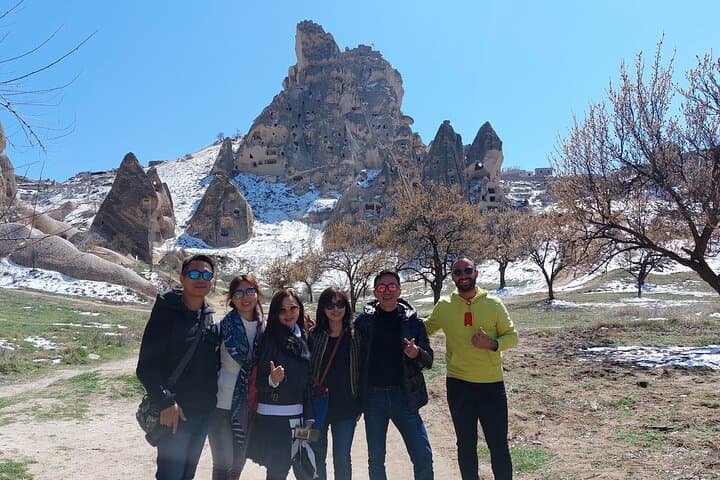
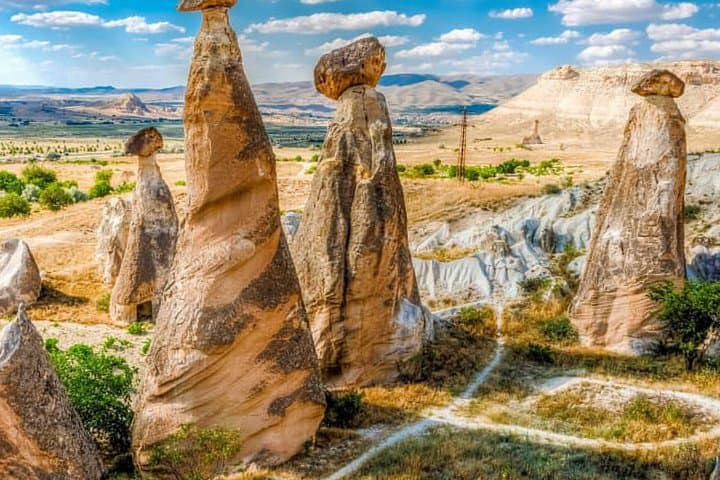
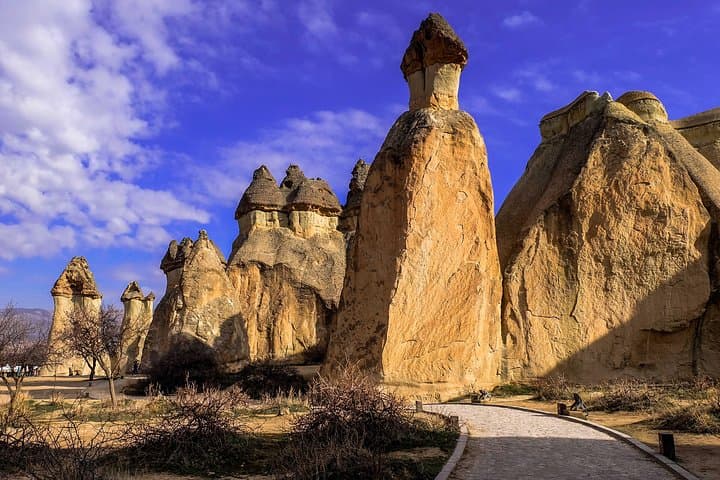
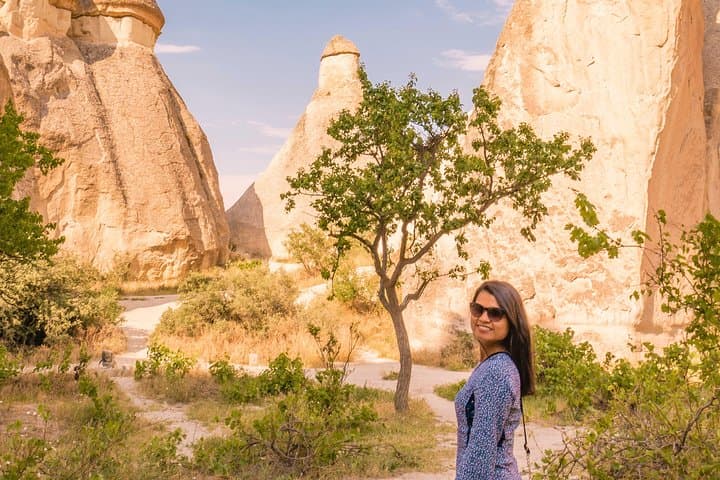
You step out of the minivan and the land seems to hold its breath — the ground here has been patient for millennia, worn into cones and columns that puncture the horizon. At the Love Valley viewpoint the fairy chimneys rise like weathered spires, their hard caps guarding softer tuff columns below. A guide points out where lava and ash once pooled, and the wind, slow and deliberate, teases out shapes that dare you to name them.
You step out of the minivan and the land seems to hold its breath — the ground here has been patient for millennia, worn into cones and columns that puncture the horizon. At the Love Valley viewpoint the fairy chimneys rise like weathered spires, their hard caps guarding softer tuff columns below. A guide points out where lava and ash once pooled, and the wind, slow and deliberate, teases out shapes that dare you to name them.
This half-day Red Zone tour threads the most recognizably strange landscapes of central Cappadocia. The story begins with geology: volcanic eruptions from ancient Mount Erciyes and Hasan laid down thick layers of tuff that erosion later carved into valleys and chimneys. Humans arrived early — Greek and Anatolian communities hollowed the soft rock into homes and churches, leaving a patchwork of cave dwellings and frescoed sanctuaries, including the St. John the Baptist cave church in Cavusin, where Byzantine carvings still catch the light.
Cavusin itself feels like a place where time slows. Walk its narrow lanes and you can see businesses folded into rock faces, if you listen closely the village will tell you about population shifts and the 1920s exchange that reshaped the region. Pasabag’s three-headed chimneys stand aloof, while Devrent Valley asks for imagination — a whale, a camel, a human profile depends on how you tilt your head. The finale is Uchisar Castle, a natural citadel with stairways hollowed into rock and a panoramic reach across the Red and Rose Valleys.
Practicalities are straightforward. This is a small-group tour (up to nine) using an air-conditioned vehicle with hotel pick-up in Göreme and Uchisar; total runtime is about 4–5 hours. Expect short, uneven walks at each stop — cumulative walking of roughly 2–4 km with modest elevation change (Uchisar’s summit gains ~80–100 m). Entrance to Pasabag is included; drinking water and an English-speaking guide are provided.
Timing matters: early light softens the tuff and thins crowds; late afternoon deepens ochres and shadows. Wear sturdy shoes for short scrambles and sun protection — the plateau offers little shade. Roads can be slick in winter; check with your operator if snow or heavy rain is forecast. Bring a refillable bottle, a camera, and a curiosity for geology and layered human history — Cappadocia delivers both in concentrated, unforgettable doses.