THE ADVENTURE COLLECTIVE® · Independent discovery and booking for outdoor travel

Trace a line from lunar valleys to living villages on a private full-day tour of Cappadocia. Explore Göreme’s cave churches, climb Uchisar Castle for sweeping views, descend into Kaymaklı’s underground network, and watch ancient pottery techniques in Avanos.
Trace a line from lunar valleys to living villages on a private full-day tour of Cappadocia. Explore Göreme’s cave churches, climb Uchisar Castle for sweeping views, descend into Kaymaklı’s underground network, and watch ancient pottery techniques in Avanos.
You step into Cappadocia and the air feels worked—worn and reshaped by volcanic fire and wind. From the hotel lobby your guide leads you into an air-conditioned vehicle, windows framing a landscape of conical spires and hollowed rock. By midmorning you’re at Göreme Panorama, where the plain opens and fairy chimneys stand like ancient sculptures, their shadows moving with the sun.
Verified experiences and guided adventures in the surrounding area.
Operated by Viva Turquia Travel · Göreme, Nevşehir
You step into Cappadocia and the air feels worked—worn and reshaped by volcanic fire and wind. From the hotel lobby your guide leads you into an air-conditioned vehicle, windows framing a landscape of conical spires and hollowed rock. By midmorning you’re at Göreme Panorama, where the plain opens and fairy chimneys stand like ancient sculptures, their shadows moving with the sun.
This route stitches together the region’s geology and human history. Millions of years ago, eruptions from Erciyes and Hasandağı blanketed the plateau with ash that compacted into soft tuff; subsequent rain and wind carved the tuff into cones, cones into chimneys. Humans answered the stone’s invitation: carving homes, churches and pigeon houses into the soft rock. The Göreme Open Air Museum preserves dozens of cave churches—Byzantine frescoes still catching slants of light—while Kaymaklı Underground City shows how communities dug down to shelter from invasion, stacking vaulted rooms and ventilation shafts eight levels deep.
The tour balances dramatic overlooks—Uchisar Castle’s rooftop panorama, Pasabag’s singular cones—and quieter cultural stops: a pottery workshop in Avanos where centuries-old red-clay techniques are still taught, the whimsical silhouettes of Devrent Valley where locals play a game of “what does this rock look like?”
Practical details matter here. Expect a 6–7 hour private excursion with pickup 30 minutes before departure in your hotel lobby; most itineraries include bottled water and private transport but not museum or underground-city admission fees. Many sites require walking on uneven ground and negotiating narrow stairs and low tunnels—Kaymaklı has tight, sloping corridors—so wear sturdy shoes and be ready to stoop. Times are flexible: sunrise balloon launches paint the sky before breakfast, but the day tour avoids the crowds if you aim for earlier starts.
Local guides are residents who read the landscape—pointing out millstone doors used for storage and pigeon houses once used as fertilizer sources. They’ll steer you away from fragile frescoes and into photo-friendly angles where the light sculpts the chimneys.
Timing and packing are simple: bring layers for temperature swings between valleys and plateaus, sun protection in summer, and a small daypack for camera gear and snacks. If you’re traveling with mobility limits or small children, note that some underground passages are not suitable for strollers or wheelchairs. Book the private tour to tailor stops to your interests—more time in Avanos for pottery, or extra minutes at Uchisar for the long view—and you’ll leave with a clearer sense of how stone, sky and human hands shaped Cappadocia.
easy.
6–7 hours.
Suitable for travelers in normal physical condition; involves moderate walking on uneven terrain and stairs.
Yes—private hotel pickup is provided, typically 30 minutes before the scheduled departure; your guide will meet you in the lobby with a sign.
No—museum and underground-city admissions are generally not included; bring cash or card for tickets.
Bottled water is included but lunch is usually not; most tours stop at a local restaurant so you can buy a meal to taste regional dishes.
Infants are allowed but must sit on laps during transportation; be aware some underground passages are not suitable for strollers or very young children.
Yes—the Göreme Open Air Museum contains numerous cave churches with frescoes; photography rules may vary, so ask your guide before using flash.
This is a private tour—guides can adjust timing and stops (within operating hours) to emphasize hiking, photography or pottery experiences.
Cappadocia’s cave churches and underground cities date to early Christian communities and earlier Anatolian settlers who carved dwellings from soft volcanic tuff to protect themselves and store crops.
High foot traffic damages fragile tuff and frescoes; follow marked paths, avoid touching painted surfaces, and respect site rules to preserve the rock-cut heritage.
Viva Turquia Travel operates guided outdoor trips and adventures with an emphasis on safety, stewardship, and memorable experiences.
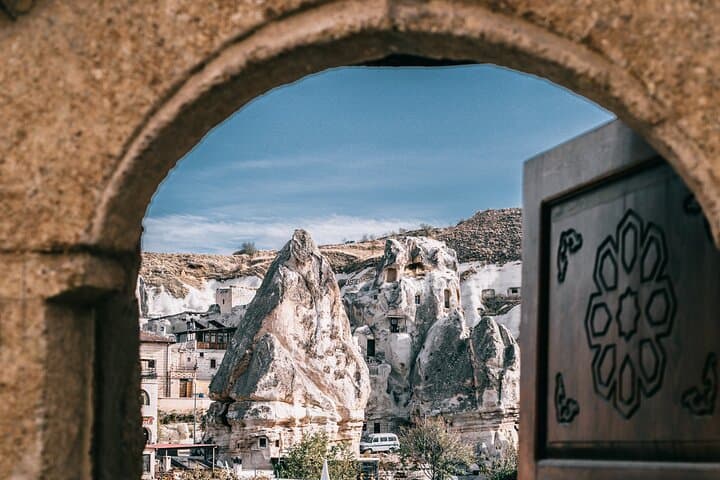
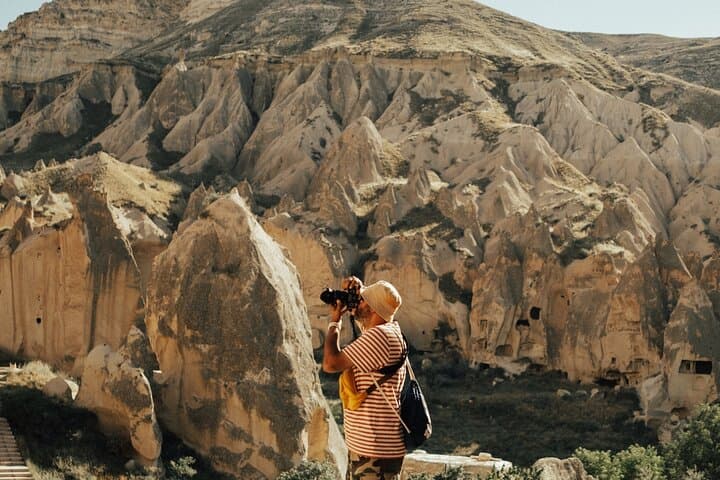
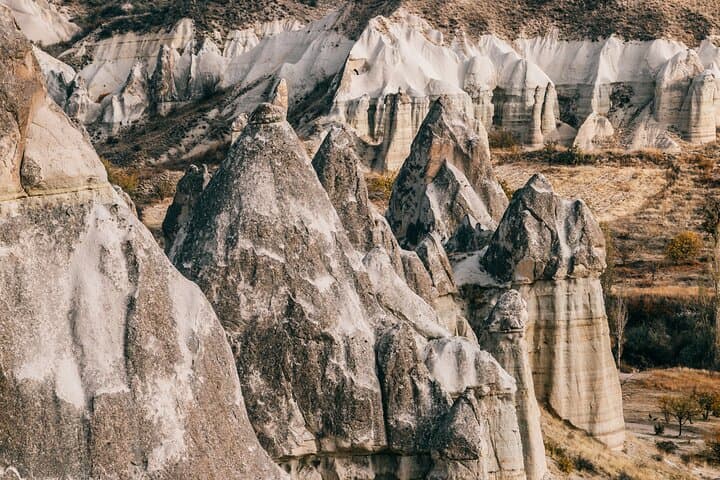
You step into Cappadocia and the air feels worked—worn and reshaped by volcanic fire and wind. From the hotel lobby your guide leads you into an air-conditioned vehicle, windows framing a landscape of conical spires and hollowed rock. By midmorning you’re at Göreme Panorama, where the plain opens and fairy chimneys stand like ancient sculptures, their shadows moving with the sun.
You step into Cappadocia and the air feels worked—worn and reshaped by volcanic fire and wind. From the hotel lobby your guide leads you into an air-conditioned vehicle, windows framing a landscape of conical spires and hollowed rock. By midmorning you’re at Göreme Panorama, where the plain opens and fairy chimneys stand like ancient sculptures, their shadows moving with the sun.
This route stitches together the region’s geology and human history. Millions of years ago, eruptions from Erciyes and Hasandağı blanketed the plateau with ash that compacted into soft tuff; subsequent rain and wind carved the tuff into cones, cones into chimneys. Humans answered the stone’s invitation: carving homes, churches and pigeon houses into the soft rock. The Göreme Open Air Museum preserves dozens of cave churches—Byzantine frescoes still catching slants of light—while Kaymaklı Underground City shows how communities dug down to shelter from invasion, stacking vaulted rooms and ventilation shafts eight levels deep.
The tour balances dramatic overlooks—Uchisar Castle’s rooftop panorama, Pasabag’s singular cones—and quieter cultural stops: a pottery workshop in Avanos where centuries-old red-clay techniques are still taught, the whimsical silhouettes of Devrent Valley where locals play a game of “what does this rock look like?”
Practical details matter here. Expect a 6–7 hour private excursion with pickup 30 minutes before departure in your hotel lobby; most itineraries include bottled water and private transport but not museum or underground-city admission fees. Many sites require walking on uneven ground and negotiating narrow stairs and low tunnels—Kaymaklı has tight, sloping corridors—so wear sturdy shoes and be ready to stoop. Times are flexible: sunrise balloon launches paint the sky before breakfast, but the day tour avoids the crowds if you aim for earlier starts.
Local guides are residents who read the landscape—pointing out millstone doors used for storage and pigeon houses once used as fertilizer sources. They’ll steer you away from fragile frescoes and into photo-friendly angles where the light sculpts the chimneys.
Timing and packing are simple: bring layers for temperature swings between valleys and plateaus, sun protection in summer, and a small daypack for camera gear and snacks. If you’re traveling with mobility limits or small children, note that some underground passages are not suitable for strollers or wheelchairs. Book the private tour to tailor stops to your interests—more time in Avanos for pottery, or extra minutes at Uchisar for the long view—and you’ll leave with a clearer sense of how stone, sky and human hands shaped Cappadocia.