THE ADVENTURE COLLECTIVE® · Independent discovery and booking for outdoor travel

Cover Cappadocia’s signature sites in one private day: carve through Ozkonak’s tunnels, study pigeon houses above the valleys, and photograph the cone-shaped fairy chimneys at Pasabag and Devrent. This guided, door-to-door tour packs geology, Byzantine art and rural culture into eight efficient hours.
Cover Cappadocia’s signature sites in one private day: carve through Ozkonak’s tunnels, study pigeon houses above the valleys, and photograph the cone-shaped fairy chimneys at Pasabag and Devrent. This guided, door-to-door tour packs geology, Byzantine art and rural culture into eight efficient hours.
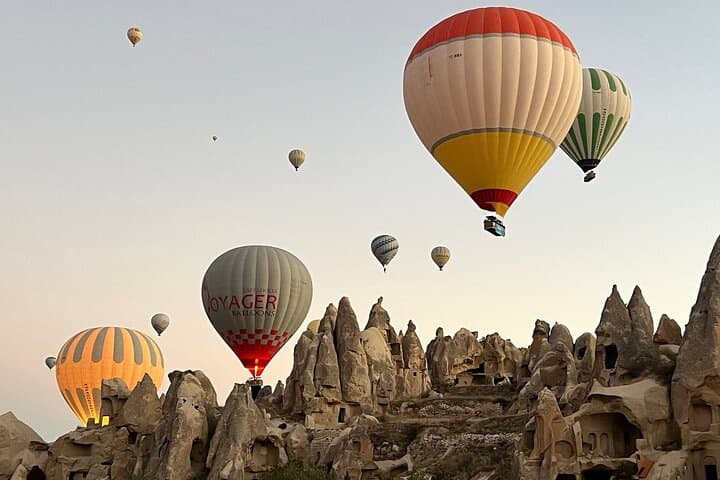
You step out from the hotel while the valley is still cool and a line of hot-air balloons drifts above the serrated horizon — a reminder that Cappadocia is both landscape and living history. A licensed local guide and a private, air-conditioned vehicle take over the logistics: no map reading, no coordination, just a curated route through rock-cut churches, mushroom-shaped chimneys and an underground city that once swallowed whole communities.
Verified experiences and guided adventures in the surrounding area.
Operated by Turquesa Tours · Göreme, Nevşehir
You step out from the hotel while the valley is still cool and a line of hot-air balloons drifts above the serrated horizon — a reminder that Cappadocia is both landscape and living history. A licensed local guide and a private, air-conditioned vehicle take over the logistics: no map reading, no coordination, just a curated route through rock-cut churches, mushroom-shaped chimneys and an underground city that once swallowed whole communities.
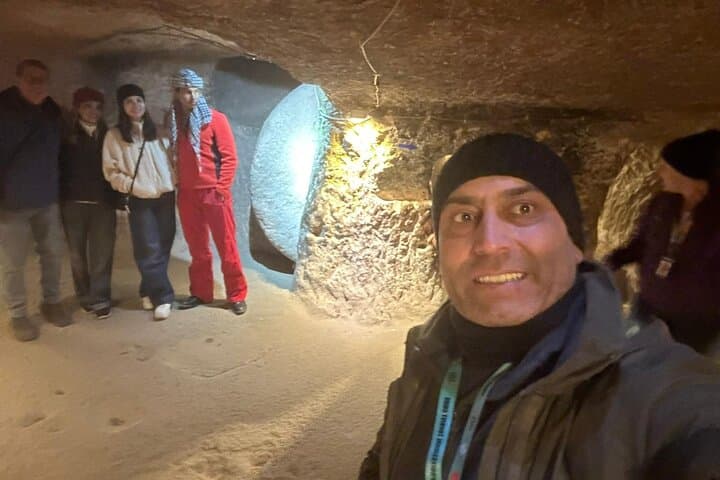
The route compresses the region’s big stories into eight hours. Ozkonak Underground City opens first: a carved labyrinth of storage rooms, kitchens, and escape passages hewn into volcanic tuff by Hittites and later adapted by early Christians. Aboveground, Pigeon Valley offers a quieter lesson in local ingenuity — thousands of man-made pigeon houses plastered into the cliffs supplied fertilizer for vineyards and a small economy that shaped rural life for centuries.
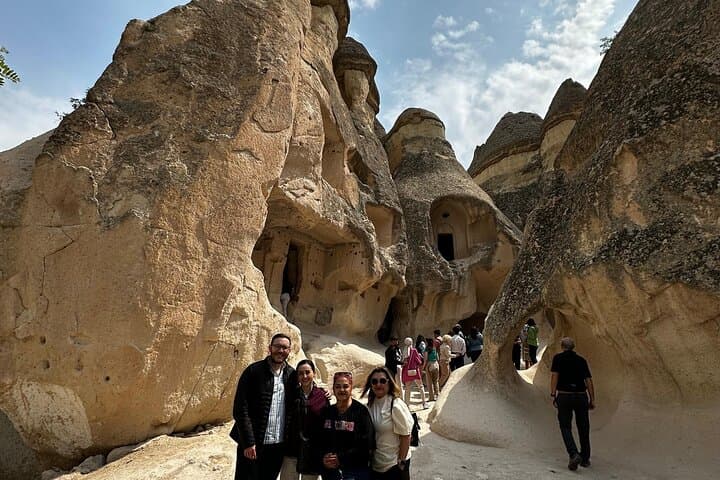
Geology is the protagonist here. Millions of years of volcanic ash solidified into soft tuff; wind and water then sculpted pillars called fairy chimneys. Pasabag (Monks Valley) is where those cones stand tall, some hollowed into hermitages and monk cells. Devrent Valley reads like a natural gallery: erosion has shaped talus into forms that suggest animals and faces. The day often closes at the Göreme Open-Air Museum, a UNESCO site, where Byzantine frescoes remain vivid inside rock-cut chapels — a rare window into medieval worship and artistry.
Practical detail matters: the tour is about eight hours with roughly 30–60 minute stops at major sites and short walks of 0.5–2 km per stop on uneven, sometimes sandy trails; total elevation gain is modest, under 150 m across the day. Entrance fees for the Göreme Open-Air Museum and Ozkonak are typically paid on-site; they aren’t always included in the tour price, so bring cards or cash. The vehicle handles transfers between sites (drives average 20–45 minutes), but expect steps and low tunnels inside the underground city and narrow paths at Pasabag.
Timing and preparation make the difference. Wear grippy shoes, bring 1.5–2 liters of water and sun protection, and carry a lightweight layer for early morning chill or a sudden wind. For photographers, aim for soft morning light at Pigeon Valley and late afternoon at Pasabag — the rock faces take on warm, honeyed tones. Ask your guide about Avanos pottery demonstrations if you want a hands-on cultural stop. In eight efficient hours, Cappadocia’s geology, history and rural craft traditions fold into a single day that’s both cinematic and practical for travelers who want maximum exposure with minimal planning.
moderate.
8 hours.
Suitable for travelers with a moderate level of fitness; involves multiple short walks and stairs in confined underground passages.
Yes — the tour includes hotel pickup and drop-off within Göreme-area accommodations; the guide meets you at your reception.
Not always; some admissions such as the Göreme Open-Air Museum and Ozkonak Underground City are typically paid on-site—bring cash or card.
Expect multiple short walks of 0.5–2 km at each site on uneven ground; there are stairs and narrow passages in the underground city.
This is a private tour, so the guide can adjust the schedule and pacing subject to site hours and traffic conditions.
Infants and small children can be accommodated, but strollers are impractical inside many sites; infant seats are available in the vehicle.
Balloon rides are separate and typically conducted at sunrise; your guide can advise on local operators and timing but it isn’t included in the day tour.
The region’s underground cities and cave churches reflect a long sequence of occupation—from Hittite and Roman eras to Byzantine Christian communities seeking refuge and continuity.
Cappadocia’s soft tuff is fragile; stick to marked paths, avoid carving or touching frescoes and support local guides who promote sustainable visitation practices.
Turquesa Tours operates guided outdoor trips and adventures with an emphasis on safety, stewardship, and memorable experiences.
You step out from the hotel while the valley is still cool and a line of hot-air balloons drifts above the serrated horizon — a reminder that Cappadocia is both landscape and living history. A licensed local guide and a private, air-conditioned vehicle take over the logistics: no map reading, no coordination, just a curated route through rock-cut churches, mushroom-shaped chimneys and an underground city that once swallowed whole communities.
You step out from the hotel while the valley is still cool and a line of hot-air balloons drifts above the serrated horizon — a reminder that Cappadocia is both landscape and living history. A licensed local guide and a private, air-conditioned vehicle take over the logistics: no map reading, no coordination, just a curated route through rock-cut churches, mushroom-shaped chimneys and an underground city that once swallowed whole communities.
The route compresses the region’s big stories into eight hours. Ozkonak Underground City opens first: a carved labyrinth of storage rooms, kitchens, and escape passages hewn into volcanic tuff by Hittites and later adapted by early Christians. Aboveground, Pigeon Valley offers a quieter lesson in local ingenuity — thousands of man-made pigeon houses plastered into the cliffs supplied fertilizer for vineyards and a small economy that shaped rural life for centuries.
Geology is the protagonist here. Millions of years of volcanic ash solidified into soft tuff; wind and water then sculpted pillars called fairy chimneys. Pasabag (Monks Valley) is where those cones stand tall, some hollowed into hermitages and monk cells. Devrent Valley reads like a natural gallery: erosion has shaped talus into forms that suggest animals and faces. The day often closes at the Göreme Open-Air Museum, a UNESCO site, where Byzantine frescoes remain vivid inside rock-cut chapels — a rare window into medieval worship and artistry.
Practical detail matters: the tour is about eight hours with roughly 30–60 minute stops at major sites and short walks of 0.5–2 km per stop on uneven, sometimes sandy trails; total elevation gain is modest, under 150 m across the day. Entrance fees for the Göreme Open-Air Museum and Ozkonak are typically paid on-site; they aren’t always included in the tour price, so bring cards or cash. The vehicle handles transfers between sites (drives average 20–45 minutes), but expect steps and low tunnels inside the underground city and narrow paths at Pasabag.
Timing and preparation make the difference. Wear grippy shoes, bring 1.5–2 liters of water and sun protection, and carry a lightweight layer for early morning chill or a sudden wind. For photographers, aim for soft morning light at Pigeon Valley and late afternoon at Pasabag — the rock faces take on warm, honeyed tones. Ask your guide about Avanos pottery demonstrations if you want a hands-on cultural stop. In eight efficient hours, Cappadocia’s geology, history and rural craft traditions fold into a single day that’s both cinematic and practical for travelers who want maximum exposure with minimal planning.