THE ADVENTURE COLLECTIVE® · Independent discovery and booking for outdoor travel

Spend 5–6 hours moving through Cappadocia’s most evocative landscapes—Devrent’s sculpted rocks, Zelve’s cave settlement and a hands-on pottery workshop—with a local guide and air-conditioned transport. This compact day tour pairs geology and living craft for travelers short on time.
Spend 5–6 hours moving through Cappadocia’s most evocative landscapes—Devrent’s sculpted rocks, Zelve’s cave settlement and a hands-on pottery workshop—with a local guide and air-conditioned transport. This compact day tour pairs geology and living craft for travelers short on time.
You step into Cappadocia from the window of an air-conditioned minibus and the landscape immediately takes charge of your attention: low, rounded cones of pale rock rise like slow-moving waves, intercut with chimneys and honeycombed faces scored by centuries of weather.
Verified experiences and guided adventures in the surrounding area.
Operated by Apono Travel · Göreme, Nevşehir Province
You step into Cappadocia from the window of an air-conditioned minibus and the landscape immediately takes charge of your attention: low, rounded cones of pale rock rise like slow-moving waves, intercut with chimneys and honeycombed faces scored by centuries of weather.
The Daily Cappadocia North Tour moves through that carved world at a deliberate pace—short hikes, lookout stops and a hands-on pottery break that offsets the geology with human craft. The day typically opens near Göreme before threading up to Devrent Valley, where natural columns take on animal shapes and the wind seems to be sketching the formations in real time.
Zelve comes next, an abandoned cave settlement where Byzantine-era churches and domestic grottoes sit exposed, their façades revealing layers of occupation: Byzantine fresco fragments, Ottoman-era reuse and the slow bleaching of volcanic tuff. The valley reads like a palimpsest, a place where the region’s geology—soft ignimbrite deposited by ancient eruptions, later eroded by wind and rain—shaped how people lived and sheltered for millennia.
Cultural stops on the route bring the human angle into sharper focus. A pottery and tile-making workshop demonstrates techniques still carried by local families, continuity that stretches from ancient Anatolian ceramics to souvenirs sold in village markets. Guides explain how trade routes and early Christian communities used the caves for safety and worship, then point out the practical engineering in rock-cut houses and dovecotes hewn into cliffs.
For travelers, the tour is both sensory and practical: dusty walking at easy grades, brief climbs to viewpoints, and long vistas where light changes the color of the formations from cream to rose to ochre over the afternoon.
Plan for sun and wind—Cappadocia’s plateaus offer little shade and temperatures swing fast between mornings and late afternoon. Comfortable hiking shoes with good traction are the sensible choice; short dirt tracks and occasional loose scree are common. Bring water, layers and a camera with a wide-angle lens; the best shots come from low sun.
Logistics are straightforward: expect a 5–6 hour window with hotel pickup available across Göreme, Ürgüp and surrounding villages, and a small group format that keeps stops efficient. The tour balances geology, history and living craft—an accessible primer on why Cappadocia’s lunar hills have held human attention for centuries.
If your schedule allows, pair this day trip with a sunrise balloon ride or an evening in Ortahisar for quieter viewpoints once the tour buses leave.
moderate.
5–6 hours.
Moderate fitness—comfortable walking for up to an hour at a time with short elevation changes.
The tour runs about 5–6 hours; pickup windows depend on hotel location but usually start mid-morning—confirm exact pickup time after booking.
Yes—pickup from hotels in Göreme, Ürgüp and surrounding villages is provided; allow about 30 minutes variation depending on location.
Admission to Zelve and Devrent is typically included on guided tours, but check your booking confirmation for specifics.
Children are welcome, but the itinerary involves walking on uneven ground and short climbs—parents should assess mobility and comfort with dust and sun exposure.
Many sites have uneven paths and steps; the tour is not fully wheelchair accessible—contact the operator for options and specific site access.
Yes—licensed guides on this tour typically speak English; multilingual guide availability should be confirmed when booking.
Cappadocia’s rock-cut settlements and cave churches reflect centuries of adaptive reuse—from Hittite and Persian times through Byzantine Christian communities who carved sanctuaries into the soft volcanic tuff.
Erosion and visitor pressure threaten fragile formations; stay on marked paths, avoid touching fresco fragments and support local conservation fees when offered.
Apono Travel operates guided outdoor trips and adventures with an emphasis on safety, stewardship, and memorable experiences.
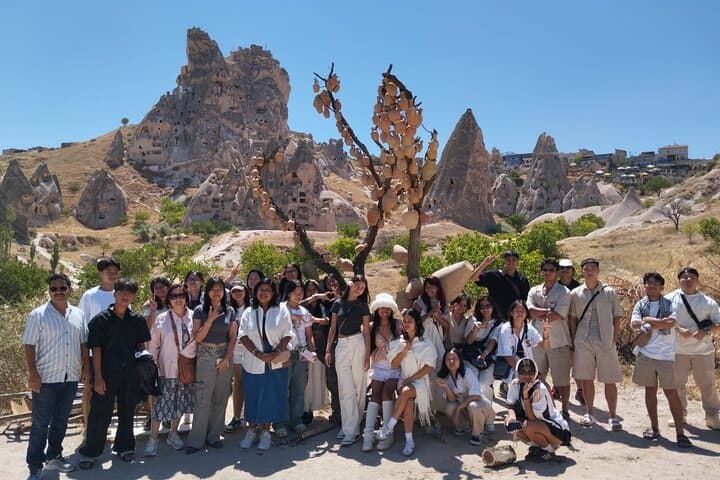
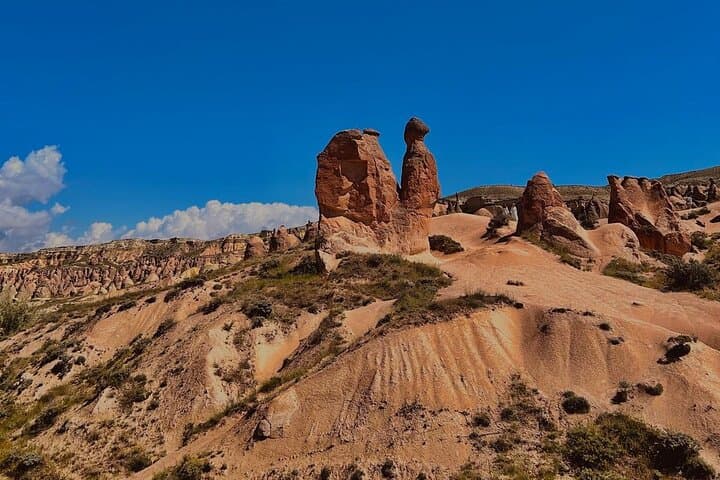
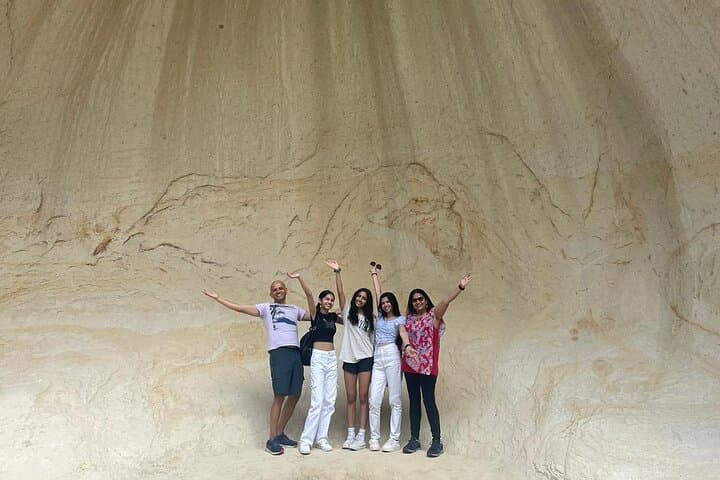
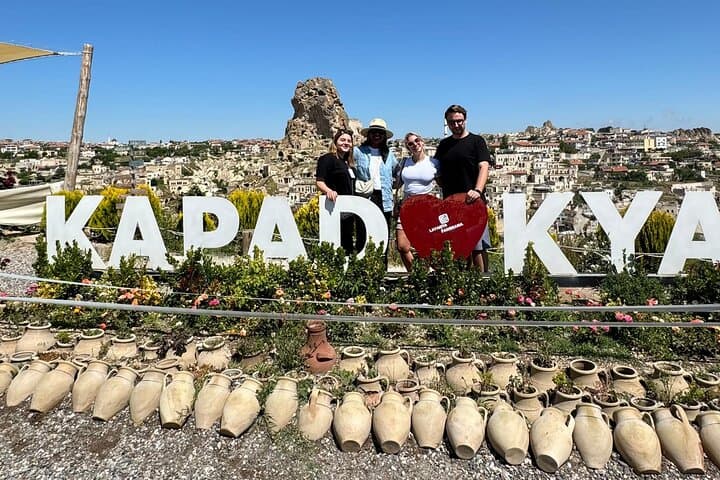
You step into Cappadocia from the window of an air-conditioned minibus and the landscape immediately takes charge of your attention: low, rounded cones of pale rock rise like slow-moving waves, intercut with chimneys and honeycombed faces scored by centuries of weather.
You step into Cappadocia from the window of an air-conditioned minibus and the landscape immediately takes charge of your attention: low, rounded cones of pale rock rise like slow-moving waves, intercut with chimneys and honeycombed faces scored by centuries of weather.
The Daily Cappadocia North Tour moves through that carved world at a deliberate pace—short hikes, lookout stops and a hands-on pottery break that offsets the geology with human craft. The day typically opens near Göreme before threading up to Devrent Valley, where natural columns take on animal shapes and the wind seems to be sketching the formations in real time.
Zelve comes next, an abandoned cave settlement where Byzantine-era churches and domestic grottoes sit exposed, their façades revealing layers of occupation: Byzantine fresco fragments, Ottoman-era reuse and the slow bleaching of volcanic tuff. The valley reads like a palimpsest, a place where the region’s geology—soft ignimbrite deposited by ancient eruptions, later eroded by wind and rain—shaped how people lived and sheltered for millennia.
Cultural stops on the route bring the human angle into sharper focus. A pottery and tile-making workshop demonstrates techniques still carried by local families, continuity that stretches from ancient Anatolian ceramics to souvenirs sold in village markets. Guides explain how trade routes and early Christian communities used the caves for safety and worship, then point out the practical engineering in rock-cut houses and dovecotes hewn into cliffs.
For travelers, the tour is both sensory and practical: dusty walking at easy grades, brief climbs to viewpoints, and long vistas where light changes the color of the formations from cream to rose to ochre over the afternoon.
Plan for sun and wind—Cappadocia’s plateaus offer little shade and temperatures swing fast between mornings and late afternoon. Comfortable hiking shoes with good traction are the sensible choice; short dirt tracks and occasional loose scree are common. Bring water, layers and a camera with a wide-angle lens; the best shots come from low sun.
Logistics are straightforward: expect a 5–6 hour window with hotel pickup available across Göreme, Ürgüp and surrounding villages, and a small group format that keeps stops efficient. The tour balances geology, history and living craft—an accessible primer on why Cappadocia’s lunar hills have held human attention for centuries.
If your schedule allows, pair this day trip with a sunrise balloon ride or an evening in Ortahisar for quieter viewpoints once the tour buses leave.