THE ADVENTURE COLLECTIVE® · Independent discovery and booking for outdoor travel

See Cappadocia’s signature landscapes and living crafts in a single day: cave churches at Göreme, panoramic views from Uchisar, pottery in Avanos and the subterranean maze of Kaymakli. This compact tour delivers geological wonder, Byzantine history and hands-on culture with practical pacing for first-time visitors.
See Cappadocia’s signature landscapes and living crafts in a single day: cave churches at Göreme, panoramic views from Uchisar, pottery in Avanos and the subterranean maze of Kaymakli. This compact tour delivers geological wonder, Byzantine history and hands-on culture with practical pacing for first-time visitors.
The van slides out of the velvet dark and the valley is already writing itself in shadow and light. Hot-air balloons hang like slow lanterns above the fairy chimneys; basalt spires and honey-colored cones throw long blue shadows across a landscape that has been carved by wind and patience. On this eight-hour circuit through Cappadocia, travelers move fast enough to taste the region’s breadth and slow enough to feel its texture: the chalk-soft tuff underfoot, the chalky bloom on sunlit walls, the whisper of dove coops cut into cliff faces.
Verified experiences and guided adventures in the surrounding area.
Operated by SUN SMILE TRAVEL · Goreme, Nevşehir
The van slides out of the velvet dark and the valley is already writing itself in shadow and light. Hot-air balloons hang like slow lanterns above the fairy chimneys; basalt spires and honey-colored cones throw long blue shadows across a landscape that has been carved by wind and patience. On this eight-hour circuit through Cappadocia, travelers move fast enough to taste the region’s breadth and slow enough to feel its texture: the chalk-soft tuff underfoot, the chalky bloom on sunlit walls, the whisper of dove coops cut into cliff faces.
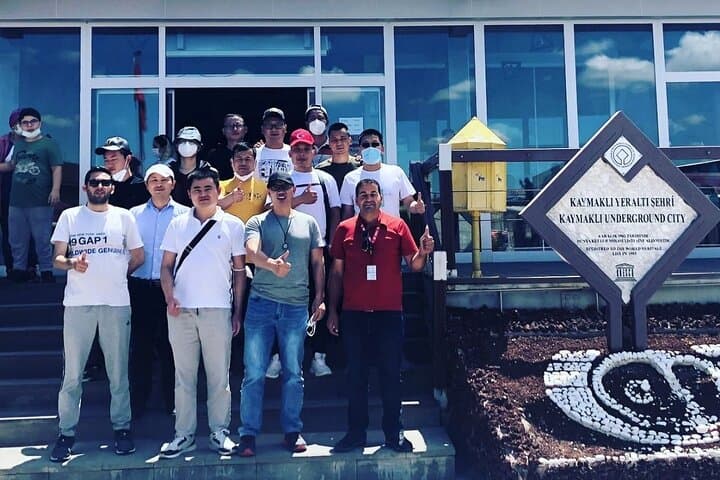
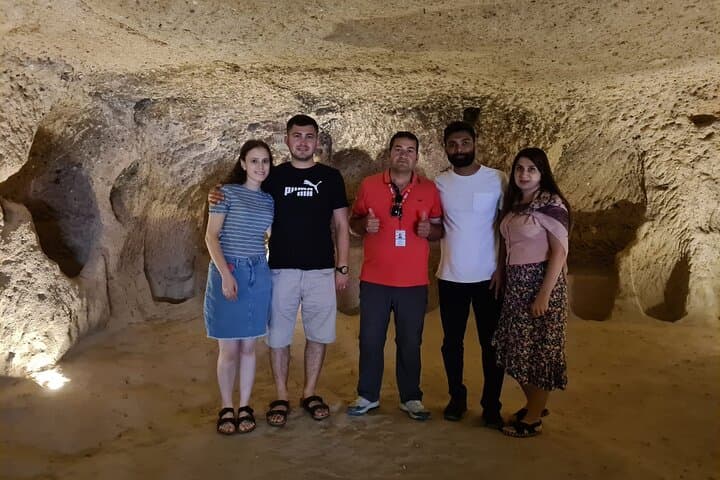
Cappadocia’s geology reads like a slow-motion drama. Volcanic ash from ancient eruptions compacted into tuff, then centuries of wind and rain sculpted the soft rock into the mushroom-shaped chimneys and valleys you see today. Humans arrived early to use that softness: Hittite and later Byzantine settlers hollowed the stone into churches, homes and vast underground refuges. The Kaymakli Underground City, visited on this route, still feels engineered to outlast a siege—narrow corridors, rolling stone doors, stacked living rooms—an architectural memory of a people who learned to live both above and below ground.
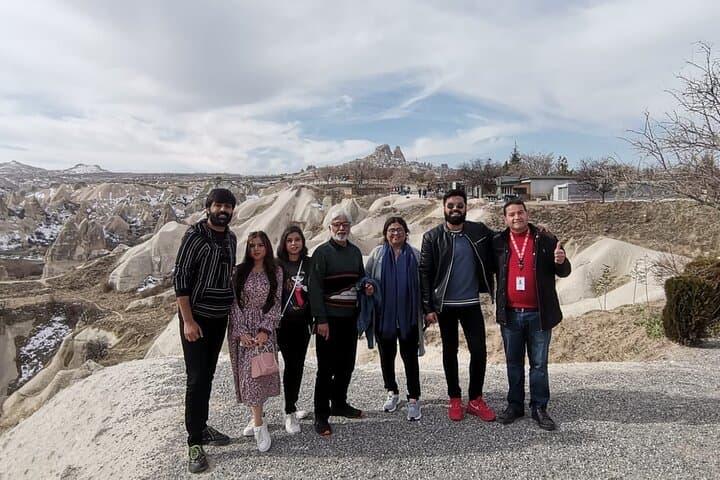
The tour stitches together cultural details as neatly as the landscape does light. In Avanos, a town on the Kızılırmak River, pottery workshops pass glazing techniques from father to son that can be traced back to Hittite kilns; watching a wheel-throwing demo is watching a craft suspend time. Uchisar Castle offers a 360° map of the region—its summit is the best place to orient yourself to Cappadocia’s geography and to pick out valleys you’ll later photograph.
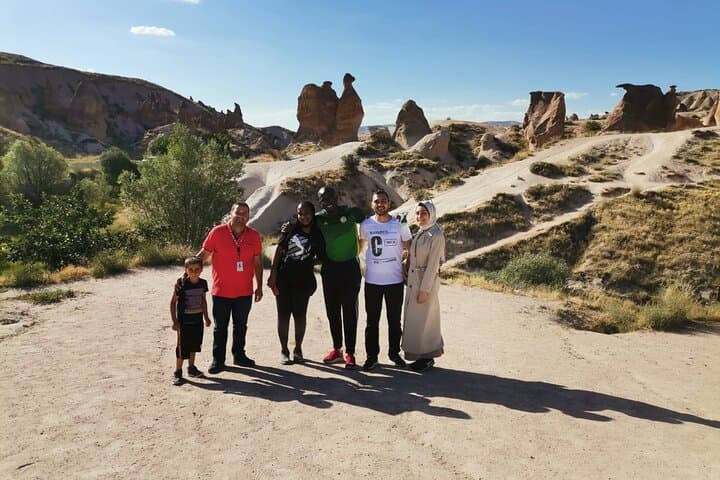
For travelers who have one short day and a small budget, this route is pragmatic: Goreme Open-Air Museum for frescoed cave churches, Devrent (Imagination) Valley for its animal-like formations, Pasabag for the monk-like chimneys, and Kaymakli for subterranean ingenuity. Guides here balance narrative with logistics—where to walk, when to keep pace, what to avoid touching—and the itinerary is designed to minimize roadside waits and maximize light for photos.
Practical guidance: mornings are cooler and less crowded; bring sturdy walking shoes for uneven tuff, a reusable water bottle, and layers—the plateau can be cold in the shade and hot in exposed gullies. Cash helps for small pottery purchases and tips. Respect signage at sensitive fresco sites and stay on marked paths to prevent erosion: the stone erodes quickly under hands and feet. With a mix of history, geology and living craft, the Highlights of Cappadocia Tour gives a concise yet textured portrait of a landscape that keeps rewriting itself, one gorge and kiln at a time.
easy.
8 hours.
Suitable for most travelers; involves short walks, steps and low-grade uneven terrain; not recommended for those with severe mobility issues.
Yes—pickup and drop-off from regional hotels is included; share your accommodation details when booking.
Some museum admissions (e.g., Goreme Open-Air Museum, Kaymakli) may require separate tickets—confirm with the operator at booking.
The tour is labeled easy and suitable for most fitness levels, though underground city passages have low ceilings and steps that may be challenging for very young children or those with mobility restrictions.
Expect short walks at each stop—usually 15–60 minutes—plus standing and light climbing at viewpoints; total on-foot time is moderate.
Yes—stops include pottery workshops where visitors can watch demonstrations and purchase ceramics; bring cash for small purchases.
Sunrise balloon scenes, Uchisar’s panorama, the whimsical shapes in Devrent (Imagination) Valley and the carved interiors at Goreme are the most photogenic stops.
Cappadocia was shaped by volcanic ash and human hands—early Christians carved cave churches here and communities used underground cities like Kaymakli as refuge during invasions.
The soft tuff erodes easily; visitors should stay on paths, avoid touching frescoes and support local operators who follow site protection guidelines.
SUN SMILE TRAVEL operates guided outdoor trips and adventures with an emphasis on safety, stewardship, and memorable experiences.
The van slides out of the velvet dark and the valley is already writing itself in shadow and light. Hot-air balloons hang like slow lanterns above the fairy chimneys; basalt spires and honey-colored cones throw long blue shadows across a landscape that has been carved by wind and patience. On this eight-hour circuit through Cappadocia, travelers move fast enough to taste the region’s breadth and slow enough to feel its texture: the chalk-soft tuff underfoot, the chalky bloom on sunlit walls, the whisper of dove coops cut into cliff faces.
The van slides out of the velvet dark and the valley is already writing itself in shadow and light. Hot-air balloons hang like slow lanterns above the fairy chimneys; basalt spires and honey-colored cones throw long blue shadows across a landscape that has been carved by wind and patience. On this eight-hour circuit through Cappadocia, travelers move fast enough to taste the region’s breadth and slow enough to feel its texture: the chalk-soft tuff underfoot, the chalky bloom on sunlit walls, the whisper of dove coops cut into cliff faces.
Cappadocia’s geology reads like a slow-motion drama. Volcanic ash from ancient eruptions compacted into tuff, then centuries of wind and rain sculpted the soft rock into the mushroom-shaped chimneys and valleys you see today. Humans arrived early to use that softness: Hittite and later Byzantine settlers hollowed the stone into churches, homes and vast underground refuges. The Kaymakli Underground City, visited on this route, still feels engineered to outlast a siege—narrow corridors, rolling stone doors, stacked living rooms—an architectural memory of a people who learned to live both above and below ground.
The tour stitches together cultural details as neatly as the landscape does light. In Avanos, a town on the Kızılırmak River, pottery workshops pass glazing techniques from father to son that can be traced back to Hittite kilns; watching a wheel-throwing demo is watching a craft suspend time. Uchisar Castle offers a 360° map of the region—its summit is the best place to orient yourself to Cappadocia’s geography and to pick out valleys you’ll later photograph.
For travelers who have one short day and a small budget, this route is pragmatic: Goreme Open-Air Museum for frescoed cave churches, Devrent (Imagination) Valley for its animal-like formations, Pasabag for the monk-like chimneys, and Kaymakli for subterranean ingenuity. Guides here balance narrative with logistics—where to walk, when to keep pace, what to avoid touching—and the itinerary is designed to minimize roadside waits and maximize light for photos.
Practical guidance: mornings are cooler and less crowded; bring sturdy walking shoes for uneven tuff, a reusable water bottle, and layers—the plateau can be cold in the shade and hot in exposed gullies. Cash helps for small pottery purchases and tips. Respect signage at sensitive fresco sites and stay on marked paths to prevent erosion: the stone erodes quickly under hands and feet. With a mix of history, geology and living craft, the Highlights of Cappadocia Tour gives a concise yet textured portrait of a landscape that keeps rewriting itself, one gorge and kiln at a time.