THE ADVENTURE COLLECTIVE® · Independent discovery and booking for outdoor travel

Two days in Cappadocia compress centuries of geology and culture into a private, guided loop from Kaymakli’s underground city to Göreme’s painted cave churches. This compact itinerary pairs easy walking with striking photo stops and local craft encounters.
Two days in Cappadocia compress centuries of geology and culture into a private, guided loop from Kaymakli’s underground city to Göreme’s painted cave churches. This compact itinerary pairs easy walking with striking photo stops and local craft encounters.
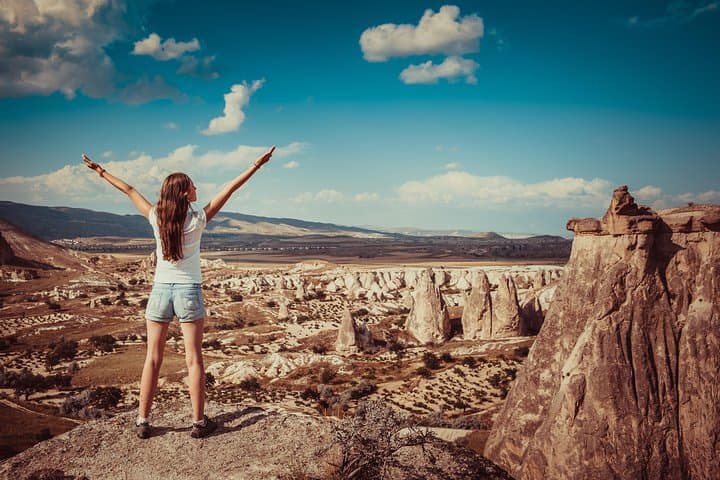
The first light over Cappadocia arrives like an unrolling map—pale gold spreading across a moonscape of chimney spires, cave windows and terraces carved into tuff. On Day One you fly from Istanbul and step from the airport into a different geology: soft volcanic stone shaped by wind and rain into towers and hollows that have housed people for millennia.
Verified experiences and guided adventures in the surrounding area.
Operated by Pupa Travel · Göreme, Nevşehir Province
The first light over Cappadocia arrives like an unrolling map—pale gold spreading across a moonscape of chimney spires, cave windows and terraces carved into tuff. On Day One you fly from Istanbul and step from the airport into a different geology: soft volcanic stone shaped by wind and rain into towers and hollows that have housed people for millennia.
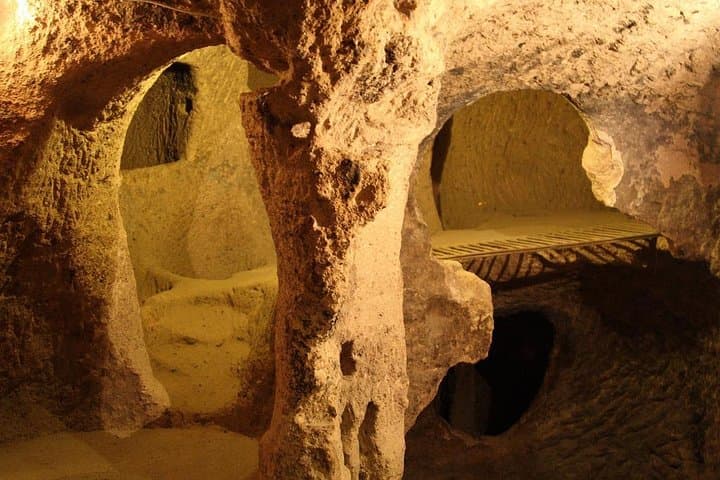
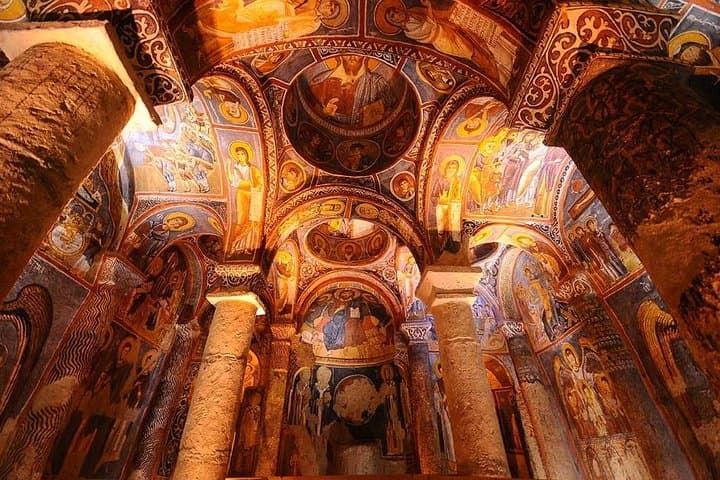
Your guide leads you through Kaymakli Underground City, where rooms stacked like a honeycomb reveal how early Christians and local populations created entire subterranean villages to survive siege and persecution. The corridors are cool and compact; the silence has weight. Above ground, the Göreme Open Air Museum stores painted chapels whose 10th–12th century frescoes still glow with ochre and lapis—the color choices of remote monks who painted narratives for congregations that could not read.
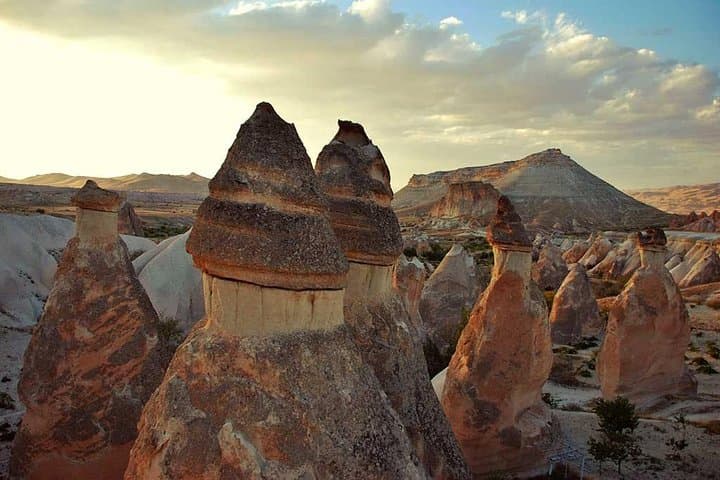
Geology here is active history. The Cappadocian landscape formed from ash and pumice after volcanic eruptions some 30 million years ago; the soft tuff eroded into the fairy chimneys and mushroom-capped pillars you’ll walk among in Devrent and Pasabag. Uchisar Castle, a citadel carved from a rock outcrop, offers a panoramic reading of the whole valley—the place looks like an open-air atlas of erosion.
Culture is tactile: pottery techniques at a local workshop trace back to Hittite and Roman craftsmen, while pigeon houses carved into cliffs point to centuries of practical ingenuity. Guides on this private two-day route thread history with lived-in details—how families stacked communal ovens in cave courtyards, or how fresco pigments were sourced.
Practicalities are straightforward. This is a private, chauffeured itinerary using a Mercedes Sprinter; hotels are centrally located in Göreme, Ürgüp or Nevşehir. Expect light to moderate walking on uneven trails and in narrow cave passages; comfortable closed-toe shoes and a jacket for cooler mornings are musts. Hot-air balloon flights are optional and booked separately—if you go, plan pre-dawn pickup and a light breakfast.
Timing matters: mornings have the softest light for photography and cooler hiking, while afternoons can be dusty and warm in summer. Bring sun protection, refillable water, and plan for tight stairwells in underground sites if you have mobility concerns. The tour includes museum tickets, two lunches, private guiding and return airport transfers—so you trade logistics for concentrated exploration.
Two days here feel both brisk and immersive: you’ll move from subterranean refuge to hilltop views, from painted churches to pottery studios. It’s a compact crash course in Cappadocia’s geology and culture—and a primer on how people have shaped, and been shaped by, a landscape that keeps offering new angles as light shifts across its carved stone.
easy.
2 days.
Suitable for most fitness levels; requires light walking, some stairs and short uneven trails.
Balloon flights are optional and not included—your guide can arrange a trusted operator, but book early because slots fill, especially in high season.
Many sites allow families, but the underground city has narrow passages and low ceilings—supervise kids and check with your guide for age-appropriate routing.
Yes—private A/C transport in a Mercedes Sprinter is included for both days and for airport transfers.
Admissions listed in the itinerary, including Göreme Open Air Museum and Kaymakli, are included in the package.
No—the itinerary uses flights to/from Kayseri or Nevşehir and runs over two days to cover the main sites without excessive transit.
The tour is labeled physically easy, but many sites have stairs, uneven terrain and narrow cave spaces—travelers with limited mobility should notify the operator in advance.
Cappadocia’s cave dwellings and rock-cut churches reflect a mix of Hellenistic, Byzantine and early Christian occupations spanning millennia.
Erosion and overtourism stress fragile tuff formations; stick to marked paths, avoid carving or climbing soft stone, and support local guides who follow conservation practices.
Pupa Travel operates guided outdoor trips and adventures with an emphasis on safety, stewardship, and memorable experiences.
The first light over Cappadocia arrives like an unrolling map—pale gold spreading across a moonscape of chimney spires, cave windows and terraces carved into tuff. On Day One you fly from Istanbul and step from the airport into a different geology: soft volcanic stone shaped by wind and rain into towers and hollows that have housed people for millennia.
The first light over Cappadocia arrives like an unrolling map—pale gold spreading across a moonscape of chimney spires, cave windows and terraces carved into tuff. On Day One you fly from Istanbul and step from the airport into a different geology: soft volcanic stone shaped by wind and rain into towers and hollows that have housed people for millennia.
Your guide leads you through Kaymakli Underground City, where rooms stacked like a honeycomb reveal how early Christians and local populations created entire subterranean villages to survive siege and persecution. The corridors are cool and compact; the silence has weight. Above ground, the Göreme Open Air Museum stores painted chapels whose 10th–12th century frescoes still glow with ochre and lapis—the color choices of remote monks who painted narratives for congregations that could not read.
Geology here is active history. The Cappadocian landscape formed from ash and pumice after volcanic eruptions some 30 million years ago; the soft tuff eroded into the fairy chimneys and mushroom-capped pillars you’ll walk among in Devrent and Pasabag. Uchisar Castle, a citadel carved from a rock outcrop, offers a panoramic reading of the whole valley—the place looks like an open-air atlas of erosion.
Culture is tactile: pottery techniques at a local workshop trace back to Hittite and Roman craftsmen, while pigeon houses carved into cliffs point to centuries of practical ingenuity. Guides on this private two-day route thread history with lived-in details—how families stacked communal ovens in cave courtyards, or how fresco pigments were sourced.
Practicalities are straightforward. This is a private, chauffeured itinerary using a Mercedes Sprinter; hotels are centrally located in Göreme, Ürgüp or Nevşehir. Expect light to moderate walking on uneven trails and in narrow cave passages; comfortable closed-toe shoes and a jacket for cooler mornings are musts. Hot-air balloon flights are optional and booked separately—if you go, plan pre-dawn pickup and a light breakfast.
Timing matters: mornings have the softest light for photography and cooler hiking, while afternoons can be dusty and warm in summer. Bring sun protection, refillable water, and plan for tight stairwells in underground sites if you have mobility concerns. The tour includes museum tickets, two lunches, private guiding and return airport transfers—so you trade logistics for concentrated exploration.
Two days here feel both brisk and immersive: you’ll move from subterranean refuge to hilltop views, from painted churches to pottery studios. It’s a compact crash course in Cappadocia’s geology and culture—and a primer on how people have shaped, and been shaped by, a landscape that keeps offering new angles as light shifts across its carved stone.