THE ADVENTURE COLLECTIVE® · Independent discovery and booking for outdoor travel

A long day of travel transforms into compact wonder: medieval cave churches, Uçhisar’s high rock-castle views, and the cool hush of an underground city. This private day trip from Konya packs Cappadocia’s essentials into a single, well-paced itinerary.
A long day of travel transforms into compact wonder: medieval cave churches, Uçhisar’s high rock-castle views, and the cool hush of an underground city. This private day trip from Konya packs Cappadocia’s essentials into a single, well-paced itinerary.
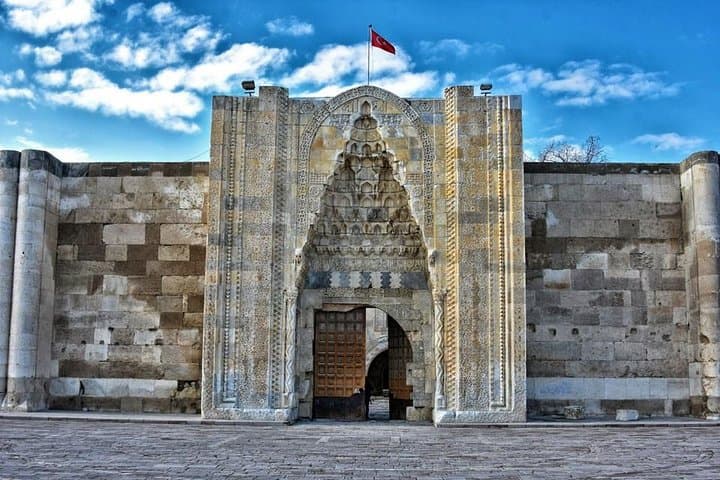
You step off the air-conditioned van and the landscape pushes back — a low, lunar sky, ridges and pinnacles carved by wind and time. The driver calls it Cappadocia, but the place insists on a different description: a carved city where people have lived inside stone for a thousand years. On this full-day loop from Konya you cross central Anatolia’s plateau, move through Seljuk caravan routes at Sultanhanı, and arrive at a region where volcanic ash hardened into tuff and generations of hands cut homes, churches and passages into it.
Verified experiences and guided adventures in the surrounding area.
Operated by Selene Travel · Göreme, Nevşehir Province
You step off the air-conditioned van and the landscape pushes back — a low, lunar sky, ridges and pinnacles carved by wind and time. The driver calls it Cappadocia, but the place insists on a different description: a carved city where people have lived inside stone for a thousand years. On this full-day loop from Konya you cross central Anatolia’s plateau, move through Seljuk caravan routes at Sultanhanı, and arrive at a region where volcanic ash hardened into tuff and generations of hands cut homes, churches and passages into it.
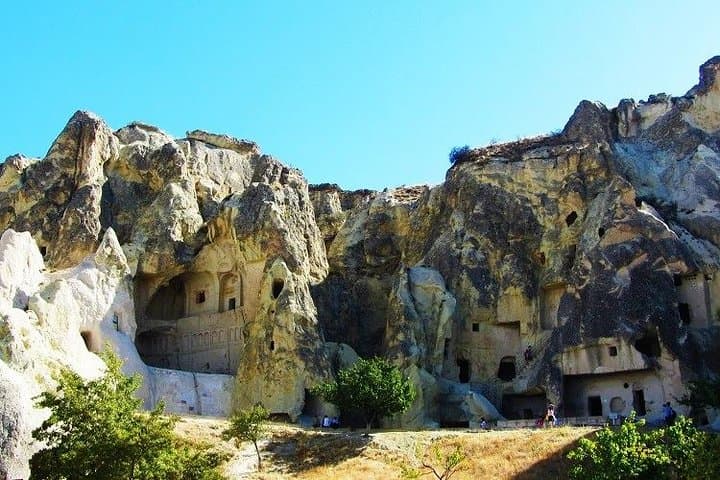
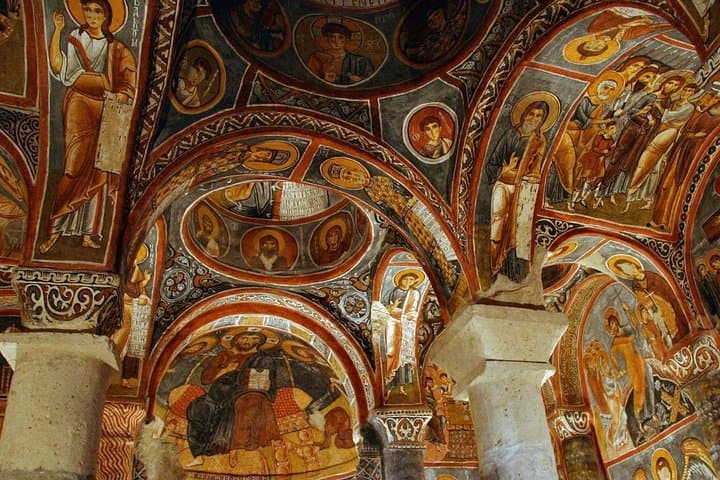
The day peels away in layers. Morning light finds you at Göreme Open Air Museum, where cave churches from the 10th–13th centuries keep frescoes that survived iconoclasm and weather. The pigments are quieter up close — deep ochres, lapis blues, saints with stubborn eyes — and the narrow aisles make you lower your voice as if respect were required by the stone itself. From there the route climbs to Uçhisar Castle, an enormous pockmarked rock that once served as a lookout and refuge; the views from its roof afford a survey of the landscape’s geometry: valleys, chimneys, and the small villages that have adapted to this geology.
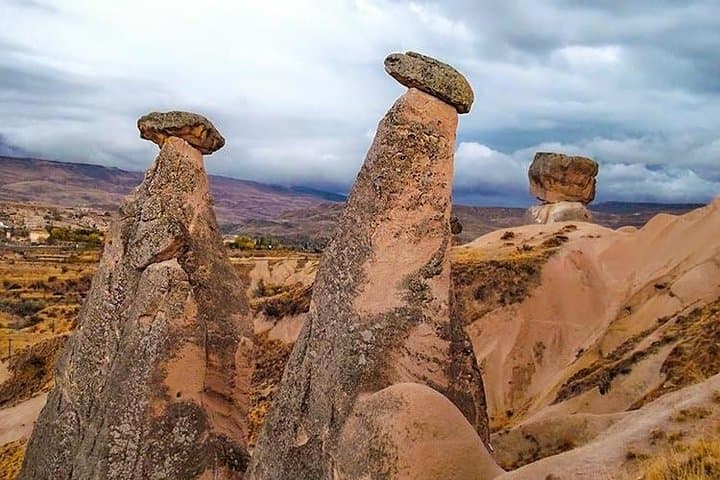
Geology explains the weirdness: a Miocene-era eruption left thick deposits of ash that lithified into tuff and later eroded into the “fairy chimneys.” Human history layered on top of that — early Christians carving sanctuaries, Seljuk merchants using caravanserais like Sultanhanı for rest on the Silk Road, communities descending into subterranean cities to avoid conflict. The underground complexes you visit are cool, silent and claustrophobic; narrow stairs and low tunnels demand attention and a steady step.
Practical notes: the tour covers major sites with admissions and lunch included and runs about 12–13 hours round-trip (Konya to Cappadocia is roughly three hours each way). Wear sturdy shoes with good traction for uneven rock and dusty trails. Bring sun protection and at least 1–1.5 liters of water; summers are hot and winters can be icy in exposed sections. The underground city contains stairs and low passages — it’s not suitable for anyone with severe mobility issues.
This itinerary is efficient: a private vehicle, a professional guide, and time at signature stops — Göreme, Uçhisar, fairy chimneys, an underground city and the Three Beauties viewpoint. If you want a quieter experience, plan the trip outside peak summer and ask about early departures. Whether you’re tracing frescoes or standing on a high rim watching balloons stitch the sky at dawn, the trip delivers concentrated history, surprising geology and the kind of scenery that asks you to slow your pace and look closely.
moderate.
12–13 hours.
Moderate fitness; able to walk 1–3 miles on uneven terrain and climb stairs repeatedly throughout the day.
Plan for roughly three hours each way depending on traffic and road conditions; the tour is a full 12–13 hour day.
Yes — the tour includes admissions to the listed sites such as Göreme Open Air Museum and designated underground city (per itinerary).
The tour can accommodate families, but the underground city has narrow, steep passages that may be difficult for very young children or people with mobility limitations.
No — balloon rides require an early, separate reservation and are not included in this ground-based day tour.
Yes — lunch with drinks is included; guides schedule breaks between sites but expect a full day of walking and transit.
Yes — the operator offers pickup from hotels, the airport and major stations in Konya; specify your pickup point at booking.
Cappadocia’s cave churches and underground cities reflect early Christian communities who carved worship and refuge spaces into tuff from the 4th–13th centuries; later Seljuk routes added caravanserais like Sultanhanı to the region’s trade network.
High visitor numbers can stress frescoed interiors and fragile rock; follow marked paths, avoid touching painted surfaces and support local conservation fees when available.
Selene Travel operates guided outdoor trips and adventures with an emphasis on safety, stewardship, and memorable experiences.
You step off the air-conditioned van and the landscape pushes back — a low, lunar sky, ridges and pinnacles carved by wind and time. The driver calls it Cappadocia, but the place insists on a different description: a carved city where people have lived inside stone for a thousand years. On this full-day loop from Konya you cross central Anatolia’s plateau, move through Seljuk caravan routes at Sultanhanı, and arrive at a region where volcanic ash hardened into tuff and generations of hands cut homes, churches and passages into it.
You step off the air-conditioned van and the landscape pushes back — a low, lunar sky, ridges and pinnacles carved by wind and time. The driver calls it Cappadocia, but the place insists on a different description: a carved city where people have lived inside stone for a thousand years. On this full-day loop from Konya you cross central Anatolia’s plateau, move through Seljuk caravan routes at Sultanhanı, and arrive at a region where volcanic ash hardened into tuff and generations of hands cut homes, churches and passages into it.
The day peels away in layers. Morning light finds you at Göreme Open Air Museum, where cave churches from the 10th–13th centuries keep frescoes that survived iconoclasm and weather. The pigments are quieter up close — deep ochres, lapis blues, saints with stubborn eyes — and the narrow aisles make you lower your voice as if respect were required by the stone itself. From there the route climbs to Uçhisar Castle, an enormous pockmarked rock that once served as a lookout and refuge; the views from its roof afford a survey of the landscape’s geometry: valleys, chimneys, and the small villages that have adapted to this geology.
Geology explains the weirdness: a Miocene-era eruption left thick deposits of ash that lithified into tuff and later eroded into the “fairy chimneys.” Human history layered on top of that — early Christians carving sanctuaries, Seljuk merchants using caravanserais like Sultanhanı for rest on the Silk Road, communities descending into subterranean cities to avoid conflict. The underground complexes you visit are cool, silent and claustrophobic; narrow stairs and low tunnels demand attention and a steady step.
Practical notes: the tour covers major sites with admissions and lunch included and runs about 12–13 hours round-trip (Konya to Cappadocia is roughly three hours each way). Wear sturdy shoes with good traction for uneven rock and dusty trails. Bring sun protection and at least 1–1.5 liters of water; summers are hot and winters can be icy in exposed sections. The underground city contains stairs and low passages — it’s not suitable for anyone with severe mobility issues.
This itinerary is efficient: a private vehicle, a professional guide, and time at signature stops — Göreme, Uçhisar, fairy chimneys, an underground city and the Three Beauties viewpoint. If you want a quieter experience, plan the trip outside peak summer and ask about early departures. Whether you’re tracing frescoes or standing on a high rim watching balloons stitch the sky at dawn, the trip delivers concentrated history, surprising geology and the kind of scenery that asks you to slow your pace and look closely.