THE ADVENTURE COLLECTIVE® · Independent discovery and booking for outdoor travel

A brisk 75-minute loop on horseback across the Western Waterpocket Fold delivers red bluffs, slickrock washes and local history. Ideal for newcomers, this ride pairs compact geology lessons with wide Utah skies.
A brisk 75-minute loop on horseback across the Western Waterpocket Fold delivers red bluffs, slickrock washes and local history. Ideal for newcomers, this ride pairs compact geology lessons with wide Utah skies.
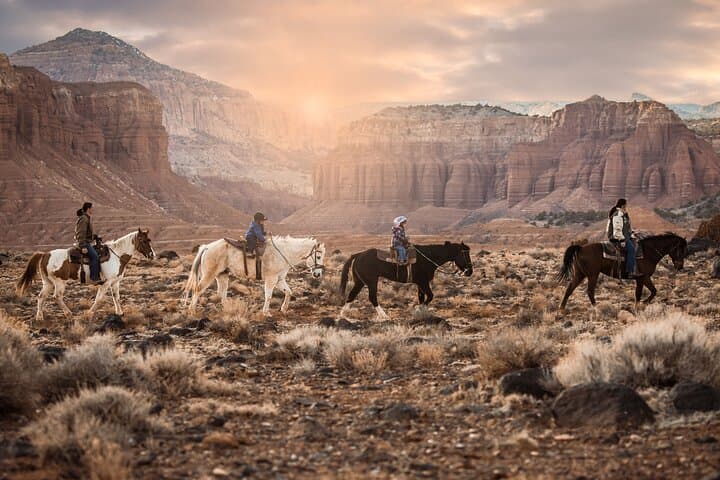
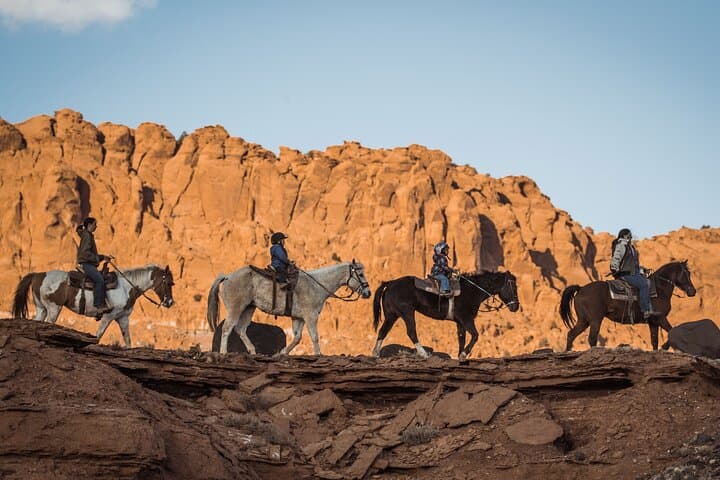
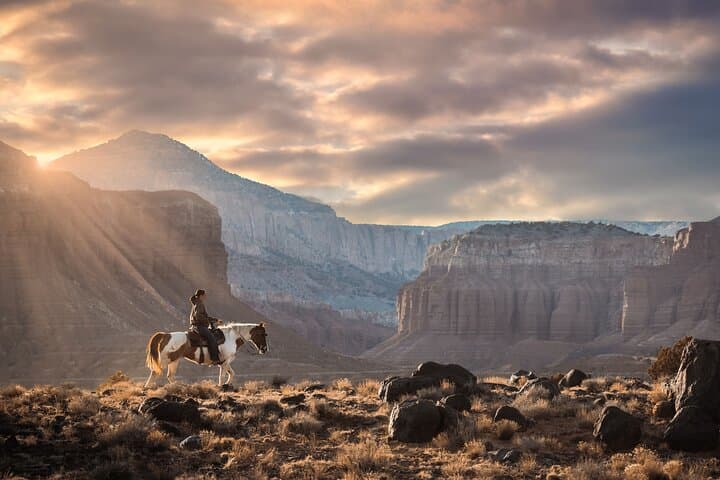
The morning air here tastes like sun-baked sage and iron. Riders swing up into saddles while the horses shift their weight, eager to step from the corrals and into the low rim of the Waterpocket Fold. For the next hour the landscape does the talking: scarlet sandstone fins, broad washes that dared ancient rivers to carve them, and the blocky silhouette of Meeks Mesa punctuating the horizon.
Verified experiences and guided adventures in the surrounding area.
Operated by Wilderness Ridge Adventures · Torrey, Utah
The morning air here tastes like sun-baked sage and iron. Riders swing up into saddles while the horses shift their weight, eager to step from the corrals and into the low rim of the Waterpocket Fold. For the next hour the landscape does the talking: scarlet sandstone fins, broad washes that dared ancient rivers to carve them, and the blocky silhouette of Meeks Mesa punctuating the horizon.
This loop ride threads through a secluded parcel of the Western Waterpocket Fold, a 100-mile monocline where crustal motion tilted layers of rock and left a spine of weathered cliffs across south-central Utah. Riders pass the Red Bluff — a slab of oxidized Navajo sandstone that glows near sunset — then slip into washes where wind and seasonal streams have polished the rock into channels. Guides here are part naturalist, part local historian: they’ll point out remnants of Fremont-era sites and explain how Mormon settlers from nearby Fruita planted orchards in the park’s sheltered benches.
The geology is obvious, but the human history is compact and layered. Ancestors of Ute and Paiute peoples traveled these slopes long before the Mormon arrival in the 19th century. The Fruitland bench and the old Fruita schoolhouse speak to the hardy homesteaders who learned to read the land’s microclimates and collect water in tanks carved into the stone.
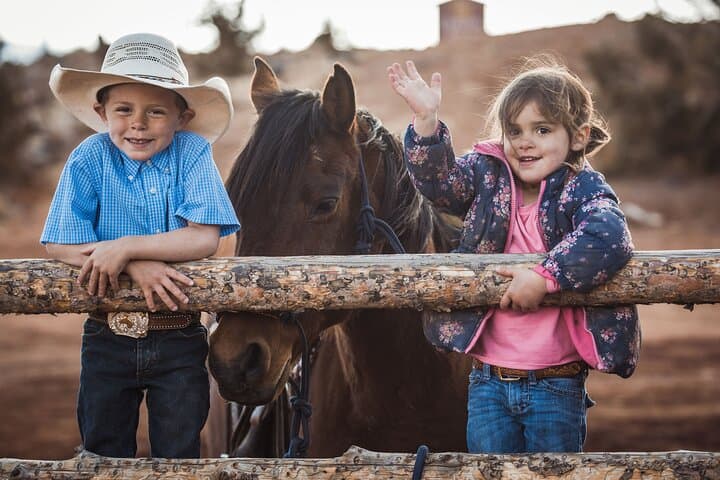
On the practical side: the ride is a 75-minute loop geared to riders of all experience levels. Terrain alternates between packed desert tracks, sandy wash bottoms, and short slickrock stretches; expect gentle rises rather than steep climbs. Horses are well cared for and helmets are provided.
Plan for sun and elevation. The corral sits at roughly 5,000–5,500 feet; afternoons can feel hot, mornings crisp. Bring water, sun protection, closed-toe shoes and long pants to avoid chafing. If you have back, heart, or pregnancy-related health concerns, choose another activity — the operator flags those conditions as restrictions. Weight and height info are collected at booking to match horses and tack.
Logistics are simple: meet at the gravel lot beside the large wooden-frame tipi on the Capitol Reef Resort property; the corrals are a short walk downhill. The ride squeezes a lot into 60 minutes of moving time — wide views, intimate wash corridors, and plenty of photo stops — making it a tidy half-day outing if you pair it with a picnic in Fruita or a drive along Scenic Byway 24.
For anyone who wants a direct, low-impact way to read Capitol Reef’s rocks and human stories, this short western loop is an efficient, evocative choice: fast on scenery, gently paced on effort, and rich in context from guides who know how to tell the land’s story without slowing the horse.
easy.
1–1.5 hours (75 minutes scheduled).
Suitable for most fitness levels; you should be able to sit comfortably in a saddle and mount/dismount with minimal assistance.
No — the ride is designed for beginners and experienced riders alike; guides give a brief orientation and control the pace.
Yes — certified riding helmets are included in the equipment provided by the operator.
The operator collects weight and height at booking to ensure a safe match to horses; specific limits are provided during booking and may vary.
Park in the gravel lot beside the large wooden-frame tipi at the Capitol Reef Resort property, then walk down the hill to the corrals where staff will meet you.
Full refunds are available if you cancel at least 24 hours before the scheduled departure time; no refund within 24 hours.
No — the operator advises against participation for pregnant travelers and those with spinal, cardiovascular, or similar medical concerns.
The Waterpocket Fold is a monocline created by uplift during the Laramide orogeny; Mormon settlers later farmed sheltered benches near the park’s Fruita area.
Stick to established trails, avoid disturbing archaeological sites, and pack out all trash — the area’s fragile soils and ancient sites recover slowly from impact.
Wilderness Ridge Adventures operates guided outdoor trips and adventures with an emphasis on safety, stewardship, and memorable experiences.
The morning air here tastes like sun-baked sage and iron. Riders swing up into saddles while the horses shift their weight, eager to step from the corrals and into the low rim of the Waterpocket Fold. For the next hour the landscape does the talking: scarlet sandstone fins, broad washes that dared ancient rivers to carve them, and the blocky silhouette of Meeks Mesa punctuating the horizon.
The morning air here tastes like sun-baked sage and iron. Riders swing up into saddles while the horses shift their weight, eager to step from the corrals and into the low rim of the Waterpocket Fold. For the next hour the landscape does the talking: scarlet sandstone fins, broad washes that dared ancient rivers to carve them, and the blocky silhouette of Meeks Mesa punctuating the horizon.
This loop ride threads through a secluded parcel of the Western Waterpocket Fold, a 100-mile monocline where crustal motion tilted layers of rock and left a spine of weathered cliffs across south-central Utah. Riders pass the Red Bluff — a slab of oxidized Navajo sandstone that glows near sunset — then slip into washes where wind and seasonal streams have polished the rock into channels. Guides here are part naturalist, part local historian: they’ll point out remnants of Fremont-era sites and explain how Mormon settlers from nearby Fruita planted orchards in the park’s sheltered benches.
The geology is obvious, but the human history is compact and layered. Ancestors of Ute and Paiute peoples traveled these slopes long before the Mormon arrival in the 19th century. The Fruitland bench and the old Fruita schoolhouse speak to the hardy homesteaders who learned to read the land’s microclimates and collect water in tanks carved into the stone.
On the practical side: the ride is a 75-minute loop geared to riders of all experience levels. Terrain alternates between packed desert tracks, sandy wash bottoms, and short slickrock stretches; expect gentle rises rather than steep climbs. Horses are well cared for and helmets are provided.
Plan for sun and elevation. The corral sits at roughly 5,000–5,500 feet; afternoons can feel hot, mornings crisp. Bring water, sun protection, closed-toe shoes and long pants to avoid chafing. If you have back, heart, or pregnancy-related health concerns, choose another activity — the operator flags those conditions as restrictions. Weight and height info are collected at booking to match horses and tack.
Logistics are simple: meet at the gravel lot beside the large wooden-frame tipi on the Capitol Reef Resort property; the corrals are a short walk downhill. The ride squeezes a lot into 60 minutes of moving time — wide views, intimate wash corridors, and plenty of photo stops — making it a tidy half-day outing if you pair it with a picnic in Fruita or a drive along Scenic Byway 24.
For anyone who wants a direct, low-impact way to read Capitol Reef’s rocks and human stories, this short western loop is an efficient, evocative choice: fast on scenery, gently paced on effort, and rich in context from guides who know how to tell the land’s story without slowing the horse.