THE ADVENTURE COLLECTIVE® · Independent discovery and booking for outdoor travel

Drive Chapman's Peak, meet African penguins at Boulders Beach, climb to the Cape Point lighthouse and taste Constantia wines—all in one well-paced small-group day tour from Cape Town. Practical, scenic and wildlife-rich, this route showcases the Cape Peninsula's geological drama and cultural history.
Drive Chapman's Peak, meet African penguins at Boulders Beach, climb to the Cape Point lighthouse and taste Constantia wines—all in one well-paced small-group day tour from Cape Town. Practical, scenic and wildlife-rich, this route showcases the Cape Peninsula's geological drama and cultural history.
You step out of an air-conditioned minivan and the Atlantic wind meets you like an impatient guest—salty, brisk, and intent on moving you forward. The road has already carved a promise: granite cliffs to your left, the ocean opening wide to your right, and ahead the slow, sure drama of Cape Point. Over eight hours this small-group tour stitches together the peninsula’s headline acts—Boulders Beach’s waddling African penguins, the hairpin poetry of Chapman's Peak Drive, the high, historic sweep of Cape of Good Hope, and a tasting stop in Constantia vineyards—while a guide translates landscape into story.
Verified experiences and guided adventures in the surrounding area.
Operated by Raw African Safaris · Cape Town, Western Cape
You step out of an air-conditioned minivan and the Atlantic wind meets you like an impatient guest—salty, brisk, and intent on moving you forward. The road has already carved a promise: granite cliffs to your left, the ocean opening wide to your right, and ahead the slow, sure drama of Cape Point. Over eight hours this small-group tour stitches together the peninsula’s headline acts—Boulders Beach’s waddling African penguins, the hairpin poetry of Chapman's Peak Drive, the high, historic sweep of Cape of Good Hope, and a tasting stop in Constantia vineyards—while a guide translates landscape into story.
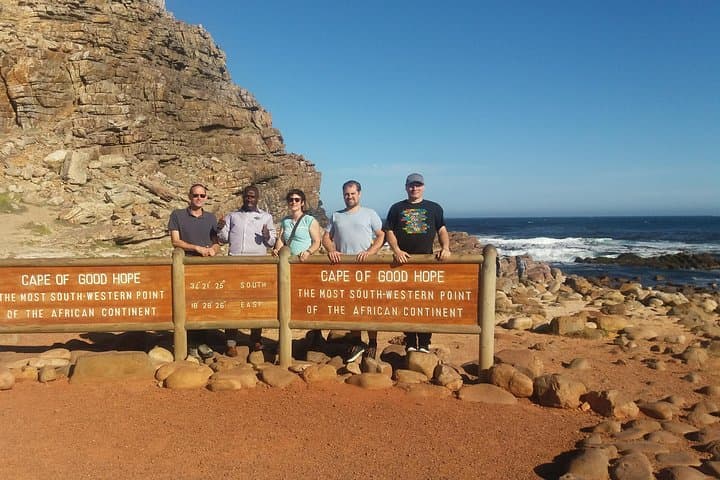
Human history and geology are on view. Mariners once feared this shore—Bartolomeu Dias named the headland the "Cape of Storms"—before it became an essential waypoint on the age of exploration. The raw rock here is Table Mountain sandstone folded and exposed by tectonic patience; the result is sea cliffs, hidden coves, and the 9 km, 114-curve spectacle of Chapman's Peak Drive constructed between 1915 and 1922.
Simon's Town adds a different note: a working harbor with colonial-era buildings and a navy presence, plus Boulders Beach, where a small colony of African penguins lives on shaded granite and sheltered sand. Constantia, by contrast, is green and temperate—South Africa’s oldest wine district—where Cape vines cool in ocean breezes and pair as easily with history as they do with chocolate.
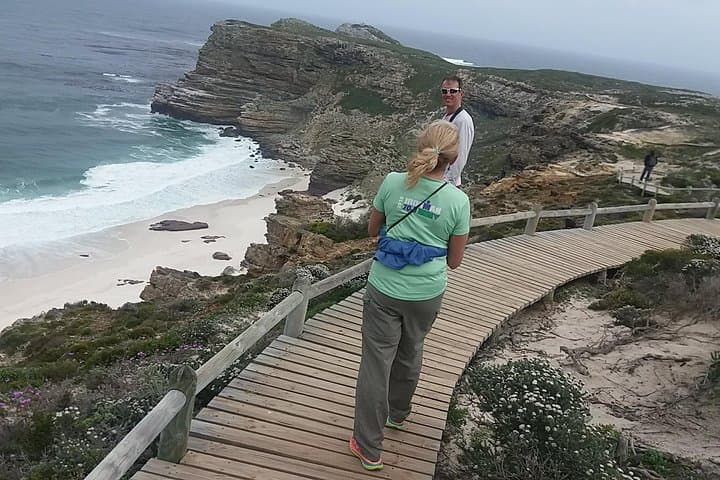
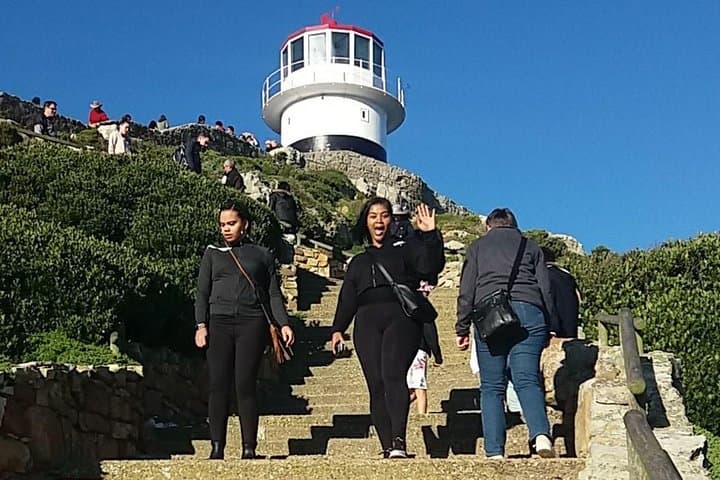
Practical side: the itinerary is vehicle-heavy with short on-foot segments—expect a few hundred metres of boardwalk at Boulders, a short steep walk (roughly 200–300 m with 60–80 m elevation gain) up to the old Cape Point lighthouse, and several lookout stops at Chapman's Peak where you’ll step out for photos. Park entry and Chapman's Peak tolls are included; bottled water is provided.
Wildlife encounters are unscripted—penguins are predictable, whales are seasonal (June–November), and chacma baboons are opportunistic: keep bags closed and snacks stashed. Respect fenced viewing areas; do not touch or feed animals.
Timing matters. Morning light softens the northern cliffs and crowds thin; late afternoon brings warm tones across the vineyards and sharper contrasts for cliff shots. Bring layered clothing—the peninsula’s microclimates can go from sunny and calm to cold and windy in minutes. Shoes should handle uneven boardwalks and sandy coves.
This is a day for variety: geology, wildlife, maritime history, and a gentle taste of Cape winemaking. For travelers who want a compact, well-paced introduction to the Cape Peninsula with local context and minimal logistics fuss, this small-group tour delivers both scenery and a clear route through one of South Africa’s most dramatic coastlines.
easy.
8 hours.
Suitable for low to moderate fitness; mostly vehicle-based with short walks and optional climbs
Yes—entry to the Cape of Good Hope Nature Reserve and Chapman's Peak toll fees are included in the tour price.
You can view African penguins from a boardwalk within a few metres; touching or feeding them is prohibited to protect their health.
Yes—pickup is offered from central Cape Town hotels and the Cape Town Cruise Ship Terminal; the provider asks guests to be in the lobby 30 minutes before departure.
There are restroom facilities at major stops like Boulders Beach and Cape Point; Simon's Town and Constantia provide restaurant options for lunch or wine tasting.
Expect seabirds and possibly whales (seasonal, June–November); chacma baboons and small antelope species are also present in the reserve.
Yes—infants and small children can use a stroller for vehicle pickups and flat boardwalk sections, though the lighthouse climb is less stroller-friendly.
The Cape of Good Hope was first rounded by European explorers in the late 15th century and later became a strategic maritime waypoint; Simon’s Town grew as a naval harbor under colonial rule.
The Cape Floral Region is globally significant and vulnerable; stay on trails, avoid disturbing nesting sites, and support local conservation fees that fund reserve management.
Raw African Safaris operates guided outdoor trips and adventures with an emphasis on safety, stewardship, and memorable experiences.
You step out of an air-conditioned minivan and the Atlantic wind meets you like an impatient guest—salty, brisk, and intent on moving you forward. The road has already carved a promise: granite cliffs to your left, the ocean opening wide to your right, and ahead the slow, sure drama of Cape Point. Over eight hours this small-group tour stitches together the peninsula’s headline acts—Boulders Beach’s waddling African penguins, the hairpin poetry of Chapman's Peak Drive, the high, historic sweep of Cape of Good Hope, and a tasting stop in Constantia vineyards—while a guide translates landscape into story.
You step out of an air-conditioned minivan and the Atlantic wind meets you like an impatient guest—salty, brisk, and intent on moving you forward. The road has already carved a promise: granite cliffs to your left, the ocean opening wide to your right, and ahead the slow, sure drama of Cape Point. Over eight hours this small-group tour stitches together the peninsula’s headline acts—Boulders Beach’s waddling African penguins, the hairpin poetry of Chapman's Peak Drive, the high, historic sweep of Cape of Good Hope, and a tasting stop in Constantia vineyards—while a guide translates landscape into story.
Human history and geology are on view. Mariners once feared this shore—Bartolomeu Dias named the headland the "Cape of Storms"—before it became an essential waypoint on the age of exploration. The raw rock here is Table Mountain sandstone folded and exposed by tectonic patience; the result is sea cliffs, hidden coves, and the 9 km, 114-curve spectacle of Chapman's Peak Drive constructed between 1915 and 1922.
Simon's Town adds a different note: a working harbor with colonial-era buildings and a navy presence, plus Boulders Beach, where a small colony of African penguins lives on shaded granite and sheltered sand. Constantia, by contrast, is green and temperate—South Africa’s oldest wine district—where Cape vines cool in ocean breezes and pair as easily with history as they do with chocolate.
Practical side: the itinerary is vehicle-heavy with short on-foot segments—expect a few hundred metres of boardwalk at Boulders, a short steep walk (roughly 200–300 m with 60–80 m elevation gain) up to the old Cape Point lighthouse, and several lookout stops at Chapman's Peak where you’ll step out for photos. Park entry and Chapman's Peak tolls are included; bottled water is provided.
Wildlife encounters are unscripted—penguins are predictable, whales are seasonal (June–November), and chacma baboons are opportunistic: keep bags closed and snacks stashed. Respect fenced viewing areas; do not touch or feed animals.
Timing matters. Morning light softens the northern cliffs and crowds thin; late afternoon brings warm tones across the vineyards and sharper contrasts for cliff shots. Bring layered clothing—the peninsula’s microclimates can go from sunny and calm to cold and windy in minutes. Shoes should handle uneven boardwalks and sandy coves.
This is a day for variety: geology, wildlife, maritime history, and a gentle taste of Cape winemaking. For travelers who want a compact, well-paced introduction to the Cape Peninsula with local context and minimal logistics fuss, this small-group tour delivers both scenery and a clear route through one of South Africa’s most dramatic coastlines.