THE ADVENTURE COLLECTIVE® · Independent discovery and booking for outdoor travel

A full-day scenic loop from Cape Town that pairs a coastal hike at Cape Point with an up-close visit to the African penguin colony at Boulders Beach. Expect dramatic cliffs, fynbos-scented air, and guided insights into geology, maritime history, and conservation.
A full-day scenic loop from Cape Town that pairs a coastal hike at Cape Point with an up-close visit to the African penguin colony at Boulders Beach. Expect dramatic cliffs, fynbos-scented air, and guided insights into geology, maritime history, and conservation.
You feel the Atlantic before you see it — a cold breath that slices past the coach as the city drains away and the road begins to climb Ou Kaapse Weg.
Verified experiences and guided adventures in the surrounding area.
Operated by Xplorer Tours · Cape Town, Western Cape
You feel the Atlantic before you see it — a cold breath that slices past the coach as the city drains away and the road begins to climb Ou Kaapse Weg.
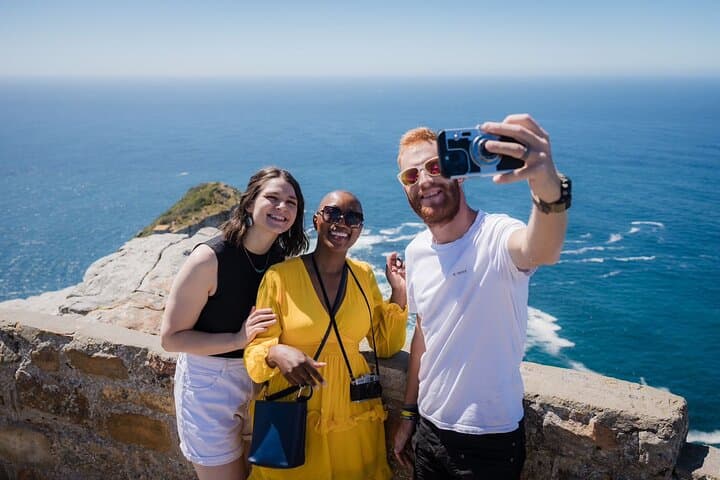
By mid-morning the bus slows into the scrubby contours of the Cape Peninsula. Fynbos lifts and falls like a green sea; the ocean alternates between pewter and glass. At Cape Point the land throws itself at the swell: granite cliffs, banded sandstone, and an exposed promontory where the wind has learned to speak. Guides lay out the geology with crisp patience — Table Mountain sandstone giving way to older granite — and point to the gullies where shipwrecks once shuddered in fog.
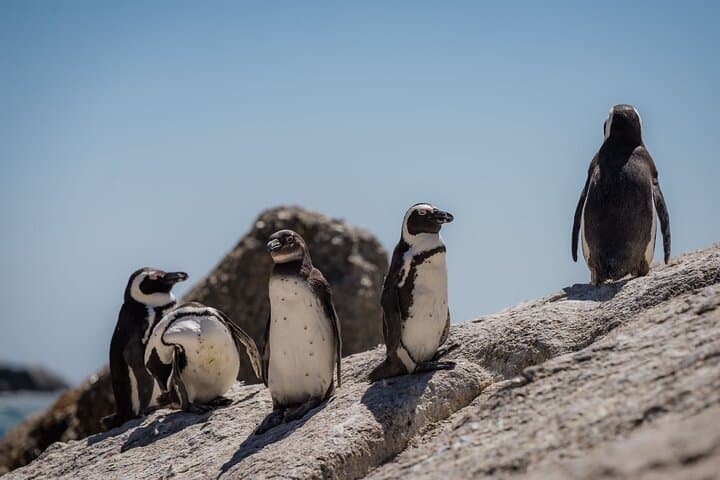
History here is tactile. The lighthouse, commissioned in the 1860s, was a hard-won answer to decades of maritime disaster. Simon’s Town, passed on the return leg, keeps its naval past on display in low-slung buildings and a working harbour. And then there’s Boulders Beach, where small tuxedo-clad penguins shuffle among granite boulders and a wooden boardwalk lets you get close without disturbing them.
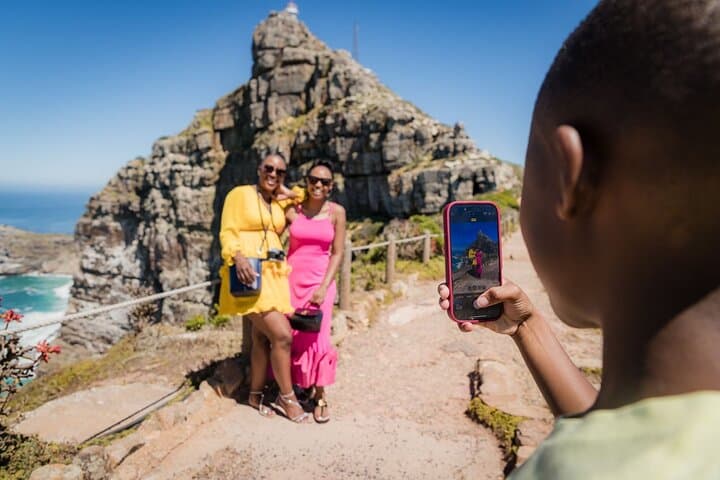
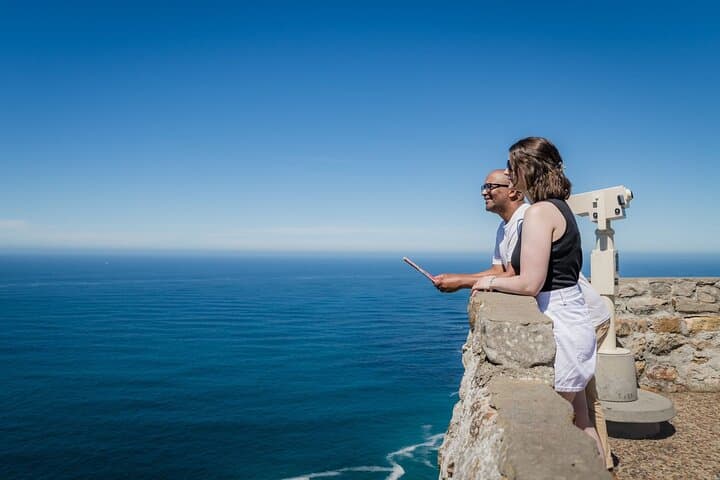
The tour gives you generous stops: roughly two hours to explore Cape Point, including an optional guided hike between Cape Point and the Cape of Good Hope, and about an hour at Boulders Beach to watch African penguins, also called jackass penguins for their braying calls. Expect interpretive narration, plenty of vantage points for photographs, and time to take the funicular or walk up to the old lighthouse for panoramic views.
Practicalities are straightforward. This is a full-day, fixed-route tour of about nine hours that begins and ends in Cape Town with multiple central pickup points. Park entry fees (SANParks) and the Boulders Beach entry fee are not included, and the funicular runs at an extra cost.
For the day itself, think layered clothing and windproof shells more than shorts and sandals. Trails at Cape Point include rocky steps and exposed ridgelines; the guided hike is medium difficulty and best attempted in sensible walking shoes. Water, sun protection, and a small daypack will make the difference between a rushed photo op and a deliberately lived day.
Wildlife encounters can feel intimate but rely on restraint — stay on boardwalks, keep a respectful distance from penguins, and follow your guide’s instructions. If you time the trip for early summer you’ll get long light and warmer air; winter brings storms that sharpen the cliffs and thin the crowds.
In short: this day tour is part natural history lesson, part coastal hike, and part wildlife viewing — a compact way to experience the dramatic final leg of South Africa’s peninsula without the logistics, but with enough time to feel you’ve actually been there.
moderate.
9 hours.
You should be comfortable with several short walks over uneven terrain and able to stand for viewpoints; medium fitness for the optional Cape Point to Cape of Good Hope hike.
No — SANParks entry for Cape Point and the Boulders Beach admission are not included; have payment ready.
Boardwalks let you view penguins within a few meters while keeping animals undisturbed; do not cross roped areas.
The guided hike is rated medium: uneven terrain and exposed stretches mean good walking shoes and moderate fitness are required.
Yes — Cape Point Reserve hosts ostriches, small antelope, and many seabirds; sightings depend on season and time of day.
Lunch is not typically included; most tours stop at a cafe or allow time to purchase food — bring snacks and water for flexibility.
Yes; the tour is family-friendly but infants must sit on laps, and children should be supervised on boardwalks and viewpoints.
The lighthouse at Cape Point was built in the 1860s after repeated shipwrecks; the peninsula has long been a strategic maritime route for vessels rounding Africa.
African penguin populations are threatened and Boulders Beach is a managed reserve — staying on boardwalks and following guidelines reduces disturbance and protects nesting sites.
Xplorer Tours operates guided outdoor trips and adventures with an emphasis on safety, stewardship, and memorable experiences.
You feel the Atlantic before you see it — a cold breath that slices past the coach as the city drains away and the road begins to climb Ou Kaapse Weg.
You feel the Atlantic before you see it — a cold breath that slices past the coach as the city drains away and the road begins to climb Ou Kaapse Weg.
By mid-morning the bus slows into the scrubby contours of the Cape Peninsula. Fynbos lifts and falls like a green sea; the ocean alternates between pewter and glass. At Cape Point the land throws itself at the swell: granite cliffs, banded sandstone, and an exposed promontory where the wind has learned to speak. Guides lay out the geology with crisp patience — Table Mountain sandstone giving way to older granite — and point to the gullies where shipwrecks once shuddered in fog.
History here is tactile. The lighthouse, commissioned in the 1860s, was a hard-won answer to decades of maritime disaster. Simon’s Town, passed on the return leg, keeps its naval past on display in low-slung buildings and a working harbour. And then there’s Boulders Beach, where small tuxedo-clad penguins shuffle among granite boulders and a wooden boardwalk lets you get close without disturbing them.
The tour gives you generous stops: roughly two hours to explore Cape Point, including an optional guided hike between Cape Point and the Cape of Good Hope, and about an hour at Boulders Beach to watch African penguins, also called jackass penguins for their braying calls. Expect interpretive narration, plenty of vantage points for photographs, and time to take the funicular or walk up to the old lighthouse for panoramic views.
Practicalities are straightforward. This is a full-day, fixed-route tour of about nine hours that begins and ends in Cape Town with multiple central pickup points. Park entry fees (SANParks) and the Boulders Beach entry fee are not included, and the funicular runs at an extra cost.
For the day itself, think layered clothing and windproof shells more than shorts and sandals. Trails at Cape Point include rocky steps and exposed ridgelines; the guided hike is medium difficulty and best attempted in sensible walking shoes. Water, sun protection, and a small daypack will make the difference between a rushed photo op and a deliberately lived day.
Wildlife encounters can feel intimate but rely on restraint — stay on boardwalks, keep a respectful distance from penguins, and follow your guide’s instructions. If you time the trip for early summer you’ll get long light and warmer air; winter brings storms that sharpen the cliffs and thin the crowds.
In short: this day tour is part natural history lesson, part coastal hike, and part wildlife viewing — a compact way to experience the dramatic final leg of South Africa’s peninsula without the logistics, but with enough time to feel you’ve actually been there.