THE ADVENTURE COLLECTIVE® · Independent discovery and booking for outdoor travel

In five hours you can watch African penguins preen on granite boulders, drive the scenic Chapman's Peak, and stand at the southern edge of Africa where two ocean currents collide. This guided half-day tour from Cape Town blends wildlife viewing, coastal geology, and maritime history with easy logistics.
In five hours you can watch African penguins preen on granite boulders, drive the scenic Chapman's Peak, and stand at the southern edge of Africa where two ocean currents collide. This guided half-day tour from Cape Town blends wildlife viewing, coastal geology, and maritime history with easy logistics.
You step out of the air-conditioned van onto wind that tastes of kelp and distance. The cliff-top at Cape Point opens like a stage — breast-high waves hitting basalt, gulls arguing over scraps, and an old white lighthouse keeping its slow watch. The guide points, not at a single drama, but at the choreography: where the cold Benguela and warm Agulhas currents meet and push against one another, shaping the coastline and the stories sailors have told for four centuries.
Verified experiences and guided adventures in the surrounding area.
Operated by Wish2C Tours & Shuttles · Cape Town, Western Cape
You step out of the air-conditioned van onto wind that tastes of kelp and distance. The cliff-top at Cape Point opens like a stage — breast-high waves hitting basalt, gulls arguing over scraps, and an old white lighthouse keeping its slow watch. The guide points, not at a single drama, but at the choreography: where the cold Benguela and warm Agulhas currents meet and push against one another, shaping the coastline and the stories sailors have told for four centuries.
This half-day loop from Cape Town threads together two very different displays of the Cape peninsula: Boulders Beach, where African penguins waddle and preen on sheltered granite boulders, and the Cape of Good Hope with its wind-swept vistas and historic beacons. The geology is blunt and honest: 300-million-year-old Table Mountain sandstone meets younger coastal deposits, carved by relentless swell into coves and cliffs. Cultural layers are here too — from the maritime routes marked by Bartolomeu Dias and Vasco da Gama to the small naval town of Simon’s Town where fisherman, naval history, and modern tourism coexist.
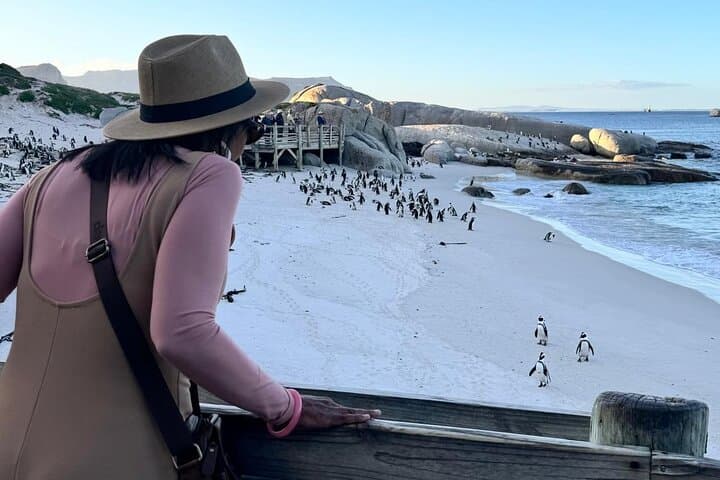
At Boulders, boardwalks give intimate, regulated views: penguins shuffle like small veterans, occasionally flapping into the surf. The colony is a rare, endangered species endemic to southern Africa, and the careful walkways exist because visitors can easily disturb nesting birds. At Cape Point and the Cape of Good Hope, follow the paths up to the lighthouses or take the Flying Dutchman funicular if you prefer the scenic lift — the climb rewards you with panoramas that make clear why mariners named this coast a turning point.
Practicalities matter: the tour is five hours with guided hotel pickup across the city. Wear sturdy shoes — paths are uneven and wind can be brisk. Bring a windproof layer, sun protection, and a refillable bottle; bottled water is provided but having your own reduces plastic. Photography lovers will want a mid-telephoto lens for penguins and a wide-angle for seascapes; keep distance from wildlife and follow guide instructions.
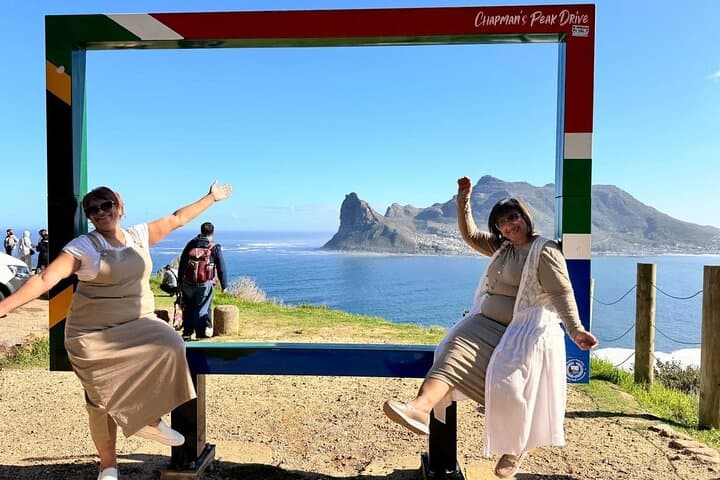
Timing is important: morning departures catch calmer seas and softer light along Chapman's Peak Drive; late summer brings sun and more tourists. The tour is low-impact physically but high on exposure to sun and spray, so hydrate and layer. Respect fenced areas at Boulders to protect nests, and consider adding time in Simon’s Town for seafood or a short museum visit.
This half-day is a concentrated primer on the Cape’s wild coast — geological motion, seafaring history, and an improbable colony of tuxedoed birds — all delivered with practical routing and local context, the kind of accessible adventure that leaves you with clear pictures and reasons to come back for a longer exploration.
easy.
5 hours.
Suitable for most fitness levels; involves short walks and some stairs or slopes at viewpoints
Admission to Boulders Beach and Cape Point is not included and is paid on-site — the tour stops allow time to purchase entry where required.
The tour lasts about five hours and includes hotel pickup within a 5km radius of Cape Town; exact pickup time is provided the day before.
Yes — the tour returns you to your accommodation in Cape Town at the end of the itinerary.
Penguins are resident year-round but visibility can vary with weather and breeding cycles; boardwalks maximize viewing without disturbing them.
Yes — the tour is rated easy with short, accessible walks, but it’s not recommended for travelers with serious spinal or heart issues.
The operator may alter the route in poor weather; cancellation policy allows refunds if you cancel at least 24 hours in advance, and the tour may be adjusted for safety.
The Cape Point area has been a navigational landmark since the 15th century; sailors like Bartolomeu Dias mapped these hazards while early lighthouses guided ships around the promontory.
Boulders Penguin Colony is protected with boardwalks and strict visitor rules to reduce disturbance; support local conservation by keeping distance and avoiding single-use plastics.
Wish2C Tours & Shuttles operates guided outdoor trips and adventures with an emphasis on safety, stewardship, and memorable experiences.
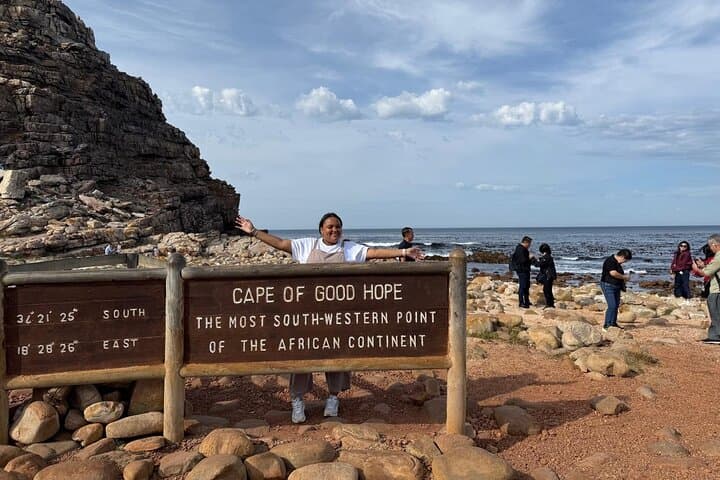
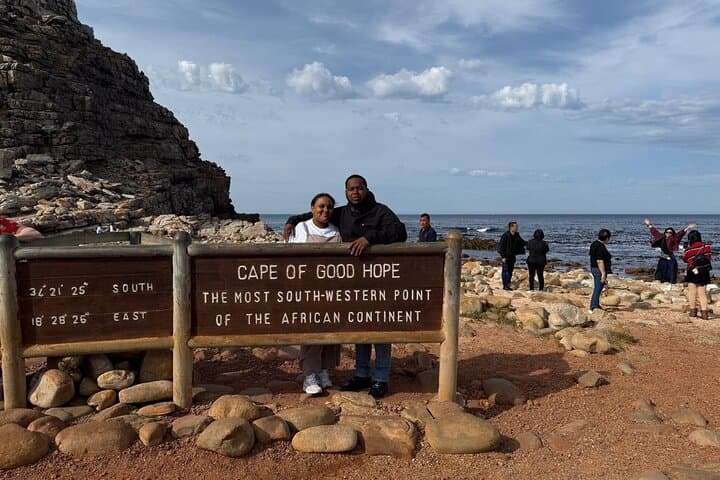
You step out of the air-conditioned van onto wind that tastes of kelp and distance. The cliff-top at Cape Point opens like a stage — breast-high waves hitting basalt, gulls arguing over scraps, and an old white lighthouse keeping its slow watch. The guide points, not at a single drama, but at the choreography: where the cold Benguela and warm Agulhas currents meet and push against one another, shaping the coastline and the stories sailors have told for four centuries.
You step out of the air-conditioned van onto wind that tastes of kelp and distance. The cliff-top at Cape Point opens like a stage — breast-high waves hitting basalt, gulls arguing over scraps, and an old white lighthouse keeping its slow watch. The guide points, not at a single drama, but at the choreography: where the cold Benguela and warm Agulhas currents meet and push against one another, shaping the coastline and the stories sailors have told for four centuries.
This half-day loop from Cape Town threads together two very different displays of the Cape peninsula: Boulders Beach, where African penguins waddle and preen on sheltered granite boulders, and the Cape of Good Hope with its wind-swept vistas and historic beacons. The geology is blunt and honest: 300-million-year-old Table Mountain sandstone meets younger coastal deposits, carved by relentless swell into coves and cliffs. Cultural layers are here too — from the maritime routes marked by Bartolomeu Dias and Vasco da Gama to the small naval town of Simon’s Town where fisherman, naval history, and modern tourism coexist.
At Boulders, boardwalks give intimate, regulated views: penguins shuffle like small veterans, occasionally flapping into the surf. The colony is a rare, endangered species endemic to southern Africa, and the careful walkways exist because visitors can easily disturb nesting birds. At Cape Point and the Cape of Good Hope, follow the paths up to the lighthouses or take the Flying Dutchman funicular if you prefer the scenic lift — the climb rewards you with panoramas that make clear why mariners named this coast a turning point.
Practicalities matter: the tour is five hours with guided hotel pickup across the city. Wear sturdy shoes — paths are uneven and wind can be brisk. Bring a windproof layer, sun protection, and a refillable bottle; bottled water is provided but having your own reduces plastic. Photography lovers will want a mid-telephoto lens for penguins and a wide-angle for seascapes; keep distance from wildlife and follow guide instructions.
Timing is important: morning departures catch calmer seas and softer light along Chapman's Peak Drive; late summer brings sun and more tourists. The tour is low-impact physically but high on exposure to sun and spray, so hydrate and layer. Respect fenced areas at Boulders to protect nests, and consider adding time in Simon’s Town for seafood or a short museum visit.
This half-day is a concentrated primer on the Cape’s wild coast — geological motion, seafaring history, and an improbable colony of tuxedoed birds — all delivered with practical routing and local context, the kind of accessible adventure that leaves you with clear pictures and reasons to come back for a longer exploration.