THE ADVENTURE COLLECTIVE® · Independent discovery and booking for outdoor travel

Spend a full day driving the dramatic Cape Peninsula, from the cliff-carved Chapman’s Peak to Cape Point’s lighthouse and the waddling African penguins at Boulders Beach. This private tour packs geology, wildlife and coastal culture into a single, unforgettable day.
Spend a full day driving the dramatic Cape Peninsula, from the cliff-carved Chapman’s Peak to Cape Point’s lighthouse and the waddling African penguins at Boulders Beach. This private tour packs geology, wildlife and coastal culture into a single, unforgettable day.
The day opens with the Atlantic wind already at the window, cool and whip-smart, as your private vehicle peels away from Cape Town and follows the coastline south. The road climbs and folds around cliffs; ocean spray punctuates the air and the mountains seem to stretch their ridgelines toward the sea. Chapman’s Peak Drive arrives like a reveal — a carved ribbon of road clinging to basalt cliffs — and the world briefly narrows to a single, perfect view of surf, rock, and horizon.
Verified experiences and guided adventures in the surrounding area.
Operated by Baraka Travel Services · Cape Town, Western Cape
The day opens with the Atlantic wind already at the window, cool and whip-smart, as your private vehicle peels away from Cape Town and follows the coastline south. The road climbs and folds around cliffs; ocean spray punctuates the air and the mountains seem to stretch their ridgelines toward the sea. Chapman’s Peak Drive arrives like a reveal — a carved ribbon of road clinging to basalt cliffs — and the world briefly narrows to a single, perfect view of surf, rock, and horizon.
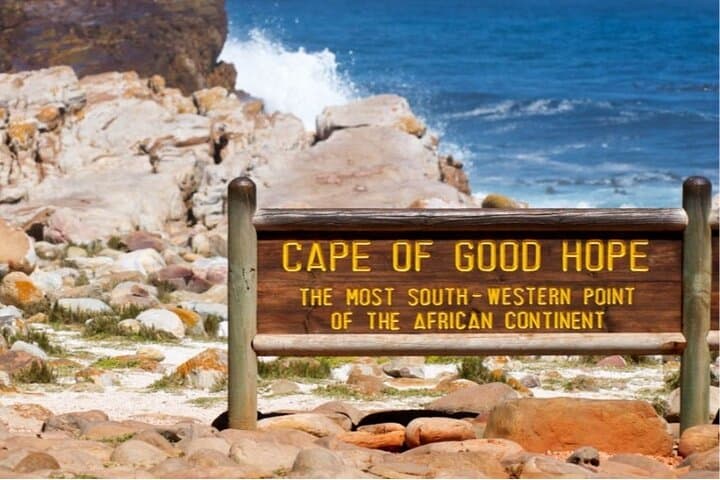
History sits heavy here: European mariners named this spit of land Cape of Storms in the 15th century, later rebranded the Cape of Good Hope as trade routes and myths grew. The geology is older: Cape Fold Belt sandstone and granite plicate into the serrated range that shepherds storms into dramatic, wind-driven shows. Simon’s Town keeps a quieter, human-scale history — wooden harbors, naval quarters and a fishing culture that still smells of salt and chips.
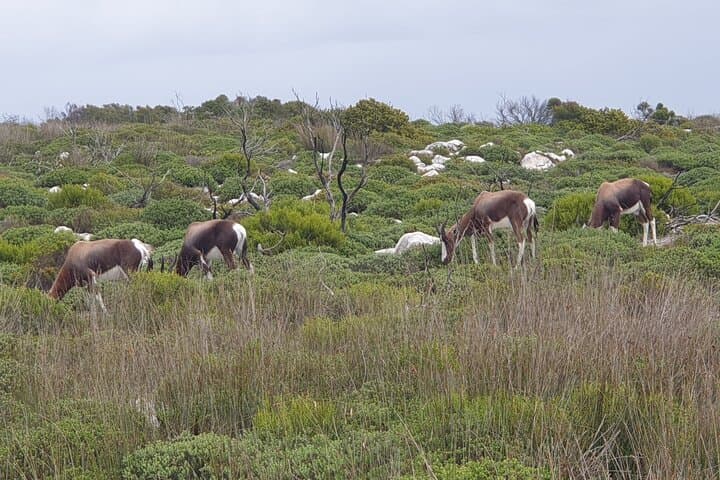
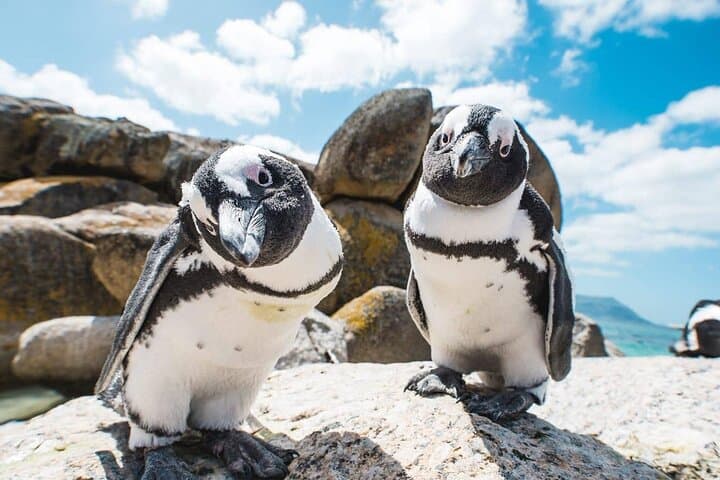
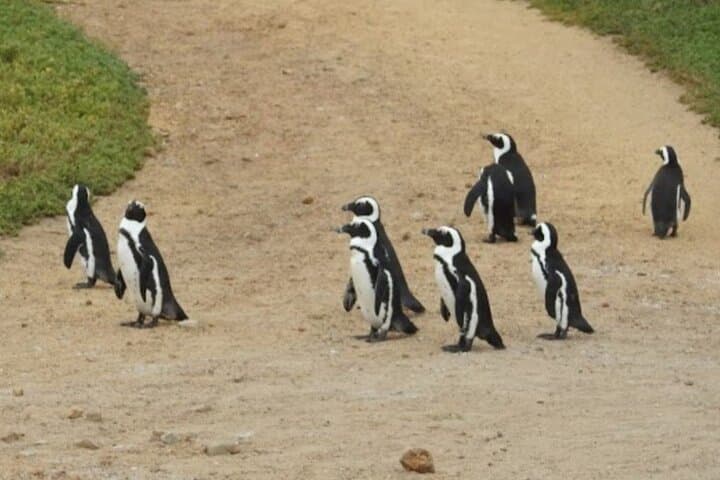
Wildlife claims its share of the landscape. At Boulders Beach, African penguins shuffle like residents of an eccentric seaside suburb, waddling between granite boulders and salt-washed dunes. Cape Point, in the Table Mountain National Park, is both botanical treasure — part of the Cape Floral Region World Heritage Site — and animal theater: bontebok, klipspringer, and Cape fur seals often perform against a backdrop of lighthouse and crashing ocean.
Practicality keeps the day moving. This private tour runs about eight to nine hours with door-to-door pickup in Cape Town; you’ll spend extended time at viewpoints, the lighthouse and the penguin colony. Chapman's Peak has a toll gate and limited parking; the guide handles logistics so you don’t waste time circling for spots. Weather can swing quickly: mornings may be glassy and calm, afternoons blasted by the southeaster (the infamous "Cape Doctor"). Dress in layers and prioritize windproof outerwear.
Respect rules at wildlife stops: stay on boardwalks at Boulders Beach, keep distance from baboons and never feed animals. If you visit between June and December, keep an eye out for southern right whales blowing off the coast. Bring binoculars, sunscreen, and a camera with a zoom; the best photos require patience and respect for the animals’ space.
By day’s end you return to the city with a sense of scale — cliffs that dared ships, penguins that refused to be tourist props, and a coastline that still writes its own weather. It’s an easy, deeply scenic introduction to the geological and biological edges of South Africa’s southwestern tip.
easy.
8–9 hours.
Suitable for travelers of most fitness levels; expect short walks, boarding steps and standing at viewpoints.
The tour runs about 8–9 hours (480–540 minutes) with hotel pickup and drop-off in Cape Town.
Boulders Beach has a resident colony and sightings are very likely, but wildlife sightings can’t be guaranteed.
Yes — the operator lists wheelchair-accessible transportation and many stops have accessible surfaces, though some viewpoints have steps.
Swimming is possible in designated areas but avoid deeper water near the rocks; always follow local signage and guide instructions.
Southern right and other whales are most commonly seen from June through December along the Cape Peninsula coast.
Yes — this is a private tour and the guide can adjust stops and timing to focus on photography, wildlife, or relaxed beach time.
European sailors first named the coast the Cape of Storms in 1488; Cape Point later became a vital navigational landmark and host to historic lighthouses.
The Cape Peninsula is part of the Cape Floral Region UNESCO site; visitors are asked to stick to paths and not disturb fynbos or wildlife to protect fragile ecosystems.
Baraka Travel Services operates guided outdoor trips and adventures with an emphasis on safety, stewardship, and memorable experiences.
The day opens with the Atlantic wind already at the window, cool and whip-smart, as your private vehicle peels away from Cape Town and follows the coastline south. The road climbs and folds around cliffs; ocean spray punctuates the air and the mountains seem to stretch their ridgelines toward the sea. Chapman’s Peak Drive arrives like a reveal — a carved ribbon of road clinging to basalt cliffs — and the world briefly narrows to a single, perfect view of surf, rock, and horizon.
The day opens with the Atlantic wind already at the window, cool and whip-smart, as your private vehicle peels away from Cape Town and follows the coastline south. The road climbs and folds around cliffs; ocean spray punctuates the air and the mountains seem to stretch their ridgelines toward the sea. Chapman’s Peak Drive arrives like a reveal — a carved ribbon of road clinging to basalt cliffs — and the world briefly narrows to a single, perfect view of surf, rock, and horizon.
History sits heavy here: European mariners named this spit of land Cape of Storms in the 15th century, later rebranded the Cape of Good Hope as trade routes and myths grew. The geology is older: Cape Fold Belt sandstone and granite plicate into the serrated range that shepherds storms into dramatic, wind-driven shows. Simon’s Town keeps a quieter, human-scale history — wooden harbors, naval quarters and a fishing culture that still smells of salt and chips.
Wildlife claims its share of the landscape. At Boulders Beach, African penguins shuffle like residents of an eccentric seaside suburb, waddling between granite boulders and salt-washed dunes. Cape Point, in the Table Mountain National Park, is both botanical treasure — part of the Cape Floral Region World Heritage Site — and animal theater: bontebok, klipspringer, and Cape fur seals often perform against a backdrop of lighthouse and crashing ocean.
Practicality keeps the day moving. This private tour runs about eight to nine hours with door-to-door pickup in Cape Town; you’ll spend extended time at viewpoints, the lighthouse and the penguin colony. Chapman's Peak has a toll gate and limited parking; the guide handles logistics so you don’t waste time circling for spots. Weather can swing quickly: mornings may be glassy and calm, afternoons blasted by the southeaster (the infamous "Cape Doctor"). Dress in layers and prioritize windproof outerwear.
Respect rules at wildlife stops: stay on boardwalks at Boulders Beach, keep distance from baboons and never feed animals. If you visit between June and December, keep an eye out for southern right whales blowing off the coast. Bring binoculars, sunscreen, and a camera with a zoom; the best photos require patience and respect for the animals’ space.
By day’s end you return to the city with a sense of scale — cliffs that dared ships, penguins that refused to be tourist props, and a coastline that still writes its own weather. It’s an easy, deeply scenic introduction to the geological and biological edges of South Africa’s southwestern tip.