THE ADVENTURE COLLECTIVE® · Independent discovery and booking for outdoor travel

Leave Hanoi’s bustle for limestone passes, multi-tiered Ban Gioc Falls and the mirror surface of Ba Be Lake. This four-day route combines revolutionary history at Pac Bo, karst scenery and nights in homestays for an immersive northern Vietnam experience.
Leave Hanoi’s bustle for limestone passes, multi-tiered Ban Gioc Falls and the mirror surface of Ba Be Lake. This four-day route combines revolutionary history at Pac Bo, karst scenery and nights in homestays for an immersive northern Vietnam experience.
The morning bus peels away from Hanoi’s Old Quarter and the city’s humidity loosens its hold as limestone ridges appear on the horizon.
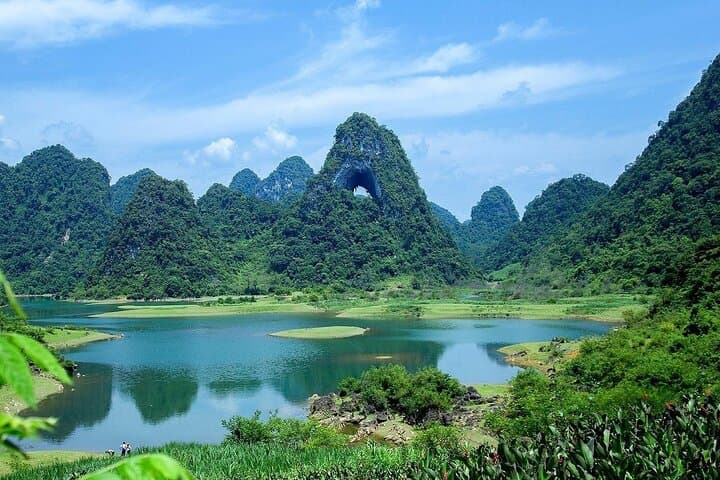
By afternoon you’re in Cao Bang: limestone peaks rise like fossilized waves, streams push forward through narrow gorges, and the air smells of wet earth and wood smoke.
Pac Bo’s Lenin Stream and Coc Bo Cave recall Ho Chi Minh’s wartime refuge, a compact chapter of Vietnam’s modern history where politics and landscape intersect.
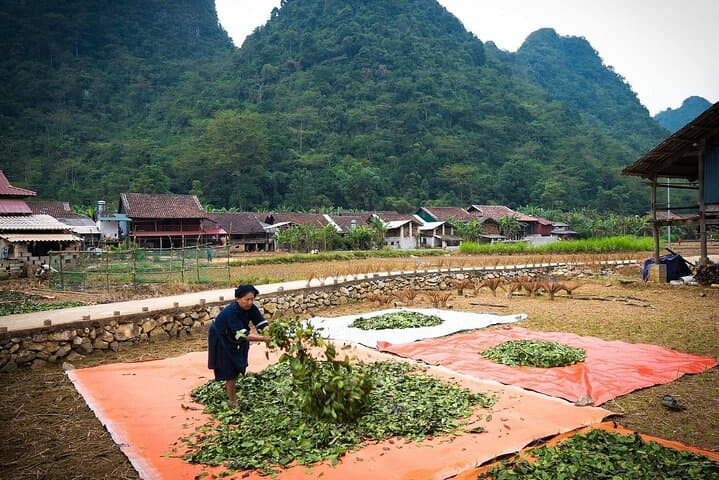
Geology here is raw — karst towers carved by millennia of water, sinkholes that cradle rice fields, and cliffs that hold caves like secret chambers. Cultural layers are visible too: Tay, Nung and H’Mong villages punctuate the valleys, offering crafts, incense-making and stilt-house hospitality.
Ban Gioc Waterfall tumbles in tiers along the China border, a broad sheet of water that dares you to step closer; at Ba Be Lake the surface lays flat and watchful, reflecting limestone walls and floating islets.
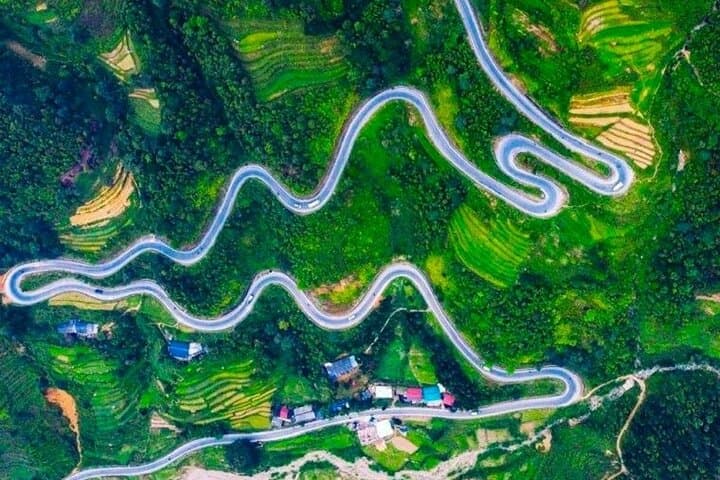
Practical edge: expect long drives (Hanoi–Cao Bang ~6 hours by minivan), homestay nights and short guided hikes or boat trips on Ba Be. Trails are uneven and occasionally steep through Ma Phuc Pass and rural paths; insect repellent, a waterproof layer and good footwear matter. Carry local currency for village purchases, and plan for early starts to capture light at waterfalls and to avoid afternoon showers in the wet season.
This itinerary is suited to travelers with moderate fitness who want a paced mix of history, geology and rural culture across four full days.
Verified experiences and guided adventures in the surrounding area.
Operated by Phu Tho Travel · Cao Bang, Cao Bang Province
The morning bus peels away from Hanoi’s Old Quarter and the city’s humidity loosens its hold as limestone ridges appear on the horizon.
By afternoon you’re in Cao Bang: limestone peaks rise like fossilized waves, streams push forward through narrow gorges, and the air smells of wet earth and wood smoke.
Pac Bo’s Lenin Stream and Coc Bo Cave recall Ho Chi Minh’s wartime refuge, a compact chapter of Vietnam’s modern history where politics and landscape intersect.
Geology here is raw — karst towers carved by millennia of water, sinkholes that cradle rice fields, and cliffs that hold caves like secret chambers. Cultural layers are visible too: Tay, Nung and H’Mong villages punctuate the valleys, offering crafts, incense-making and stilt-house hospitality.
Ban Gioc Waterfall tumbles in tiers along the China border, a broad sheet of water that dares you to step closer; at Ba Be Lake the surface lays flat and watchful, reflecting limestone walls and floating islets.
Practical edge: expect long drives (Hanoi–Cao Bang ~6 hours by minivan), homestay nights and short guided hikes or boat trips on Ba Be. Trails are uneven and occasionally steep through Ma Phuc Pass and rural paths; insect repellent, a waterproof layer and good footwear matter. Carry local currency for village purchases, and plan for early starts to capture light at waterfalls and to avoid afternoon showers in the wet season.
This itinerary is suited to travelers with moderate fitness who want a paced mix of history, geology and rural culture across four full days.
moderate.
4 days.
Moderate: comfortable with multi-hour van transfers, short to medium hikes (1–4 hours) on uneven terrain and basic stair/cave scrambling.
Yes—most breakfasts, lunches and dinners are included as stated; expect local Vietnamese dishes at homestays and restaurants.
Pick-up is from hotels in Hanoi’s Old Quarter; drop-off returns to Hanoi at the end of day four.
A guided boat trip in Ba Be National Park is included per the itinerary, though certain optional excursions may require small additional fees.
No—the tour involves uneven village paths, steps in caves and homestay accommodations; it’s not recommended for guests with serious mobility or spinal problems.
Pac Bo Cave and Lenin Stream are historically significant as a hideout used by Ho Chi Minh during the 1940s independence movement, tying national history to the landscape.
Ba Be National Park is a protected area—stick to trails, avoid single-use plastics in villages and support homestays that follow local conservation practices.
Phu Tho Travel operates guided outdoor trips and adventures with an emphasis on safety, stewardship, and memorable experiences.

The morning bus peels away from Hanoi’s Old Quarter and the city’s humidity loosens its hold as limestone ridges appear on the horizon.
By afternoon you’re in Cao Bang: limestone peaks rise like fossilized waves, streams push forward through narrow gorges, and the air smells of wet earth and wood smoke.
Pac Bo’s Lenin Stream and Coc Bo Cave recall Ho Chi Minh’s wartime refuge, a compact chapter of Vietnam’s modern history where politics and landscape intersect.
Geology here is raw — karst towers carved by millennia of water, sinkholes that cradle rice fields, and cliffs that hold caves like secret chambers. Cultural layers are visible too: Tay, Nung and H’Mong villages punctuate the valleys, offering crafts, incense-making and stilt-house hospitality.
Ban Gioc Waterfall tumbles in tiers along the China border, a broad sheet of water that dares you to step closer; at Ba Be Lake the surface lays flat and watchful, reflecting limestone walls and floating islets.
Practical edge: expect long drives (Hanoi–Cao Bang ~6 hours by minivan), homestay nights and short guided hikes or boat trips on Ba Be. Trails are uneven and occasionally steep through Ma Phuc Pass and rural paths; insect repellent, a waterproof layer and good footwear matter. Carry local currency for village purchases, and plan for early starts to capture light at waterfalls and to avoid afternoon showers in the wet season.
This itinerary is suited to travelers with moderate fitness who want a paced mix of history, geology and rural culture across four full days.
The morning bus peels away from Hanoi’s Old Quarter and the city’s humidity loosens its hold as limestone ridges appear on the horizon.
By afternoon you’re in Cao Bang: limestone peaks rise like fossilized waves, streams push forward through narrow gorges, and the air smells of wet earth and wood smoke.
Pac Bo’s Lenin Stream and Coc Bo Cave recall Ho Chi Minh’s wartime refuge, a compact chapter of Vietnam’s modern history where politics and landscape intersect.
Geology here is raw — karst towers carved by millennia of water, sinkholes that cradle rice fields, and cliffs that hold caves like secret chambers. Cultural layers are visible too: Tay, Nung and H’Mong villages punctuate the valleys, offering crafts, incense-making and stilt-house hospitality.
Ban Gioc Waterfall tumbles in tiers along the China border, a broad sheet of water that dares you to step closer; at Ba Be Lake the surface lays flat and watchful, reflecting limestone walls and floating islets.
Practical edge: expect long drives (Hanoi–Cao Bang ~6 hours by minivan), homestay nights and short guided hikes or boat trips on Ba Be. Trails are uneven and occasionally steep through Ma Phuc Pass and rural paths; insect repellent, a waterproof layer and good footwear matter. Carry local currency for village purchases, and plan for early starts to capture light at waterfalls and to avoid afternoon showers in the wet season.
This itinerary is suited to travelers with moderate fitness who want a paced mix of history, geology and rural culture across four full days.