THE ADVENTURE COLLECTIVE® · Independent discovery and booking for outdoor travel

Walk a restored boardwalk clinging to the vertical limestone of Desfiladero de los Gaitanes. This guided tour from Málaga pairs transport and entry with expert narration—perfect for travelers who want dramatic canyon views without technical climbing.
Walk a restored boardwalk clinging to the vertical limestone of Desfiladero de los Gaitanes. This guided tour from Málaga pairs transport and entry with expert narration—perfect for travelers who want dramatic canyon views without technical climbing.
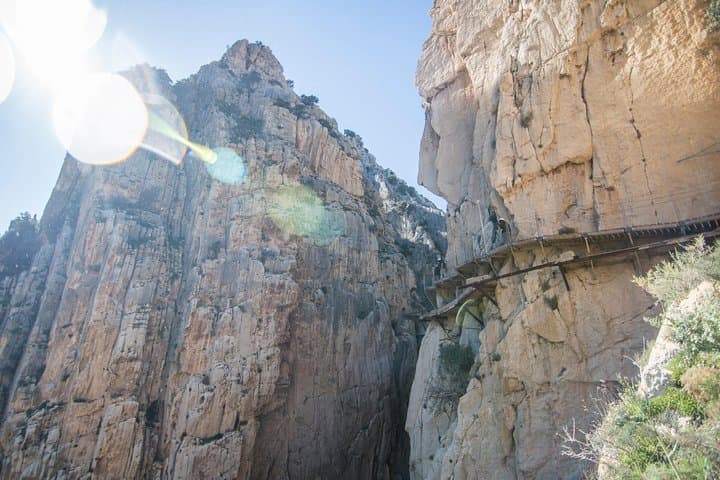
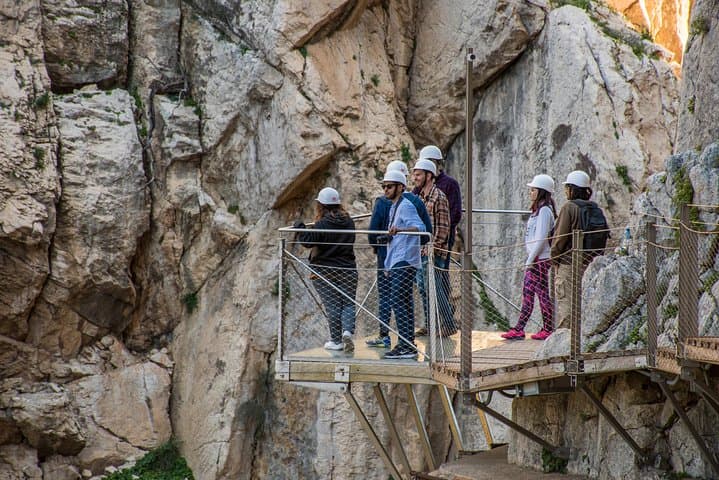
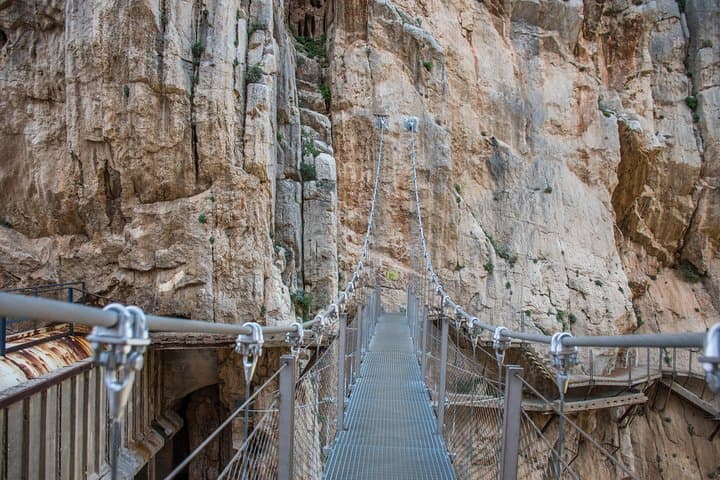
You step onto a narrow wooden ribbon bolted to limestone, and the gorge instantly redraws the rules of distance: the valley falls away, water murmurs far below, and wind threads through the canyon as if testing your balance. The Caminito del Rey is not a postcard; it’s a controlled encounter with height—three hundred meters of exposed walkway that forces attention to each step and rewards it with views that feel earned.
Verified experiences and guided adventures in the surrounding area.
Operated by Discovering Spain · Ardales, Andalusia
You step onto a narrow wooden ribbon bolted to limestone, and the gorge instantly redraws the rules of distance: the valley falls away, water murmurs far below, and wind threads through the canyon as if testing your balance. The Caminito del Rey is not a postcard; it’s a controlled encounter with height—three hundred meters of exposed walkway that forces attention to each step and rewards it with views that feel earned.
Originally built in the early 20th century to service hydroelectric works and later walked by King Alfonso XIII, the path snakes through the Desfiladero de los Gaitanes. The canyon itself is a lesson in geology: hard limestone sheared and polished by millennia of the Guadalhorce’s flow, with vertical faces scoured into cliffs that now host colonies of Griffon vultures and peregrine falcons. Around the trail, white Andalusian villages—Álora, Ardales and Antequera—carry a quieter history: Roman roads, Moorish fortifications and agricultural terraces that shaped how people negotiated this rugged landscape.
Culturally the route reads like a local rite of passage. Day-trippers arriving from Málaga or Granada still buy tickets weeks in advance; the restored walkway reopened with strict visitor limits and safety upgrades after a major rehabilitation in 2015, preserving both the structure and the fragile scrubland ecology beneath.
Practical guidance: the full experience is a half-to-full day. The walkway stretches roughly 7.7 km round-trip with about 2.9 km of elevated boardwalk; expect 2–4 hours on your feet plus transfer time if you join the guided tour from Málaga. The trail is not technically difficult—no climbing or rope work—but exposure is constant. Helmets and guided briefings are standard; children under 8 are not permitted, and the route is unsuitable for those with severe mobility, heart, or spinal conditions.
Timing matters: morning light brings cooler air and better bird activity; late afternoon sharpens shadows against the cliff face. Bring a reusable water bottle, sturdy closed-toe shoes with good grip, sun protection and a light layer for wind. Photography is allowed—use a wrist or neck strap and avoid blocking the path for other visitors. Drones are prohibited.
If you want quiet after the walkway, continue to the small reservoirs near El Chorro village or take a short drive to the Ardales viewpoints for different angles on the gorge.
The Caminito is both spectacle and stewardship: authorities limit numbers, maintain walkways, and manage access to protect nesting birds and fragile cliffs. Walk deliberately, respect the rules, and you’ll leave not only with photos but with a palpable sense of how geology, history and human ingenuity can share one razor-edged ridge.
moderate.
4–8 hours.
Moderate fitness—comfortable walking on uneven surfaces for several hours and managing exposure at heights.
Children under 8 years old are not permitted. Older children must be supervised and able to walk the distance and handle the exposure.
The full route covers about 7.7 km round-trip with approximately 2.9 km of elevated boardwalk; allow 2–4 hours for the walk plus transfer time on guided tours.
No—the elevated boardwalk and access paths are not wheelchair accessible.
Drones are prohibited. Tripods that obstruct the path are discouraged—use a wrist strap or monopod and be mindful of other visitors.
The Caminito can close in high winds or heavy rain; tours may be cancelled and refundable if the site managers close the path for safety.
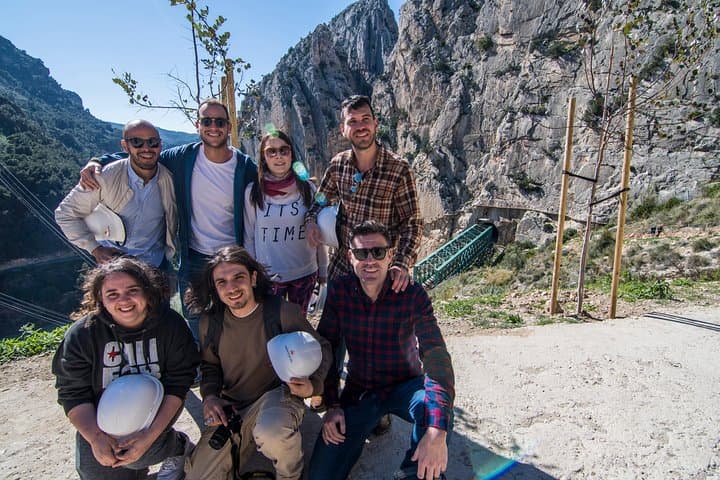
Guided tours often include an official guide and helmets for safety; follow the operator’s instructions about equipment and briefing.
Built in the early 1900s to service hydroelectric plants and famously walked by King Alfonso XIII, the path was restored and reopened with modern safety controls in 2015.
Visitor numbers are limited and the route is maintained to protect nesting raptors and fragile cliff vegetation; stick to paths and follow guide instructions to minimize impact.
Discovering Spain operates guided outdoor trips and adventures with an emphasis on safety, stewardship, and memorable experiences.
You step onto a narrow wooden ribbon bolted to limestone, and the gorge instantly redraws the rules of distance: the valley falls away, water murmurs far below, and wind threads through the canyon as if testing your balance. The Caminito del Rey is not a postcard; it’s a controlled encounter with height—three hundred meters of exposed walkway that forces attention to each step and rewards it with views that feel earned.
You step onto a narrow wooden ribbon bolted to limestone, and the gorge instantly redraws the rules of distance: the valley falls away, water murmurs far below, and wind threads through the canyon as if testing your balance. The Caminito del Rey is not a postcard; it’s a controlled encounter with height—three hundred meters of exposed walkway that forces attention to each step and rewards it with views that feel earned.
Originally built in the early 20th century to service hydroelectric works and later walked by King Alfonso XIII, the path snakes through the Desfiladero de los Gaitanes. The canyon itself is a lesson in geology: hard limestone sheared and polished by millennia of the Guadalhorce’s flow, with vertical faces scoured into cliffs that now host colonies of Griffon vultures and peregrine falcons. Around the trail, white Andalusian villages—Álora, Ardales and Antequera—carry a quieter history: Roman roads, Moorish fortifications and agricultural terraces that shaped how people negotiated this rugged landscape.
Culturally the route reads like a local rite of passage. Day-trippers arriving from Málaga or Granada still buy tickets weeks in advance; the restored walkway reopened with strict visitor limits and safety upgrades after a major rehabilitation in 2015, preserving both the structure and the fragile scrubland ecology beneath.
Practical guidance: the full experience is a half-to-full day. The walkway stretches roughly 7.7 km round-trip with about 2.9 km of elevated boardwalk; expect 2–4 hours on your feet plus transfer time if you join the guided tour from Málaga. The trail is not technically difficult—no climbing or rope work—but exposure is constant. Helmets and guided briefings are standard; children under 8 are not permitted, and the route is unsuitable for those with severe mobility, heart, or spinal conditions.
Timing matters: morning light brings cooler air and better bird activity; late afternoon sharpens shadows against the cliff face. Bring a reusable water bottle, sturdy closed-toe shoes with good grip, sun protection and a light layer for wind. Photography is allowed—use a wrist or neck strap and avoid blocking the path for other visitors. Drones are prohibited.
If you want quiet after the walkway, continue to the small reservoirs near El Chorro village or take a short drive to the Ardales viewpoints for different angles on the gorge.
The Caminito is both spectacle and stewardship: authorities limit numbers, maintain walkways, and manage access to protect nesting birds and fragile cliffs. Walk deliberately, respect the rules, and you’ll leave not only with photos but with a palpable sense of how geology, history and human ingenuity can share one razor-edged ridge.