THE ADVENTURE COLLECTIVE® · Independent discovery and booking for outdoor travel

A one-day guided excursion from Seville to Caminito del Rey guides you along a 7 km cliffside walkway through the Desfiladero de los Gaitanes—an engineered route that now offers high-adrenaline views, geological drama, and a direct connection to Andalusia’s industrial past. Practical details, accessibility notes, and packing tips inside.
A one-day guided excursion from Seville to Caminito del Rey guides you along a 7 km cliffside walkway through the Desfiladero de los Gaitanes—an engineered route that now offers high-adrenaline views, geological drama, and a direct connection to Andalusia’s industrial past. Practical details, accessibility notes, and packing tips inside.
The morning bus slips out of Seville while the city rubs sleep from its eyes; by the time the first cliffs appear, the road has already begun to cut through olive groves and scrub. At the trailhead the gorge announces itself: limestone walls rise like bookends, squeezing the sky into a narrow strip. The Guadalhorce below threads through shadow and light, daring you to walk the path clinging to rock faces 100 meters above the river and deeper where the canyon widens.
Verified experiences and guided adventures in the surrounding area.
Operated by Descubre · Ardales, Málaga
The morning bus slips out of Seville while the city rubs sleep from its eyes; by the time the first cliffs appear, the road has already begun to cut through olive groves and scrub. At the trailhead the gorge announces itself: limestone walls rise like bookends, squeezing the sky into a narrow strip. The Guadalhorce below threads through shadow and light, daring you to walk the path clinging to rock faces 100 meters above the river and deeper where the canyon widens.
Caminito del Rey’s walk today is both modern safety and old industrial grit. Built in the early 1900s to service hydroelectric works, the original walkway was a rickety passage for workers; after a headline-grabbing collapse and years of closure it reopened in 2015 with reinforced boardwalks, steel bridges, and controlled access. Geologically, the Desfiladero de los Gaitanes is a carved limestone throat: water and time have gouged vertical faces up to 700 meters deep in places, with narrow sections that funnel wind and echo the river’s voice.
Culturally the route sits on the edge of Andalusia’s white-village country. El Chorro and Ardales feel agricultural and slow—olive oil mills, stone farmhouses, and tapas bars where locals will point you to the best arroces when you return. The walk itself concentrates the region’s stories into seven kilometers: the engineering of the early 20th century, the grit of the workforce, and a more recent rebirth as one of southern Spain’s signature outdoor experiences.
Practicalities are straightforward but non-negotiable. The organized excursion includes guide-led access to the 7 km walkway, park admission, and return transport to Seville; expect about six hours total with a 9:00 a.m. meeting at the operator’s office. The trail is linear and exposed in stretches—handrails and platforms are secure, but the route suits people who are steady on their feet and comfortable with heights. Carry at least 1–1.5 liters of water, wear sturdy hiking shoes with good grip, and arrive early to avoid midday heat in summer.
Health warnings are explicit: this trip is not recommended for pregnant travelers, people with severe cardiovascular issues, or those with a pronounced fear of heights. Weather can alter access—high winds or heavy rain close the path—so keep flexible plans and check cancellation terms.
On balance, Caminito del Rey is a concentrated, dramatic walk where geology, human history, and raw cliffs combine into an accessible but demanding day trip. It rewards focus: listen for the river’s pull through the gorge, watch the changing light on the limestone, and remember that each step follows a narrow, storied line between engineering and wildness.
challenging.
6 hours.
Good cardiovascular fitness and sure-footedness are required; expect sustained walking, stairs, and exposed platforms.
The guided walkway covers about 7 km; with transport from Seville and round-trip time, expect roughly a six-hour excursion.
Children can do the route if steady on their feet and not afraid of heights; operators often set minimum ages—check with the tour provider beforehand.
The route includes high, exposed sections with railings; it’s not recommended for people with severe acrophobia.
Yes—this full-day excursion includes guide-led access, park admission, and return transport from Seville as stated by the operator.
Yes—high winds or heavy rain can force closures; the operator’s cancellation policy allows refunds if weather prevents access.
Facilities are limited along the path; use restrooms at the visitor centers and bring snacks and water for the walk.
The walkway was built in the early 20th century to provide maintenance access for hydroelectric projects and gained modern fame after being restored and reopened to the public in 2015.
Access is ticketed and guided to protect fragile cliff habitats; stay on designated paths and pack out any waste to minimize impact.
Descubre operates guided outdoor trips and adventures with an emphasis on safety, stewardship, and memorable experiences.
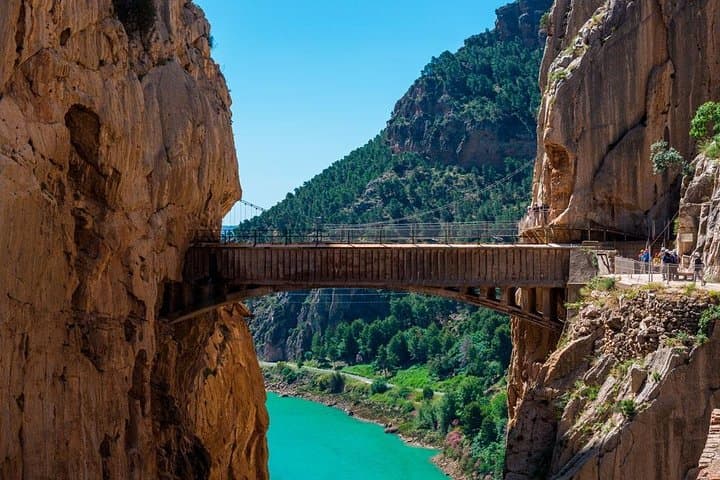
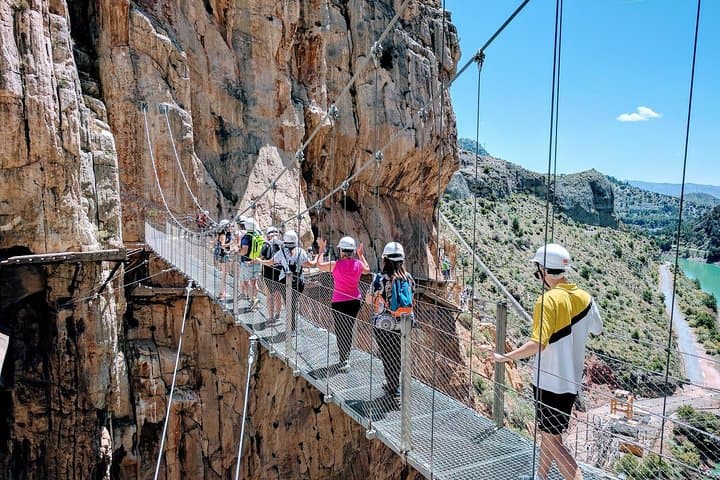
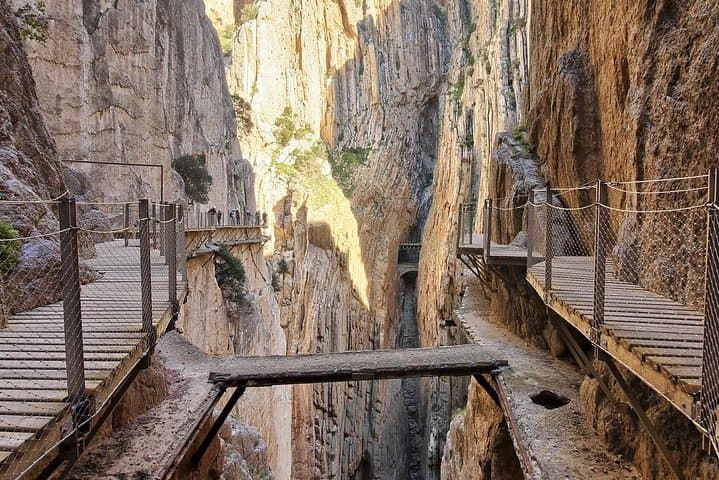
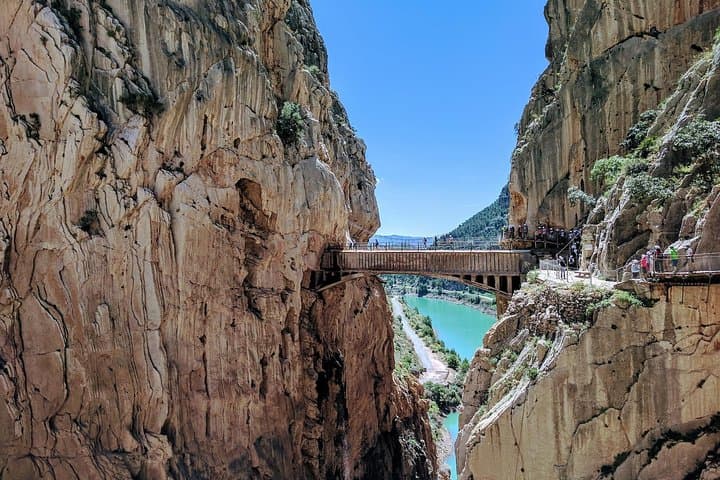
The morning bus slips out of Seville while the city rubs sleep from its eyes; by the time the first cliffs appear, the road has already begun to cut through olive groves and scrub. At the trailhead the gorge announces itself: limestone walls rise like bookends, squeezing the sky into a narrow strip. The Guadalhorce below threads through shadow and light, daring you to walk the path clinging to rock faces 100 meters above the river and deeper where the canyon widens.
The morning bus slips out of Seville while the city rubs sleep from its eyes; by the time the first cliffs appear, the road has already begun to cut through olive groves and scrub. At the trailhead the gorge announces itself: limestone walls rise like bookends, squeezing the sky into a narrow strip. The Guadalhorce below threads through shadow and light, daring you to walk the path clinging to rock faces 100 meters above the river and deeper where the canyon widens.
Caminito del Rey’s walk today is both modern safety and old industrial grit. Built in the early 1900s to service hydroelectric works, the original walkway was a rickety passage for workers; after a headline-grabbing collapse and years of closure it reopened in 2015 with reinforced boardwalks, steel bridges, and controlled access. Geologically, the Desfiladero de los Gaitanes is a carved limestone throat: water and time have gouged vertical faces up to 700 meters deep in places, with narrow sections that funnel wind and echo the river’s voice.
Culturally the route sits on the edge of Andalusia’s white-village country. El Chorro and Ardales feel agricultural and slow—olive oil mills, stone farmhouses, and tapas bars where locals will point you to the best arroces when you return. The walk itself concentrates the region’s stories into seven kilometers: the engineering of the early 20th century, the grit of the workforce, and a more recent rebirth as one of southern Spain’s signature outdoor experiences.
Practicalities are straightforward but non-negotiable. The organized excursion includes guide-led access to the 7 km walkway, park admission, and return transport to Seville; expect about six hours total with a 9:00 a.m. meeting at the operator’s office. The trail is linear and exposed in stretches—handrails and platforms are secure, but the route suits people who are steady on their feet and comfortable with heights. Carry at least 1–1.5 liters of water, wear sturdy hiking shoes with good grip, and arrive early to avoid midday heat in summer.
Health warnings are explicit: this trip is not recommended for pregnant travelers, people with severe cardiovascular issues, or those with a pronounced fear of heights. Weather can alter access—high winds or heavy rain close the path—so keep flexible plans and check cancellation terms.
On balance, Caminito del Rey is a concentrated, dramatic walk where geology, human history, and raw cliffs combine into an accessible but demanding day trip. It rewards focus: listen for the river’s pull through the gorge, watch the changing light on the limestone, and remember that each step follows a narrow, storied line between engineering and wildness.