THE ADVENTURE COLLECTIVE® · Independent discovery and booking for outdoor travel

Combine a glass-bottom boat ride to El Arco, a tranquil camel walk along the Pacific shore, and a guided tequila tasting into a single half-day that showcases both the maritime drama and desert edge of Los Cabos.
Combine a glass-bottom boat ride to El Arco, a tranquil camel walk along the Pacific shore, and a guided tequila tasting into a single half-day that showcases both the maritime drama and desert edge of Los Cabos.
You feel the Pacific wind before you see the rock: salt on your lips, gulls calling, and the soft thud of camel steps on the hard-packed sand. The day opens on two parallel worlds—an onshore Baja desert that tilts into scrub and golden dunes, and the blue, restless Pacific that has carved granite into the dramatic Arch of Cabo San Lucas. This combined tour stitches both landscapes together: a clear-bottom boat that slides toward El Arco, a serene camel ride along the shoreline, and a small, hands-on tequila tasting that brings the trip home.
Verified experiences and guided adventures in the surrounding area.
You feel the Pacific wind before you see the rock: salt on your lips, gulls calling, and the soft thud of camel steps on the hard-packed sand. The day opens on two parallel worlds—an onshore Baja desert that tilts into scrub and golden dunes, and the blue, restless Pacific that has carved granite into the dramatic Arch of Cabo San Lucas. This combined tour stitches both landscapes together: a clear-bottom boat that slides toward El Arco, a serene camel ride along the shoreline, and a small, hands-on tequila tasting that brings the trip home.
Geology here is blunt and theatrical. The Arch, known locally as El Arco, is a sculpted granite outcrop pushed up by tectonic forces and smoothed by waves. Centuries of currents and storms have hollowed caves and carved openings that now frame the meeting of Sea of Cortez and Pacific. Culturally, Cabo grew from a fishing community into a crossroads of tourism and artisanal traditions—tequila being one of Mexico’s most protected and storied contributions. A guided tasting explains agave terroir, distillation basics, and the difference between blanco, reposado, and añejo.
On the water, visibility changes with the tide; the clear-boat window offers quick glimpses of rays and schools of small fish darting under the hull, while the captain points out sea lion colonies that sun on the rocks. On land, the camel ride moves at a deliberate pace that lets you scan for shells, seabirds, and footprints where desert meets surf. The tasting at a local casa feels intentionally small—more education than spectacle—so you leave with a sense of place as well as a sip of history.
Practical guide: expect about five hours total, with easy transitions between activities. Sun protection is non-negotiable—Baja sun strips you faster than you think. Wear closed-toe sandals or lightweight hiking shoes for the beach and shifting sand; avoid flip-flops for the camel section. Bring a small dry bag for camera gear and a reusable water bottle—operators often provide water but having one at hand keeps you comfortable between stops.
Good for couples, families with older kids, and first-time visitors who want a varied introduction to Los Cabos in a single half-day. The pace balances motion and moments of stillness: the boat’s hum, the camel’s steady rhythm, the hush of a tasting room. Book a morning slot to catch clearer water and softer light, or late afternoon for silhouette shots of El Arco at sunset. Either way, you’ll leave with a roster of images and a practical sense of how water, stone, and culture intersect at Baja’s southern tip.
moderate.
5 hours.
Suitable for average fitness—able to climb on/off boats and sit on camels for 20–30 minutes
The full experience runs about 5 hours from pick-up to return, including the boat, camel ride, and tequila tasting.
Most operators allow older children; check age and weight limits—young kids may be restricted for safety and comfort reasons.
Boats typically approach El Arco for photos and to view sea lion colonies; disembarkation on rocks is not usually allowed for safety reasons.
Yes: a guided tasting with several styles of tequila is included and led by an interpreter who explains production and flavor differences.
Wear comfortable, sun-protective clothing and closed-toe shoes; avoid short skirts and loose items that can flap while riding.
There are boat transfers and the need to climb onto camels; the tour is not recommended for guests with significant mobility limitations—check with the operator for assistance options.
Cabo transformed from a 19th-century fishing port into a tourism hub in the mid-20th century; El Arco is a natural granite feature formed by tectonic uplift and relentless wave erosion.
Choose operators that follow Marine Protected Area guidelines—avoid feeding wildlife and ask how they minimize wake and noise; support local producers who use sustainable agave practices.
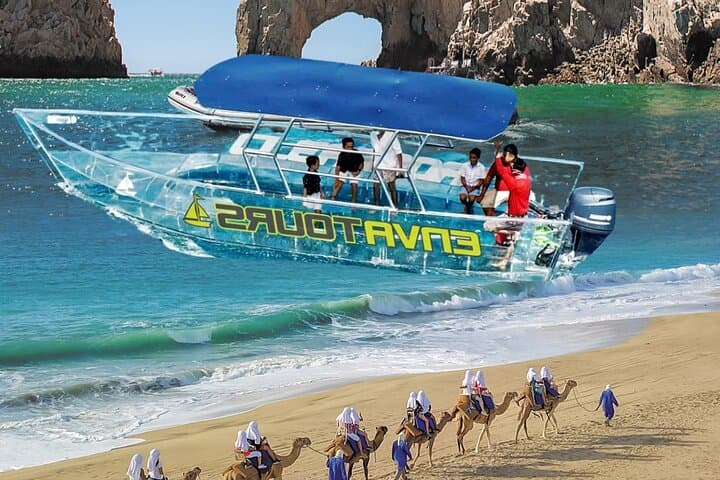
You feel the Pacific wind before you see the rock: salt on your lips, gulls calling, and the soft thud of camel steps on the hard-packed sand. The day opens on two parallel worlds—an onshore Baja desert that tilts into scrub and golden dunes, and the blue, restless Pacific that has carved granite into the dramatic Arch of Cabo San Lucas. This combined tour stitches both landscapes together: a clear-bottom boat that slides toward El Arco, a serene camel ride along the shoreline, and a small, hands-on tequila tasting that brings the trip home.
You feel the Pacific wind before you see the rock: salt on your lips, gulls calling, and the soft thud of camel steps on the hard-packed sand. The day opens on two parallel worlds—an onshore Baja desert that tilts into scrub and golden dunes, and the blue, restless Pacific that has carved granite into the dramatic Arch of Cabo San Lucas. This combined tour stitches both landscapes together: a clear-bottom boat that slides toward El Arco, a serene camel ride along the shoreline, and a small, hands-on tequila tasting that brings the trip home.
Geology here is blunt and theatrical. The Arch, known locally as El Arco, is a sculpted granite outcrop pushed up by tectonic forces and smoothed by waves. Centuries of currents and storms have hollowed caves and carved openings that now frame the meeting of Sea of Cortez and Pacific. Culturally, Cabo grew from a fishing community into a crossroads of tourism and artisanal traditions—tequila being one of Mexico’s most protected and storied contributions. A guided tasting explains agave terroir, distillation basics, and the difference between blanco, reposado, and añejo.
On the water, visibility changes with the tide; the clear-boat window offers quick glimpses of rays and schools of small fish darting under the hull, while the captain points out sea lion colonies that sun on the rocks. On land, the camel ride moves at a deliberate pace that lets you scan for shells, seabirds, and footprints where desert meets surf. The tasting at a local casa feels intentionally small—more education than spectacle—so you leave with a sense of place as well as a sip of history.
Practical guide: expect about five hours total, with easy transitions between activities. Sun protection is non-negotiable—Baja sun strips you faster than you think. Wear closed-toe sandals or lightweight hiking shoes for the beach and shifting sand; avoid flip-flops for the camel section. Bring a small dry bag for camera gear and a reusable water bottle—operators often provide water but having one at hand keeps you comfortable between stops.
Good for couples, families with older kids, and first-time visitors who want a varied introduction to Los Cabos in a single half-day. The pace balances motion and moments of stillness: the boat’s hum, the camel’s steady rhythm, the hush of a tasting room. Book a morning slot to catch clearer water and softer light, or late afternoon for silhouette shots of El Arco at sunset. Either way, you’ll leave with a roster of images and a practical sense of how water, stone, and culture intersect at Baja’s southern tip.