THE ADVENTURE COLLECTIVE® · Independent discovery and booking for outdoor travel

Follow the caldera rim from Fira to Imerovigli on a private four‑hour walk that combines cliffside panoramas, café pauses and a climb to Skaros rock. This guide explains what you’ll see, the route’s terrain, and how to prepare for the sun‑lit photos and narrow paths.
Follow the caldera rim from Fira to Imerovigli on a private four‑hour walk that combines cliffside panoramas, café pauses and a climb to Skaros rock. This guide explains what you’ll see, the route’s terrain, and how to prepare for the sun‑lit photos and narrow paths.
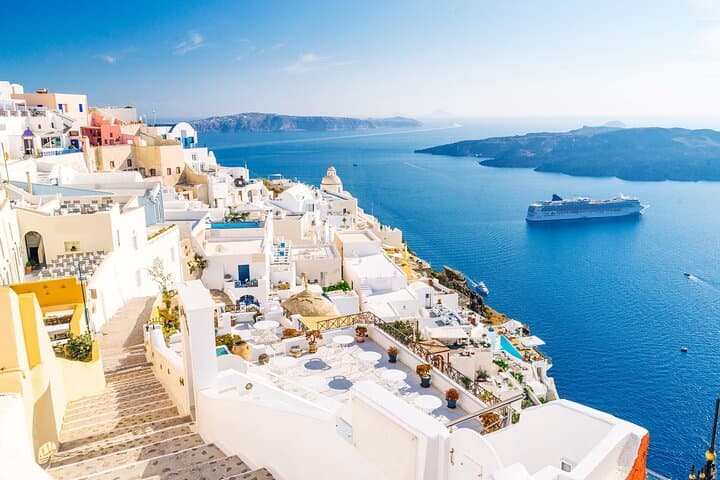
The first step on the caldera rim feels deliberate: whitewashed steps underfoot, the Aegean stretching out like an unrolling page that refuses to stay flat. On this four‑hour private walk from Fira to Imerovigli, the route peels along Santorini’s volcanic edge—narrow pedestrian lanes, cobbled flagstones and sudden plunge views where the sea is a bright, disciplined blue beneath the cliffs.
Verified experiences and guided adventures in the surrounding area.
Operated by FPROPERTY & TOURS · Fira, South Aegean
The first step on the caldera rim feels deliberate: whitewashed steps underfoot, the Aegean stretching out like an unrolling page that refuses to stay flat. On this four‑hour private walk from Fira to Imerovigli, the route peels along Santorini’s volcanic edge—narrow pedestrian lanes, cobbled flagstones and sudden plunge views where the sea is a bright, disciplined blue beneath the cliffs.
The trail traces centuries of human response to a violent geology. Santorini is the exposed rim of a drowned volcano; the Minoan eruption that reshaped the island around 1600 BCE left the steep caldera cliffs you now skirt. Towns like Fira and Imerovigli were built deliberately on that rim, their stepped streets and terraces oriented toward the same skylines that once terrified residents and now sell postcards.
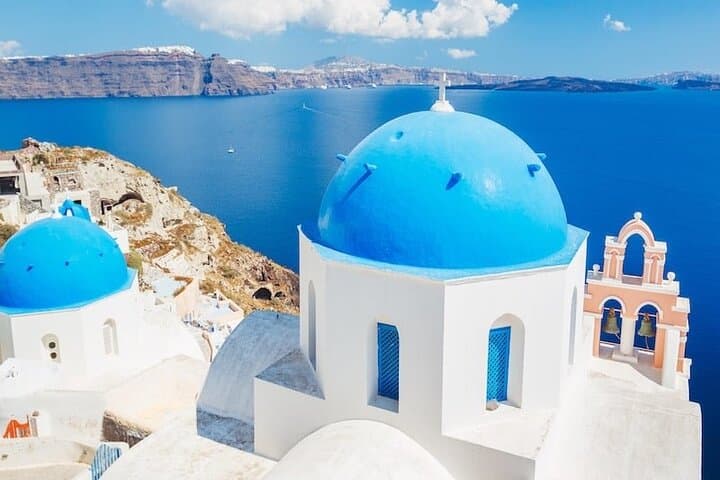
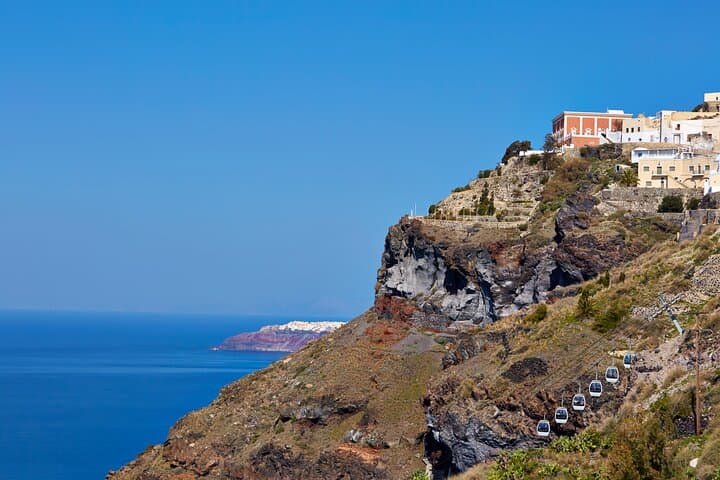
Along the way, you’ll pass small chapels with blue domes, old stone cisterns and the occasional crate of sun‑baked tomatoes drying on a ledge. Firostefani feels quieter than Fira: cafes here offer tea and a place to breathe while the caldera seems to measure your pulse. Imerovigli’s claim to fame is Skaros, a jagged promontory of volcanic rock where a medieval castle ruin perches—humans stacking defense on geology.
The path itself is straightforward: roughly 3–5 km roundtrip depending on detours, with intermittent stone steps and gentle rises—expect 100–200 m of cumulative elevation change. It’s a walk of viewpoints rather than wilderness; the terrain is mostly paved, sometimes uneven, and often exposed to sun and wind. The guide hands you details and local stories—the name of a family taverna, the church bell that rings at noon, where the best honey comes from.
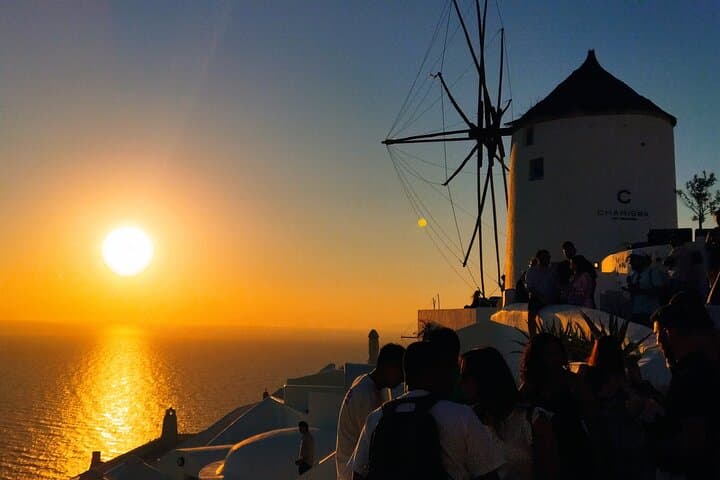
Practical notes: bring sun protection and at least 1–1.5 liters of water per person, wear shoes with good grip, and plan your timing. Morning light softens the white walls and crowds are thinner; late afternoon yields legendary sunsets but also thicker foot traffic. Photography is part of the promise—blue domes, cliffside paths and the low, horizontal line of the horizon make for clean compositions.
This private tour keeps a pragmatic rhythm: stops for photos, a coffee break in Firostefani, a chance to climb to Skaros for sweeping vistas. It’s accessible to most people with a moderate fitness level but not recommended for those with severe back or heart issues. Conservation‑minded travelers should stick to paths, avoid trampling terraces and carry out any trash—water is scarce here and the caldera’s soils are fragile.
Walkers leave with an understanding of how landscape and history shape local life: the island’s architecture, its dependence on tourism and the stubborn ways people have worked with the caldera rather than against it. By the time you return to the Atlantis Hotel meeting point, the cliffs have already rearranged themselves in your memory—angles you’ll look for again from a café terrace or a ferry crossing the caldera basin.
moderate.
4 hours.
Moderate—comfortable walking fitness with ability to handle stairs and short climbs for up to 2–3 hours of moving time.
The private tour lasts about four hours with stops; walking time is roughly 1.5–2.5 hours over paved, uneven paths with moderate elevation changes—suitable for most who have moderate fitness.
Families and older adults can typically manage the route if they are steady on their feet; uneven steps may be a challenge—ask about a slower pace when booking.
The meeting and end point is Atlantis Hotel in Fira (left side of the main town entrance), a well‑known landmark on the caldera edge.
Yes—the trail is linear and can be walked either way, though guides generally prefer Fira to Imerovigli for logistical reasons and crowd flow.
Yes—Firostefani has cafés and restrooms where you can pause for a drink; plan breaks into the four‑hour schedule.
The route is exposed to sun and wind but rarely closed; extreme heat or strong winds can make the walk uncomfortable—check conditions and dress accordingly.
The caldera rim is the edge of a massive volcanic collapse from the Bronze Age Minoan eruption; settlements shifted above the cliffs over centuries to exploit sea views and breezes.
Water is scarce and foot traffic strains fragile terraces—stick to paths, avoid single‑use plastics and refill bottles at cafes to reduce waste.
FPROPERTY & TOURS operates guided outdoor trips and adventures with an emphasis on safety, stewardship, and memorable experiences.
The first step on the caldera rim feels deliberate: whitewashed steps underfoot, the Aegean stretching out like an unrolling page that refuses to stay flat. On this four‑hour private walk from Fira to Imerovigli, the route peels along Santorini’s volcanic edge—narrow pedestrian lanes, cobbled flagstones and sudden plunge views where the sea is a bright, disciplined blue beneath the cliffs.
The first step on the caldera rim feels deliberate: whitewashed steps underfoot, the Aegean stretching out like an unrolling page that refuses to stay flat. On this four‑hour private walk from Fira to Imerovigli, the route peels along Santorini’s volcanic edge—narrow pedestrian lanes, cobbled flagstones and sudden plunge views where the sea is a bright, disciplined blue beneath the cliffs.
The trail traces centuries of human response to a violent geology. Santorini is the exposed rim of a drowned volcano; the Minoan eruption that reshaped the island around 1600 BCE left the steep caldera cliffs you now skirt. Towns like Fira and Imerovigli were built deliberately on that rim, their stepped streets and terraces oriented toward the same skylines that once terrified residents and now sell postcards.
Along the way, you’ll pass small chapels with blue domes, old stone cisterns and the occasional crate of sun‑baked tomatoes drying on a ledge. Firostefani feels quieter than Fira: cafes here offer tea and a place to breathe while the caldera seems to measure your pulse. Imerovigli’s claim to fame is Skaros, a jagged promontory of volcanic rock where a medieval castle ruin perches—humans stacking defense on geology.
The path itself is straightforward: roughly 3–5 km roundtrip depending on detours, with intermittent stone steps and gentle rises—expect 100–200 m of cumulative elevation change. It’s a walk of viewpoints rather than wilderness; the terrain is mostly paved, sometimes uneven, and often exposed to sun and wind. The guide hands you details and local stories—the name of a family taverna, the church bell that rings at noon, where the best honey comes from.
Practical notes: bring sun protection and at least 1–1.5 liters of water per person, wear shoes with good grip, and plan your timing. Morning light softens the white walls and crowds are thinner; late afternoon yields legendary sunsets but also thicker foot traffic. Photography is part of the promise—blue domes, cliffside paths and the low, horizontal line of the horizon make for clean compositions.
This private tour keeps a pragmatic rhythm: stops for photos, a coffee break in Firostefani, a chance to climb to Skaros for sweeping vistas. It’s accessible to most people with a moderate fitness level but not recommended for those with severe back or heart issues. Conservation‑minded travelers should stick to paths, avoid trampling terraces and carry out any trash—water is scarce here and the caldera’s soils are fragile.
Walkers leave with an understanding of how landscape and history shape local life: the island’s architecture, its dependence on tourism and the stubborn ways people have worked with the caldera rather than against it. By the time you return to the Atlantis Hotel meeting point, the cliffs have already rearranged themselves in your memory—angles you’ll look for again from a café terrace or a ferry crossing the caldera basin.