THE ADVENTURE COLLECTIVE® · Independent discovery and booking for outdoor travel

Ride in comfort from Sonora to the world of giant sequoias and Gold Rush towns. This small-group day tour mixes easy grove walks, regional history, and riverside picnic spots — all with coach transport and an expert guide.
Ride in comfort from Sonora to the world of giant sequoias and Gold Rush towns. This small-group day tour mixes easy grove walks, regional history, and riverside picnic spots — all with coach transport and an expert guide.
A hush settles on the coach as it drops below the rim of the Sierra Foothills and the road opens into a patchwork of oak-studded meadows and weathered downtowns. The guide, voice low and exact, points out the ghost lines of sluice boxes and the clapboard storefronts of Sonora and Angels Camp — towns that still wear the Gold Rush in their porches and plaque-lined main streets.
Verified experiences and guided adventures in the surrounding area.
Operated by Valuable Essential Must Experience · Arnold, California
A hush settles on the coach as it drops below the rim of the Sierra Foothills and the road opens into a patchwork of oak-studded meadows and weathered downtowns. The guide, voice low and exact, points out the ghost lines of sluice boxes and the clapboard storefronts of Sonora and Angels Camp — towns that still wear the Gold Rush in their porches and plaque-lined main streets.
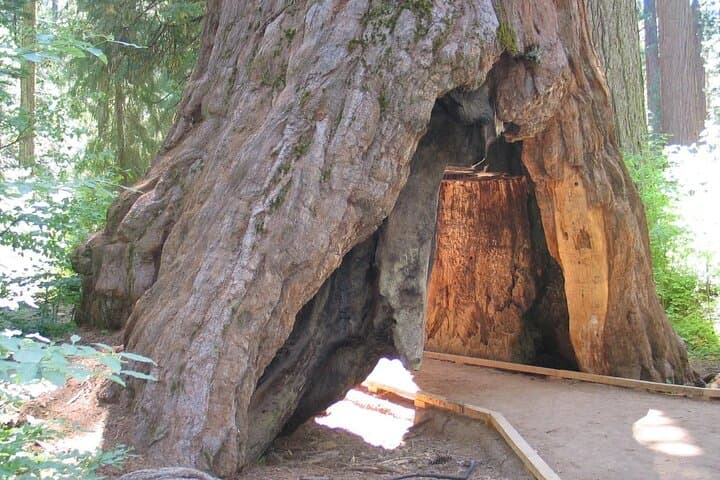
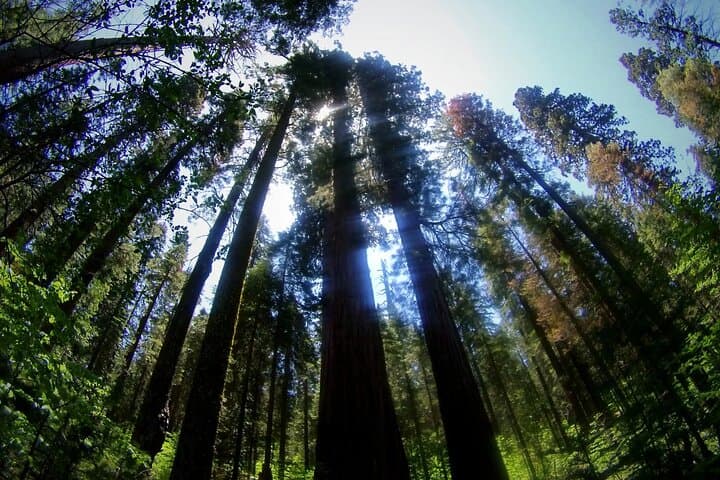
By the time the vehicle coils into the parking area at Calaveras Big Trees State Park, the scale of the place reorients you. The walk into the North Grove is a study in contrasts: scrub oaks and manzanita give way to trunks wider than a small house, bark that smells faintly of cinnamon, and branches that lift like cathedral ribs. These are Sequoiadendron giganteum — the giant sequoias first documented here in the 1850s — survivors of volcanic soils and centuries of Sierra weather.
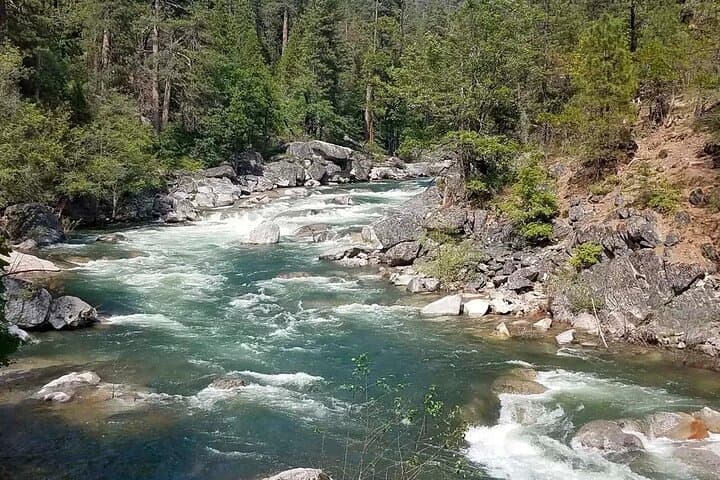
Geology is visible everywhere: the Stanislaus River carves shallow canyons, and nearby basalt outcrops hint at ancient lava flows that reshaped valley floors and submerged towns when New Melones Reservoir rose. Local culture is braided into the landscape — Mark Twain and Bret Harte once walked these roads; Angels Camp still hosts a frog-jumping Jubilee that tastes of kitsch and community.
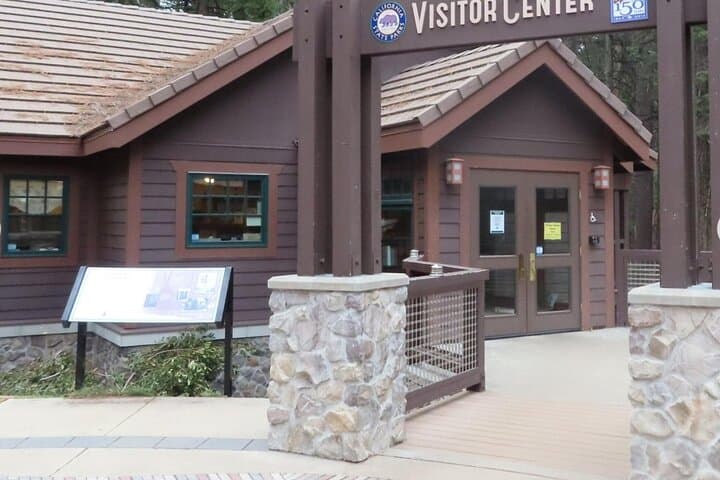
The tour balances narrative and access. Guides lead a mostly level 1–1.5 mile loop through the North Grove, an easy introduction to old-growth trees and interpretive exhibits at the Visitor Center. For hikers who want more, the South Grove and connecting trails extend the experience into quieter, higher-contrast forest with more sustained elevation and solitude.
Practicalities are straightforward: the day trip runs roughly 2–3 hours door-to-door from Sonora with luxury coach transport, onboard restrooms, snacks, bottled water and Wi‑Fi. The park’s trails are family-friendly, but winter can bring snow and short closures on Highway 4; summer sees the busiest crowds. Wear sturdy shoes, bring layered clothing and enough water for a few hours outside the vehicle.
Conservation is part of the story: these sequoias are fire-adapted yet vulnerable to human impact, so stay on designated paths, pack out trash, and avoid disturbing root zones. Photography rewards a slow pace — wide-angle lenses for trunk clusters, a telephoto for river birds, and patience for shafts of slanting light.
Whether you come for a soft-booted stroll among giants or to stitch Gold Rush history into a single afternoon, this guided day tour delivers context, comfort and access: the guide supplies the stories, the coach supplies the comfort, and the trees insist on the perspective.
easy.
2–3 hours.
Suitable for most fitness levels; walking on mostly level, well-marked paths with optional longer hikes for fitter guests.
The park stop is typically about 60 minutes, enough time for the Visitor Center and the North Grove loop; ask about extending for South Grove hikes when booking.
Yes — admission for the scheduled park stop is included in the tour price as described in the itinerary item.
Pickups are arranged in Sonora (commonly Best Western Plus Sonora Oaks) or a pre-arranged location; confirm your exact pickup when booking.
Yes — the North Grove trail is stroller accessible and the tour is suitable for children; some trails in the South Grove are more rugged.
Tours may be canceled for full refund if severe weather or low traveler counts occur; winter snow can also affect highway access so check conditions in advance.
The coach has an onboard restroom and there are public restrooms at the Visitor Center during park hours.
Giant sequoias in Calaveras were documented in the 1850s during the Gold Rush; the park preserves both natural and mining-era heritage.
The park uses trail management and visitor education to protect sequoia root zones and reduce human impact; practice Leave No Trace and stay on designated paths.
Valuable Essential Must Experience operates guided outdoor trips and adventures with an emphasis on safety, stewardship, and memorable experiences.
A hush settles on the coach as it drops below the rim of the Sierra Foothills and the road opens into a patchwork of oak-studded meadows and weathered downtowns. The guide, voice low and exact, points out the ghost lines of sluice boxes and the clapboard storefronts of Sonora and Angels Camp — towns that still wear the Gold Rush in their porches and plaque-lined main streets.
A hush settles on the coach as it drops below the rim of the Sierra Foothills and the road opens into a patchwork of oak-studded meadows and weathered downtowns. The guide, voice low and exact, points out the ghost lines of sluice boxes and the clapboard storefronts of Sonora and Angels Camp — towns that still wear the Gold Rush in their porches and plaque-lined main streets.
By the time the vehicle coils into the parking area at Calaveras Big Trees State Park, the scale of the place reorients you. The walk into the North Grove is a study in contrasts: scrub oaks and manzanita give way to trunks wider than a small house, bark that smells faintly of cinnamon, and branches that lift like cathedral ribs. These are Sequoiadendron giganteum — the giant sequoias first documented here in the 1850s — survivors of volcanic soils and centuries of Sierra weather.
Geology is visible everywhere: the Stanislaus River carves shallow canyons, and nearby basalt outcrops hint at ancient lava flows that reshaped valley floors and submerged towns when New Melones Reservoir rose. Local culture is braided into the landscape — Mark Twain and Bret Harte once walked these roads; Angels Camp still hosts a frog-jumping Jubilee that tastes of kitsch and community.
The tour balances narrative and access. Guides lead a mostly level 1–1.5 mile loop through the North Grove, an easy introduction to old-growth trees and interpretive exhibits at the Visitor Center. For hikers who want more, the South Grove and connecting trails extend the experience into quieter, higher-contrast forest with more sustained elevation and solitude.
Practicalities are straightforward: the day trip runs roughly 2–3 hours door-to-door from Sonora with luxury coach transport, onboard restrooms, snacks, bottled water and Wi‑Fi. The park’s trails are family-friendly, but winter can bring snow and short closures on Highway 4; summer sees the busiest crowds. Wear sturdy shoes, bring layered clothing and enough water for a few hours outside the vehicle.
Conservation is part of the story: these sequoias are fire-adapted yet vulnerable to human impact, so stay on designated paths, pack out trash, and avoid disturbing root zones. Photography rewards a slow pace — wide-angle lenses for trunk clusters, a telephoto for river birds, and patience for shafts of slanting light.
Whether you come for a soft-booted stroll among giants or to stitch Gold Rush history into a single afternoon, this guided day tour delivers context, comfort and access: the guide supplies the stories, the coach supplies the comfort, and the trees insist on the perspective.