THE ADVENTURE COLLECTIVE® · Independent discovery and booking for outdoor travel

Cross an international border and spend a full day exploring Budapest’s Buda Castle, Chain Bridge, Heroes’ Square and St. Stephen’s Basilica on this private tour from Belgrade. Expect a long but efficient day with guided highlights and free time to explore at your own pace.
Cross an international border and spend a full day exploring Budapest’s Buda Castle, Chain Bridge, Heroes’ Square and St. Stephen’s Basilica on this private tour from Belgrade. Expect a long but efficient day with guided highlights and free time to explore at your own pace.
A predawn van pulls out of Belgrade and the highway unwinds westward: fields blur, road signs flip between Serbian and Hungarian names, and the Danube begins to assert itself as a silver seam on the horizon. By midmorning the city rises—Buda’s honey-stone roofs and Pest’s symmetrical boulevards—each side of the river offering its own mood. This private day trip compresses centuries of architecture and history into a single, carefully paced day: a four-hour drive each way, three hours of guided stops, and three hours of free time to make the city yours.
Verified experiences and guided adventures in the surrounding area.
Operated by VICTOR TOURS · Budapest, Budapest
A predawn van pulls out of Belgrade and the highway unwinds westward: fields blur, road signs flip between Serbian and Hungarian names, and the Danube begins to assert itself as a silver seam on the horizon. By midmorning the city rises—Buda’s honey-stone roofs and Pest’s symmetrical boulevards—each side of the river offering its own mood. This private day trip compresses centuries of architecture and history into a single, carefully paced day: a four-hour drive each way, three hours of guided stops, and three hours of free time to make the city yours.
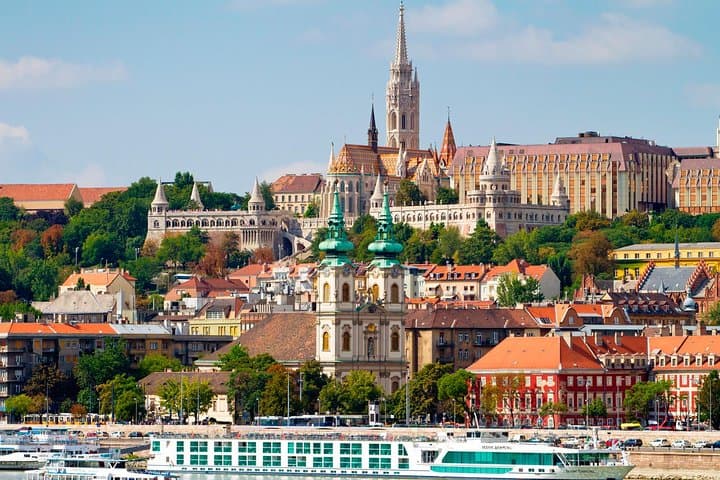
Budapest is a city shaped by water and stone. Gellért Hill hangs like a guardian over the Danube, its vantage offering a sweeping read on the city’s layout and why the river has been both highway and dividing line since Roman times. The Buda side still carries medieval scars—the 13th-century Buda Castle and Matthias Church—while Pest speaks to 19th-century ambition along Andrássy Avenue and the monumental sweep of Heroes’ Square. Geologically, the Buda Hills are limestone and thermal faults; those faults feed the hot springs that made the city famous for its baths, and that warmth colors local life as much as the baroque facades.
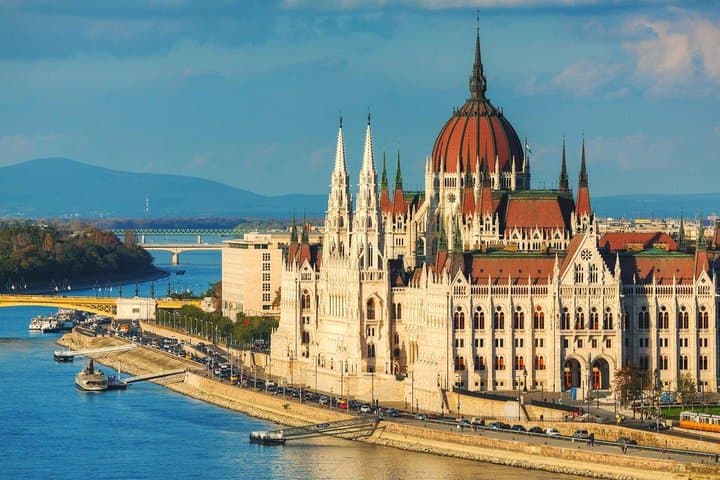
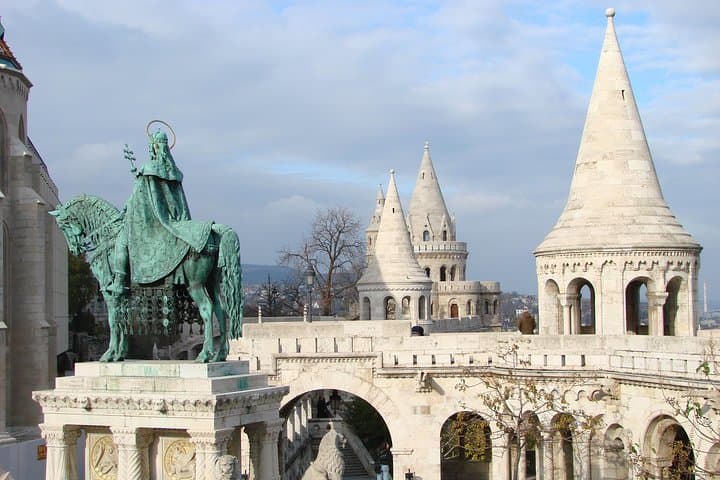
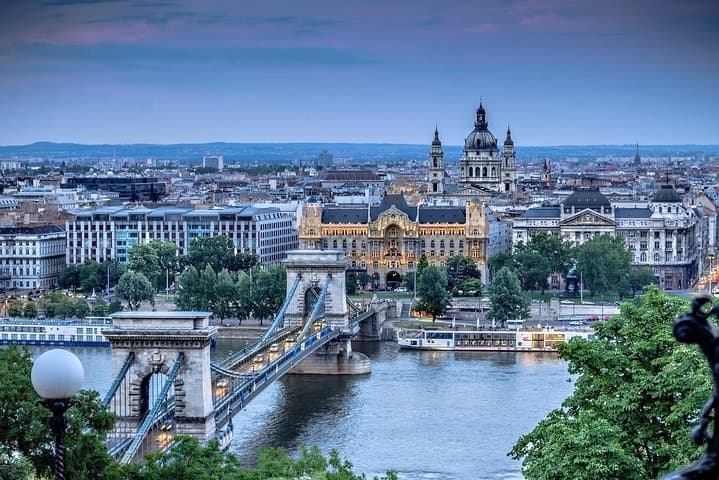
Culturally, Budapest is direct. Locals prize hearty food—gulyás, lángos—and expect visitors to move at a similar, brisk tempo through crowded markets and squares. The Chain Bridge links the two halves visually and symbolically: cross it for Parliament’s lace-like façade, then climb to Fisherman’s Bastion for a postcard view.
Practically, this is a long day—expect 12–14 hours from hotel pickup through return. A valid passport and any required visa are mandatory at the border; note this route historically experiences heavy summer delays and does not operate between July 1 and August 31. Comfort on the vehicle is part of the package—air-conditioned minivans or private sedans—but plan for walking on cobbles and several staircases in Buda.
Timing your visit matters: early light on Gellért Hill or late-afternoon sun on the Bastion flattens the crowds and enhances photos. If you crave a slower tempo, use the guided portion to see the highlights, then spend your free hours in a café near St. Stephen’s Basilica or a quiet soak at Gellért Baths (admission not included).
For travelers based in Belgrade, the exchange of borders is the real hinge of the day: logistics, passport checks, and comfort in transit are as significant as the monuments you’ll tick off. Plan smart—pack water, wear supportive shoes, and keep copies of travel documents easily accessible—so the Danube can do what it does best: invite you to look farther downstream.
easy.
12–14 hours.
Light fitness: able to sit comfortably for a multi-hour drive and walk 2–4 miles across uneven city terrain
Visa requirements depend on your nationality—confirm with your consulate well before travel; the operator requires you have any necessary visas in advance.
About three hours in the afternoon to explore independently, shop on Váci Street, or visit a thermal bath (admission not included).
Lunch is not included; the guide will recommend local restaurants where you can try gulyás or other Hungarian specialties.
Infants can use a stroller and specialized infant seats are available; however the trip is not wheelchair accessible.
The operator may adjust stops or timing; the tour does not run in peak-summer due to long waits—expect flexibility on the return schedule.
Yes, pickup from Belgrade Airport is possible for a supplement (see the operator’s pickup policy in booking details).
Budapest formed from two cities—Buda and Pest—united in 1873; Buda Castle dates back to the 13th century and reflects the city’s medieval and imperial layers.
The Danube has cleaner stretches than decades ago and urban authorities manage thermal bath discharge—travelers should avoid littering and respect bathhouse rules to reduce local impact.
VICTOR TOURS operates guided outdoor trips and adventures with an emphasis on safety, stewardship, and memorable experiences.
A predawn van pulls out of Belgrade and the highway unwinds westward: fields blur, road signs flip between Serbian and Hungarian names, and the Danube begins to assert itself as a silver seam on the horizon. By midmorning the city rises—Buda’s honey-stone roofs and Pest’s symmetrical boulevards—each side of the river offering its own mood. This private day trip compresses centuries of architecture and history into a single, carefully paced day: a four-hour drive each way, three hours of guided stops, and three hours of free time to make the city yours.
A predawn van pulls out of Belgrade and the highway unwinds westward: fields blur, road signs flip between Serbian and Hungarian names, and the Danube begins to assert itself as a silver seam on the horizon. By midmorning the city rises—Buda’s honey-stone roofs and Pest’s symmetrical boulevards—each side of the river offering its own mood. This private day trip compresses centuries of architecture and history into a single, carefully paced day: a four-hour drive each way, three hours of guided stops, and three hours of free time to make the city yours.
Budapest is a city shaped by water and stone. Gellért Hill hangs like a guardian over the Danube, its vantage offering a sweeping read on the city’s layout and why the river has been both highway and dividing line since Roman times. The Buda side still carries medieval scars—the 13th-century Buda Castle and Matthias Church—while Pest speaks to 19th-century ambition along Andrássy Avenue and the monumental sweep of Heroes’ Square. Geologically, the Buda Hills are limestone and thermal faults; those faults feed the hot springs that made the city famous for its baths, and that warmth colors local life as much as the baroque facades.
Culturally, Budapest is direct. Locals prize hearty food—gulyás, lángos—and expect visitors to move at a similar, brisk tempo through crowded markets and squares. The Chain Bridge links the two halves visually and symbolically: cross it for Parliament’s lace-like façade, then climb to Fisherman’s Bastion for a postcard view.
Practically, this is a long day—expect 12–14 hours from hotel pickup through return. A valid passport and any required visa are mandatory at the border; note this route historically experiences heavy summer delays and does not operate between July 1 and August 31. Comfort on the vehicle is part of the package—air-conditioned minivans or private sedans—but plan for walking on cobbles and several staircases in Buda.
Timing your visit matters: early light on Gellért Hill or late-afternoon sun on the Bastion flattens the crowds and enhances photos. If you crave a slower tempo, use the guided portion to see the highlights, then spend your free hours in a café near St. Stephen’s Basilica or a quiet soak at Gellért Baths (admission not included).
For travelers based in Belgrade, the exchange of borders is the real hinge of the day: logistics, passport checks, and comfort in transit are as significant as the monuments you’ll tick off. Plan smart—pack water, wear supportive shoes, and keep copies of travel documents easily accessible—so the Danube can do what it does best: invite you to look farther downstream.