THE ADVENTURE COLLECTIVE® · Independent discovery and booking for outdoor travel

A demanding day-hike into Dominica’s volcanic heart leads to the world’s largest boiling lake. Expect humid forest, steaming fumaroles and a raw, geologic spectacle.
A demanding day-hike into Dominica’s volcanic heart leads to the world’s largest boiling lake. Expect humid forest, steaming fumaroles and a raw, geologic spectacle.
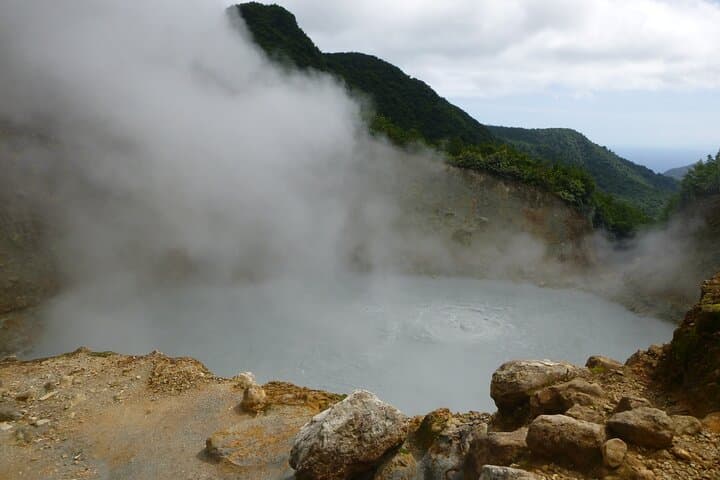
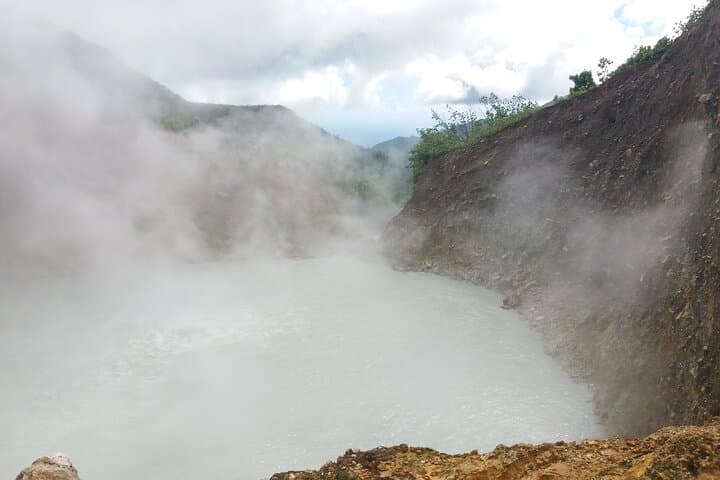
Fog parts like a curtain as you crest the ridge above the Valley of Desolation and the air changes: sulfurous steam threads upward, the ground hisses, and a vast, simmering pool sits like an unruly heart in the crater.
Verified experiences and guided adventures in the surrounding area.
Operated by TNK · Laudat, Saint George Parish
Fog parts like a curtain as you crest the ridge above the Valley of Desolation and the air changes: sulfurous steam threads upward, the ground hisses, and a vast, simmering pool sits like an unruly heart in the crater.
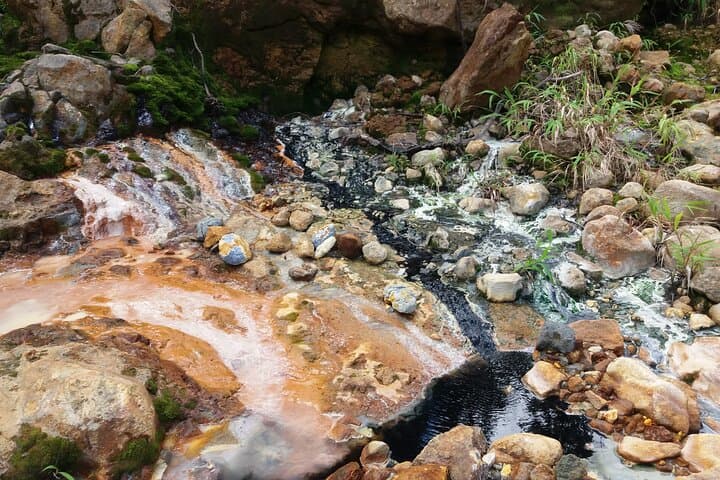
The Boiling Lake sits in Morne Trois Pitons National Park, a UNESCO World Heritage site formed by volcanic forces that shaped Dominica’s interior. The trail moves through thick tropical forest—tree ferns, giant heliconias and hardwoods—before opening to stark pumice slopes and steaming fumaroles in the valley of desolation. The lake itself is a flooded fumarole; temperatures at the edge can reach the high 70s–80s °C and colors shift from steel gray to sulfur-streaked ochres as minerals mix with steam.
Locally the area is tied to Carib and colonial histories: mountain paths once connected interior settlements and the park preserves both natural processes and cultural memory. Guides from Laudat and nearby communities read the land—when the wind shifts, which fumaroles are active—and share stories that tie geology to daily life.
Practical notes: expect a long, rugged trek—roughly 12–14 km round-trip with sustained elevation change and muddy, rooty sections. Wear sturdy, broken-in boots, carry 2–3 liters of water, rain protection and a basic first-aid kit. Start early to avoid afternoon showers and to secure a guided permit if required; many operators include a guide for safety and route-finding. Respect volatile ground around fumaroles—stay on paths, and don’t attempt to enter hot pools. The reward is elemental: a rare, living landscape that tests your legs and your curiosity.
challenging.
6–8 hours.
Good cardiovascular fitness and prior full-day hiking experience recommended; able to manage steep, uneven terrain.
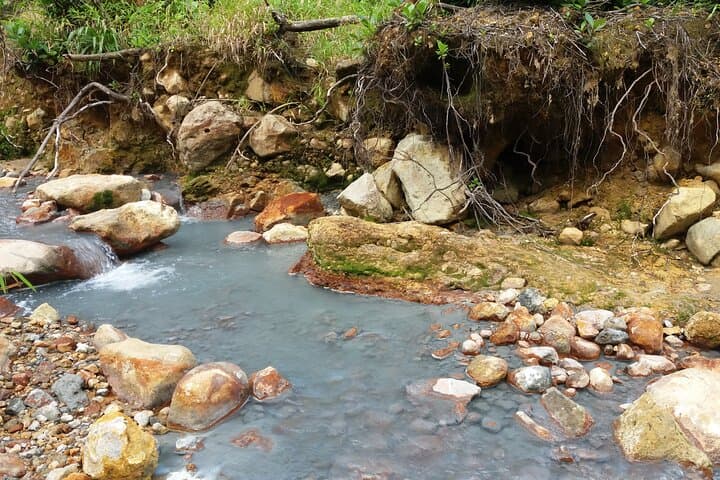
No—water temperatures are dangerously hot and edges are unstable; bathing is limited to distant, cooler thermal pools where guides permit.
A local guide is strongly advised for safety and navigation; park rules vary—book through certified operators for permits and logistics.
Expect roughly 12–14 km round-trip with significant elevation change and rough trail conditions; plan for a 6–8 hour full-day outing.
Not recommended for young children or people with serious cardiovascular conditions due to long exertion and sulfurous steam exposure.
Morne Trois Pitons preserves volcanic landscapes and historical highland paths used by indigenous and colonial communities; the park gained UNESCO status for its dynamic geomorphology.
Stay on established trails to protect fragile vegetation and geothermal features; follow Leave No Trace and heed guide instructions to minimize impact.
TNK operates guided outdoor trips and adventures with an emphasis on safety, stewardship, and memorable experiences.
Fog parts like a curtain as you crest the ridge above the Valley of Desolation and the air changes: sulfurous steam threads upward, the ground hisses, and a vast, simmering pool sits like an unruly heart in the crater.
Fog parts like a curtain as you crest the ridge above the Valley of Desolation and the air changes: sulfurous steam threads upward, the ground hisses, and a vast, simmering pool sits like an unruly heart in the crater.
The Boiling Lake sits in Morne Trois Pitons National Park, a UNESCO World Heritage site formed by volcanic forces that shaped Dominica’s interior. The trail moves through thick tropical forest—tree ferns, giant heliconias and hardwoods—before opening to stark pumice slopes and steaming fumaroles in the valley of desolation. The lake itself is a flooded fumarole; temperatures at the edge can reach the high 70s–80s °C and colors shift from steel gray to sulfur-streaked ochres as minerals mix with steam.
Locally the area is tied to Carib and colonial histories: mountain paths once connected interior settlements and the park preserves both natural processes and cultural memory. Guides from Laudat and nearby communities read the land—when the wind shifts, which fumaroles are active—and share stories that tie geology to daily life.
Practical notes: expect a long, rugged trek—roughly 12–14 km round-trip with sustained elevation change and muddy, rooty sections. Wear sturdy, broken-in boots, carry 2–3 liters of water, rain protection and a basic first-aid kit. Start early to avoid afternoon showers and to secure a guided permit if required; many operators include a guide for safety and route-finding. Respect volatile ground around fumaroles—stay on paths, and don’t attempt to enter hot pools. The reward is elemental: a rare, living landscape that tests your legs and your curiosity.