THE ADVENTURE COLLECTIVE® · Independent discovery and booking for outdoor travel

Stand beneath a living cathedral of blue ice on a guided winter hike from Jökulsárlón. This short but intense morning or afternoon trip combines a rugged glacier drive with a hands-on cave approach—perfect for travelers who want a high-impact Arctic experience without technical climbing.
Stand beneath a living cathedral of blue ice on a guided winter hike from Jökulsárlón. This short but intense morning or afternoon trip combines a rugged glacier drive with a hands-on cave approach—perfect for travelers who want a high-impact Arctic experience without technical climbing.
The air tastes like metal and clean snow as the modified 4x4 grinds away from the parking lot at Jökulsárlón. Headlights carve through a low, pale sky while the driver points toward the glacier’s dark flank—an immense river of compressed ice that breathes and groans in slow, geological time. Minutes later you stand at a raw, blue mouth in the glacier, helmet on, crampons biting into hard-packed ice. The cave doesn't wait; it is found, entered, and then it shows itself—columns of glassy ice, veins of ash preserved from long-ago eruptions, and a light that filters and amplifies everything into surreal cobalt.
Verified experiences and guided adventures in the surrounding area.
Operated by Marina Travel · Jökulsárlón, Austurland
The air tastes like metal and clean snow as the modified 4x4 grinds away from the parking lot at Jökulsárlón. Headlights carve through a low, pale sky while the driver points toward the glacier’s dark flank—an immense river of compressed ice that breathes and groans in slow, geological time. Minutes later you stand at a raw, blue mouth in the glacier, helmet on, crampons biting into hard-packed ice. The cave doesn't wait; it is found, entered, and then it shows itself—columns of glassy ice, veins of ash preserved from long-ago eruptions, and a light that filters and amplifies everything into surreal cobalt.
The ice caves here are ephemeral works of nature. Formed each winter by meltwater tunnels and nightly refreezing, the shapes shift through the season; every visit is to a place that exists for a moment. Geologically, Vatnajökull—Europe’s largest glacier—has been sculpting the landscape since the last ice age, burying and revealing layers of volcanic history. Local guides bring this context alive, explaining how subglacial streams carve caverns and why the ice reads blue: dense ice absorbs red wavelengths and lets blues pass, the same physics that gives glacial ice its signature hue.
Culturally, the lagoon below the glacier holds floating icebergs calved from the tongue of Vatnajökull, and the area has long been a crossroads for fishermen and shepherds of Hornafjörður. Modern tourists arrive with cameras, but the region’s quiet villages—especially Höfn—retain practical, weather-worn hospitality: warm soup, dark rye, and simple lodgings that feel earned after a day on the ice.
Practically, the tour is short—about three hours door-to-door from the meeting point at the lagoon—but intensely specific: a drive across glacial outwash, a guided walk with crampons and helmet, and careful route-finding to the cave entrance. Guides assess ice conditions continually; locations change, and safety dictates the route.
Plan for cold, wind, and shifting light. Layering, waterproof outerwear, and sturdy hiking boots that work with crampons are non-negotiable. Camera batteries drain quickly in low temperatures, and tripod use is awkward inside narrow passages, so bring a compact, fast-lens setup if you want crisp interior shots. Respect the cave: fragile ice, hidden crevasses, and melting schedules mean the site is transient; follow your guide’s instructions and leave only footprints.
If you go in winter, you leave with an understanding of both the fragility and force of glacial landscapes—a place that feels alive, improvising new corridors of blue every season.
moderate.
3 hours (fixed).
Suitable for most fitness levels; requires walking on uneven ice and short uphill sections. Able-bodied walkers who can handle 30–45 minutes of icy footing are fine.
Blue ice caves are seasonal and typically accessible in winter months (roughly November–March); exact availability depends on weather and ice conditions each year.
No—this tour is guided and suitable for participants without previous glacier experience; guides provide instruction on using crampons and safe movement on ice.
Children are allowed on some departures but operators set minimum age limits and assess each child’s ability to handle icy terrain; check with the provider when booking.
If roads to Jökulsárlón are closed by weather, the operator may cancel; their policy allows refunds if canceled in advance, but last-minute road closures may require travel insurance for reimbursement.
No—the caves change every season and even day-to-day; photos are illustrative and guides search for the best, safe openings each winter.
Tripods can be cumbersome in narrow passages; many photographers use small, fast-lens setups and handheld stabilizers. If you bring larger gear, expect to carry it over uneven ice and follow guide directions.
Jökulsárlón formed as Vatnajökull retreated in the 20th century; once a trapped glacial lake, it is now Iceland’s most famous iceberg-strewn lagoon and a focus of local fishing and tourism.
The glacier and lagoon are sensitive to climate change and visitor impact—follow guide instructions, avoid disturbing wildlife, and stick to established access routes to minimize erosion.
Marina Travel operates guided outdoor trips and adventures with an emphasis on safety, stewardship, and memorable experiences.
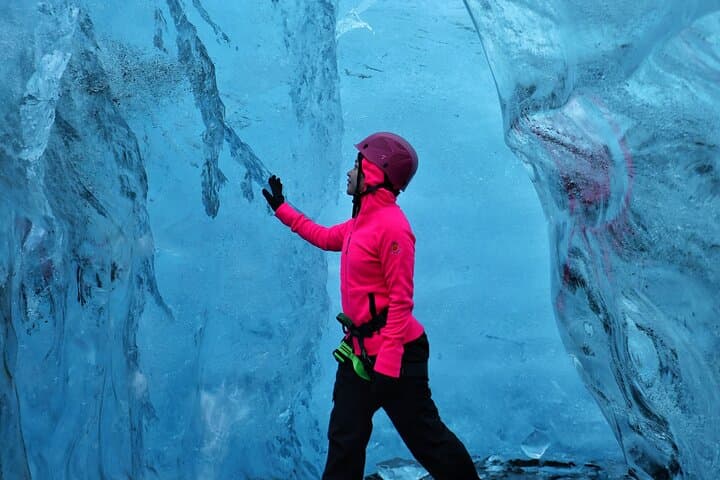
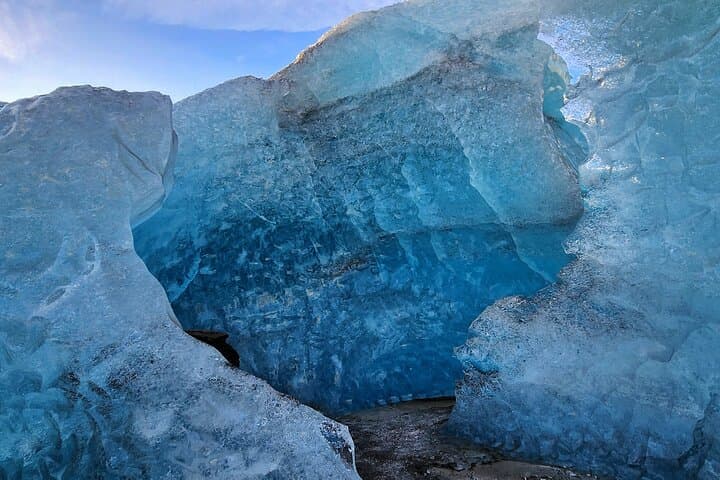
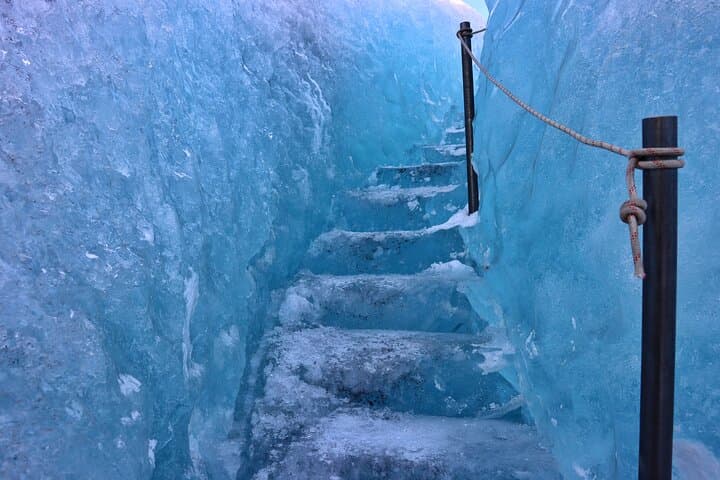
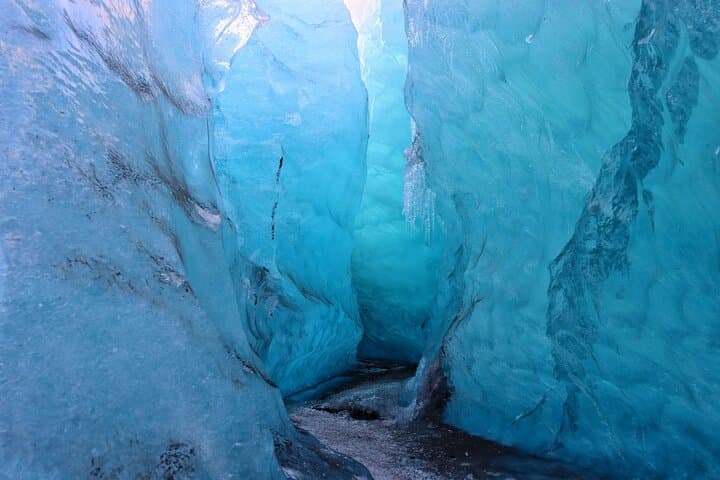
The air tastes like metal and clean snow as the modified 4x4 grinds away from the parking lot at Jökulsárlón. Headlights carve through a low, pale sky while the driver points toward the glacier’s dark flank—an immense river of compressed ice that breathes and groans in slow, geological time. Minutes later you stand at a raw, blue mouth in the glacier, helmet on, crampons biting into hard-packed ice. The cave doesn't wait; it is found, entered, and then it shows itself—columns of glassy ice, veins of ash preserved from long-ago eruptions, and a light that filters and amplifies everything into surreal cobalt.
The air tastes like metal and clean snow as the modified 4x4 grinds away from the parking lot at Jökulsárlón. Headlights carve through a low, pale sky while the driver points toward the glacier’s dark flank—an immense river of compressed ice that breathes and groans in slow, geological time. Minutes later you stand at a raw, blue mouth in the glacier, helmet on, crampons biting into hard-packed ice. The cave doesn't wait; it is found, entered, and then it shows itself—columns of glassy ice, veins of ash preserved from long-ago eruptions, and a light that filters and amplifies everything into surreal cobalt.
The ice caves here are ephemeral works of nature. Formed each winter by meltwater tunnels and nightly refreezing, the shapes shift through the season; every visit is to a place that exists for a moment. Geologically, Vatnajökull—Europe’s largest glacier—has been sculpting the landscape since the last ice age, burying and revealing layers of volcanic history. Local guides bring this context alive, explaining how subglacial streams carve caverns and why the ice reads blue: dense ice absorbs red wavelengths and lets blues pass, the same physics that gives glacial ice its signature hue.
Culturally, the lagoon below the glacier holds floating icebergs calved from the tongue of Vatnajökull, and the area has long been a crossroads for fishermen and shepherds of Hornafjörður. Modern tourists arrive with cameras, but the region’s quiet villages—especially Höfn—retain practical, weather-worn hospitality: warm soup, dark rye, and simple lodgings that feel earned after a day on the ice.
Practically, the tour is short—about three hours door-to-door from the meeting point at the lagoon—but intensely specific: a drive across glacial outwash, a guided walk with crampons and helmet, and careful route-finding to the cave entrance. Guides assess ice conditions continually; locations change, and safety dictates the route.
Plan for cold, wind, and shifting light. Layering, waterproof outerwear, and sturdy hiking boots that work with crampons are non-negotiable. Camera batteries drain quickly in low temperatures, and tripod use is awkward inside narrow passages, so bring a compact, fast-lens setup if you want crisp interior shots. Respect the cave: fragile ice, hidden crevasses, and melting schedules mean the site is transient; follow your guide’s instructions and leave only footprints.
If you go in winter, you leave with an understanding of both the fragility and force of glacial landscapes—a place that feels alive, improvising new corridors of blue every season.