THE ADVENTURE COLLECTIVE® · Independent discovery and booking for outdoor travel

Wind through high-fern gullies and craggy ridgelines on a 6 km guided hike in Black River Gorges National Park. See rare endemic birds, small waterfalls and coastal panoramas while learning the conservation story that brought Mauritius’ wildlife back from the brink.
Wind through high-fern gullies and craggy ridgelines on a 6 km guided hike in Black River Gorges National Park. See rare endemic birds, small waterfalls and coastal panoramas while learning the conservation story that brought Mauritius’ wildlife back from the brink.
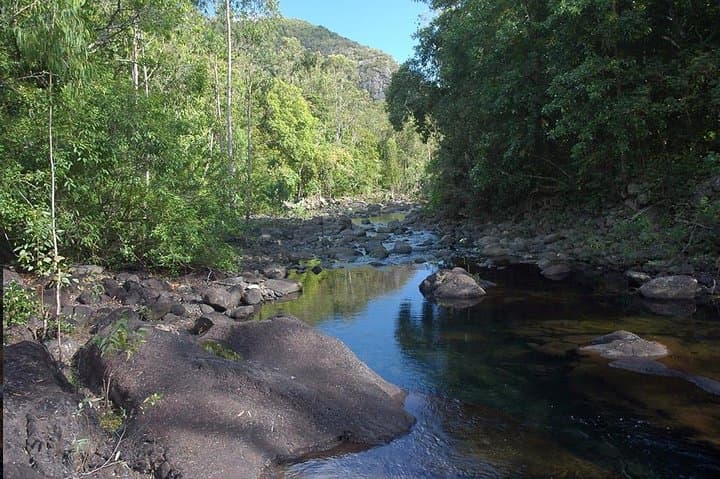
The trail begins beneath a green ceiling: giant ferns unfurling like living umbrellas, trunks mottled with lichen, a thin river daring you to cross at a narrow stepping-stone. On a guided Black River Gorges hike, the forest feels alive in both sound and purpose — the high, metallic calls of Echo Parakeets punctuate the hush and small streams push the route into a slow, steady rhythm. For three hours you move through a world that has fought back from the very brink.
Verified experiences and guided adventures in the surrounding area.
Operated by RELAX MAX LTD · Rivière Noire, Rivière Noire District
The trail begins beneath a green ceiling: giant ferns unfurling like living umbrellas, trunks mottled with lichen, a thin river daring you to cross at a narrow stepping-stone. On a guided Black River Gorges hike, the forest feels alive in both sound and purpose — the high, metallic calls of Echo Parakeets punctuate the hush and small streams push the route into a slow, steady rhythm. For three hours you move through a world that has fought back from the very brink.
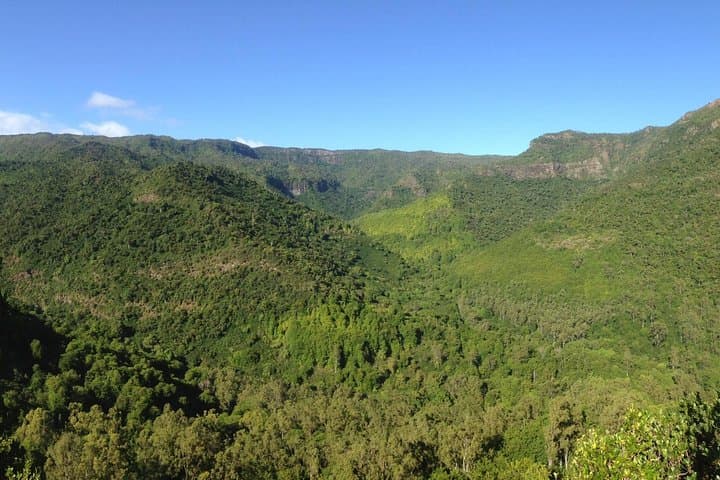
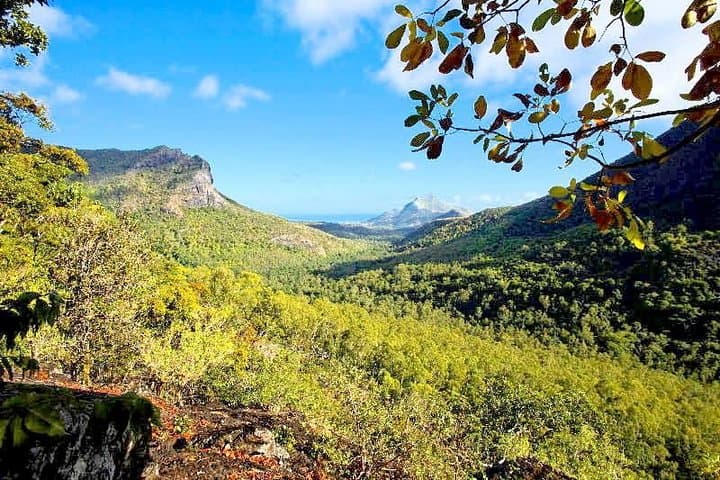
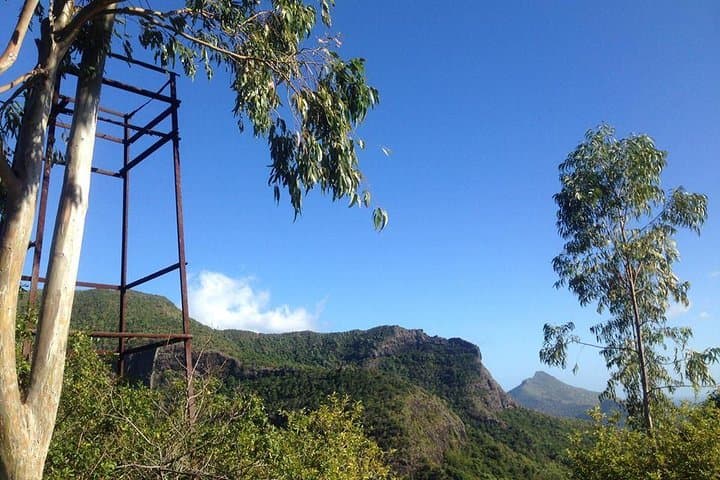
Black River Gorges National Park covers roughly 67.5 km² of Mauritius’s rugged interior, carved by ancient volcanic flows and later sculpted by rain. Valleys fall away to west-coast views while ridgelines offer glimpses of sugarcane plains and coral-blue sea far below. The area’s modern story is as compelling as its geology: by the 1950s several endemic species were on the verge of extinction. Intensive captive-breeding and habitat protection — most famously for the Mauritius kestrel, pink pigeon and Echo Parakeet — have returned hundreds of birds to the wild, but their presence still feels fragile and rare.
Culturally, this patch of island is a crossroad of Creole history and conservation science. Local guides often weave stories of early settlers, colonial land use, and the long-running recovery programs into the hike. You’ll pass plant species unique to Mauritius and learn why staying on trail matters: off-trail movement disturbs nesting sites and spreads invasive plants faster than rangers can remove them.
Practical detail keeps the beauty accessible. The standard guided route is about 6 km with roughly 350 m of elevation gain and the same descent — a compact loop that a moderately fit traveler can complete in about three hours. Groups are intentionally small (maximum 12) to minimize impact and maximize wildlife viewing; morning departures are best for bird activity and cooler air. Expect uneven, sometimes muddy footing after rain, root-crossed singletrack, and a few short rock scrambles that are more about balance than exposure.
Pack light but smart: breathable layers, good treaded hiking shoes, insect repellent, and at least 1–1.5 liters of water. The guide brings local knowledge — where the parakeets roost, which side streams hold small waterfalls — and will also handle logistics like meeting points and vehicle pickups when included. Respect the rules: no feeding wildlife, carry out any trash, and photograph rather than collect.
At the end of the loop you’re likely to feel both tired and connected — to the island’s volatile geology, its reclaimed wildlife, and the small, deliberate work of conservation that keeps this forest breathing. If you go, bring curiosity and boots with grip; the park rewards both.
moderate.
3 hours.
Good for travelers with moderate fitness; expect steady uphill sections and uneven terrain.
The 6 km loop has about 350 m of ascent and descent — moderate effort with uneven terrain; ideal for those comfortable on sustained uphill walking.
Guides target known roosting areas for Echo Parakeets, Pink Pigeons and Mauritius Kestrels, but sightings aren’t guaranteed; mornings increase your chances.
Facilities are limited; use hotel facilities before arrival and pack toilet paper and hand sanitizer for emergencies.
Yes — this is a guided activity with groups capped at 12; private transfers may be available when booked with pickup included.
Light, breathable layers, good hiking shoes, a hat, and insect repellent; bring a light rain jacket in the wetter months.
Full refund is available if you cancel at least 24 hours before departure; tours may be canceled in bad weather and rescheduled when possible.
In the 1950s several endemic bird species approached extinction; intensive captive-breeding and protection since then have helped populations recover from only a handful of surviving individuals.
The park is central to Mauritius’ recovery programs — stay on trails, avoid feeding wildlife and support local guides who contribute to monitoring and invasive-species removal.
RELAX MAX LTD operates guided outdoor trips and adventures with an emphasis on safety, stewardship, and memorable experiences.
The trail begins beneath a green ceiling: giant ferns unfurling like living umbrellas, trunks mottled with lichen, a thin river daring you to cross at a narrow stepping-stone. On a guided Black River Gorges hike, the forest feels alive in both sound and purpose — the high, metallic calls of Echo Parakeets punctuate the hush and small streams push the route into a slow, steady rhythm. For three hours you move through a world that has fought back from the very brink.
The trail begins beneath a green ceiling: giant ferns unfurling like living umbrellas, trunks mottled with lichen, a thin river daring you to cross at a narrow stepping-stone. On a guided Black River Gorges hike, the forest feels alive in both sound and purpose — the high, metallic calls of Echo Parakeets punctuate the hush and small streams push the route into a slow, steady rhythm. For three hours you move through a world that has fought back from the very brink.
Black River Gorges National Park covers roughly 67.5 km² of Mauritius’s rugged interior, carved by ancient volcanic flows and later sculpted by rain. Valleys fall away to west-coast views while ridgelines offer glimpses of sugarcane plains and coral-blue sea far below. The area’s modern story is as compelling as its geology: by the 1950s several endemic species were on the verge of extinction. Intensive captive-breeding and habitat protection — most famously for the Mauritius kestrel, pink pigeon and Echo Parakeet — have returned hundreds of birds to the wild, but their presence still feels fragile and rare.
Culturally, this patch of island is a crossroad of Creole history and conservation science. Local guides often weave stories of early settlers, colonial land use, and the long-running recovery programs into the hike. You’ll pass plant species unique to Mauritius and learn why staying on trail matters: off-trail movement disturbs nesting sites and spreads invasive plants faster than rangers can remove them.
Practical detail keeps the beauty accessible. The standard guided route is about 6 km with roughly 350 m of elevation gain and the same descent — a compact loop that a moderately fit traveler can complete in about three hours. Groups are intentionally small (maximum 12) to minimize impact and maximize wildlife viewing; morning departures are best for bird activity and cooler air. Expect uneven, sometimes muddy footing after rain, root-crossed singletrack, and a few short rock scrambles that are more about balance than exposure.
Pack light but smart: breathable layers, good treaded hiking shoes, insect repellent, and at least 1–1.5 liters of water. The guide brings local knowledge — where the parakeets roost, which side streams hold small waterfalls — and will also handle logistics like meeting points and vehicle pickups when included. Respect the rules: no feeding wildlife, carry out any trash, and photograph rather than collect.
At the end of the loop you’re likely to feel both tired and connected — to the island’s volatile geology, its reclaimed wildlife, and the small, deliberate work of conservation that keeps this forest breathing. If you go, bring curiosity and boots with grip; the park rewards both.