THE ADVENTURE COLLECTIVE® · Independent discovery and booking for outdoor travel

Pedal into the Great Rift Valley on a full-day from Nairobi that pairs lakeside bike rides with a ranger-led hike through Hell’s Gate’s red gorges and geothermal terrain. Practical, scenic and rich in geology and wildlife.
Pedal into the Great Rift Valley on a full-day from Nairobi that pairs lakeside bike rides with a ranger-led hike through Hell’s Gate’s red gorges and geothermal terrain. Practical, scenic and rich in geology and wildlife.
You step out of an air-conditioned minivan as the Rift Valley opens like a page torn from the earth: broad, sun-baked plains, vertical red cliffs and a lake rimmed in papyrus. The morning smells of dust and diesel give way to green coolness along Lake Naivasha, where bicycles wait and the guide checks brakes and tyre pressure with the same calm he uses to read animal tracks.
Verified experiences and guided adventures in the surrounding area.
Operated by Kana Safaris · Naivasha, Nakuru County
You step out of an air-conditioned minivan as the Rift Valley opens like a page torn from the earth: broad, sun-baked plains, vertical red cliffs and a lake rimmed in papyrus. The morning smells of dust and diesel give way to green coolness along Lake Naivasha, where bicycles wait and the guide checks brakes and tyre pressure with the same calm he uses to read animal tracks.
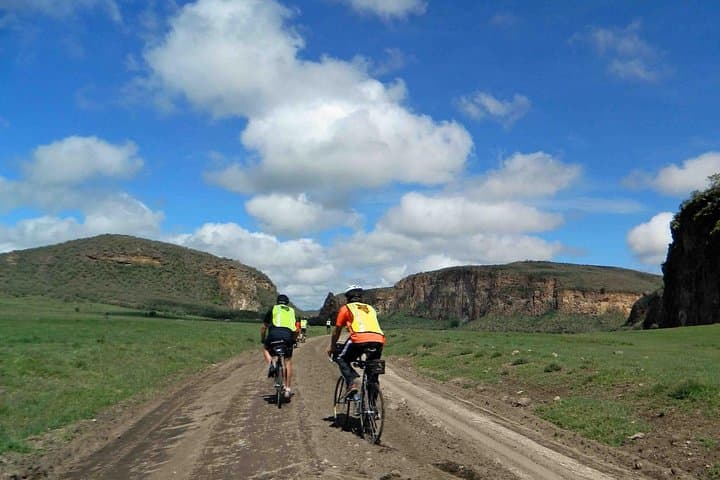
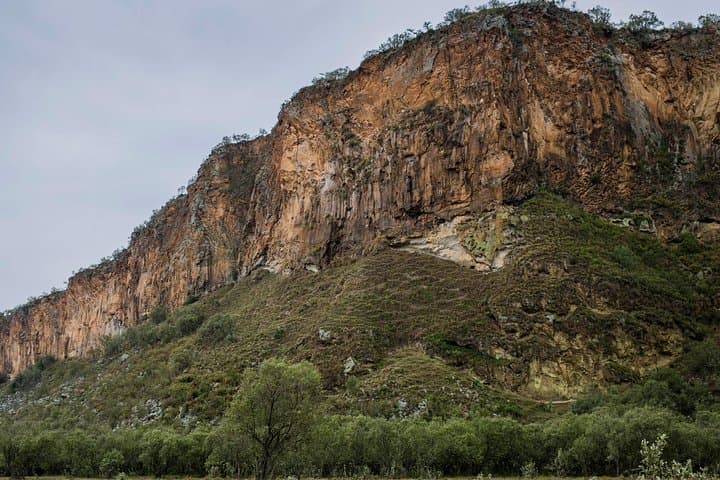
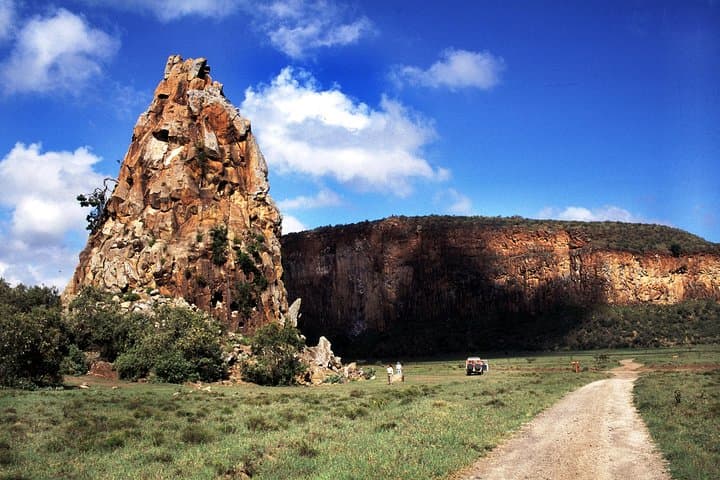
The route follows service tracks and compacted dirt roads that thread Hell's Gate National Park and the lake’s shoreline. Geology is on display—basalt columns and gorge walls carved by tectonics and episodic water flow—so the landscape feels both ancient and active. Hell's Gate sits inside the Eastern branch of the Great Rift Valley, where volcanic heat still powers Olkaria’s geothermal fields and steam vents punctuate the horizon.
Culture is never far away. Maasai landowners and lakeside fishing communities have long used this corridor for grazing and trade; park management today balances tourism with grazing rights and geothermal development. Rangers carry more than maps: they explain where the animals graze, point out medicinal plants, and share how the park’s status as one of the few where walking and cycling are permitted has shaped local livelihoods.
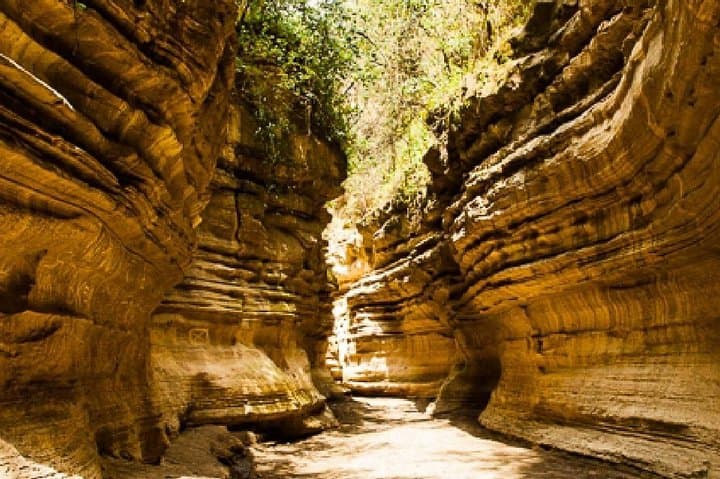
On the bike you cover 10–18 km of mostly flat gravel with short climbs into the park’s gorges; built-up tyres and firm brakes keep the ride steady. A ranger-guided, 1–2 hour hike takes you into a canyon cut through red volcanic tuff—walls close in, birds chatter and the air feels cooler. You’ll likely pause at geothermal seeps and a viewpoint where cliffs and a pale lake frame the Rift like a natural amphitheater.
Practicalities matter: this is an 8-hour day with hotel pickup in Nairobi. Bike hire, bottled water and a local guide are included, but sunscreen, a helmet if you prefer your own, and sturdy trainers help the day go smoothly. Expect dusty roads, open sun and occasional wind; plan to start early to avoid the hottest hours and to catch wildlife in the cooler morning.
For photographers and active travelers the mix of still water, raw rock and wildlife—eland, zebra and towers of vultures—makes for a varied portfolio. Conservation-minded visitors should stick to marked tracks, pack out all waste and respect grazing areas. The park’s low-impact day-use model has kept populations of grazing ungulates and resident birds stable while supporting community revenue.
Whether you’re chasing geology, birds or a fast, scenic pedal out of the city, this combined bike-and-hike day delivers a tactile slice of the Rift Valley that’s both readable and rugged, with a practical tempo designed for travellers who want to move through the landscape rather than merely observe it.
moderate.
8 hours.
Moderate—suitable for riders who can comfortably cycle 10–20 km on mixed gravel and take a 1–2 hour guided hike; not technical.
Expect roughly 10–18 km of cycling inside Hell’s Gate and along the lake tracks, depending on the group route and stops.
Bike hire is included; helmets may be provided but you can bring your own for comfort and fit.
The ranger-guided hike is family-friendly but check age and mobility—children should be supervised on rocky sections and near cliff edges.
Yes—small herbivores like zebra, Thomson’s gazelle and eland are common; sightings of larger predators are rare in this park.
Yes—the tour includes pickup and drop-off in Nairobi and is designed as a full-day excursion (about 8 hours round trip).
Comfortable layers, a camera, and to avoid touching hot vents—stick to marked areas because ground temperatures and gases can be hazardous.
The Hell’s Gate corridor opened as part of the Great Rift Valley’s tectonic activity; local Maasai communities have managed grazing and trade in this region for generations.
Hell’s Gate promotes low-impact activities like walking and cycling to limit disturbance; visitors are encouraged to stay on trails and minimize plastic waste to support ongoing community conservation.
Kana Safaris operates guided outdoor trips and adventures with an emphasis on safety, stewardship, and memorable experiences.
You step out of an air-conditioned minivan as the Rift Valley opens like a page torn from the earth: broad, sun-baked plains, vertical red cliffs and a lake rimmed in papyrus. The morning smells of dust and diesel give way to green coolness along Lake Naivasha, where bicycles wait and the guide checks brakes and tyre pressure with the same calm he uses to read animal tracks.
You step out of an air-conditioned minivan as the Rift Valley opens like a page torn from the earth: broad, sun-baked plains, vertical red cliffs and a lake rimmed in papyrus. The morning smells of dust and diesel give way to green coolness along Lake Naivasha, where bicycles wait and the guide checks brakes and tyre pressure with the same calm he uses to read animal tracks.
The route follows service tracks and compacted dirt roads that thread Hell's Gate National Park and the lake’s shoreline. Geology is on display—basalt columns and gorge walls carved by tectonics and episodic water flow—so the landscape feels both ancient and active. Hell's Gate sits inside the Eastern branch of the Great Rift Valley, where volcanic heat still powers Olkaria’s geothermal fields and steam vents punctuate the horizon.
Culture is never far away. Maasai landowners and lakeside fishing communities have long used this corridor for grazing and trade; park management today balances tourism with grazing rights and geothermal development. Rangers carry more than maps: they explain where the animals graze, point out medicinal plants, and share how the park’s status as one of the few where walking and cycling are permitted has shaped local livelihoods.
On the bike you cover 10–18 km of mostly flat gravel with short climbs into the park’s gorges; built-up tyres and firm brakes keep the ride steady. A ranger-guided, 1–2 hour hike takes you into a canyon cut through red volcanic tuff—walls close in, birds chatter and the air feels cooler. You’ll likely pause at geothermal seeps and a viewpoint where cliffs and a pale lake frame the Rift like a natural amphitheater.
Practicalities matter: this is an 8-hour day with hotel pickup in Nairobi. Bike hire, bottled water and a local guide are included, but sunscreen, a helmet if you prefer your own, and sturdy trainers help the day go smoothly. Expect dusty roads, open sun and occasional wind; plan to start early to avoid the hottest hours and to catch wildlife in the cooler morning.
For photographers and active travelers the mix of still water, raw rock and wildlife—eland, zebra and towers of vultures—makes for a varied portfolio. Conservation-minded visitors should stick to marked tracks, pack out all waste and respect grazing areas. The park’s low-impact day-use model has kept populations of grazing ungulates and resident birds stable while supporting community revenue.
Whether you’re chasing geology, birds or a fast, scenic pedal out of the city, this combined bike-and-hike day delivers a tactile slice of the Rift Valley that’s both readable and rugged, with a practical tempo designed for travellers who want to move through the landscape rather than merely observe it.