THE ADVENTURE COLLECTIVE® · Independent discovery and booking for outdoor travel

Board a minibus at Milan Central and spend a full day on the Bernina Express route — from Lake Como’s gentler shores to the glacial heights above Tirano and a quick stop in St. Moritz. This intimate small-group day trip pairs engineering history with raw alpine panoramas.
Board a minibus at Milan Central and spend a full day on the Bernina Express route — from Lake Como’s gentler shores to the glacial heights above Tirano and a quick stop in St. Moritz. This intimate small-group day trip pairs engineering history with raw alpine panoramas.
You step out of Milano Centrale into a morning that smells faintly of coffee and diesel, then climb aboard a minibus that threads toward Lake Como. The town on the lake looks like a postcard pressed open — pastel buildings, a promenade that dares you to slow down — but the real ascent waits beyond, where the road narrows and the air thins.
Verified experiences and guided adventures in the surrounding area.
Operated by LUCAfromITALY · Milan, Lombardy
You step out of Milano Centrale into a morning that smells faintly of coffee and diesel, then climb aboard a minibus that threads toward Lake Como. The town on the lake looks like a postcard pressed open — pastel buildings, a promenade that dares you to slow down — but the real ascent waits beyond, where the road narrows and the air thins.
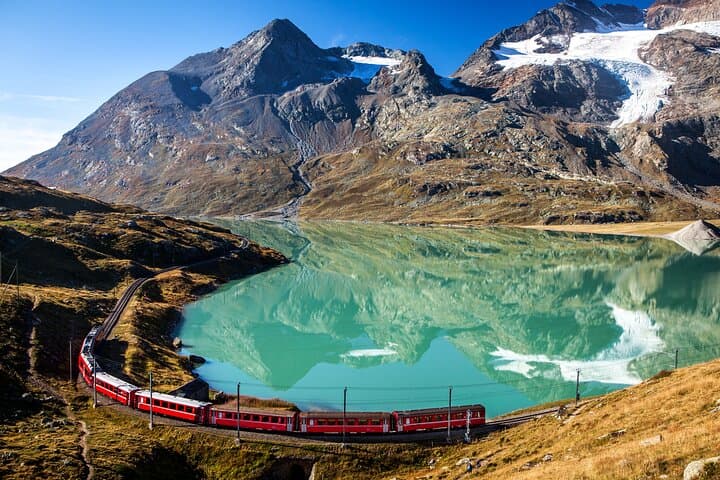
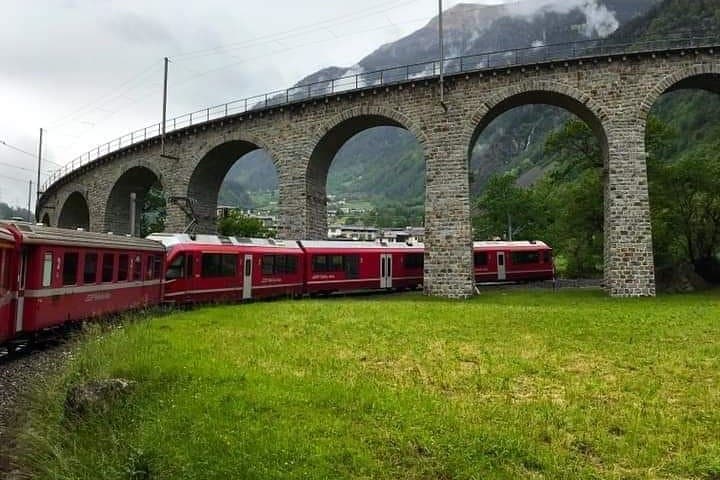
By midday the minibus drops you off in Tirano. After a quick climb up to the Bernina station and a lunch taken under the shadow of slate roofs, the Bernina Express rolls out: a red ribbon unspooling into alpine country. The train climbs gradually, folding through viaducts, tunnel mouths, and hairpin turns, each bend revealing a new angle on glaciers that hold their white breath and peaks that push at the sky.
This is Rhaetian Railway country, inscribed on the UNESCO list for the way iron and stone solved altitude — a feat of early 20th-century engineering that threads villages, valleys, and glaciers together. The line traces a geologic seam where sedimentary basins meet crystalline mountains; its viaducts and spirals were born from practical necessity and remain elegant solutions to slope and elevation.
Culture here is compact and pragmatic: Italian cafés give way to Swiss punctuality, and both sides of the border share food rooted in mountain life — polenta, cured meats, and alpine cheese. St. Moritz arrives like a chapter change: an upscale resort with a small lake that gleams like polished metal and a compact center to explore in 30–45 minutes.
Practicalities govern the day. This is a long, 13-hour round-trip that begins and ends at Milan Central. Passports are mandatory; dress in layers — sun at the lake can be warm even when the pass is cold. Expect short walks, stairs at stations, and the possibility of twisty mountain roads during bus segments. The operator runs small groups (max 18) and includes the Bernina train ticket and guiding; lunch is on your own in Tirano.
Timing matters: summer offers green valleys and late thaw lines; shoulder seasons reward clear light and fewer crowds but require warmer clothing. Winter trips can let you step onto snow-sketched platforms and glimpse blue ice, but the operator reserves the right to alter the itinerary if the train is partially suspended.
For travelers who want a concentrated Alpine contrast — Italian lakeside charm and Swiss high-mountain drama in a single long day — this tour delivers scenery, history, and a measured dose of logistical simplicity. Know your pace, pack smart, and let the route do the storytelling.
moderate.
12–13 hours.
You should have a moderate fitness level—able to manage short stair climbs and stand or walk for intermittent stretches over a long day.
Yes—every passenger must carry a valid passport because the route crosses the Italy–Switzerland border.
No—lunch in Tirano is on your own; you’ll have roughly an hour to eat at cafés or bring a picnic.
The Bernina train ticket is included, but severe weather or operational issues can force partial cancellations; the operator may alter the itinerary or refund if the train cannot operate.
Yes, but the minimum age is 12 and children must be accompanied by an adult; the long day may be tiring for younger kids.
There are stops, but bathroom frequency is limited—plan accordingly and bring hand sanitizer and tissues.
Short walks and stairs are involved; travelers should have at least moderate mobility—contact the operator if you have specific accessibility needs.
The Rhaetian Railway’s Albula/Bernina lines were inscribed as a UNESCO World Heritage site for the early 20th-century engineering that linked remote alpine valleys with viaducts and spiral tunnels.
Alpine environments are fragile—stay on designated paths, pack out trash, and respect seasonal restrictions; the route crosses protected Swiss Alpine areas where disturbance is minimized.
LUCAfromITALY operates guided outdoor trips and adventures with an emphasis on safety, stewardship, and memorable experiences.
You step out of Milano Centrale into a morning that smells faintly of coffee and diesel, then climb aboard a minibus that threads toward Lake Como. The town on the lake looks like a postcard pressed open — pastel buildings, a promenade that dares you to slow down — but the real ascent waits beyond, where the road narrows and the air thins.
You step out of Milano Centrale into a morning that smells faintly of coffee and diesel, then climb aboard a minibus that threads toward Lake Como. The town on the lake looks like a postcard pressed open — pastel buildings, a promenade that dares you to slow down — but the real ascent waits beyond, where the road narrows and the air thins.
By midday the minibus drops you off in Tirano. After a quick climb up to the Bernina station and a lunch taken under the shadow of slate roofs, the Bernina Express rolls out: a red ribbon unspooling into alpine country. The train climbs gradually, folding through viaducts, tunnel mouths, and hairpin turns, each bend revealing a new angle on glaciers that hold their white breath and peaks that push at the sky.
This is Rhaetian Railway country, inscribed on the UNESCO list for the way iron and stone solved altitude — a feat of early 20th-century engineering that threads villages, valleys, and glaciers together. The line traces a geologic seam where sedimentary basins meet crystalline mountains; its viaducts and spirals were born from practical necessity and remain elegant solutions to slope and elevation.
Culture here is compact and pragmatic: Italian cafés give way to Swiss punctuality, and both sides of the border share food rooted in mountain life — polenta, cured meats, and alpine cheese. St. Moritz arrives like a chapter change: an upscale resort with a small lake that gleams like polished metal and a compact center to explore in 30–45 minutes.
Practicalities govern the day. This is a long, 13-hour round-trip that begins and ends at Milan Central. Passports are mandatory; dress in layers — sun at the lake can be warm even when the pass is cold. Expect short walks, stairs at stations, and the possibility of twisty mountain roads during bus segments. The operator runs small groups (max 18) and includes the Bernina train ticket and guiding; lunch is on your own in Tirano.
Timing matters: summer offers green valleys and late thaw lines; shoulder seasons reward clear light and fewer crowds but require warmer clothing. Winter trips can let you step onto snow-sketched platforms and glimpse blue ice, but the operator reserves the right to alter the itinerary if the train is partially suspended.
For travelers who want a concentrated Alpine contrast — Italian lakeside charm and Swiss high-mountain drama in a single long day — this tour delivers scenery, history, and a measured dose of logistical simplicity. Know your pace, pack smart, and let the route do the storytelling.