THE ADVENTURE COLLECTIVE® · Independent discovery and booking for outdoor travel

Board a panoramic carriage and trade Milan’s boulevards for glacier light, spiral viaducts, and the high passes above St. Moritz. This full-day Bernina Express tour pairs easy exploration in St. Moritz with one of Europe’s most dramatic rail journeys.
Board a panoramic carriage and trade Milan’s boulevards for glacier light, spiral viaducts, and the high passes above St. Moritz. This full-day Bernina Express tour pairs easy exploration in St. Moritz with one of Europe’s most dramatic rail journeys.
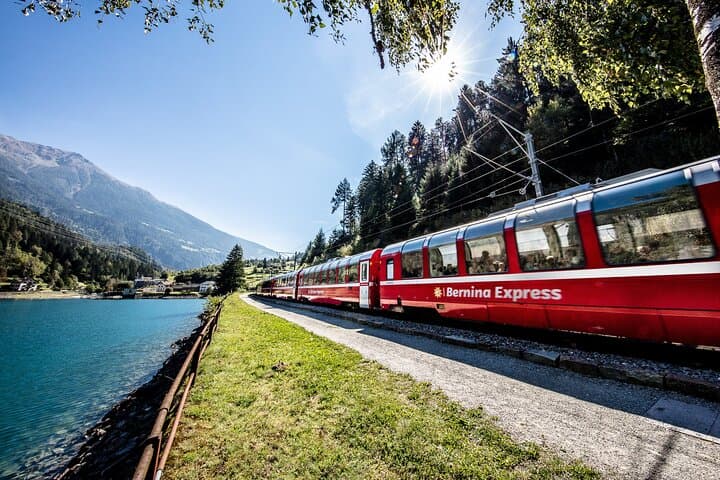
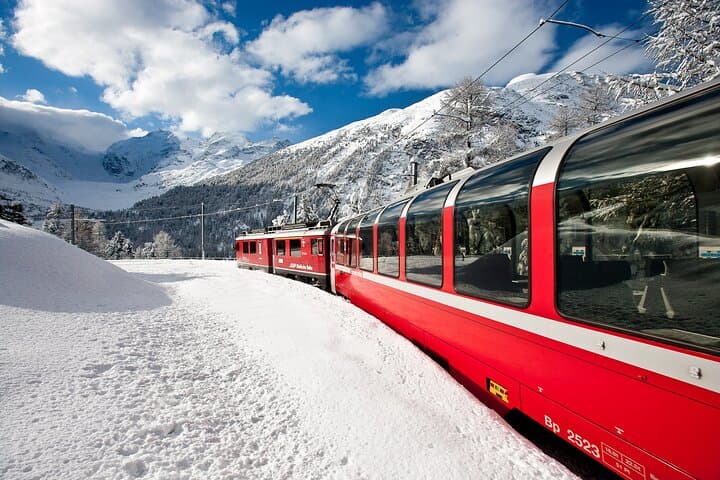
Morning in Milan begins with a small congregation of travelers at Piazza IV Novembre — coffee in hand, passports in pockets — as a coach idles beneath the shadow of the Excelsior Gallia. The road north tightens into hairpins and the air thins; within hours the city noise is replaced by a steady palette of conifers and slate rooftops. In St. Moritz, the trip loosens into an easy two-hour window to stretch legs on postcard-ready streets before boarding the Bernina Express, whose panoramic windows turn each mile into a moving viewpoint.
Verified experiences and guided adventures in the surrounding area.
Operated by FRIGERIO VIAGGI SRL · St. Moritz, Graubünden
Morning in Milan begins with a small congregation of travelers at Piazza IV Novembre — coffee in hand, passports in pockets — as a coach idles beneath the shadow of the Excelsior Gallia. The road north tightens into hairpins and the air thins; within hours the city noise is replaced by a steady palette of conifers and slate rooftops. In St. Moritz, the trip loosens into an easy two-hour window to stretch legs on postcard-ready streets before boarding the Bernina Express, whose panoramic windows turn each mile into a moving viewpoint.
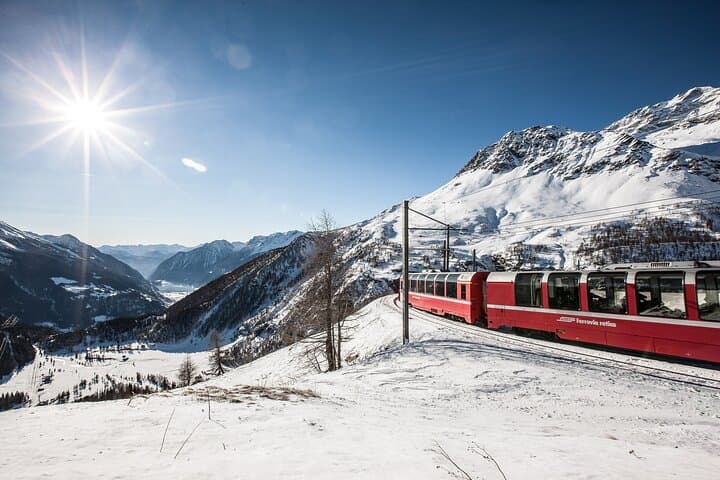
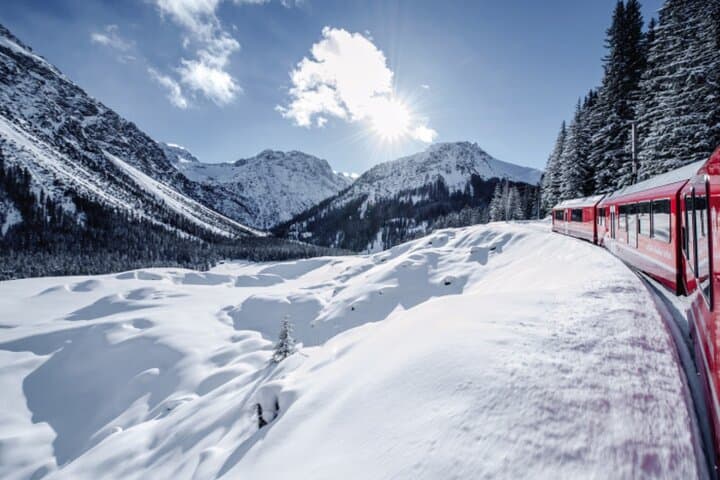
The Bernina line is more than a scenic railway; it’s a chapter in Alpine engineering. Built in the early 20th century, the Rhaetian Railway stitches Switzerland’s high valleys together — a UNESCO World Heritage corridor that climbs to 2,253 meters at the Bernina Pass and gives sightlines to Piz Bernina (4,049 m), the range’s glacier-carved spine.
Geology here is raw and readable: jagged granite peaks, sculpted moraines, and the glitter of Lake Bianco where meltwater pools against black rock. The train negotiates steep gradients and viaducts with the kind of mechanical grace that feels deliberate — a human answer to the mountain’s verticality. Cultural notes come in slow rhythms: Valtellina’s stone hamlets, Tirano’s basilica, and the gentle commerce of alpine pastries in St. Moritz. The Brusio Spiral Viaduct, a corkscrew of masonry, is both a photo magnet and an engineering flourish meant to tame a steep descent without tearing the landscape apart.
Practically, the day is long but low-effort: a round-trip coach from Milan, a couple of hours in St. Moritz for a stroll and coffee, then the panoramic carriage for the Bernina route to Tirano where the bus returns you to Milan. Pack a valid passport — original ID is required for expatriation checks — and expect a roughly 13-hour outing. Weather at altitude changes fast; dress in layers and bring sun protection even in cool months. Cameras and batteries will be rewarded: Alpine light scours details and adds depth to glacier fields and spiral viaducts.
Timing matters for the carriage type: panoramic windows are guaranteed with the upgrade option and are often provided free on weekends through October 26; note that from October 27 until December 11 the panoramic carriage may not be available. Expect periods of standing-room photography and short stops at iconic viewpoints like Alp Grüm and Lago Bianco. For a steady, high-return day of scenery, culture, and history without the need for hiking boots, this tour stitches Italy and Switzerland into a single cinematic day.
easy.
13 hours (approx.).
Suitable for travelers who can sit for long periods and handle short walks on cobbles and station platforms.
The full excursion runs about 13 hours round-trip from Milan, including a stop in St. Moritz and the Bernina Express leg to Tirano.
Meals are not included; there’s a coffee stop and free time in St. Moritz to buy food — bring snacks for the train and bus segments.
Yes — an original passport or national identity document valid for expatriation is required on the day of travel.
No — panoramic carriages are guaranteed only with the upgrade and may be unavailable between Oct 27 and Dec 11; weekends before Oct 26 often receive free upgrades.
Yes; infants can ride in strollers and must sit on an adult’s lap. The day is long, so plan accordingly for naps and snacks.
The tour is mostly accessible for travelers who can board a coach and train and walk short distances; check with the operator for specific mobility needs.
The Rhaetian Railway opened in the early 1900s and the Bernina line is recognized as a UNESCO World Heritage route for its technical and scenic value.
The rail route reduces road traffic through sensitive alpine environments; visitors are encouraged to minimize waste, stick to tracks and support local businesses to sustain communities.
FRIGERIO VIAGGI SRL operates guided outdoor trips and adventures with an emphasis on safety, stewardship, and memorable experiences.
Morning in Milan begins with a small congregation of travelers at Piazza IV Novembre — coffee in hand, passports in pockets — as a coach idles beneath the shadow of the Excelsior Gallia. The road north tightens into hairpins and the air thins; within hours the city noise is replaced by a steady palette of conifers and slate rooftops. In St. Moritz, the trip loosens into an easy two-hour window to stretch legs on postcard-ready streets before boarding the Bernina Express, whose panoramic windows turn each mile into a moving viewpoint.
Morning in Milan begins with a small congregation of travelers at Piazza IV Novembre — coffee in hand, passports in pockets — as a coach idles beneath the shadow of the Excelsior Gallia. The road north tightens into hairpins and the air thins; within hours the city noise is replaced by a steady palette of conifers and slate rooftops. In St. Moritz, the trip loosens into an easy two-hour window to stretch legs on postcard-ready streets before boarding the Bernina Express, whose panoramic windows turn each mile into a moving viewpoint.
The Bernina line is more than a scenic railway; it’s a chapter in Alpine engineering. Built in the early 20th century, the Rhaetian Railway stitches Switzerland’s high valleys together — a UNESCO World Heritage corridor that climbs to 2,253 meters at the Bernina Pass and gives sightlines to Piz Bernina (4,049 m), the range’s glacier-carved spine.
Geology here is raw and readable: jagged granite peaks, sculpted moraines, and the glitter of Lake Bianco where meltwater pools against black rock. The train negotiates steep gradients and viaducts with the kind of mechanical grace that feels deliberate — a human answer to the mountain’s verticality. Cultural notes come in slow rhythms: Valtellina’s stone hamlets, Tirano’s basilica, and the gentle commerce of alpine pastries in St. Moritz. The Brusio Spiral Viaduct, a corkscrew of masonry, is both a photo magnet and an engineering flourish meant to tame a steep descent without tearing the landscape apart.
Practically, the day is long but low-effort: a round-trip coach from Milan, a couple of hours in St. Moritz for a stroll and coffee, then the panoramic carriage for the Bernina route to Tirano where the bus returns you to Milan. Pack a valid passport — original ID is required for expatriation checks — and expect a roughly 13-hour outing. Weather at altitude changes fast; dress in layers and bring sun protection even in cool months. Cameras and batteries will be rewarded: Alpine light scours details and adds depth to glacier fields and spiral viaducts.
Timing matters for the carriage type: panoramic windows are guaranteed with the upgrade option and are often provided free on weekends through October 26; note that from October 27 until December 11 the panoramic carriage may not be available. Expect periods of standing-room photography and short stops at iconic viewpoints like Alp Grüm and Lago Bianco. For a steady, high-return day of scenery, culture, and history without the need for hiking boots, this tour stitches Italy and Switzerland into a single cinematic day.