THE ADVENTURE COLLECTIVE® · Independent discovery and booking for outdoor travel

Board a boat from Sant Antoni for a supervised beginner dive in a cliff-ringed Ibiza bay. Learn the basics in a short class, make a 35-minute dive to 8 m, then snorkel and relax on deck—ideal for first-time divers.
Board a boat from Sant Antoni for a supervised beginner dive in a cliff-ringed Ibiza bay. Learn the basics in a short class, make a 35-minute dive to 8 m, then snorkel and relax on deck—ideal for first-time divers.
You step off the quay at Sant Antoni and the harbor thins behind you as the boat cuts toward a cliff-guarded bay 35 minutes away.
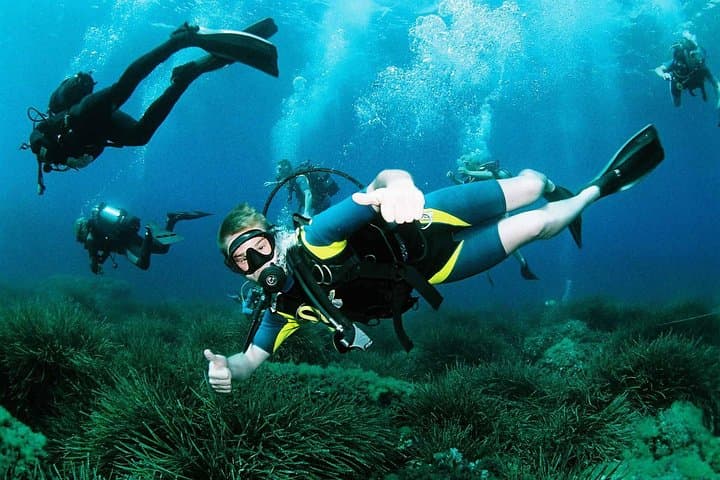
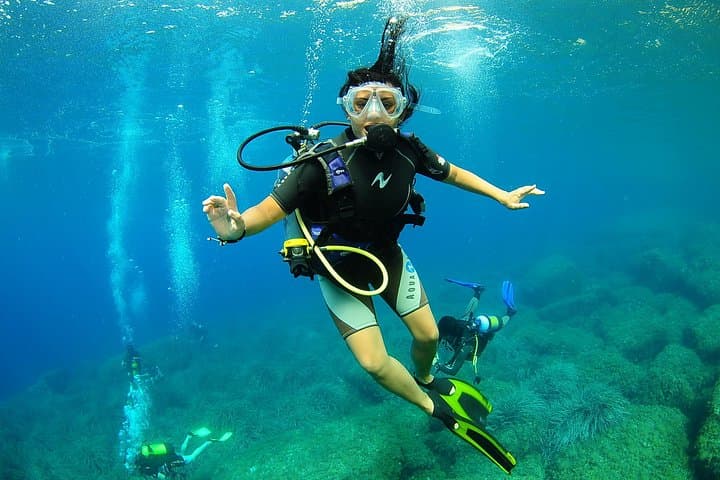
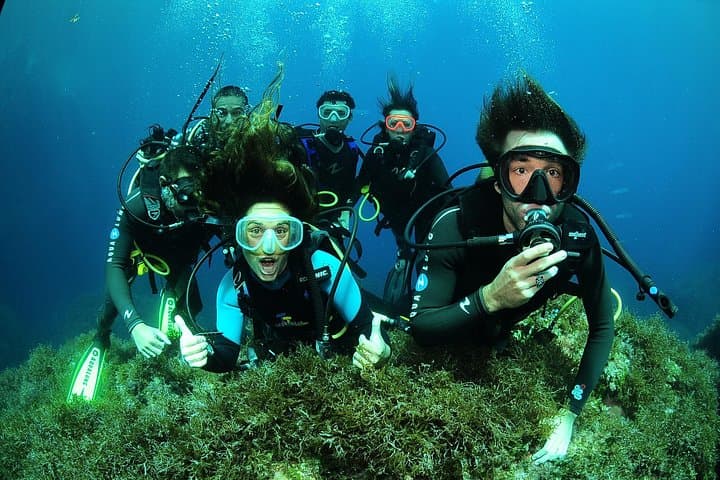
The air tastes of salt and warmed resin from rocky promontories; instructors sort tanks and masks while the pilot threads a corridor of blue that opens into a sheltered drop-off. The pace is deliberate: a short theory briefing, kit checks, and groups of no more than four beginners per instructor before a controlled descent to about 8 meters.
Geology here is stark—limestone cliffs carved by wind and sea, giving way underwater to rocky ledges and sandy patches where Posidonia oceanica, a UNESCO-protected seagrass, carpets the seabed. That seagrass supports small rockfish, starfish and the occasional wary octopus, and it explains why anchors and careful routing by boats matter in these coves.
Ibiza’s coastal culture is still tied to the sea—local fishermen, small boat operators and conservation efforts shape how visitors access remote coves. Expect a hands-on yet cautious introduction to breathing underwater; instructors emphasize equalizing, buoyancy basics and safe ascent procedures.
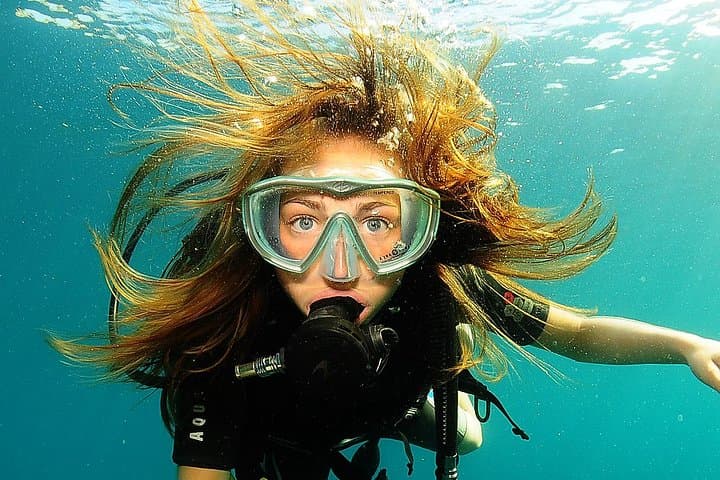
Practical guidance: allow about four hours for the whole program, bring swimwear and layered clothing for wind on the return trip, and plan no flights for 12 hours after diving. If you wear glasses bring contacts or a prescription mask; avoid reef-harming sunscreens and don’t touch the bottom or marine life. After the 35-minute supervised dive you can snorkel from the boat, relax on deck and watch the cliffs slide by on the return to port—an accessible first dive that pairs clear Mediterranean water with tight supervision and strong local stewardship.
Verified experiences and guided adventures in the surrounding area.
Operated by Centro de Buceo Arenal · Sant Antoni de Portmany, Balearic Islands
You step off the quay at Sant Antoni and the harbor thins behind you as the boat cuts toward a cliff-guarded bay 35 minutes away.
The air tastes of salt and warmed resin from rocky promontories; instructors sort tanks and masks while the pilot threads a corridor of blue that opens into a sheltered drop-off. The pace is deliberate: a short theory briefing, kit checks, and groups of no more than four beginners per instructor before a controlled descent to about 8 meters.
Geology here is stark—limestone cliffs carved by wind and sea, giving way underwater to rocky ledges and sandy patches where Posidonia oceanica, a UNESCO-protected seagrass, carpets the seabed. That seagrass supports small rockfish, starfish and the occasional wary octopus, and it explains why anchors and careful routing by boats matter in these coves.
Ibiza’s coastal culture is still tied to the sea—local fishermen, small boat operators and conservation efforts shape how visitors access remote coves. Expect a hands-on yet cautious introduction to breathing underwater; instructors emphasize equalizing, buoyancy basics and safe ascent procedures.
Practical guidance: allow about four hours for the whole program, bring swimwear and layered clothing for wind on the return trip, and plan no flights for 12 hours after diving. If you wear glasses bring contacts or a prescription mask; avoid reef-harming sunscreens and don’t touch the bottom or marine life. After the 35-minute supervised dive you can snorkel from the boat, relax on deck and watch the cliffs slide by on the return to port—an accessible first dive that pairs clear Mediterranean water with tight supervision and strong local stewardship.
moderate.
4 hours.
Moderate fitness—comfortable in the water, able to kneel on a boat deck and follow sustained instructions.
No—this is a beginner baptism-style dive with instruction; certification is not required but the dive is supervised and shallow (max 8 m).
Participants from around 10 years old can join the beginners program, but age and health requirements should be confirmed at booking.
Non-confident swimmers may take part under close instructor supervision, but basic comfort in the water is necessary and medical restrictions may apply.
The operator may cancel for safety; you’ll get a full refund if canceled at least 24 hours in advance or due to weather-related cancellations.
Ibiza’s coastline has been used for fishing and small-boat travel for centuries; modern dive access preserves that maritime link while shifting toward tourism and conservation.
Posidonia meadows are protected; avoid anchoring on seagrass, use reef-safe sunscreens, and follow instructor guidance to minimize contact with wildlife.
Centro de Buceo Arenal operates guided outdoor trips and adventures with an emphasis on safety, stewardship, and memorable experiences.
You step off the quay at Sant Antoni and the harbor thins behind you as the boat cuts toward a cliff-guarded bay 35 minutes away.
The air tastes of salt and warmed resin from rocky promontories; instructors sort tanks and masks while the pilot threads a corridor of blue that opens into a sheltered drop-off. The pace is deliberate: a short theory briefing, kit checks, and groups of no more than four beginners per instructor before a controlled descent to about 8 meters.
Geology here is stark—limestone cliffs carved by wind and sea, giving way underwater to rocky ledges and sandy patches where Posidonia oceanica, a UNESCO-protected seagrass, carpets the seabed. That seagrass supports small rockfish, starfish and the occasional wary octopus, and it explains why anchors and careful routing by boats matter in these coves.
Ibiza’s coastal culture is still tied to the sea—local fishermen, small boat operators and conservation efforts shape how visitors access remote coves. Expect a hands-on yet cautious introduction to breathing underwater; instructors emphasize equalizing, buoyancy basics and safe ascent procedures.
Practical guidance: allow about four hours for the whole program, bring swimwear and layered clothing for wind on the return trip, and plan no flights for 12 hours after diving. If you wear glasses bring contacts or a prescription mask; avoid reef-harming sunscreens and don’t touch the bottom or marine life. After the 35-minute supervised dive you can snorkel from the boat, relax on deck and watch the cliffs slide by on the return to port—an accessible first dive that pairs clear Mediterranean water with tight supervision and strong local stewardship.
You step off the quay at Sant Antoni and the harbor thins behind you as the boat cuts toward a cliff-guarded bay 35 minutes away.
The air tastes of salt and warmed resin from rocky promontories; instructors sort tanks and masks while the pilot threads a corridor of blue that opens into a sheltered drop-off. The pace is deliberate: a short theory briefing, kit checks, and groups of no more than four beginners per instructor before a controlled descent to about 8 meters.
Geology here is stark—limestone cliffs carved by wind and sea, giving way underwater to rocky ledges and sandy patches where Posidonia oceanica, a UNESCO-protected seagrass, carpets the seabed. That seagrass supports small rockfish, starfish and the occasional wary octopus, and it explains why anchors and careful routing by boats matter in these coves.
Ibiza’s coastal culture is still tied to the sea—local fishermen, small boat operators and conservation efforts shape how visitors access remote coves. Expect a hands-on yet cautious introduction to breathing underwater; instructors emphasize equalizing, buoyancy basics and safe ascent procedures.
Practical guidance: allow about four hours for the whole program, bring swimwear and layered clothing for wind on the return trip, and plan no flights for 12 hours after diving. If you wear glasses bring contacts or a prescription mask; avoid reef-harming sunscreens and don’t touch the bottom or marine life. After the 35-minute supervised dive you can snorkel from the boat, relax on deck and watch the cliffs slide by on the return to port—an accessible first dive that pairs clear Mediterranean water with tight supervision and strong local stewardship.