THE ADVENTURE COLLECTIVE® · Independent discovery and booking for outdoor travel

Step off the evening boat into Bako National Park and into a nocturnal world of slow lorises, flying lemurs, and slumbering proboscis monkeys. This guided night walk from Kuching pairs intimate wildlife encounters with dramatic coastal geology—bring a torch and low expectations for silence.
Step off the evening boat into Bako National Park and into a nocturnal world of slow lorises, flying lemurs, and slumbering proboscis monkeys. This guided night walk from Kuching pairs intimate wildlife encounters with dramatic coastal geology—bring a torch and low expectations for silence.
The boat cuts a dark wedge through the estuary as mangrove roots scrape the hull and the last light slides under the horizon. On the shoreline, cliffs—sculpted sandstone cliffs—stand like slow-moving waves frozen in stone. You step ashore with a torch, and the forest answers: a chorus of frogs, the metallic tap of insect mandibles, and the soft clamber of primates making their way to high branches to sleep. This is Bako at night, a compact pocket of Borneo where nocturnal life stages a performance that daytime trails only hint at.
Verified experiences and guided adventures in the surrounding area.
Operated by Magunatip Holidays Sdn Bhd · Kuching, Sarawak
The boat cuts a dark wedge through the estuary as mangrove roots scrape the hull and the last light slides under the horizon. On the shoreline, cliffs—sculpted sandstone cliffs—stand like slow-moving waves frozen in stone. You step ashore with a torch, and the forest answers: a chorus of frogs, the metallic tap of insect mandibles, and the soft clamber of primates making their way to high branches to sleep. This is Bako at night, a compact pocket of Borneo where nocturnal life stages a performance that daytime trails only hint at.
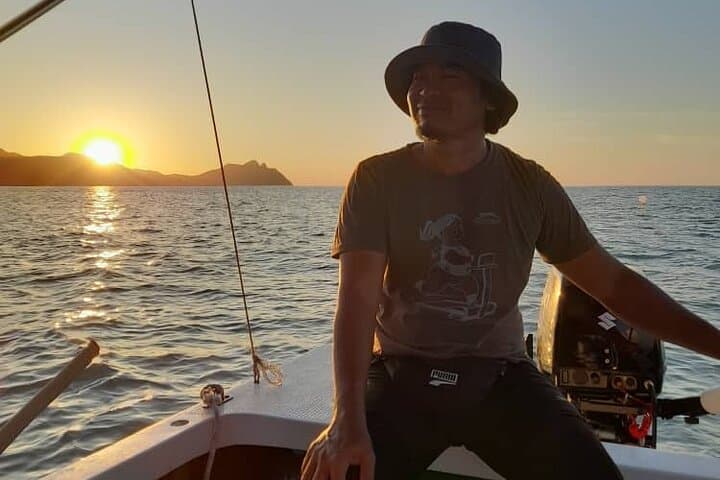
Bako National Park is one of Sarawak’s earliest protected areas, set aside in the mid-20th century to preserve its patchwork of coastal heath, mangrove, and dipterocarp forest. Millions of years of sandstone erosion have carved the coastline here—arches, stacks, and narrow bays that direct wind and sea into sudden, arresting views. Culturally, the park sits on the edge of Kuching’s maritime communities; boatmen who run the 30–40 minute transfer between Damai and the park know every inlet and shallow, and they read the tides like a map.
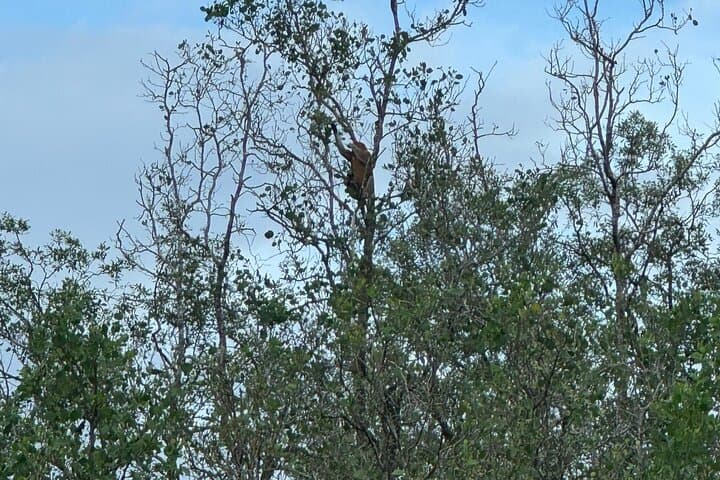
Night tours shift the focus from the park’s iconic daytime stars—proboscis monkeys and monitor lizards—to smaller, more secretive species: slow lorises unblinking in the canopy, flying lemurs gliding between trunks, and the occasional green pit viper holding still on a branch. Guides trained in low-light tracking point out bat roosts, scorpions, leaf-mimicking insects, and the subtle scratch-marks of bearded pigs in the understory. Respectful, quiet observation is essential; these animals conserve energy at night and will slip away at the first flash of bright light.
Practical details: the tour is about six hours total, including hotel pickup from Kuching, a short boat ride, two hours of guided night-walking inside the park, and return. Wear closed-toe trekking shoes with good grip—trails can be muddy and uneven—and bring a reliable headlamp or torch (red light preferred to avoid spooking wildlife), insect repellent, and a lightweight poncho for tropical rain. The group size is small (around seven), which keeps disturbance low and sightings higher. The terrain is mostly gentle but includes roots, rocky shorelines, and short ups and downs; the tour is listed as suitable for most fitness levels.
Safety notes: watch where you step and don't reach into dark spaces—pit vipers are arboreal and well camouflaged. Keep voices low, avoid flash photography, and follow your guide’s instructions for both safety and conservation. For photographers, arrive early to catch dusk along the coast and use a fast lens with high ISO for handheld night shots.
At night, Bako feels close and immediate—wildlife is not a backdrop here but an active presence daring you to pay attention.
easy.
Approximately 6 hours (including transfers and night walk).
Suitable for most fitness levels; requires steady balance on uneven, sometimes muddy trails.
Most tours include hotel pickup in Kuching and a 30–40 minute boat transfer from the Damai coast to the park entrance—confirm pickup point when booking.
Guides are trained to spot and avoid venomous snakes; follow instructions, keep to paths, and do not touch wildlife to minimize risk.
Expect nocturnal species such as slow loris, flying lemur, fruit bats, frogs, and possibly foraging civets and bearded pigs; sightings vary by season and luck.
The activity is listed as suitable for all fitness levels; infants must sit on an adult’s lap—consider noise and low light when bringing young children.
Park admission and basic tour inclusions are usually covered, but bring small cash for extras, souvenirs, or snacks at departure points.
Avoid flash—bright light disturbs nocturnal animals and can alter their behavior; use fast lenses, high ISO, and a steady hand instead.
Bako was designated one of Sarawak’s earliest protected areas in the mid-20th century to protect its unique coastal and forest habitats and the endemic wildlife of Borneo.
Visitor numbers are managed on night walks to reduce disturbance; stay on trails, avoid feeding animals, and follow guide directions to minimize impact on fragile ecosystems.
Magunatip Holidays Sdn Bhd operates guided outdoor trips and adventures with an emphasis on safety, stewardship, and memorable experiences.
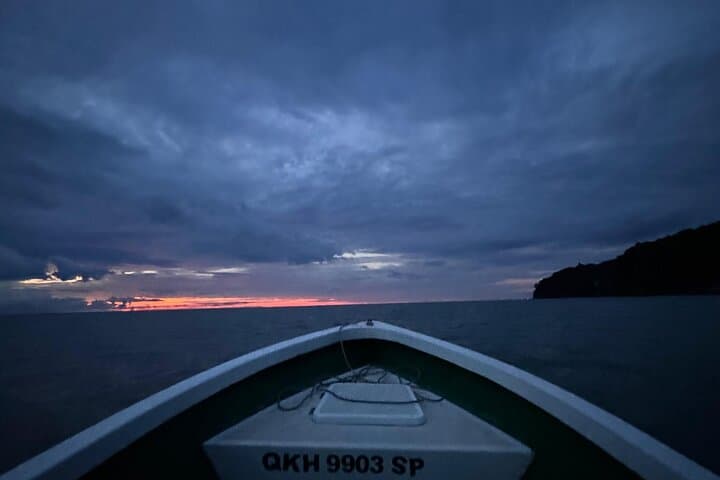
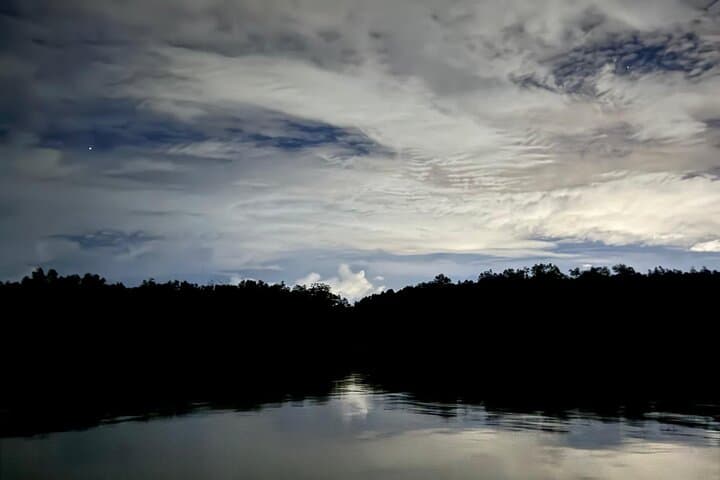
The boat cuts a dark wedge through the estuary as mangrove roots scrape the hull and the last light slides under the horizon. On the shoreline, cliffs—sculpted sandstone cliffs—stand like slow-moving waves frozen in stone. You step ashore with a torch, and the forest answers: a chorus of frogs, the metallic tap of insect mandibles, and the soft clamber of primates making their way to high branches to sleep. This is Bako at night, a compact pocket of Borneo where nocturnal life stages a performance that daytime trails only hint at.
The boat cuts a dark wedge through the estuary as mangrove roots scrape the hull and the last light slides under the horizon. On the shoreline, cliffs—sculpted sandstone cliffs—stand like slow-moving waves frozen in stone. You step ashore with a torch, and the forest answers: a chorus of frogs, the metallic tap of insect mandibles, and the soft clamber of primates making their way to high branches to sleep. This is Bako at night, a compact pocket of Borneo where nocturnal life stages a performance that daytime trails only hint at.
Bako National Park is one of Sarawak’s earliest protected areas, set aside in the mid-20th century to preserve its patchwork of coastal heath, mangrove, and dipterocarp forest. Millions of years of sandstone erosion have carved the coastline here—arches, stacks, and narrow bays that direct wind and sea into sudden, arresting views. Culturally, the park sits on the edge of Kuching’s maritime communities; boatmen who run the 30–40 minute transfer between Damai and the park know every inlet and shallow, and they read the tides like a map.
Night tours shift the focus from the park’s iconic daytime stars—proboscis monkeys and monitor lizards—to smaller, more secretive species: slow lorises unblinking in the canopy, flying lemurs gliding between trunks, and the occasional green pit viper holding still on a branch. Guides trained in low-light tracking point out bat roosts, scorpions, leaf-mimicking insects, and the subtle scratch-marks of bearded pigs in the understory. Respectful, quiet observation is essential; these animals conserve energy at night and will slip away at the first flash of bright light.
Practical details: the tour is about six hours total, including hotel pickup from Kuching, a short boat ride, two hours of guided night-walking inside the park, and return. Wear closed-toe trekking shoes with good grip—trails can be muddy and uneven—and bring a reliable headlamp or torch (red light preferred to avoid spooking wildlife), insect repellent, and a lightweight poncho for tropical rain. The group size is small (around seven), which keeps disturbance low and sightings higher. The terrain is mostly gentle but includes roots, rocky shorelines, and short ups and downs; the tour is listed as suitable for most fitness levels.
Safety notes: watch where you step and don't reach into dark spaces—pit vipers are arboreal and well camouflaged. Keep voices low, avoid flash photography, and follow your guide’s instructions for both safety and conservation. For photographers, arrive early to catch dusk along the coast and use a fast lens with high ISO for handheld night shots.
At night, Bako feels close and immediate—wildlife is not a backdrop here but an active presence daring you to pay attention.